Kategoriat
Uncategorized

Duhigg: Power Of Habit

🔵 Kirjan pääviesti on opettaa miten ymmärryksestä rakennetaan automaattinen tapa toimia. Ihmisen toimintatavoista 40% on automaattisia ja loput aktiivisia päätöksiä.


✅ Tapoja voidaan muuttaa jos tiedostamme miten ne toimivat. Tiedostamattomia tapoja emme vastaavasti pysty korjaamaan. AA-kerho on esimerkiksi valtaisa koneisto, jonka tehtävä on tunnistaa ja korvata päihteiden käyttöön johtavat tavat. 


✅ Tavat syntyvät, koska aivot pyrkivät säästämään energiaa. Kun aivot saavat vihjeen (tuhkakuppi), joka aktivoi rutiinin (tupakointi) niin siitä seuraa palkinto (nikotiini). 

✅ Jos esimerkiksi haluat käydä joka aamu lenkillä, niin laita juoksukengät näkyvälle paikalle, josta saat kimmokkeen lähteä lenkille kun heräät. Yksistään hampaiden pesu on, jossa Pepsodent (vihje) on synnyttänyt aamuun (rutiini) koetun raikkauden tunteen (palkinto) vaahtoavan hammastahnan kautta. 


✅ Tuttuuden tunne on mekanismi, jolla voidaan synnyttää tapoja. Uuden asian tuominen tutun asian yhteyteen tuottaa vihjeen, joka vakiinnuttaa sen uudeksi tavaksi.

✅ Jos etsit kirjasta itsellesi, niin tässä on kaksi:- Kun tiedostat tapasi, niin voit päättää niistä (vihje-rutiini-plkkio).- Puhu kohtalotovereiden kanssa kun haluat päästä niistä eroon.

⛔️ En ymmärrä miksi tässä kirjassa oli yli 400 sivua.

Kategoriat
Uncategorized

O’Reilly: WTF? What’s the Future and Why It’s Up to Us

🔵 Miksi lukisit 448 sivua? 

  • Paras syy on, että ymmärrät kuinka pienestä liiketoiminnasta Internet-palveluissa on vielä kyse. 
  • Toiseksi paras syy on, että pääset miettimään minkälaiseksi muodostuu työelämä? 

✅ Julkisuudessa on esitetty näkökulmia, että Internet-liiketoiminta on menneen talven lumia ja nyt on aika keskittyä johonkin muuhun. 

  • Todellisuudessa Internetin osuus BKT:sta on vasta 5 % kehittyneissä maissa. Siis 95 % BKT:sta on vielä Internet-liiketoiminnan ulkopuolella. Kasvun mahdollisuuksia on ja paljon.

✅ Työelämän muutos ei ole välttämättä sitä mitä julkisuudessa esitetään. O’Reilly käyttää Lyftiä ja Uberia paljon esimerkkinä kuvastaessaan muutosta:

  • Ensimmäinen muutos on, että algoritmit ovat korvanneet keskijohdon. Miksi? “Apps can do now what managers used to do.” 
  • Toinen on, että alustatalousyhtiöt eivät pelkästään polje palkkoja, vaan ne maksavat parhaille taksikuskeille enemmän – tulevaisuudessa. Miksi? ”Even if there are enough drivers, the quality of drivers deeply influences the customer experience.”
  • Kolmas – em. yhtiöt joutuvat kilpailemaan hyvästä työvoimasta aivan kuten kivijalkaliiketoiminnassa. Miksi? “Uber and Lyft will be engaged in as fierce a contest to attract and keep drivers as they are to attract and keep customers today.”

Kategoriat
Uncategorized

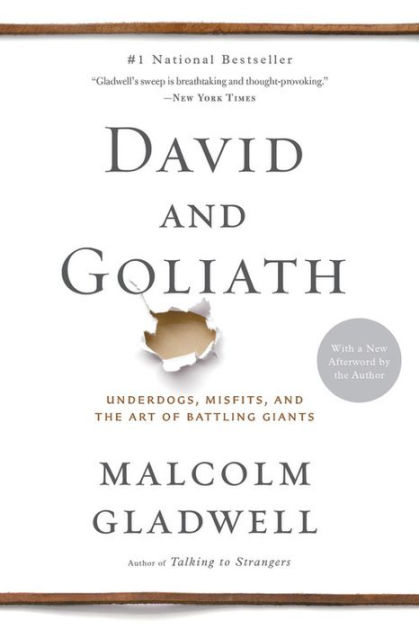
Gladwell: Talking to Strangers

🔴 Hitti vai huti? Ensivaikutelma oli, että nyt tuli huti. Pidin pari päivää taukoa ja luin muistiinpanot. Päätin lieventää kritiikkiäni. Ei huti eikä hitti.  

✅ Gladwellillä on neljä argumenttia: 

1)    Ihmiset ovat outoja. Ihmislaji on voittanut muut lajit muun muassa sen takia, että osaamme nopeasti viestittää ilmeillämme ja tulkita niitä. Väärät ilmeet eivät vielä tee ihmisestä outoa.  

2)    Miksi emme näe metsää puilta. Pääsääntöisesti uskomme ihmisten kertovan totuuden. Uskomme lähtökohtaisesti vastapuolesta hyvää, vaikka ihan kaikkien kohdalla ei olisi tarvetta. Epäily ei ole uskomuksen vihollinen – ne ovat kumppaneita. 

3)    Kahjot – toisinaan, kertovat että keisarilla ei ole vaatteita. Nykyajan kahjoja ovat ns. ilmiantajat (whistleblower), joiden tarkoitus on osoittaa sormelle jotain mikä on ilmeistä, mutta kukaan ei tohdi sanoa ääneen.  

4)    Virhetulkinnasta rankaiseminen. Some-kohut johtavat pikatuomioihin, jotka ovat kaukana totuudesta. Tapamme tulkita toisia ihmisiä saattaa erota heidän tavastaan ilmaista itseään, niin se ei vielä tee vastapuolesta ”rikollista”. Jos teet virhetulkinnan, niin se ei vielä tee sinusta huonoa kansalaista, isää eikä äitiä tai huonoa esimiestä 

⚫️ Melko paljon käytetään aikaa vakoilijoiden ja poikkeavien seksuaalisten kohtaamisten tulkintaan.    

Kategoriat
Uncategorized

Louis Gerstner: Who Says Elephants Can’t Dance?

About the book

“This is not my autobiography. I can’t think of anyone other than my children who might want to read that book (and I’m not 100 percent sure they would, either).” I love this guy. He is such a character. From the first pages he shows true character and sense of humour.

Louis Gerstner held top positions in American Express and was CEO of IBM during the turbulent times. I was expecting a lot from the book and he delivers. Especially the second half of the book is better than great.

Compared to Alfred P. Sloans and Jack Welch’s memoirs Gerstner’s book has mainly two things to give to the reader – a low-key and well argumented leadership style.

“I’ve never been certain that I can abstract from my experiences a handful of lessons that others can apply to their own situations.”

What are the key learnings?

Key learnings of the book are

–      Corporate culture is the game.

–      People respect what you inspect.

–      Free cash flow is the True north of every business.

–      Execution is really the critical part of a successful strategy.

–      Lack of focus is the most common cause of corporate mediocrity.

–      What do you really want people to do? Win, execute, and team.

Corporate Culture

“I came to see, in my time at IBM, that culture isn’t just one aspect of the game—it is the game. In the end, an organization is nothing more than the collective capacity of its people to create value. Vision, strategy, marketing, financial management—any management system, in fact—can set you on the right path and can carry you for a while. But no enterprise—whether in business, government, education, health care, or any area of human endeavor—will succeed over the long haul if those elements aren’t part of its DNA.”

Inspect

“Greatest mistake is to confuse expectations with inspection. Too often the executive does not understand that people do what you inspect, not what you expect.”

Execution

“Execution is really the critical part of a successful strategy. Getting it done, getting it done right, getting it done better than the next person is far more important than dreaming up new visions of the future.”

Free cash flow

“It is the three most important words for Louis Gerstner. It’s the True north of every business. For him it is “the single most important measure of corporate soundness and performance.”

Focus

“Focus is a critical element of institutional success. If a management team doesn’t believe that it has identified and is seriously funding new growth opportunities, then it is likely to wander off and drink the heady brew of acquisitions and diversification—and ultimately fail.”

Gerstner’s management philosophy and practice

Management philosophy and practice of Lou Gerstner:

–      “I manage by principle, not procedure. 

–      The marketplace dictates everything we should do.

–      I’m a big believer in quality, strong competitive strategies and plans, teamwork, payoff for performance, and ethical responsibility.

–      I look for people who work to solve problems and help colleagues. I sack politicians. I am heavily involved in strategy; the rest is yours to implement.

–      Just keep me informed in an informal way. Don’t hide bad information—I hate surprises. Don’t try to blow things by me. Solve problems laterally.

–      I am heavily involved in strategy; the rest is yours to implement. Just keep me informed in an informal way. Don’t hide bad information—I hate surprises. Don’t try to blow things by me. Solve problems laterally; don’t keep bringing them up the line.

–      Move fast. If we make mistakes, let them be because we are too fast rather than too slow.

–      Hierarchy means very little to me. Let’s put together in meetings the people who can help solve a problem, regardless of position. Reduce committees and meetings to a minimum. No committee decision making. Let’s have lots of candid, straightforward communications.”

How to use power?

I turned to the flight attendant and said, “This has been a really tough day. I think I’d like to have a drink.” She said, “You don’t mean an alcoholic drink, do you?” “I certainly do!” I replied. “What kind of vodka do you have?” “We have no alcohol on IBM airplanes. It is prohibited to serve alcohol.” I said, “Can you think of anyone who could change that rule?” “Well, perhaps you could, sir.” “It’s changed, effective immediately.”

“A customer was now running IBM”

The Strategy Session Features:

–      Questions about customers to be raised raised.

–      Compare our offerings to those of our competitors.

–      Integration across the various topics that allowed the group to pull together a total company view.

Gerstner’s way to salvage IBM

With four critical decisions Gerstner saved IBM:

1.   “Keep the company together.

2.   Change our fundamental economic model.

3.   Reengineer how we did business.

4.   Sell underproductive assets in order to raise cash.”

“So keeping IBM together was the first strategic decision, and, I believe, the most important decision I ever made—not just at IBM, but in my entire business career. I didn’t know then exactly how we were going to deliver on the potential of that unified enterprise, but I knew that if IBM could serve as the foremost integrator of technologies, we’d be delivering extraordinary value.”

Pain comes first

“I’ve had a lot of experience turning around troubled companies, and one of the first things I learned was that whatever hard or painful things you have to do, do them quickly and make sure everyone knows what you are doing and why.”

An enormous sense of urgency

“To focus on day-to-day execution, stabilizing the company while we sought growth strategies that would build on our unique position in the industry. Those were not to come until a year later.”

Creating the leadership team

“I think it would have been absolutely naïve—as well as dangerous—if I had come into a company as complex as IBM with a plan to import a band of outsiders somehow magically to run the place better than the people who were there in the first place.”

Fallacies and Myths and Lessons

“With os/ 2-the fallacy that the best technology always wins.”

“First, the buyers were individual consumers, not senior technology officers. Consumers didn’t care much about advanced, but arcane, technical capability. They wanted a PC that was easy to use, with a lot of handy applications. And, as with any consumer product—from automobiles to bubble gum to credit cards or cookies—marketing and merchandising mattered.

Second, Microsoft had all the software developers locked up, so all the best applications ran on Windows. Microsoft’s terms and conditions with the PC manufacturers made it impossible for them to do anything but deliver Windows—ready to go, preloaded on every PC they sold.”

“In the case of application software-the myth of “account control.”

“This was a term used by IBM and others to talk about how a company maintained its hold on customers and their wallets. I had this quaint view that it was the job of a supplier to serve customers, not control them!

Beware of totally proprietary vendors who fight new developments like Linux. These vendors still view the world through the window of their proprietary stack.”

“In the case of PCS, there are still unanswered questions.”

“Why did we make the decision to exit the application software, network hardware, DRAMs, or the data transmission businesses, but not PCs? Why did we decide to stay in the hardware end of this business, even as we folded our hand on OS/ 2? In hindsight, was this the right decision? I think it was at the time, but the decision has been painful and costly for IBM.

But when it came to the PC business, we weren’t paying attention to either our customers or our competitors. One competitor in the PC industry was proving that customers were perfectly willing to buy direct—over the phone, or later via a Web site. But we were painfully slow to move away from our existing distribution channels. Why? The incomplete and unsatisfying answer at the time was that we’d always done it that way.”

On corporate culture

“I have a theory about how culture emerges and evolves in large institutions: Successful institutions almost always develop strong cultures that reinforce those elements that make the institution great. They reflect the environment from which they emerged. When that environment shifts, it is very hard for the culture to change. In fact, it becomes an enormous impediment to the institution’s ability to adapt.”

“You can’t simply give a couple of speeches or write a new credo for the company and declare that the new culture has taken hold. You can’t mandate it, can’t engineer it.”

“What you can do is create the conditions for transformation. You can provide incentives. You can define the marketplace realities and goals. But then you have to trust. In fact, in the end, management doesn’t change culture. Management invites the workforce itself to change the culture.”

Leading by Principles

1. The marketplace is the driving force behind everything we do.

2. At our core, we are a technology company with an overriding commitment to quality.

3. Our primary measures of success are customer satisfaction and shareholder value.

4. We operate as an entrepreneurial organization with a minimum of bureaucracy and a never-ending focus on productivity.

5. We never lose sight of our strategic vision.

6. We think and act with a sense of urgency.

7. Outstanding, dedicated people make it all happen, particularly when they work together as a team.

8. We are sensitive to the needs of all employees and to the communities in which we operate.

“Nothing can stop a cultural transformation quicker than a CEO who permits a high-level executive—even a very successful one—to disregard the new behavior model.”

IBM LEADERSHIP COMPETENCIES

Focus to Win

–      Customer Insight

–      Breakthrough Thinking

–      Drive to Achieve

Mobilize to Execute

–      Team Leadership

–      Straight Talk

–      Teamwork Decisiveness

Sustain Momentum

–      Building Organizational Capability

–      Coaching

–      Personal Dedication

The Core

–      Passion for the Business

“Win, execute, and team.”

Win

It was vital that all IBMers understand that business is a competitive activity. There are winners and losers. In the new IBM, there would be no place for anyone who lacked zeal for the contest. Most crucially, the opponent is out there, not across the Armonk campus. We needed to make the marketplace the driving criterion for all of our actions and all of our behavior.

Execute

This was all about speed and discipline. There would be no more of the obsessive perfectionism that had caused us to miss market opportunities and let others capitalize on our discoveries. No more studying things to death. In the new IBM, successful people would commit to getting things done—fast and effectively.

Team

This was a commitment to acting as one IBM, plain and simple.

Fundamentals

There are fundamentals that characterize successful enterprises and successful executives.

–      They are focused.

–      They are superb at execution.

–      They abound with personal leadership.

“Final issue that is unique to the largest and most complex institutions: how to strike the appropriate balance between integration and decentralization.

Focus—You Have to Know (and Love) Your Business

I have learned that lack of focus is the most common cause of corporate mediocrity.

“The grass is greener.”

“This is the most pernicious example. In my thirty-five-year business career I have seen many companies, when the going gets tough in their base business, decide to try their luck in new industries. It’s a long list:

–      Xerox going into financial services;

–      Coca-Cola into movies;

–      Kodak into pharmaceuticals.

History shows that truly great and successful companies go through constant and sometimes difficult self-renewal of the base business. They don’t jump into new pools where they have no sense of the depth or temperature of the water. “We need to grow, so let’s go acquire somebody.”

Steely-Eyed Strategies

Again, good strategies start with massive amounts of quantitative analysis—hard, difficult analysis that is blended with wisdom, insight, and risk taking.

Intelligence Wins Wars

Perhaps the most difficult part of good strategy is hard-nosed competitive analysis. Almost every institution develops a pride in itself.

Good Strategy: Long on Detail

Have a clear understanding of the five or six critical things they need to do in their base business to be successful.

Good strategies are long on detail and short on vision. They lay out multi-year plans in great quantitative detail.

The most important value-added function of a corporate management team is to ensure that the strategies developed by the operating units are steeped in

–      Tough-minded analysis, and

–      That they are insightful and

–      Actionable.

Great companies lay out strategies that are

–      Believable and

–      Executable.

The Hard Part: Allocating Resources

“Finally, making sure that resources are applied to the most important elements of the strategy is perhaps the hardest thing for companies to do. Too many companies view strategy and operations as two separate activities.”

Survival of the Fattest

“Here’s my last observation on focus: The Darwinian concept of survival of the fittest unfortunately doesn’t work in a lot of companies. Instead, too often the rule is “survival of the fattest.” Divisions or product lines that are successful today always want to redeploy their cash and other resources into existing products and existing markets. Finding ample resources to fund new growth and new businesses is one of the hardest tasks of a corporate leader.”

Execution-Strategy Goes Only So Far

“Execution—getting the task done, making it happen—is the most unappreciated skill of an effective business leader. In my years as a consultant, I participated in the development of many strategies for many companies. I will let you in on a dirty little secret of consulting: It is extremely difficult to develop a unique strategy for a company; and if the strategy is truly different from what others in the industry are doing, it is probably highly risky. The reason for this is that industries are defined and bounded by economic models, explicit customer expectations, and competitive structures that are known to all and impossible to change in a short period of time.”

“At the end of the day, more often than not, every competitor basically fights with the same weapons. In most industries five or six success factors that drive performance can be identified. For example, everyone knows that product selection, brand image, and real estate costs are critical in the retailing industry. It is difficult, if not impossible, to redefine what it takes to be successful in that industry. Dot-com retailers were a good example of a spectacular failure to understand that you cannot suspend the fundamentals of an industry.”

“Execution is really the critical part of a successful strategy. Getting it done, getting it done right, getting it done better than the next person is far more important than dreaming up new visions of the future.”

Daily grind of execution is mannaryyni-strategia

“Execution is the tough, difficult, daily grind of making sure the machine moves forward meter by meter, kilometer by kilometer, milestone by milestone. Accountability must be demanded, and when it is not met, changes must be made quickly. Managers must be asked to report on their performance and explain their successes and failures. Most important, no credit can be given for predicting rain—only for building arks.”

“I believe effective execution is built on three attributes of an institution:

–      World-class processes,

–      strategic clarity, and

–      a high-performance culture.”

World-Class Processes

Earlier in this section I mentioned that in every industry it is possible to identify the five or six key success factors that drive leadership performance. The best companies in an industry build processes that allow them to outperform their competitors vis-à-vis these success factors.

Think about great companies

–      Wal-Mart has superb processes in store management, inventory, selection, and pricing.

–      GE is world-class in cost management and quality.

–      Toyota is best-in-class in product lifecycle management.

Strategic Clarity

”Companies that out-execute their competitors have communicated crystal-clear messages to all their employees: “This is our mission.” “This is our strategy.” “This is how you carry out your job.” But high-caliber execution cannot simply be a matter of exhortation and message.”

“Execution flows naturally and instinctively at great companies, not from procedures and rule books. Manuals may play a role in early training activities, but they have limited value in the heat of battle.”

Superb execution is more about values and commitments.

“At American Express we knew we provided the best customer service in the industry—not because our training manuals said it was important but because our people on the firing line, those who talked to customers all day, believed it. They knew it was a critical component of our success.”

High-Performance Culture

“Superb execution is not just about doing the right things. It is about doing the right things faster, better, more often, and more productively than your competitors do.”

WHAT IT TAKES TO RUN IBM

Energy

–      Enormous personal energy

–      Stamina Strong bias for action

Organizational Leadership

–      Strategic sense

–      Ability to motivate and energize others

–      Infectious enthusiasm to maximize the organization’s potential

–      Builds strong team

–      Gets the best from others

Marketplace Leadership

–      Outstanding oral communications

–      CEO-level presence and participation in the industry and with customers

Personal Qualities

–      Smart Self-confident, but knows what he/ she doesn’t know

–      Listens

–      Makes hard decisions—in business and with people

–      Passion that is visible

–      Maniacal customer focus

–      Instinctive drive for speed/ impact

How should we change according to the book?

Leadership Is Personal

“Great institutions are not managed; they are led. They are not administered; they are driven to ever-increasing levels of accomplishment by individuals who are passionate about winning.”

–      Personal leadership is about visibility.

–      Personal leadership is about being both strategic and operational.

–      Personal leadership is about communication, openness, and a willingness to speak often and honestly, and with respect for the intelligence of the reader or listener.

–      Most of all, personal leadership is about passion.

Remember my description of personal leadership. It starts with the hard work of strategy, culture, and communications.

What should I personally do?

Great leaders according to Gerstner are Sam Walton of Wal-Mart, Jack Welch of General Electric, Juergen Schrempp of DaimlerChrysler, and Andy Grove of Intel.

“Have you ever noticed how the past keeps getting better the further into the future you go? Someone once said that the only paradises we have are those that are lost.”

Read their books.

Summary

–      The book in six words – ” Stick to your knitting; dance with the partner who brought you.” (Old-age saying)

Kategoriat
Uncategorized

Melinda Gates: Tasa-arvo. Nyt!

Kirjasta

En ole elävien ihmisten itsekirjoitettujen muistelmien fani. Mutta Melinda tarina – jos ei ole aikamme tärkein manifesti, niin on syvällinen kuvaus kuplastamme. Kirja alkaa sarjalla kuvauksia kuinka hän ja hänen miehensä ovat pyrkineet vaikuttamaan alikehittyneiden maiden tasa-arvon kehittymiseen. Minä en ole ymmärtänyt kuinka vähällä voimme voimaannuttaa kokonaisia kansoja ja mahdollistaa tasa-arvoa.

Käännös on delikaatti kysymys. Paikoitellen olin aistivinani, että kääntäjä ei tunne liike-elämän koukeroita. Mm. sanat liike-elämän tutkinto tai liikenaisen puvussa kuulostavat oikeilta, mutta eivät kohtaa arkikielen kanssa. Samoin kirjan nimi olisi voinut olla toinen. Alkuperäinen nimi on ”The Moment of Lift: How Empowering Women Changes the World”. Suomennos on “Tasa-arvo. Nyt!”.

Mitkä ovat kirjan keskeiset ideat? 

Kirjan keskeiset opit ovat:

·     Tasa-arvo on tärkein lääkitys köyhyyteen ja sosiaalisiin sairauksiin. Poissuljetut on otettava mukaan, on mentävä yhteiskunnan syrjäisille laidoille ja haettava sieltä sisään.

·     Vaikeasti köyhissä maissa naiset on ajettu marginaaliin.

·     Naisten täytyy herätä auttamaan toisiaan, jotta heistä tulee yhdessä vahvempia.

·     Palkkatyö kohottaa naiset kohti tasa-arvoa.

·     Tyttöjen koulutuksen voimaannuttava vaikutus yhteiskunnassa.

Melinda Gatesilla on globaalia ymmärrystä naisten ja tyttöjen asemasta. Hän tunnustautuu olevansa kiihkeä feministi. Gates toivoo, että katsomme itseämme ja mietimme, mitä juuri minä voisin tehdä. ”Muutetaan maailmaa yhdessä!”

Kirjan sivuilta putoilee hengästyttävään tahtiin dataa maailman tilasta:

·     Tytöt palaavat kotiseudulleen koulutuksen jälkeen auttamaan kulmakunnan kehittämistä.

·     Intian kastijärjestelmässä musharit ovat arvottomia ja erityisesti tytöt. Heidän varjoonsa meidän jokaisen pitäisi katsoa.

·     Lapsiavioliitot heikentävät nuorten tyttöjen roolia.

Meille länkkärille seuraavat huomiot ovat tärkeitä:

·     Hewlett-Packardin tutkimuksen mukaan naiset hakevat työtä jos työpaikan hakukriteerit täyttyvät 100% ja miehet hakevat jo kun 60% hakukriteereistä täyttyy. 

·     Palkattoman työn epätasa-arvoinen balanssi. Naiset käyttävät maailmassa kaksi kertaa enemmän aikaa palkattomaan työhön kuin miehet.

·     Esimerkiksi Yhdysvalloissa naiset tekevät neljä tuntia palkatonta työtä, miehet kaksi ja puoli tuntia. Elämänsä aikana naiset tekevät seitsemän vuotta palkatonta työtä enemmän kuin miehet. Siinä ajassa jo opiskelee yhden korkeakoulututkinnon. 

·     ”Miehet eivät hevin luovu järjestelmästä, jossa puolet maailman väestöstä tekee töitä lähes vastikkeetta” Marilyn Waring.

Tämän ongelman ratkaisemiseksi hän tarjoaa Diane Elsonin 3R-metodia (recognize, reduce, redistribute).

Muita huomioita kirjasta. Bill ja Melinda Gatesin säätiöstä puhutaan paljon. Kirjojen lukemisesta puhutaan paljon. Ja raamatullista eetostakin piisaa ”Viimeiset tulevat ensimmäiseksi ja ensimmäiset viimeiseksi”.

Jännittävää on myös, että hän ottaa kantaa omiin tekemisiinsä. Miljardöörien hyväntekeväisyyden haasteet:

·     Joutuuko lahjoituksen kohde vastaanottamaan myös miljardöörien ajatukset ja arvomaailman?

·     Mitä et voi mitata, et voi johtaa. Siis miten tietää onko hyväntekeväisyys onnistunut?

·     Omnipotentti lahjoittaja voi kuvitella olevansa kaikkien alojen asiantuntija?

Hienoa itsekriittisyyttä löytyy Melindan tekstistä. Ehkä hän haluaa tehdä hyväntekeväisyyden kasvuhakkerointia arvioimalla kriittisesti omaa toimintaansa?

Mitä meidän pitäisi tehdä kirjan perusteella?

Tämä kirjaa kuuluu ihmisille, jotka tekevät arvovalintoja. Mm. millä kriteereillä ihmisiä ylennetään tai palkataan. Lukukokemus oli voimaannuttava kokemus, koska ymmärsin olleeni oikealla polulla. Melinda avasi tekstillään lisää syvyyttä miksi tasa-arvo on KPI-tasoinen tavoite. 

Mitä minun pitäisi itse tehdä? 

Kirja toi mieleen arkkipiispa Kari Mäkisen saarnan, jossa hän toteaa ”yhteiskunnan tilaa on katsottava varjopaikoista käsin”.

Pitää muistaa katsoa varjopaikkoihin.

Yhteenveto

Kirja kuudella sanalla – ”Sosiaalisen sukupuolen moninaisuus ei ole hyväksi pelkästään naisille. Se on hyväksi kaikille, jotka haluavat tuloksia.” 

Kategoriat
Uncategorized

Michael Wade et al: Orchestrating Transformation

About the book

Oh boy! This is the BIG book of transformation. After this there is no need to read any other books about digital transformation. Unless Wade et al. will write something new about digital transformation.

The companies that have not already been subject to serious digital competition will benefit from this book. The companies that would most benefit from learnings of the book are B2B and engineering companies or public organization.

The book is written to business leaders, executives and Chief Digital Officers. This is your book if you want to avoid “the danger of becoming a corporate irrelevance”. Do not be a “Queen of PowerPoint.” Become the master of digital transformation.

“When you’re finished changing, you’re finished.” (Ben Franklin)

What are the key learnings?

“Transformation is not an event; it’s an essential and perpetual task of leadership.”

The key learnings are

–      “A second wave of disruption is upon us. This wave is focused not only on digitizing products and services, but also on business models, processes, and value chains“.

–      Now it’s your turn. “Companies that were easy targets for digitalization – media, financial and telco’s, have already gone through the digital disruption.”

–      The third wave is around the corner. Watch out technologies such as RPA, ML and AI.

“Orchestrating Transformation is less about what the best companies do better than anyone else. Instead, it’s largely about what everyone gets consistently wrong—and how to fix it. This book proceeds from a simple premise: most companies are not successful in digital business transformation.”

Digital business transformation involves much more than technology.

Definition of Digital Business Transformation is “organizational change through the use of digital technologies and business models to improve performance.”

–      “The objective of digital business transformation is to improve business performance.

–      Digital business transformation is based on a digital foundation.

–      Digital business transformation requires organizational change – change that includes processes, people, and strategy.”

Orchestration

“The concept of orchestration to contend with the connected nature of change. By embracing the networked nature of organizations, and the challenge of changing what is highly connected, we reframe what the execution of a digital business transformation program means (continuous and holistic) and increase the chances that it will ultimately succeed.”

Transformation dilemma

“We call this the “transformation dilemma” of today’s incumbents. Organizational characteristics of today’s market incumbents

–      scale,

–      interdependence,

–      dynamism.

“Why the “entanglement” of these characteristics makes it nearly impossible to achieve success in digital business transformation using traditional change methods.”

“Today’s incumbents are missing the growth hacking factor, because “the vast majority of organizational change efforts fail. Estimates vary, but failure rates range from 60 to 80 percent and don’t seem to improve over time.”

“Digital transformations fail so frequently that we’ve met many executives who are hostile to the very term “digital,” or who have made any phrases containing “transformation” verboten because of the word’s perceived connotations of hype, frustration, and fiasco.”

Why? Many company leaders don’t understand the problem they face. “Simply put – things change a lot:

–      Scale. Companies are awash in huge volumes of “things that need to be managed”

–      Interdependence. The things that need to be managed are interrelated, and the effects from any one action are felt throughout the organization in ways that aren’t easy to predict.

–      Dynamism. The things that need to be managed, and the environments (market, regulatory, etc.) in which they operate, are constantly evolving. The need to do things differently is a constant competitive reality.”

Cult of synergy

“Often, companies respond to interdependence by separating things into different units. This approach, known as “departmentalization,” gives a certain team the authority to establish (“own”) a standard for how something is done. At first glance, the approach makes sense as an antidote for complexity. However, it also contributes to the balkanization of companies (i.e., silos), undermining the biggest value of interdependence: synergy.

“A lack of synergy is a major contributing factor in why most transformation programs fail to deliver their expected returns.”

Tales on unexpected

–      Gray Wolf Effect. “One example involves the return of the gray wolf to Yellowstone National Park. 7 By 1926, all gray wolves, the natural “apex predator” in Yellowstone, had been exterminated. In the mid-1990s, gray wolves were reintroduced into the park, and scientists soon observed how their predatory habits affected the entire food chain and overall biodiversity of the region. The reintroduced gray wolves killed and ate the park’s elk population. In turn, the reduced number of grazing elk allowed for the growth of more vegetation. This increase in plant life and its root systems then increased the stability of riverbanks and, ultimately, changed the paths followed by the park’s rivers. (To ecologists, this phenomenon is known as a “trophic cascade”).”

–      Cobra Effect. ”This phenomenon is sometimes referred to as the Cobra Effect. The term originated in the British Raj in 19 th century India. The British government, concerned about the proliferation of venomous cobras in Delhi, offered a bounty to citizens who killed the snakes. Unfortunately, local residents reacted to this incentive by modifying their behavior in an unanticipated way: they began breeding cobras that could be killed for money. When the government realized that citizens were gaming the system, they shut down the bounty program. This prompted the citizens to free their now-worthless snakes, significantly increasing the cobra population.”

–      Black Swan Effect of course.

Four types of change

1.   Plain Old Change.

a.   “This is functionally autonomous, incremental change. The goal of change is straightforward, and the resources needed are limited and well-defined within a particular functional area or group. For example, if the advertising department opts to shift investment in newspaper and television media to online ads, that’s their purview. It doesn’t significantly impact, and isn’t contingent upon, other parts of the company. This type of change represents most of the management effort focused on implementing changes. It’s pretty run-of-the-mill and doesn’t involve extensive cross-functional considerations. It also doesn’t require changes to a company’s overarching strategy or business model.”

2.   Blanket Adjustments.

a.   “This is highly entangled, incremental change. Here, a company makes a tweak or calibration—introducing new enterprise-wide hiring rules or a global expense management system—that affects many different stakeholders in all parts of the organization. These adjustments frequently collide with highly entangled structures and, as many of us have experienced, can be challenging to implement. Nonetheless, the extent of change isn’t large. There’s no essential change to the kinds of value the company creates for customers, how it makes money, or its overall competitive position.”

3.   Smart X.

a.   “This is functionally autonomous, major change. The changes are big, but they don’t have a company-wide focus. When you hear about projects like “smart supply chain” or “smart real estate,” these are examples of Smart X change. This doesn’t mean, however, that Smart X change is a breeze to achieve. Although the change may be limited to a single function, it can be ambitious in scope. A “smart factory,” for example, could involve a complete revolution in how manufacturing processes are performed. This certainly qualifies as “major change.”

4.   Digital Business Transformation.

a.   ”This is highly entangled, major change. This type of change is the focus of the DBT Center in general and this book in particular. Recalling our earlier definition of digital business transformation as “organizational change through the use of digital technologies and business models to improve performance,” we can see that this type of change is considerably different from the others. It combines high levels of scale, interdependence, and dynamism with the need to make fundamental changes to the entire organization in the service of a new strategic direction. It means making changes to business models and customer value creation to address disruptive competition. It may also involve value creation with third parties (i.e., through platforms).”

Guiding objectives

“What’s more, too many transformations are disconnected from:

–      Customer value creation,

–      Business models,  

–      Strategies of the company.”

“We refer to these three elements together as guiding objectives. Guiding objectives are a set of clearly-articulated aims that serve as the point of departure for effective execution of a transformation program. (However, they are not the company’s “digital strategy”; see sidebar.)”

Three common denominators in modus operandi for succeeding in transformation are:

1.   Cost value. Disruptors create value for customers through lower costs or by creating some kind of economic gain.

2.   Experience value. through customer experiences that are faster, more convenient, more personalized, and so forth.

3.   Platform value. By creating connections that did not exist before, such as between a buyer and a seller, or between a teacher and a student.

Smash the paradigm

“In the past, as described in Michael Porter’s classic Competitive Strategy, firms focused on one of two main competitive orientations: cost leadership (what we refer to as “cost value”) and differentiation (what we call “experience value”). 2 Porter’s point is that companies pick one or the other: you can be Walmart (cost value) or you can be Burberry (experience value). But you don’t try to do both at once—doing so would be a recipe for disaster (by the way, there were not platforms as we think of them today back when Porter wrote his book). Companies like Uber, and all of the most disruptive companies, smash this paradigm with their ability to create combinatorial disruption that customers can’t get enough of.”

Case Fujifilm. “Fujifilm recognized the digital threat to its core market in analog cameras and film. As far back as the 1980s, both companies anticipated declining sales of photographic film and paper and launched successful digital camera offerings. By 1999, Fujifilm was the world leader in digital camera sales. By 2003, however, the disruption in digital photography deepened with the introduction of smartphones with built-in multi-megapixel cameras. At Fujifilm, film sales fell off a cliff. They dropped by one-third within a year, and photo labs reported an 80 percent decline in processing jobs for consumers. After decades of growth, Fujifilm’s revenue reached a peak in 1999 at $13.6 billion. Shigetaka Komori, who became CEO in 2003 (he was also named chairman in 2012), had to respond: “At first I thought that color film wouldn’t disappear quickly, but digital stole it all away in an instant.” This is a common sentiment for executives who have the misfortune of encountering value vampires—disruptive competitors who permanently undercut the viability of a market. In 2001, film accounted for two-thirds of Fujifilm profits. By 2017, it was less than 1 percent. Komori and his team restructured the organization, reducing its distribution, research and development, and management costs. Significant job reductions, factory closings, and other cuts helped decrease the company’s cost base by more than $5 billion. Fujifilm diversified and retreated into a few niche markets where value vampires (Apple and the Android-based smartphone makers) had no intention of following: high-end digital imaging machines, enterprise document solutions, and (unexpectedly) cosmetics.

Strategic Response Playbook – Four strategic options

1.   Harvest: Maximizing Returns from a Disrupted Business

2.   Retreat: Strategic Withdrawal

3.   Disrupt: Creating New Customer Value

4.   Occupy: Winning in a Disrupted Space

Harvest

Harvest is a defensive strategy designed to maximize gains from an at-risk or declining business. Harvest strategies frequently begin with “blocking tactics,” drawing on the benefits of incumbent status with customers, partners, regulators, opinion-makers, and providers of capital. These countermeasures are intended to slow the disruption or buy time for an incumbent to come up with a more appropriate response.

Harvest shouldn’t be equated with failure. It’s the natural progression of a mature business confronting commoditization, customer attrition, margin compression, and other unpleasantness arising from digital disruption. Leaders who are clear-sighted enough to accept this are best positioned to steer their organizations through the transition. An example of a global incumbent adopting a Harvest strategy is Avon Products. 4 Founded over 130 years ago in New York, the company uses a direct, social-selling channel: 6 million “Avon Ladies” form an independent salesforce of micro-entrepreneurs who go door-to-door to offer women cosmetics, fragrances, jewelry, and health supplements.

Retreat

“There are two main components to a Retreat strategy.

–      Retreat emphasizes withdrawal into a market niche that serves a small subset of existing customers with specialized needs. Usually, the niche is a market the incumbent has dominated in the past and, in most cases, is an expert at managing for profitability. The niche market often requires a level of experience value that is hard for disruptors to deliver.

–      Market exit is the second component of a Retreat strategy, and choosing the right time to exit is a critical decision. Too early, and you risk leaving money on the table. Too late, and the value has disappeared. Fujifilm sold many of its core assets in film and paper production while they still had value, channeling the proceeds into new business lines.”

Disrupt

“A Disrupt strategy focuses on creating cost value, experience value, and platform value for customers using digital technologies and business models in a new way. Becoming a disruptor requires a mix of deep customer and competitor insights, innovative thinking, strategic experimentation, capability transfer and building, and careful investment. As a result, many incumbents find disruption very difficult. For example Casper and Endy’s success is the result of their rigorous focus on providing value to customers. Buying a mattress through traditional channels can be a painful experience.

Occupy

“While a disruption can be achieved through cost value or experience value or platform value, a successful Occupy strategy normally requires combinatorial disruption. Only by combining all three forms of value can an organization prevail in the disruption battle for any length of time. The main problem with Occupy is that incumbents are often on unfamiliar terrain. Sleep Country Canada…. Far from retrenching, the company is aggressively investing, improving cost controls and inventory levels. <= LeanLeap

Sleep Country Canada is also “disrupting the disruptors,” emulating the market-changing innovations that underpin the value of Casper and Endy’s offers, while continuing to wield its physical stores presence and greater bargaining strengths. It launched an easy-to-deliver mattress-in-a-box called Bloom, 36 allowing it to participate in a fast-growing segment of the market. 37 The company has always offered a 100-day satisfaction guarantee but is benefiting from the market awareness that online competitors’ marketing efforts are creating.”

Establishing Guiding Objectives of a Transformation

“What should we do first in our transformation program?” The answer is: start by establishing guiding objectives.”

“Drawing on our research into digital transformation journeys, we have built a simple tool called “20 Questions” to help organizations prioritize strategic responses.

“Certain strategies in the Strategic Response Playbook are employed more than others:

–      Retreat strategies are less frequent, in part because, as we observed in our earlier book, leaders are reluctant to pursue them (out of fear they will be perceived as signposts of deficient leadership) and because, even though market entry and exit rates are accelerating in the Digital Vortex, “wrapping up” a business is not a daily occurrence for firms.

–      Disrupt strategies are not something companies embark on frequently or lightly. They tend to be radical departures from what the company has done in the past and require a different model for market formation, incubation, and scaling. Most incumbents are not good at Disrupt strategies because they imply being first to market, often with a small subset of early-adopter customers.

–      Harvest. More commonly, big, traditional, prosperous companies concentrate their efforts on Harvest and Occupy. The former means playing defense, and usually involves a lot of cost optimization, streamlining, and specialization. #Lean

–      Occupy. The latter means playing offense, but after a value vacancy and a market disruption have already materialized, allowing the incumbent to be a “fast follower” and compete based on its unique strengths. #Leap”

“Experience value and platform value are the most common value-creation focuses for big companies pursuing a Disrupt strategy. However, any one of the three forms of value can be the basis of Disrupt.”

“In Occupy, incumbents need to deliver all three forms of value to keep customers from migrating to competitors who are similarly targeting the value vacancy—and to secure the continued status of market leader.”

“The three components of guiding objectives—customer value creation, business models, and strategy—cannot be developed sequentially. To frame execution, they must be considered as an integrated whole.”

Case Intuit. “In doing so, Intuit adopted an Occupy strategy: the launch of an advantageously priced TurboTax cloud offer quickly displaced the desktop version of its tax software. 5 Intuit was willing to cannibalize its own product to build a large market share with a cloud-based product that ensured much more loyalty from customers. This prevented a competitor, Microsoft, from capturing a significant portion of the market with its Microsoft Money software. In fact, Microsoft interrupted that offer and stopped supporting it altogether after 2011.

In late 2017, the company began its next strategy refresh cycle. Seeing data analytics, AI, and machine learning as the new disruptive capabilities likely to impact customer experiences, Intuit mobilized over 100 teams to review research on trends and customer feedback. Based on this, Ko and the management team identified eight major macro trends driving massive societal and economic shifts. In response, the company is reallocating $1 billion—roughly one-fourth of its operating expenses—to address these opportunities. Under the leadership of Al Ko, Intuit’s recurring strategy refresh is becoming a repeatable process. Using knowledge and best practices from the past two iterations in 2012 and 2017, his team is codifying them in the company’s operating rhythm. The process of revisiting the strategy and assessing its progress is now fully represented in the company’s one-and three-year planning cycles, and in operating reviews. But Ko insists that regardless of how repeatable the refresh has become, there’s no substitute for revisiting a massive list of trends and opportunities regularly and stress-testing ways to create more value for customers. Intuit provides a compelling example of how transformation is an essential and perpetual task of leadership. Investors seem to like the results of Ko’s “maniacal focus” on strategy refresh, and the execution that has followed. Intuit’s market capitalization has increased by roughly 600 percent since 2010, compared with some 250 percent for the Nasdaq overall.”

The company’s transformation ambition

“Another important concept that is related to, but distinct from, guiding objectives: the company’s transformation ambition. This is simply a statement that outlines the company’s overall change goal. The transformation ambition aggregates the strategic intent of all the guiding objectives that span the company’s divisions or businesses.”

PRISM

“Good transformation ambitions have a few consistent characteristics. They act as a “prism” that focuses and directs the organization’s energies.

Precise – no room for interpretation.

Realistic – all can credibly see the company actually pulling off.

Inclusive – It needs to be relevant to everyone in the company, from top to bottom.

Succinct – It must be something the average employee can easily remember, almost a rallying cry.

Measurable – everyone can define progress in his or her own way.

Case Cisco. “The transformation ambition of 40/40/2020 was not a commitment to Wall Street, but rather a kind of unofficial, universally understood “north star” for the company. was a shorthand leaders used to describe a future standing in which the company would garner 40 percent of its revenue from recurring (subscription-based) sources and 40 percent from software by the year 2020 (the company’s 2021 fiscal year).”

“A powerful faction among the executive team, which must include the CEO and the board, is needed to overcome resistance to change. A CEO and board, backed by cooperative leaders, must establish an unambiguous stance supporting the transformation ambition.”

“Metrics also play an important role in the ongoing management of a transformation program, quantifying and tracking progress (or the lack thereof) against guiding objectives and the transformation ambition. One CDO told us, “We invest heavily in measurement to drive accountability. Data means there is nowhere to hide. If you’re not on side, there won’t be a sliver of daylight.”

The Transformation Orchestra

Silos are the enemy of transformation. Especially with digital transformation where the ownership is not clear. The Transformation Orchestra is:

Go-to-Market Section

1)   Offerings: The products and services your company sells.  

2)   Channels: How products and services reach customers (i.e., route to market).

Engagement Section

3)   Customer Engagement: How your company engages with its customers.

4)   Partner Engagement: How your company engages with its partner ecosystem.

5)   Workforce Engagement: How your company engages with its employees and contract staff.

Organization Section

6)   Org Structure: The structure of business units, teams, reporting lines, and profit and loss centers (P&Ls).

7)   Incentives: How workers are compensated and rewarded for their performance and behavior.

8)   Culture: The values, attitudes, beliefs, and habits of the company.

Demonstrating that the focus should be on eight elements (not three, not 40) is liberating.

Orchestration Competencies

What do you need to bridge guiding objectives and execution?

1. Customer journey mapping is a needed competency.

800!!!!!! “Customer journey mapping means achieving a detailed understanding of customers’ experiences from the beginning to the end of their interactions with an organization. The proliferation of digital channels is changing how companies approach this mapping. Consider today’s typical multichannel retailer. Shopper interactions once comprised a small handful of possible journeys. But taking into account new channels, including mobile, online, wearables, and in-home devices (e.g., Amazon Echo), we’ve calculated that today’s shoppers have more than 800 unique variations of possible shopping journeys.”

Case Nespresso journey. “Lamblard suggested that e-commerce and user experience (UX) will increasingly focus on removing friction points across the customer journey. “The future of UX is no UX,” he said, and “e-commerce checkouts will vanish.” To accomplish this omnichannel reality, Nespresso aims to eliminate all unnecessary steps from the customer journey by leveraging data and personalization at scale. (For example, when future customers shop in a boutique, they will simply choose their coffee and then leave.) Examples of digital capabilities that may facilitate this seamless journey include subscription ordering models, AI, automation, and peer-to-peer commerce. Nespresso has motivated its channels to work together by harmonizing cross-channel employee incentives. (This makes the company not only a prime example of customer journey mapping, but of orchestration that combines multiple “instruments”.)”

2. Business model design is a complementary competency.

“Key to business model reinvention is a keen understanding of customers’ expectations and what they’ll pay for. Management consulting skills in strategy and business modeling (e.g., the Business Model Canvas) are important here, as is an understanding of customer value creation. How are other firms—especially disruptive competitors—creating cost value, experience value, and/or platform value for customers?”

“Competitive intelligence also plays a big role in understanding how the market is evolving.”

“The creation of a center of excellence around design thinking and user experience has definitely been a critical construct for us to evolve and develop.”

“Understand THE state of the ORGANIZATION.”

3. Business architecture is a competency that helps orchestrators to mobilize organizational resources and assemble transformation networks.

4. Capability assessment, including the availability and readiness of resources.

Build Synergy

Companies undergoing large-scale digital transformation are often places of confusion. A lack of both a clear vision and a shared narrative to describe the company’s transformation efforts frequently prevents people from taking decisive action. For these reasons,

5. Communications and training is a key orchestration competency.

6. Incubation

Orchestrators should also provide (6) incubation and scaling platforms . Platforms are great for creating market change, and they are critical in driving organizational change as well. They are particularly useful in generating synergies and as scaling engines.

7. Internal venture funding focused on innovation and transformation.

“No one listens to a cost center.”

“You’ve got to have financial means to be an attractive business partner.” For a midsized company, this funding might run to a few million dollars. For a large global incumbent, it could be in the tens or even hundreds of millions of dollars. These funds should be ring-fenced for efforts that promote cross-functional outcomes.”

8. Agile

Finally, when it comes to accelerating a transformation program, practitioners must be adept at (8) Agile ways of working. Agile plays a core role in how transformation programs in general—and transformation networks in particular—run.

Case ING. “Employees were asked to reapply for positions structured according to an Agile approach. ING divided the workforce into 350 “squads,” each with a maximum of nine employees. Each squad owned a specific customer-focused business objective, and included workers from multiple disciplines, such as IT development, product management, marketing, and distribution. The squads functioned as “self-organizing” units, each setting its own direction, tasks, prioritization, and strategy for accomplishing its goals. The squads were coordinated using a formal approach, including “chapters” to connect members of the same discipline across different squads, and “tribes,” which were groups of squads working on related missions. Agile coaches were embedded in the squads and tribes to facilitate the process and drive the cultural change needed to succeed in this new way of working.”

Organizing for Orchestration

“Although organizations are fairly evenly divided about whether “digital” should be a centralized or a distributed responsibility, our research shows that when it comes to managing digital transformation, 84 percent of organizations have established a dedicated or specialized group. For almost half of companies, digital is integral to every manager’s job. However, this is not true for transformation, where more than eight in 10 companies recognize that transformation can’t be added to managers’ day-to-day activities, but instead must be aggressively driven in a targeted way.”

“Leaders would do well to bear in mind this important distinction, which we’ve stressed throughout: digital and transformation are not the same thing.”

A centralized transformation group can quickly become its own silo.

“By the same token, a diffused model can also slow down execution. Things can get lost in translation. Wheels can get reinvented.”

“In many large and midsized organizations, coordinati grow like mushrooms as teams (separately) invest in program management roles that get tied up ensuring that other groups have visibility into their work, and that they, in turn, understand how the work of other groups pertains to their own. Former Google CEO Eric Schmidt referred to these workers as “glue people”—employees “who sit between functions and help either side but don’t themselves add a lot of value.” Glue is helpful in binding things together, but unhelpful when it makes things immovable.”

“Multiple executives are “responsible for overseeing digital transformation” in the company, even though a dedicated transformation group exists. In fact, an average of 3.3 different leaders.”

To CDO or to not CDO?

The chief digital officer role has emerged as one of several key leadership roles in digital business transformation. Three main types of CDOs and their share are:

1)   The Customer Experience Maven (25 %)

2)   The Artist Formerly Known as the CIO (66 %)

3)   The Agitator (10 %)

The Customer Experience Maven.

The first type of CDO is focused predominantly in the areas of marketing, communications, e-commerce, customer engagement, and product development. Many of these CDOs come from a chief marketing officer role or from the advertising and creative industries. This CDO frequently views digital primarily as a way to position and strengthen the company’s brand and to interact with customers. A key focus may be adding digital capabilities to existing products (e.g., placing a sensor on a refrigerator, putting a computer screen in a car).   

The Artist Formerly Known as the CIO.

The second type of CDO drives digital primarily from an IT perspective, much as the chief information officer has done in years past. Often, there is little change in the charter of the role, meaning the executive has oversight of the company’s IT but gets a new business card. Sometimes, this is very superficial. The “D” is viewed as trendier than the “I,” which, fairly or unfairly, carries certain baggage in terms of perceived value and skills. Indeed, CIOs as a profession have experienced a “crisis of relevance” in recent years, as business executives consistently cite lack of strategic alignment and innovation as challenges they see in IT leadership. In some circles, there is a belief that if the company hires a CDO, it’s because the CIO has not done his or her job. CDOs are basically CIOs with a title change or a modest enlargement of their responsibilities.

The Agitator.

The third type of CDO is hired not just as a “digital” leader, but to be a gadfly—to challenge received wisdoms and entrenched approaches—and in some cases, as one executive put it, to “blow up the business model” of the company. Many of these CDOs come from startup or management consulting backgrounds. Here, the focus is on major changes to firm strategy and helping the company make money in new ways, usually in response to disruptive competition and/or changing customer demands. This often happens when executive leadership wants to pursue offensive strategies like Disrupt or Occupy.  

The New CTO: Chief Transformation Officer

“This position should be invested with an orchestration charter and responsibility for how the transformation program is executed. The CTO should be responsible for mobilizing organizational resources and enabling their connections. He or she should act as the company’s synergy creator. In the words of one practitioner, “Every action I take can’t just knock over the next domino. It has to knock over 10 or 12 dominoes.” Ideally, the CTO will report to the CEO.”

“Every manager should understand digital and seek to apply it to his or her area of responsibility. But transformation should be driven by a single leader—the chief transformation officer.”

“One key lesson we’ve learned is: let leaders lead. Allow the people who’ve made your company successful to do what they do. Of course, if they’re not performing or are actively trying to undermine the leadership consensus (constantly revisiting and challenging the transformation ambition, for example), they should be replaced. But leaders also have influence and expertise. The company needs their buy-in and engagement for major changes to work.”

“Most organizations and their leadership structures are geared to operate the business, not transform it. Most leadership teams are not there to be change agents, but to deliver results. These results tend to be framed in the here and now—meeting shareholder expectations or addressing the urgent demands of today’s customer.”

“Don’t expect everyone to be orchestrators of cross-functional outcomes. Make that someone’s full-time job—someone who can transcend silos, unstick log jams, and focus outside the immensely difficult task facing all other leaders in the company: operating the mainstream business efficiently and effectively.”

 “If someone’s not complaining about you, you’re not being innovative enough.” (CDO Rob Roy / Sprint)

How should we change according to the book?

“Action: Make the chief transformation officer responsible for orchestrating the company’s digital business transformation, mobilizing organizational resources and enabling connections among them, but create shared accountabilities and joint KPIs with the business for results. The rest of the business should focus on implementing digital capabilities and driving change in their respective areas.”

“Action: Ensure that the executive team consistently reinforces the direction of the transformation, along with their explicit expectation that managers and individual employees plan, invest, and execute in ways that support this direction.

“Action: Create an appropriately sized internal venture fund that can accelerate cross-functional efforts and business outcomes.”

“Action: Document major digital initiatives occurring across the business to create visibility and potential synergies. The orchestrator, however, shouldn’t try to “own” these projects.”

“Action: Make the customer the centerpiece of your company’s digital business transformation. Work backward from how you intend to create new or improved value for the end customer.”

“Action: Create transformation networks consisting of multiple instruments to address transformation challenges. Keep each transformation network small, agile, and focused on a highly specific transformation challenge. This makes measuring the progress and impacts of the change easier.”

“Action: Encourage the CTO to build a strong rapport with division and functional leaders; rather than competing with the business, the transformation office should be seen as a source of innovation, agility, and speed.”

“Action: Keep the transformation office focused on incubating new processes and better capabilities. Transition ongoing management of these processes and capabilities when they reach maturity to the business. The transformation office should remain engaged to adjust the outputs over time.”

“Action: Ensure that the CTO works with other key leaders, particularly the CIO and the assigned transformation leads, to increase the overall level of digital business agility in the company—its foundational capacity to change. This involves creating weak connections among organizational resources that provide new or relevant information, as well as strong connections that create the trust and cohesion needed for a connected approach to change.”

What should I personally do?

Study these….. “Digital technologies including AI and automation, IoT, 5G, and blockchain will profoundly impact companies in the years ahead.”

AI & automation: “It’s not inconceivable that we reach a point in the not-too-distant future where AI is used to orchestrate transformation networks of robots and other intelligent systems to deliver on the organization’s guiding objectives. Already we are seeing signs of orchestration and “resource programmability” coming to the world of IT, where analytics, telemetry, cloud, and virtualization technology allow organizations to shift bandwidth or compute resources, or to establish new policies or access rules, on the fly across a vast footprint of technologies.”

IoT & 5G: “The growth of IoT and the launch of 5G are setting the stage for the level of connectivity within organizations to skyrocket. IoT and 5G will enable organizations to obtain a real-time high-definition view of their people, data, and infrastructure, allowing organizations an unprecedented and detailed understanding of their resources and how they are working together (or not). These technologies will drive tremendous growth in data, which will allow companies to uncover hidden patterns of poor resource utilization that beget inefficiencies or hinder value creation. Better data heralds the possibility of better decision-making.”

Blockchain: “Blockchain and smart contract technology have the power to transform both intra-company and inter-company operating processes, including supply chain, legal, finance, human resources, and sales. For example, blockchain technology could be used in HR to verify employment history and training credentials, while it could transform payment processing and contract management in finance and improve traceability in a company’s supply chain. An orchestrator could simply program a smart contract to execute an organizational change, transmitting money or information automatically when triggered.”

Summary

The book in six words – “Silos are the enemy of transformation.” 

Kategoriat
Uncategorized

Ellis & Brown: Hacking Growth

About the book

I’m sorry – this is going to be one of the loooooongest LinkedIn articles that I have ever published. But I’m so excited about the topic and especially the content of the book was spot on – so I’ll forgive myself.

This book is all about breaking the silos within organisations and especially breaking the walls between marketing and engineering.

For me the key question while reading the book was that is growth hacking a new way of doing business development or merely a new way of doing prospecting?

After reading the book I can conclude that growth hacking is kind of next generation war room activity, but without the typical sense of urgency of war room activity. That does not mean that growth hacking would have more time to deliver results. On the contrary growth hacking is very focused on delivering results. But growth hacking teams does not come from an idle world where business has been so gooooood. Growth hackers come from the world of Internet.

“Growth hacking is so much more than a business strategy, or even an ongoing process. It’s a philosophy, a way of thinking, and it’s one that can be adopted in any team or company, big or small.”

What are the key learnings?

“Where did Skype go wrong? Put simply, the product and executive teams failed to grasp the appeal of mobile messaging and perceive how rapidly mobile phones and tablets were being integrated into workplace communication.”

This book has two key learnings:

1)   Customers Relationship

a.   Approaches like these is meant to be used as building, growing, and retaining a customer base.

2)   Ability to Grow

a.   “More important, companies’ growing ability to collect, store, and analyze vast amounts of user data, and to track it in real time, was now enabling even small start-ups to experiment with new business opportunities at an increasingly low cost, much higher speed, and greater level of precision.”

Lead your business via measuring:

–      Aha moment

o  “Vital step in determining whether your product has the aha potential is to seek out truly avid fans by mining user data and feedback, and then to search for any similarities in the ways these people use the product.”

–      Retention

o  “Whether or not you’ve achieved must-have status is your product’s retention rate.”

The way of working is a “process is a continuous cycle comprising four key steps”:

(1) ANALYZE:

a.   Data analysis and insight gathering;

(2) IDEATE:

a.   Idea generation;

(3) PRIORITIZE:

a.   Experiment prioritization; and

(4) TEST:

a.   Running the experiments, and then circles back to the analyze step to review results and decide the next steps.”

North Star

Choosing your North Star is a crucial part of the Growth Hacking operations:

–      “To determine what that is you must ask yourself: Which of the variables in your growth equation best represents the delivery of that must-have experience you identified for your product?”

–      “The North Star should be the metric that most accurately captures the core value you create for your customers.

–       “The North Star may change over time as the company grows and initial goals are achieved.”

By far the best part of the book is about almost classic cases:

–      “Hotmail, for example, was one of the first to tap into the viral quality of Web products—and their ability to “sell themselves”—when it added the simple tagline “P.S: Get Your Free Email at Hotmail” at the bottom of every email that users sent, with a link to a landing page to set up an account.”

–      “LinkedIn, which had struggled to gain traction in its first year, saw their growth begin to skyrocket in late 2003, when the engineering team worked out an ingenious way for members to painlessly upload and invite their email contacts stored in their Outlook address book, kicking network effects growth into high gear.”

–      “How would you feel if you could no longer use Dropbox?” Users could respond “Very disappointed,” “Somewhat disappointed,” “Not disappointed,” or “N/A no longer using the product” (I wrote the question this way because I found that asking people if they were satisfied with a product didn’t deliver meaningful insights; disappointment was a much better gauge of product loyalty than satisfaction). I had found that companies where more than 40 percent of respondents said they would be “very disappointed” if they could no longer use the product had very strong growth potential, where those that fell under that 40 percent threshold tended to face a much harder path in growing the business (due to user apathy).” 

Growth hacking as a way of working

Growth hacking is combination of new tools and old tricks. “Growth was about engineer[ing] systems of scale and enabling our users to grow the product for us. The Lean Startup adopted the practice of rapid development and frequent testing, and added the practice of getting a minimum viable product out on the market and into the hands of actual users as soon as possible, to get real user feedback and establish a viable business. Growth hacking adopted the continuous cycle of improvement and the rapid iterative approach of both methods and applied them to customer and revenue growth.”

How to organize?

“At LinkedIn, for example, the growth team has evolved from an initial 15-person unit to comprise 120-plus members, broken down into five units dedicated to: network growth; SEO/SEM operations; onboarding; international growth; and engagement and resurrection of users.13 At Uber, by contrast, the growth team is divided into groups, including those who focus on adding more drivers, growing the pool of riders, expanding internationally, and more.”

Benefits of growth hacking

SURVIVING DISRUPTION

⁃ They risk being disrupted by a competitor who has growth hacking methods.

THE NEED FOR SPEED

⁃ Start-ups and established companies alike, in other words, simply can’t afford to be slowed down by organizational silos

MINING DATA GOLD

⁃ Growth hacking cultivates the maximization of big data through collaboration and information sharing.

THE RISING COSTS AND DUBIOUS RETURNS OF TRADITIONAL MARKETING

⁃ Growth hacking empowers companies to achieve breakout growth without pouring money into outdated and horribly expensive marketing campaigns of questionable business value.

GETTING THE JUMP ON NEW TECHNOLOGY

⁃ Seizing these opportunities requires tech and marketing teams to work closely together.

(VIRAL CHANNEL EFFECTIVENESS is rapidly changing)

Myth busting

0. First, the process is not, as it’s been misunderstood by some, about discovering one “silver bullet” solution.

0. Second, many companies believe they can simply hire a single Lone Ranger to be the growth hacker, who will swoop in with a bag of magic tricks to bring growth to their business. This, too, is badly misguided. Throughout the book we show that, in reality, growth hacking is a team effort, that the greatest successes come from combining programming know-how with expertise in data analytics and strong marketing experience, and very few individuals are proficient in all of these skills.

0. Growth hacking is often characterized as being specifically about bringing in new users or customers. But in fact, growth teams are, and should be, tasked with much broader responsibilities:

A) They should also work on customer activation. In addition, growth teams should work on finding ways to 

B) retain and 

C) monetize customers.

Part I: Method

Building Growth Teams

Breaking silos…. “This kind of collaboration between marketing and product teams is woefully uncommon. As the BitTorrent team soon realized, often the best ideas come from this type of cross-functional collaboration, which, again, is why it’s a fundamental feature of the growth hacking process. P.S. BitTorrent was a company that had 50 people in their pay roll.”

“The success of this data-driven approach to growth and product development prompted the BitTorrent executives to invest more heavily in data science and staff up its analytics team.”

THE WHO

These positions can be also seen as functions or responsibilities if they cannot be identified/dedicated as persons to the growth team.

A) THE GROWTH LEAD

“The growth lead sets the course for experimentation as well as the tempo of experiments to be run, and monitors whether or not the team is meeting their goals.

All growth leads require a basic set of skills: fluency in data analysis; expertise or fluency in product management (meaning the process of developing and launching a product); and an understanding of how to design and run experiments.”

B) PRODUCT MANAGER

“The role is well suited to assisting in the growth hacking mission of breaking down the silos between departments and identifying good candidates in engineering and marketing to help start the growth team.”

C) SOFTWARE ENGINEERS

“Recall that at BitTorrent, the engineers were invaluable in recommending the development of the lucrative battery saver feature. The very essence of growth hacking is the hacker spirit that emerged out of software development and design of solving problems with novel engineering approaches. Growth teams simply don’t work without software engineers being a part of them.”

D) MARKETING SPECIALISTS

“The cross-pollination of expertise between engineering and marketing can be particularly fruitful in generating ideas for hacks to try.”

E) DATA ANALYSTS

“Understanding how to collect, organize, and then perform sophisticated analysis on customer data to gain insights that lead to ideas for experiments, is another of the cornerstone requirements for teams. A growth team might not include an analyst as a full-time member, but rather have an analyst assigned to it who collaborates with the team but performs other work for the company as well. “

“What is essential is that data analysis not be farmed out to the intern who knows how to use Google Analytics or to a digital agency, to cite extreme but all too frequent realities.”

F) PRODUCT DESIGNERS

“Having design experience on a team often improves the speed of execution of experiments, because the team has a dedicated staff person to immediately produce whatever design work may be involved.”

THE SIZE AND SCOPE

“If you’re just starting to form a growth team, then bringing over one or two individuals from different departments to get the team started may be a good way to get the ball rolling, and the size of the team can grow over time.”

THE HOW

“The process is a continuous cycle comprising four key steps:

(1) ANALYZE: Data analysis and insight gathering;

(2) IDEATE: Idea generation;

(3) PRIORITIZE: Experiment prioritization; and

(4) TEST: Running the experiments, and then circles back to the analyze step to review results and decide the next steps.”

<= Check also the process behind The Lean Startup (Build-Measure-Learn).

Churn – is it a new business opportunity?

“An in-depth analysis of customer churn (meaning identifying those who recently abandoned the product) might reveal that the people who are defecting haven’t made use of a particular feature of the product that is popular with avid users.

Growth cannot be a side project

You need a Executive sponsor…. “Growth teams must be worked into the organizational reporting structure of a company with total clarity about to whom the growth lead reports. It is imperative that a high-level executive is given responsibility for the team, in order to assure that the team has the authority to cross the bounds of the established departmental responsibilities. Growth cannot be a side project. Without clear and forceful commitment from leadership, growth teams will find themselves battling bureaucracy, turf wars, inefficiency, and inertia.”

THE REPORTING STRUCTURES FOR TEAMS

THE PRODUCT-LED MODEL

Growth team is under vice president for products.

–      Acquisition = New Business

–      Activation = Current customers

–      Retention = Retention

In addition to Pinterest, companies that follow this model include LinkedIn, Twitter, and Dropbox.

THE INDEPENDENT-LED MODEL

“Independent teams are most easily established early in a company’s development before corporate structures have crystallized and ownership battles over resources and reporting formalize. When the turf isn’t yet claimed, there are fewer complaints against redistributing responsibility and headcount to a growth team. That said, it’s not impossible to introduce independent growth teams in established, larger companies.”

Chapter 2 Must-have product

The Cardinal Rules of Growth Hacking

“One of the cardinal rules of growth hacking is that you must not move into the high-tempo growth experimentation push until you 

1. know your product is must-have, 

2. why it’s must-have, and 

3. to whom it is a must-have: in other words, what is its core value, to which customers, and why.”

“The opportunity costs of pushing for growth too soon are twofold. 

0. First, you’re spending precious money and time on the wrong efforts (i.e., on promoting a product that no one wants); and 

0. second, rather than turning early customers into fans, you’re making them disillusioned, even angry, critics. Remember that viral word of mouth can work two ways; it can supercharge growth or it can stop it in its tracks.”

“Many other products that achieved rocket-like growth by pushing too hard too soon for adoption have flamed out in similarly spectacular fashion. Which is why all growth hackers must always keep in mind that, as the growth team at Airbnb says, “love creates growth, not the other way around.”

“And for there to be love, there needs to be that aha moment.” 

WHAT’S THE AHA MOMENT?

“Identifying what a product’s aha moment is can sometimes be quite tricky.”

Find your true believers: “Vital step in determining whether your product has the aha potential is to seek out truly avid fans by mining user data and feedback, and then to search for any similarities in the ways these people use the product.”

For example at Slack the 2 000 messages is a threshold. “A team chat and messaging product designed to eliminate internal corporate email threads (and one of the fastest-growing business applications of all time), data showed that once team members had sent and received 2,000 messages to one another, the team became far more likely to make Slack a core part of their communication workflow and upgrade to a paid plan with premium features.”

“The good news is that while discovering how to make a product deliver an aha moment can be very difficult, determining whether or not your product meets the baseline requirement generally doesn’t require elaborate diagnostics. We advise a simple two-part assessment.”

THE MUST-HAVE SURVEY

This Must-Have Survey begins with the question: 

How disappointed would you be if this product no longer existed tomorrow? 

a) Very disappointed 

b) Somewhat disappointed 

c) Not disappointed (it really isn’t that useful) 

d) N/ A—I no longer use it

Now this is important!

–      “Interpreting the results is simple enough; if 40 percent or more of responses are “very disappointed,” then the product has achieved sufficient must-have status, which means the green light to move full speed ahead gunning for growth.”

–      “If 25 to 40 percent of respondents answer “very disappointed,” then often what’s needed are tweaks either to the product or to the language used to describe the product and how to use it. If less than 25 percent answer “very disappointed,” it’s likely that either the audience you’ve attracted is the wrong fit for your product, or the product itself needs more substantial development before it’s ready for a growth push.”

–      “In these cases, a set of additional questions on the Must-Have Survey will help to point you toward your next steps: What would you likely use as an alternative to [name of product] if it were no longer available? I probably wouldn’t use an alternative I would use: What is the primary benefit that you have received from [name of product]? Have you recommended [name of product] to anyone? No Yes (Please explain how you described it) What type of person do you think would benefit most from [name of product]? How can we improve [name of product] to better meet your needs? Would it be okay if we followed up by email to request a clarification to one or more of your responses?”

“The question about alternative products can help identify your chief competition for customers.”

MEASURING RETENTION 

“The second measure to use in assessing whether or not you’ve achieved must-have status is your product’s retention rate.” 

Achieving stable retention should not be viewed as a benchmark that once passed can be assumed has been accomplished and that the team is done with; teams must expect to continue to work on sustaining retention. And, in fact, they should keep working to improve the retention rate.

Remember that “according to data published by mobile intelligence company Quettra, most mobile apps, for example, retain just 10 percent of their audience after one month, while the best mobile apps retain more than 60 percent of their users one month after installation.” 

“And fast-food restaurant chains see month-over-month retention of customers ranging from 50 to 80 percent. For example, McDonald’s saw 78 percent of their customers come in every month to their restaurants in 2012.14 A 2013 study concluded that credit card companies in the US see annual churn rates of roughly 20 percent, while European cellphone carriers see churn of anywhere between 20 and 40 percent.” 

“Be aware of the feature creep; that is, adding more and more features that do not truly create core value and that often make products cumbersome and confusing to use.”

How to find your true believers?

Innovators and Etsy…. “Etsy discovered the network power of “Stitch ’n Bitch” groups, comprised of feminist crafters who were a key force in the growth of the craft movement.”

Proximity and Tinder… “Yet Tinder faced a unique challenge in gaining early adopters that wasn’t an issue for Etsy—people are only interested in finding dating prospects who are fairly close by.”

Preexisisting communities… “Preexisting communities to target for insight into how to achieve the aha moment can also.”

House of Cards…. “For example, at Netflix, by examining the movies and shows that customers were watching, the company found that Kevin Spacey films and political drama series were both hugely popular with their customers. That insight gave the company confidence to green-light the development of House of Cards, which became not only a huge hit, but also a must-have experience for many subscribers.”

Instagram… “Systrom and cofounder Mike Krieger realized that taking and sharing photos was the aha experience they should redesign around.”

YouTube…. “Similarly, though it is hard to believe today, YouTube started as a video dating site, pivoting to be the home for all video online only once the founders saw that users weren’t only uploading video profiles to find dates, but rather sharing videos of all types.”

“A minimum viable test (MVT), the least costly experiment that can be run to adequately vet an idea.”

“One particularly powerful and typically inexpensive method is A/ B testing.”

DRIVING TO THE AHA 

–      Focus…. “Remember that all of this experimentation and analysis should be focused on discovering the aha moment you are offering, or can offer, customers.

–      New customers…. “Once the conditions that create that magical experience have been identified, the growth team should turn its attention to getting more customers to experience that moment as fast as possible.”

Companies deploy many additional tactics to drive users to the aha, such as product tours, email communication, special offers, and more, and we’ll cover when and how to implement each type more fully in the later chapters.

III. Identifying your growth levers

HACKING YOUR GROWTH STRATEGY

Growth strategy…. “Creating an aha moment and driving more people to it is the starting point for hacking growth. The next step is to determine your growth strategy.”

Mad scientist…. “You must be rigorously scientific in identifying the kind of growth you need and the levers that will drive it.”

Build your own growth equation.

Uber…. “For Uber, for example, one crucial factor is the number of drivers, because there must be enough of them in any given location to ensure the aha moment of a ride showing up quickly. The number of riders is also crucial, not only for generating revenue, but for assuring that there’s enough demand for drivers so that those who do sign on keep driving. This is why the growth team at Uber is tasked specifically with improving these two core metrics.”

LinkedIn…. “But for LinkedIn, the large pool of people who have simply filled in their work profiles, even if they hardly ever visit the site, is the fundamental basis of the site’s value.”

eBay…. “By contrast, for eBay, one of the metrics that matters most is not daily users or new users but the number of items listed for sale.”

CHOOSING A NORTH STAR

“Some in the growth community refer to this one key metric as the One Metric That Matters, while others call it the North Star.”

“The North Star should be the metric that most accurately captures the core value you create for your customers. To determine what that is you must ask yourself: Which of the variables in your growth equation best represents the delivery of that must-have experience you identified for your product?”

WhatsApp… “WhatsApp’s North Star was therefore the number of messages sent.”

AirBnB… “For Airbnb, the North Star was nights booked.”

“The North Star may change over time as the company grows and initial goals are achieved.”

“As companies grow, they also create more product and growth teams, which have their own North Stars, even while the company may still have its one overridingly important metric.”

Picking the right North Star helps to reorient growth efforts to more optimal solutions.

IT’S NOT ALL ABOUT THE NUMBERS

Dashboards…. “For small start-ups such as Geckoboard and Klipfolio, to enterprise solutions such as Tableau and Qlik Sense and dozens more.”

Twitter…. “Three cohorts: core users, who visited at least seven times a month; casual users, who visited less often; and cold users, who never came back after a first visit.”

IV. Testing at high tempo

“Learning more by learning faster is also the goal—and the great benefit—of the high-tempo growth hacking process.”

Mannaryyni-strategia… “Remember that, generally, big successes in growth hacking come from a series of small wins, compounded over time.”

“Many of the leading growth teams regularly run 20 to 30 experiments a week, and some run many more.” 

THE GROWTH HACKING CYCLE

Recall that the stages of the process are: 

0. Analyze – data analysis and insight gathering, 

0. Ideate – idea generation, experiment prioritization, 

0. Test – running the experiments, and 

0. Analyze – then returning to the analyze step to review results and decide next steps, in a continuous loop.

“In the very first growth meeting, you won’t yet be making decisions about which tests to run. Rather, team members will take the next week to brainstorm and percolate ideas for what experiments to run in the first cycle.”

As Linus Pauling said, “The best way to have a good idea is to have lots of ideas.”

“Ideas should be submitted to an idea pipeline, following a templated format by which they should be submitted. It’s important to standardize the format so that ideas can be quickly evaluated, without the team needing to ask lots of questions.”

HYPOTHESIS

“Like in any other type of experiment, the hypothesis should be a simple proposition of expected cause and effect.

You ultimately want ideas coming in not only from the members of the team, but from people all around the company.

Before an idea is ready to be considered by the team, it must be scored. ICE score system, with ICE standing for 

0. Impact, 

0. Confidence, and 

0. Ease. 

When submitting ideas, the submitter should rate each idea on a ten-point scale, across each of the following three criteria: the idea’s potential impact, the submitter’s level of confidence in how effective it will be, and how easy it will be to implement.

It’s true that scoring your own ideas can be challenging, as they do require relative subjectivity and some degree of trying to predict the future.

While we like to use the ICE system, many other scoring systems have been created by fellow growth hackers. Bryan Eisenberg, considered the godfather of conversion optimization, recommends his TIR system, which stands for Time, Impact, and Resources. 3 Another system is PIE, for Potential, Importance, and Ease.” 

BACK TO STAGE

“ANALYSIS AND LEARNING The analysis of the test results should be conducted by either the analyst or the growth lead, if he or she has the expertise.

It should also be added to a database where you store all test summaries, which we call the knowledge base. Create a “Wins” email distribution list.”

War Room schedule

Your weekly schedule:

–      Monday

o  On Monday, the members check in on experiments in progress to identify any that can be concluded, or to collect data to update the team on during the meeting.

–      Tuesday

o  The growth meeting is held on Tuesdays, which provides the team with a day at the beginning of the week to finish some of the requisite prep work.

o  The growth team lead does a review of the activity from the prior week, including:

§ Look at the number of experiments successfully launched and compare it to the velocity goal of the team

§ Confer with the data analyst to update all of the key metrics they’re following so that she can brief the team about them, perhaps distributing reports

§ Gather the data about any tests that were concluded

§ Conduct a high-level assessment of the previous week’s activity and results, including a summary of findings about both the positive and negative effects on growth discovered from the experiments

§ Compile this information and include it with the meeting agenda, which acts as a living document and is shared with the team beforehand. Some teams keep this document as a file that lives in the cloud, such as in Google Docs or Dropbox, while others use an internal wiki page in software such as Google Sites, Confluence, or the corporate intranet.

Meeting schedule:

–      15 MINUTES: METRICS REVIEW AND UPDATE FOCUS AREA

–      10 MINUTES: REVIEW LAST WEEK’S TESTING ACTIVITY

–      15 MINUTES: KEY LESSONS LEARNED FROM ANALYZED EXPERIMENTS

–      15 MINUTES: SELECT GROWTH TESTS FOR CURRENT CYCLE

–      5 MINUTES: CHECK GROWTH OF IDEA PIPELINE

PART II: GROWTH HACKING PLAYBOOK

V. Hacking acquisition

“The first phase of work in scaling up your acquisition of customers should be devoted to achieving two additional types of fit: 

–      Language/ market fit, which is how well the way you describe the benefits of your product resonates with your target audience, and 

–      Channel/ product fit, which describes how effective the marketing channels are that you’ve selected to reach your intended audience with your product, such as paid search advertising or viral, or content, marketing.”

“The term language/ market fit was coined by James Currier to refer to how well the language you use to describe and market your product to potential users resonates with them and motivates them to give it a try.

Research has shown that the average attention span (the amount of time we focus on a new piece of information online) of humans is now eight seconds.”

“This means that the language you use must directly and persuasively connect with a need or desire they have in order to hook them—in eight seconds or less!”

“Most email marketing systems, such as Salesforce Marketing Cloud and MailChimp, make it easy to test specific pieces of your email copy, such as the subject line or call to action.”

LANGUAGE FIT HELPS HONE YOUR PRODUCT, NOT JUST YOUR BRANDING 

“Sometimes the changes in wording you arrive at will lead you to additional changes to make.”

Don’t diversify:

–      “In stock market investing, experts agree that it’s best to spread your money across a wide swath of diverse types of businesses and sectors. But this is not the right strategy when it comes to finding the channels for marketing and distributing your product (which in Web business are often one and the same).

–      Marketers commonly make the mistake of believing that diversifying efforts across a wide variety of channels is best for growth. As a result, they spread resources too thin and don’t focus enough on optimizing one or a couple of the channels likely to be most effective.

–      Most often it’s better, as Google founder and CEO Larry Page has said, to put “more wood behind fewer arrows.” Or as Peter Thiel, cofounder of PayPal, Palantir, and the first outside investor in Facebook, tells start-up founders, “It is very likely that one channel is optimal.

–      Most businesses actually get zero distribution channels to work. Poor distribution—not product—is the number one cause of failure.

–      If you can get even a single distribution channel to work, you have great business. If you try for several but don’t nail one, you’re finished.” 

There are two phases in which to home in on your best channels:

1)   Discovery and

2)   Optimization.

“You’ll often need to offer users an incentive. The best way to do this is to create a double-sided incentive, that is, one that offers something to both the sender and the recipient.”

CREATE AN INCENTIVE THAT’S IN SYNERGY WITH YOUR PRODUCT’S CORE VALUE

“Cash offers can work also, but for the best effect, it’s important that they’re also related to the core value of the product.”

EXPERIMENT, EXPERIMENT, EXPERIMENT

“The point is: many of the best hacks are unanticipated discoveries. The methods you read about are designed to help you find them—strategically, efficiently, and at low cost.”

VI. Hacking activation

“The first step in hacking activation is to identify each point in your customers’ journey toward the aha moment.”

CREATING A FUNNEL REPORT OF CONVERSIONS AND DROP-OFFS 

“One of the best ways to measure conversion rates is through a funnel report, a tool that displays the rates at which people who come to your product are moving on to each of the key steps in the customer journey.”

SURVEY DOS AND DON’TS

“We advise asking one or two questions at maximum, which either can be open-ended or can offer a set of answers to select from. 

We have a preference for open-ended questions because they don’t shoehorn people into your preconceived notions of what the problems users are encountering are. Letting them respond with whatever they feel like sharing allows them to surprise you.”

“The key takeaway here is that you cannot know ahead of time which experiments are going to be most effective.”

“The bottom line is: there are no shortcuts. But if you follow the three steps we have outlined above, you will rapidly discover ideas and insights that will produce dramatic gains in activation for your product. To recap, those steps are: 

–      map all of the steps that get users to the aha moment; 

–      create a funnel report that profiles the conversion rates for each of the steps and segments users by the channel through which they arrive; and 

–      conduct surveys and interviews both of users who progressed through each step where you’re seeing high drop-offs, and those who left at that point to understand the causes of drop-off.”

ERADICATING FRICTION

“In user experience design, friction is the term used to refer to any annoying hindrances that prevent someone from accomplishing the action they’re trying to complete, such as ads that pop up in the middle of an article you’re reading.”

DESIRE – FRICTION = CONVERSION RATE

Important…. “In order to improve activation, you can either increase your customers’ desire or reduce the friction they experience.”

OPTIMIZING THE NEW USER EXPERIENCE 

First rule…. “The first rule of designing and optimizing your NUX is to treat it as a unique, onetime encounter with your product.”

Second rule…. “The second rule is that the first landing page of the NUX must accomplish three fundamental things: communicate relevance, show the value of the product, and provide a clear call to action.”

“Flip the funnel, meaning to allow visitors to start experiencing the joys of your product before asking them to sign up.”

THE POWER OF POSITIVE FRICTION 

“One of the great ironies of improving activation is that not all friction is bad.

Learn flow is Elman’s definition of a new user experience that’s designed to more than just sign people up, but rather purposefully educates new users about the product, its benefits and value.”

THE ART OF THE QUESTIONNAIRE 

“Neil Patel, a leading expert in growth hacking, has highlighted the effectiveness of asking users a set of questions as you greet them.

A key caution here is that you also don’t want to ask too many questions. Patel recommends no more than five, and making them multiple-choice rather than open-ended.”

GAMIFICATION PROS AND CONS 

“Gamification is, in essence, offering rewards, such as perks and benefits not available to all people, to customers for taking certain actions.”

INS AND OUTS OF TRIGGERS

“Triggers are any sort of prompt that provokes a response from people, common ones being email notifications, mobile push notifications, and, less obtrusively, calls to action on a landing page.

There is no denying that triggers are one of the most powerful tactics for increasing the use of your product.

A great rule of thumb about deploying triggers is that your rationale for getting in touch with the users should be to alert them of an opportunity of clear value to them. For example, the grocery app team could send notifications when an item that a person has saved in their shopping list goes on sale.

The bottom line is: do experiment with triggers, because they can be extraordinarily effective, but do so with a very thoughtful understanding of how they can actually be of service to your users.”

VII. Hacking retention

“Legendary business expert Peter Drucker famously wrote many years ago that the purpose of business is to create and keep a customer.”

“Frederick Reichheld of Bain & Company has shown that a 5 percent increase in customer retention rates increases profits by anywhere from 25 to 95 percent.”

WHAT DRIVES RETENTION? 

“What builds customer loyalty and keeps customers coming back.”

THE THREE PHASES OF RETENTION

1. “The initial retention period is the critical time during which a new user either becomes convinced to keep using or buying a product or service, or goes dormant after one or a few visits.

2. “Medium retention phase, a period when the interest in a product’s novelty often fades.”

3. “Long-term retention. This is the phase in which growth teams can help to assure that a product keeps offering customers more value.”

“For e-commerce, the basic metric of retention is the repurchase rate of customers, which might, for example, be the number of times customers make a purchase per month.”

IDENTIFY AND CHART YOUR COHORTS

Cohort analysis….. “This allows you to probe more deeply into your data to make discoveries about why those who are staying are doing so—and why others are not.”

HACKING INITIAL RETENTION 

“Once you’ve analyzed the cohort data to identify drop-off points in initial retention and deployed surveys to probe into the causes of the defections, you can begin to experiment with solutions.”

“One general rule that holds true across most product types is that improving the perceived value of the rewards leads to greater retention.”

“Teams should be creative about thinking of ideas for such nontangible rewards to offer, and they should also experiment with blending both tangible rewards and experiential and social ones.” Such as:

1.   BRAND AMBASSADOR PROGRAMS

2.   RECOGNITION OF ACHIEVEMENTS

3.   CUSTOMIZATION OF THE RELATIONSHIP

“Promise of new features as a retention hook. “Coming Soon” hack.”

LONG-TERM RETENTION 

“Once you’ve achieved strong retention for a good base of users, the next step is to focus on continuing to keep them happy and highly active over the long haul. Here we recommend a two-pronged approach that involves:

(1) optimizing the current set of product features, notifications, and subsequent rewards from repeated use; and

(2) introducing a steady stream of new features over a long period of time.”

ONGOING ONBOARDING 

As new features are added, and also as more discoveries are made about how the most avid and satisfied of your customers are using your product, it’s important to continue to educate your customers about the value they can be deriving from your product.”

RESURRECTING “ZOMBIE” CUSTOMERS 

“Winning back users who’ve abandoned a product is called resurrection in growth circles. The growth hacking process can again help you discover experiments to run to win back “zombie customers” who have disappeared off your radar.”

VIII. Hacking monetization

MAP YOUR MONETIZATION FUNNEL 

“As with all growth hacking efforts, the first step is to perform data analysis that will help you home in on the highest-potential experiments. When it comes to monetization, analysis starts by returning to the basic mapping of the entire customer journey.”

ASK CUSTOMERS WHAT BENEFITS THEY WANT 

“Growth teams should also again make use of surveys and find out directly from customers what improvements in the product, such as possible new features, new plan levels, or perhaps improved selection of items for sale, each of your key customer segments would most like to see.”

DON’T BE INTRUSIVE 

“An important word of caution about customizing is that it can backfire if you’re not sensitive about how you’re doing it. If you seem to be prying too deeply into people’s lives, customization becomes, for lack of a better word, creepy.”

OPTIMIZING YOUR PRICING

“William Poundstone cites the power of using “charm prices,” those that purposefully end with a 9 or 99 or 98 or 95 instead of the full round dollar amount. Hard as it may be to believe, those pricing strategies actually work; Poundstone writes, “In 8 studies published from 1987 to 2004, charm prices were reported to boost sales by an average of 24 percent relative to nearby prices.” 

LESS IS NOT ALWAYS MORE

“Psychologist and bestselling author Robert Cialdini explains this phenomenon: he says this is the result of people using price as a signal for quality, and it’s particularly common in markets such as technology and professional services.”

“Moreover, monetizing free users through ads, or by charging for add-on features, can be extremely lucrative.”

How should we change according to the book?

“Certain species of sharks must always keep moving to survive; if they stop swimming, they literally die. Growth teams are like those sharks. Teams that aren’t constantly innovating, that aren’t continuously diving into customer data and surveying, and that aren’t rapidly experimenting and producing results are not long for the world.”

What should I personally do?

I’m glad that I’ve studied statistics, because doing Internet business for 22 years has required basic understanding on statistical analysis. How little did I know back in the university days that statistics will be so useful in my career. My learning would that you should always study topics that might not seem super relevant “right at the moment”.

I should venture into new areas and educate myself.

And…. Try Kissmetrics.

Summary

The book in six words – “Love creates growth, not the other way around”.

Kategoriat
Uncategorized

Collins & Hansen: Great by Choice

About the book

I just the love Mr. Jim Collins and his research team has conducted. No man on earth has made as much as Mr. Collins to help leaders to stay on track. The current business systems wouldn’t be the same without his insights, creative writings and evidence based analysis. We can easily promote Jim Collins to the same category as Peter Drucker.

“One should… be able to see that things are hopeless and yet be determined to make them otherwise.” —F. Scott Fitzgerald

What are the key learnings?

Key question… “What does it take to build a great company?”

This is the recipe…. “Bill Gates didn’t just get a lucky break and cash in his chips. He kept pushing, driving, working:

1)   staying on a 20 Mile March;

2)   firing first bullets, then big calibrated cannonballs;

3)   exercising productive paranoia to avoid the Death Line;

4)   developing and amending a SMaC recipe;

5)   hiring great people;

6)   building a culture of discipline; never deviating from his monomaniacal focus—and sustained his efforts for more than two decades.”

1 THRIVING IN UNCERTAINTY

Meaning of the book…. “All of this led us to a simple question: Why do some companies thrive in uncertainty, even chaos, and others do not? We began the nine-year research project behind this book in 2002, when America awoke from its false sense of stability, safety, and wealth entitlement.”

“We selected on performance plus environment for two reasons:

1)   First, we believe the future will remain unpredictable and the world unstable for the rest of our lives, and we wanted to understand the factors that distinguish great organizations, those that prevail against extreme odds, in such environments.

2)   Second, by looking at the best companies and their leaders in extreme environments, we gain insights that might otherwise remain hidden when studying leaders in more tranquil settings.”

FINDING THE 10X CASES

“We spent the first year of our efforts identifying the primary study set of 10X cases, searching for historical cases that met three basic tests:

1)   The enterprise sustained truly spectacular results for an era of 15 + years relative to the general stock market and relative to its industry.

2)   The enterprise achieved these results in a particularly turbulent environment, full of events that were uncontrollable, fast-moving, uncertain, and potentially harmful.

3)   The enterprise began its rise to greatness from a position of vulnerability, being young and/ or small at the start of its 10X journey.

The crucial question is “What did the great companies share in common that distinguished them from their direct comparisons?”

Leaders…. Entrenched myth: Successful leaders in a turbulent world are bold, risk-seeking visionaries. Contrary finding: The best leaders we studied did not have a visionary ability to predict the future. They observed what worked, figured out why it worked, and built upon proven foundations.

They were not:

·     more risk taking,

·     bolder,

·     more visionary, and

·     more creative than the comparisons.

They were:

·     more disciplined,

·     more empirical, and

·     more paranoid.

Innovation…. “Entrenched myth: Innovation distinguishes 10X companies in a fast-moving, uncertain, and chaotic world. Contrary finding: To our surprise, no. Yes, the 10X cases innovated, a lot. But the evidence does not support the premise that 10X companies will necessarily be more innovative than their less successful comparisons; and in some surprise cases, the 10X cases were less innovative. Innovation by itself turns out not to be the trump card we expected; more important is the ability to scale innovation, to blend creativity with discipline.”

Speed….. “Entrenched myth: A threat-filled world favors the speedy; you’re either the quick or the dead. Contrary finding: The idea that leading in a “fast world” always requires “fast decisions” and “fast action”—and that we should embrace an overall ethos of “Fast! Fast! Fast!”—is a good way to get killed. 10X leaders figure out when to go fast, and when not to.”

Change…. “Entrenched myth: Radical change on the outside requires radical change on the inside. Contrary finding: The 10X cases changed less in reaction to their changing world than the comparison cases. Just because your environment is rocked by dramatic change does not mean that you should inflict radical change upon yourself.”

Luck…. “Entrenched myth: Great enterprises with 10X success have a lot better luck.  Contrary finding: The 10X companies did not generally have more luck than the comparisons. Both sets had luck—lots of luck, both good and bad—in comparable amounts. The critical question is not whether you’ll have luck, but what you do with the luck that you get.”

Peter Drucker taught, “the best—perhaps even the only—way to predict the future is to create it.

2 10XERS

“Victory awaits him who has everything in order—luck people call it. Defeat is certain for him who has neglected to take the necessary precautions in time; this is called bad luck.” —Roald Amundsen, The South Pole

“Amundsen’s philosophy: You prepare with intensity, all the time, so that when conditions turn against you, you can draw from a deep reservoir of strength. And equally, you prepare so that when conditions turn in your favor, you can strike hard.”

“Unlike Scott, Amundsen systematically built enormous buffers for unforeseen events.”

“A single detail aptly highlights the difference in their approaches: Scott brought one thermometer for a key altitude-measurement device, and he exploded in “an outburst of wrath and consequence” when it broke; Amundsen brought four such thermometers to cover for accidents.”

DIFFERENT BEHAVIORS, NOT DIFFERENT CIRCUMSTANCES

“We’re not saying that 10Xers lacked creative intensity, ferocious ambition, or the courage to bet big. They displayed all these traits, but so did their less successful comparisons. So then, how did the 10Xers distinguish themselves?

1)   Control: First, 10Xers embrace a paradox of control and non-control. On the one hand, 10Xers understand that they face continuous uncertainty and that they cannot control, and cannot accurately predict, significant aspects of the world around them.

2)   Fate: On the other hand, 10Xers reject the idea that forces outside their control or chance events will determine their results; they accept full responsibility for their own fate.

10Xers then bring this idea to life by a triad of core behaviours:

·     Fanatic discipline,

·     Empirical creativity, and

·     Productive paranoia.

FANATIC DISCIPLINE

“Both Kelleher and Lewis, like all the 10Xers we studied, were nonconformists in the best sense. They started with values, purpose, long-term goals, and severe performance standards; and they had the fanatic discipline to adhere to them.”

(if you’re a hammer, everything you see looks like a nail).

EMPIRICAL CREATIVITY

Like scientists….. “CEOs of the 10Xers were like scientists. Working based on the data and evidence.”

“Social psychology research indicates that at times of uncertainty, most people look to other people—authority figures, peers, group norms—for their primary cues about how to proceed.

10Xers, in contrast, do not look to conventional wisdom to set their course during times of uncertainty, nor do they primarily look to what other people do, or to what pundits and experts say they should do. They look primarily to empirical evidence.”

“But the 10Xers had a much deeper empirical foundation for their decisions and actions, which gave them well-founded confidence and bounded their risk. The 10Xers don’t favor analysis over action; they favor empiricism as the foundation for decisive action.”

PRODUCTIVE PARANOIA

“Like Amundsen with his huge supply buffers, 10Xers maintain a conservative financial position, squirreling away cash to protect against unforeseen disruptions.”

“In short, we found no consistent pattern in the backgrounds of 10Xers relative to the comparison leaders.”

3 20 MILE MARCH

“The 20 Mile March is more than a philosophy. It’s about having concrete, clear, intelligent, and rigorously pursued performance mechanisms that keep you on track.”

“The 20 Mile March creates two types of self-imposed discomfort:

(1) the discomfort of unwavering commitment to high performance in difficult conditions, and

(2) the discomfort of holding back in good conditions.”

Important…. “We found that every 10X company exemplified the 20 Mile March principle during the era we studied.”

WHY 20 MILE MARCHERS WIN?

“20 Mile Marching helps turn the odds in your favor for three reasons:

1. Confidence: It builds confidence in your ability to perform well in adverse circumstances.

2. Prevent: It reduces the likelihood of catastrophe when you’re hit by turbulent disruption.

3. Self-control: It helps you exert self-control in an out-of-control environment.”

“Having a clear 20 Mile March focuses the mind; because everyone on the team knows the markers and their importance, they can stay on track.”

ARTHUR LEVINSON: TEACHING A COMPANY TO MARCH

A good 20 Mile March has the following seven characteristics:

1. Clear performance markers.

2. Self-imposed constraints.

3. Appropriate to the specific enterprise.

4. Largely within the company’s control to achieve.

5. A proper timeframe—long enough to manage, yet short enough to have teeth.

6. Imposed by the company upon itself.

7. Achieved with high consistency.

“Key question? What is your 20 Mile March, something that you commit to achieving for 15 to 30 year?”

4 FIRE BULLETS, THEN CANNONBALLS

A BIG SURPRISE

About innovation…. “The evidence from our research does not support the premise that 10X companies will necessarily be more innovative than their less successful comparisons. And in some surprise cases, such as Southwest Airlines versus PSA and Amgen versus Genentech, the 10X companies were less innovative than the comparisons.”

About pioneering…. “Tellis and Golder also found that 64 percent of pioneers failed outright.

Good for society, bad for pioneers…. “It seems that pioneering innovation is good for society but statistically lethal for the individual pioneer!”

The level of innovation…. “We’re not saying that innovation is unimportant. Every company in this study innovated. It’s just that the 10X winners innovated less than we would have expected relative to their industries and relative to their comparison cases; they were innovative enough to be successful but generally not the most innovative.”

CREATIVITY AND DISCIPLINE

“Of course, it is not discipline alone that makes greatness, but the combination of discipline and creativity.”

“Fire bullets, then fire cannonballs. First, you fire bullets to figure out what’ll work. Then once you have empirical confidence based on the bullets, you concentrate your resources and fire a cannonball. After the cannonball hits, you keep 20 Mile Marching to make the most of your big success.”

<= Just like in the “Lean Startup Way”

Bullets… “Acquisitions would be made with little or no debt, and only when the balance sheet would remain strong after the purchase, thereby ensuring that acquisitions would remain low risk, low cost, and relatively low distraction.”

Calibrated cannonballs… “The 10Xers were much more likely to fire calibrated cannonballs, while the comparison cases had uncalibrated cannonballs flying all over the place.”

“And that’s the underlying principle: empirical validation. Be creative, but validate your creative ideas with empirical experience. You don’t even need to be the one to fire all the bullets; you can learn from the empirical experience of others.”

EMPIRICAL VALIDATION, NOT PREDICTIVE GENIUS

APPLE’S REBIRTH: BULLETS, CANNONBALLS, AND DISCIPLINED CREATIVITY

KEY POINTS ► A “fire bullets, then cannonballs” approach better explains the success of 10X companies than big-leap innovations and predictive genius.

5 LEADING ABOVE THE DEATH LINE

“As soon as there is life there is danger.” —Ralph Waldo Emerson

“In this chapter, we explore three core sets of practices, rooted in the research, for leading and building a great enterprise with productive paranoia: ► Productive Paranoia 1: Build cash reserves and buffers—oxygen canisters—to prepare for unexpected events and bad luck before they happen. ► Productive Paranoia 2: Bound risk—Death Line risk, asymmetric risk, and uncontrollable risk—and manage time-based risk. ► Productive Paranoia 3: Zoom out, then zoom in, remaining hypervigilant to sense changing conditions and respond effectively.”

PRODUCTIVE PARANOIA 1: EXTRA OXYGEN CANISTERS-IT’S WHAT YOU DO BEFORE THE STORM COMES

“A Black Swan is a low-probability disruption, an event that almost no one can foresee, a concept popularized by the writer and financier Nassim Nicholas Taleb. Almost no one can predict a particular Black Swan before it hits, not even our 10Xers. But it is possible to predict that there will be some Black Swan, as yet unspecified.”

“When a calamitous event clobbers an industry or the overall economy, companies fall into one of three categories: those that pull ahead, those that fall behind, and those that die. The disruption itself does not determine your category. You do.”

PRODUCTIVE PARANOIA 2: BOUNDING RISK

“To explore this question, we first identified three primary categories of risk relevant to leading an enterprise: (1) Death Line risk, (2) asymmetric risk, and (3) uncontrollable risk. (See Research Foundations: Risk-Category Analysis.)”

“In short, we found that the 10X companies took less risk than the comparison cases. Certainly, the 10X leaders took risks, but relative to the comparisons in the same environments, they bounded, managed, and avoided risks. The 10X leaders abhorred Death Line risk, shunned asymmetric risk, and steered away from uncontrollable risk.”

PRODUCTIVE PARANOIA 3: ZOOM OUT, THEN ZOOM IN

Zoom Out…. “Sense a change in conditions Assess the time frame: How much time before the risk profile changes? Assess with rigor: Do the new conditions call for disrupting plans? If so, how?”

Zoom In…. “Focus on supreme execution of plans and objectives”

LEADING ABOVE THE DEATH LINE KEY POINTS ► This chapter explores three key dimensions of productive paranoia: 1. Build cash reserves and buffers—oxygen canisters—to prepare for unexpected events and bad luck before they happen. 2. Bound risk—Death Line risk, asymmetric risk, and uncontrollable risk—and manage time-based risk. 3. Zoom out, then zoom in, remaining hypervigilant to sense changing conditions and respond effectively.

6 SMaC

“Most men die of their remedies, and not of their illnesses.” —Molière

The “SMaC” is a formula and the word stands for

–      Specific,

–      Methodical, and

–      Consistent.”

“You can use the term “SMaC” as a descriptor in any number of ways: as an adjective (“ Let’s build a SMaC system”), as a noun (“ SMaC lowers risk”), and as a verb (“ Let’s SMaC this project”).”

“A SMaC recipe is a set of durable operating practices that create a replicable and consistent success formula; it is clear and concrete, enabling the entire enterprise to unify and organize its efforts, giving clear guidance regarding what to do and what not to do. A SMaC recipe reflects empirical validation and insight about what actually works and why. Howard Putnam’s 10 points at Southwest Airlines perfectly illustrates the idea.”

7 RETURN ON LUCK

“The real difference between the 10X and comparison cases wasn’t luck per se but what they did with the luck they got. Adding up all the evidence, we found that the 10X cases were not generally luckier than the comparison cases. The 10X cases and the comparisons both got luck, good and bad, in comparable amounts. The evidence leads us to conclude that luck does not cause 10X success. People do. The critical question is not “Are you lucky?” but “Do you get a high return on luck?”

This is just like straight from Malcolm Gladwell’s “Outliers” …. “His friend Paul Allen just happened to see a cover story in the January 1975 issue of Popular Electronics titled “World’s First Microcomputer Kit to Rival Commercial Models.”

Important about the luck…. “Gates did more with his luck, taking a confluence of lucky circumstances and creating a huge return on his luck. And this is the important difference.”

Return on Luck (ROL)….. “Everyone gets luck, good and bad, but 10X winners make more of the luck they get. The Bill Gates story illustrates the upper-right quadrant, getting a great return on good luck.”

10XERS SHINE: GREAT RETURN ON BAD LUCK

“Canadian NHL players with the “bad luck” of being born in the second half of the year have a higher likelihood of making it into the Hall of Fame than those with the “good luck” of being born in the first half of the year!”

About bad luck…. “Nietzsche famously wrote, “What does not kill me, makes me stronger.” We all get bad luck. The question is how to use that bad luck to make us stronger, to turn it into “one of the best things that ever happened,” to not let it become a psychological prison. And that’s precisely what 10Xers do.”

BAD LUCK, POOR RETURN: THE ONE PLACE YOU REALLY DON’T WANT TO BE

LUCK IS NOT A STRATEGY…. “Life offers no guarantees. But it does offer strategies for managing the odds, indeed, even managing luck. The essence of “managing luck” involves four things: (1) cultivating the ability to zoom out to recognize luck when it happens, (2) developing the wisdom to see when, and when not, to let luck disrupt your plans, (3) being sufficiently well-prepared to endure an inevitable spate of bad luck, and (4) creating a positive return on luck—both good luck and bad—when it comes. Luck is not a strategy, but getting a positive return on luck is.”

“The best leaders we’ve studied maintain a paradoxical relationship to luck. On the one hand, they credit good luck in retrospect for having played a role in their achievements, despite the undeniable fact that others were just as lucky. On the other hand, they don’t blame bad luck for failures, and they hold only themselves responsible if they fail to turn their luck into great results. 10Xers grasp that if they blame bad luck for failure, they capitulate to fate. Equally, they grasp that if they fail to perceive when good luck helped, they might overestimate their own skill and leave themselves exposed when good luck runs dry. There might be more good luck down the road, but 10Xers never count on it.”

EPILOGUE GREAT BY CHOICE

Disease…. “We sense a dangerous disease infecting our modern culture and eroding hope: an increasingly prevalent view that greatness owes more to circumstance, even luck, than to action and discipline—that what happens to us matters more than what we do.”

Responsibility…. “Do we want to build a society and culture that encourage us to believe that we aren’t responsible for our choices and accountable for our performance? Our research evidence stands firmly against this view.”

People….“The factors that determine whether or not a company becomes truly great, even in a chaotic and uncertain world, lie largely within the hands of its people.”

Moment of truth…. “When the moment comes—when we’re afraid, exhausted, or tempted—what choice do we make? Do we abandon our values? Do we give in? Do we accept average performance because that’s what most everyone else accepts?”

Deep within…. “The greatest leaders we’ve studied throughout all our research cared as much about values as victory, as much about purpose as profit, as much about being useful as being successful. Their drive and standards are ultimately internal, rising from somewhere deep inside.

How should we change according to the book?

Start the 20 Mile March:

1. Clear performance markers (tavoitteet).

2. Self-imposed constraints.

3. Appropriate to the specific enterprise.

4. Largely within the company’s control to achieve (saavutettavissa).

5. A proper timeframe—long enough to manage, yet short enough to have teeth (aikaikkuna).

6. Imposed by the company upon itself.

7. Achieved with high consistency (osumatarkkuus).

What should I personally do?

“Companies, leaders, organizations, and societies do not thrive on chaos. But they can thrive in chaos.”

Summary

The book in six words – ”When the going gets weird, the weird become CEO.” (Hunter S. Thompson quote with a slight twist)

Kategoriat
Uncategorized

Gladwell: David & Goliath

About the book

The expectations of the book are high due to his “Tipping point” book. David & Goliath is not an disappointment. And if I would have read this as a first Gladwell book and after that the Tipping point I might have found this book better. The thing is that I’m trying to say that Tipping point is a great book. But anyways, don’t get hesitant. Malcom Gladwell’s book about David and Goliath is worth reading. Go!  

How was the actual reading of the book?

This book is for everybody. People who are interested about science, it is for parents, it is for business people and it is for people interested in life in large.

Gladwell tells his story through nine different characters. Those range from modern people to historic figures. Some of the portraits are very detailed and some rather lengthy. 

Malcom Gladwell explains how one should not take the apparent as a fact. He argues that we should look beyond the apparent. For example how parenting economics influence parents ability to raise their children. Or how Impressionists found their place in the world of art. Or how relative deprivation influences the suicide rate of different nations. 

Secondly Gladwell states that underdogs have opportunities that are not apparent. And underdogs have nothing to lose. Famous underdogs are Lawrence of Arabia who defeated Turks. Martin Luther King who defeated racism. And Ferrari which defeated Ford in Le Mans year after year (not an example in the book…;-)  

What are the key learnings of the book? 

Malcom Gladwell has two central ideas and a hint.

1) “Giants are not what we think they are”:

–      “Giants are not what we think they are” is a valuable lesson in the world of Internet.

–      All the current Internet goliaths where actually originally davids. Take any of the top ten Internet sites which did not exist twenty years ago.

2) “Underdogs win all the time”, but underdog strategies are hard:

–      Underdogs and opportunities are packaged for example in a form of dyslexia. Dyslexia is a desirable difficulty and it can be turned into advantage.

–      Not all difficulties are negative, because humans can adapt their behavior. For example a dyslexic became top courthouse lawyer because of compensation learning i.e. his ability to listen and memorize carefully.  

–      But the underdog strategies are hard, because those are not to be found from any books. One have to discover those by themselves.

For giants there is a valuable lesson to be learned:

–      “There comes a point where the best-intentioned application of power and authority begins to backfire.”

–      Northern Ireland is a sad example how power is misused and what went wrong the usage of power.

–      Gladwell advises that one should carefully evaluate how and where to use ones power. And are there other means to an end?

How should we change according to the book?

Goliaths should learn their limits of power and Davids should deploy a suitable strategy to become a giant.

What should I personally do? 

Evaluate ones desirable difficulties. 

Summary

Malcolm Gladwell’s book tells a story about the art of battling giants. He makes his points thoroughly and not only leaning to success stories. In this kind of book it’s important that the reader can relate to the topics. That’s why Gladwell has succeeded again. He has taken into consideration the main target group – his readers.  

The book in six words – Everybody can be David, not Goliath. 

Kategoriat
Uncategorized

Jan Carlzon: Moments of Truth

About the book

This book must have been a bright flash in the world of business books during the days when it was published. Jan Carlzons thinking is fresh and the lessons of the book are still valid.

“Moments of Truth” was published in 1987, but it has not lost the magic of customer-driven thinking. That in our mind the second important notion about the book is that if Carlzon was able to develop such a holistic approach towards customer-driven thinking thirty years ago – how hard can it be for us to be customer-driven today?

What are the key learnings?

The key lesson for me is the name of the book – moments of truth. “Moments of Truth” is all about the 15 seconds that you typically spend with a customer (within airline industry). During those 15 seconds the customer defines the entire customer relationship.

Second lesson is that we must re-define middle management. In his Swedish version he talks about “riv ner pyramiden” – tear down the pyramid. Get rid of hindering hierarchies.

Third and last lesson was that by empowering people by spreading responsibility you unleash a money making monster.

These three key lessons can be found from the first pages of the book. Rest of the book is spent on scrutinising other topics. For example explaining his business operations in companies such as Vingresor, Linjeflyg and SAS. Do not skip the rest of the book. Carlzon in fact helps you to get grip of the book.

Other lessons of the book are:

·     SAS existed in the era when Sweden was leaping from rural society into modern welfare state.

·     Power of pricing. SAS dropped the ticket prices on average with 11 %, but the number of passengers increased 44 %. Talk about price sensitivity.

·     Carlzons recipe was to reorient SAS “towards the needs of the market it serves”. He wanted to restore the olive into customers’ the martini”.

·     “Love is in the Air” was the tune of SAS when Carlzon started his change management activities. So Swedish choice!

Carlzon talks a lot about leaders and leadership. He sees that leaders To Do –list consists the following topics:

–      Define clear strategy and goals.

–      Communicate it.

–      Train your people to take responsibility.

In Carlzons’ thinking a leader is a listener, communicator and educator.

How should we change according to the book?

We should everybody understand the Latin concept of company. In Latin company comes from two words – com and panis. Com means “our”. “Panis” means bread. So company is our common bread.

What should I personally do?

If Jan Carlzon saw diversity as one of the key drivers in innovative thinking – we must follow him.

Summary

The book in six words – “An individual without information cannot take responsibility; an individual who is given information cannot help but take responsibility“.