Kategoriat
Uncategorized

Jan Carlzon: Moments of Truth

About the book

This book must have been a bright flash in the world of business books during the days when it was published. Jan Carlzons thinking is fresh and the lessons of the book are still valid.

“Moments of Truth” was published in 1987, but it has not lost the magic of customer-driven thinking. That in our mind the second important notion about the book is that if Carlzon was able to develop such a holistic approach towards customer-driven thinking thirty years ago – how hard can it be for us to be customer-driven today?

What are the key learnings?

The key lesson for me is the name of the book – moments of truth. “Moments of Truth” is all about the 15 seconds that you typically spend with a customer (within airline industry). During those 15 seconds the customer defines the entire customer relationship.

Second lesson is that we must re-define middle management. In his Swedish version he talks about “riv ner pyramiden” – tear down the pyramid. Get rid of hindering hierarchies.

Third and last lesson was that by empowering people by spreading responsibility you unleash a money making monster.

These three key lessons can be found from the first pages of the book. Rest of the book is spent on scrutinising other topics. For example explaining his business operations in companies such as Vingresor, Linjeflyg and SAS. Do not skip the rest of the book. Carlzon in fact helps you to get grip of the book.

Other lessons of the book are:

·     SAS existed in the era when Sweden was leaping from rural society into modern welfare state.

·     Power of pricing. SAS dropped the ticket prices on average with 11 %, but the number of passengers increased 44 %. Talk about price sensitivity.

·     Carlzons recipe was to reorient SAS “towards the needs of the market it serves”. He wanted to restore the olive into customers’ the martini”.

·     “Love is in the Air” was the tune of SAS when Carlzon started his change management activities. So Swedish choice!

Carlzon talks a lot about leaders and leadership. He sees that leaders To Do –list consists the following topics:

–      Define clear strategy and goals.

–      Communicate it.

–      Train your people to take responsibility.

In Carlzons’ thinking a leader is a listener, communicator and educator.

How should we change according to the book?

We should everybody understand the Latin concept of company. In Latin company comes from two words – com and panis. Com means “our”. “Panis” means bread. So company is our common bread.

What should I personally do?

If Jan Carlzon saw diversity as one of the key drivers in innovative thinking – we must follow him.

Summary

The book in six words – “An individual without information cannot take responsibility; an individual who is given information cannot help but take responsibility“.

Kategoriat
Uncategorized

Howard Yu: Leap

About the book

This book is a result of research that begin 2011 in IMD in Switerland.

Thea idea of the book is fairly simple. Howard Yu has studied how companies leap from a discipline from another. His work is similar to Jim Collinses studies about good companies turning into great companies:

1)   LEAP: Mr. Yu just goes one step further to study the actual transformation process. 

2)   CANNIBALIZE: He explores the unwillingness to cannibalize existing sales and the obsession over marginal cost

3)   LONG-TERM PROSPERITY: “But the reason why so few companies have managed to leap is easy to understand: executives are often asked to trade secured, near-term profits for uncertain, long-term prosperity.”

4)   ABSORB CAREER RISK: “Corporate leaders need to absorb career risks that individual midlevel general managers normally shun. Success requires an exact combination of knowledge power and positional power.”

Our time is filled with need to leap, because of the digitalisation. This is why this book is very topical. Mr. Yu sees that intelligent machines and the emergence of ubiquitous connectivity will be the biggest seismic shift in our times.

Leap – P&G made leap from mechanical engineering to consumer psychology

Leap – the Basel pharmaceuticals’—from organic chemistry to microbiology.

Has your company leaped from one knowledge discipline to another in the past? From Ixonos to Digitalist.

What are the key learnings?

“Meaning of the book is to explain and predict how companies can prosper…. Throughout this book, I will compare the industry histories and the actions that different companies have undertaken. Contrasting their diverging outcomes, I will distill five fundamental principles at work. These principles both explain and predict how companies can prosper when labor, information, and money move easily, cheaply, and almost instantaneously.”

Key learnings or the main principles are:

·     Principle 1: Understand your firm’s foundational knowledge and its trajectory.

·     Principle 2: Acquire and cultivate new knowledge disciplines.

·     Principle 3: Leverage seismic shifts.

·     Principle 4: Experiment to gain evidence.

·     Principle 5: Dive deep into execution.

Cases are companies such as Yamaha, Procter & Gamble, Novartis and John Deere. 

All companies are on a race to the bottom. Some companies can avoid it and even prosper, because they leap. Leap is a different way of thinking about and leading the business. Why does only few companies leap? Because they are in a hurry on managing their current business.

“The only way to prosper under such conditions over long periods is to leap: Pioneers must move across knowledge disciplines, to leverage or create new knowledge on how a product is made or service is delivered. Absent such efforts, latecomers will always catch up. Why, then, don’t pioneering companies leap more often? Complicating this matter often is the fact that executives are under tremendous pressure to meet the ongoing demands of their current businesses. What is good in the long run hurts in the near term. To be ready to leap would therefore require a different way of thinking about and leading the business.”

Yu also explains part of the success is based on luck like Jim Collins also does… “Granted, some firms are born lucky in their industries: new discoveries by the scientific community render the matter of where to leap a no-brainer.”

Or so the explanation goes

“Why is it that knowledge and expertise mercilessly fled across the border from the Piedmont and Hong Kong, while Switzerland’s homegrown industries continue to remain solid, intact, and prosperous? Typical explanations:

1.   “Pharmaceuticals are more high-tech than textiles and toys,” or “Big Pharma owns a lot of patents,”

2.   A second common explanation for the disparity concerns the nature of knowledge itself. Some executives rightly point out that pharmaceutical discovery remains highly uncertain and risky. This is evident from Novartis’s astronomical research and development costs, which it incurs with no guarantee that a drug will succeed in clinical trials and eventually make it to the marketplace. Today, commercializing a single new drug can average some $ 2.6 billion, with the amount projected to double every five years.

By comparison, the innovation efforts in such sectors as textiles, electronics, wind turbines, and solar panels are far less costly and more predictable. From this perspective, as long as a company operates within a sector in which product development remains highly uncertain, the window of opportunity remains closed to latecomers looking to threaten existing incumbents. Rich experience, deep knowledge, and subject expertise are needed to tackle complex problems inherently unpredictable; the barriers to entry are simply too high for inexperienced latecomers to overcome. Or so the explanation goes.”

Principles

Principle 1: Understand your firm’s foundational knowledge and its trajectory.

⁃ Why incumbents find it so difficult to preempt new competition? 

⁃ To avert this dangerous trajectory would require executives to, first and foremost, reassess a firm’s foundational or core knowledge and its maturity. Circumventing the danger must begin by knowing where we are.

Principle 2: Acquire and cultivate new knowledge disciplines.

⁃ Competitive advantage depends most critically on the assimilation of new knowledge and the timely creation of new markets and new businesses. 

⁃ Only by forging ahead, rather than refining what has already been, can a pioneer avoid being caught by copycats. Such is how the once little-known Basel-based pharmaceutical firms have managed to stay ahead for nearly a century and a half.

⁃ Granted, some firms are born lucky in their industries: new discoveries by the scientific community render the matter of where to leap a no-brainer.

Procter & Gamble has maintained its leading position in household consumer goods by leaping toward new knowledge disciplines.

Principle 3: Leverage seismic shifts.

⁃ Two intertwining forces will propel all companies into the second half of the twenty-first century: the inexorable rise of 1) intelligent machines and the emergence of 2) ubiquitous connectivity.

⁃ All winners must leverage the seismic shifts around them and leap accordingly.

Principle 4: Experiment to gain evidence.

⁃ Donald Rumsfeld’s phrase of “unknown unknowns,” executives may not even be aware that they don’t possess a critical piece of information. 

⁃ To facilitate evidence-based decision making, managers must carry out frequent experimentation to reduce the dark space of ignorance and to arrive at conclusions with the required level of familiarity.

⁃ The biggest risk that threatens the survival of a large and complex organization lies in political infighting and collective inaction.

⁃ Experimentation is the window of truth to let light in from outside.

Principle 5: Dive deep into execution.

⁃ Awareness is not the same as commitment, so insights alone never suffice.

⁃ What makes it so hard for pioneering companies to leap, however, is that game-changing ideas can easily be filtered out as business proposals move up the corporate ladder. 

⁃ Committed executives at the very top must be ready to intervene and implement a new directive when necessary. I call the instances in which top executives personally intervene at critical junctures, wielding the power to overcome specific barriers, the CEO “deep dive.” Deep dives are different from micromanagement because they rely on knowledge power rather than position power.

⁃ Thinking doesn’t equate to doing.

PART I WHAT HAPPENED

1 THE PIANO WAR: WHEN STRENGTH BECOMES A WEAKNESS 

Those who cannot remember the past are condemned to repeat it. —GEORGE SANTAYANA, PHILOSOPHER (1863–1952)

“German immigrant named Henry Engelhard Steinway launched his piano-making firm with a plan to “build the best piano possible” by “treating each and every piano better than many doctors treat their patients.”

Steinway vs. Yamaha’s success to the following factors:

“(1) A entrepreneurial sales manager who relentlessly pursued the American market;

(2) The piano market boom in Japan, which allowed Yamaha to achieve economies of scale in its home base;

(3) The automation of the manufacturing process, which drove down the cost of production even further;

(4) Yamaha’s voracious desire to produce concert grands, entering an ever-more-profitable segment of the market; and

(5) A visionary leader who persisted with his expansion strategy over the course of three decades.”

“The company that has mastered automation early on will naturally become the big winner, taking advantage of a growing industry. This is how Yamaha’s meteoric rise began. This is how Steinway & Sons spiraled into decline, in large part due to its myopic obsession with craftsmanship at the expense of technological advancement and automation.”

“With a far bigger balance sheet, a diverse set of technologies, and many advanced production techniques, Yamaha could marshal many more resources in marketing, distribution, recruitment, and production. The money it gained from the low-end segment had become the wellspring that allowed it to enter the high end. The most remarkable part of this outcome is perhaps the fact that all these changes occurred while the underlying product stayed constant, which only makes Steinway’s predicament all too painful to watch. Simply put, a piano involves hammers striking strings to make sound, as it has always been. The function and form of the finished goods and the requirements of leading artists had barely changed.”

“They provide the immediate explanations for Yamaha’s success but do not articulate the ultimate cause. We need water to stay alive. This is what I call the ultimate cause in that the explanation goes back further along the chain of causation, referring to the fundamental condition that sets in motion the unfolding of fortuitous events.”

Competitive myopia….

“At the height of the rapid ascendancy of Japan’s economy in the 1980s, Harvard professors Robert Hayes and William Abernathy published an influential article in the Harvard Business Review titled “Managing Our Way to Economic Decline.” The authors accused American managers of relying too heavily on short-term financial measurements, such as return on investment (ROI), to guide investment decisions instead of taking a long-term view of product and technological development. American managers, in their view, were collectively suffering from “competitive myopia.” Profits had gone into shareholders’ pockets instead of updated machinery.

“Carliss Baldwin, together with the former dean of Harvard Business School, Kim Clark…… The authors offered a simple explanation for the seemingly irrational managerial behaviors. To evaluate investment opportunities, managers would often run the numbers through financial analytical tools, such as discounted cash flow (DCF) or net present value (NPV) calculations. The crux of such an exercise is comparing the investment proposals with the alternative scenario of not investing or doing nothing. To project the future cash flows or returns of different options, one has to extrapolate historical data. And by extrapolation, managers often assume that the present health of the company will continue indefinitely as long as the existing production system is adequately maintained.”

“But this is a dangerous premise. It’s an unrealistic assumption that causes too many companies to hesitate to launch a new product with a lower margin than the existing one. These two forces:

1.   Cannibalize – the unwillingness to cannibalize current sales and 

2.   Leverage – the tendency to leverage what we have today

….. deprive many investment projects that pioneering incumbents desperately need to stay ahead in the long run.”

“Yamaha was starting from the bottom of the heap, and its investors were accustomed to a much lower level of profitability than Steinway’s. Ironically, their dimmed expectations had enabled Yamaha to invest in new capabilities and take on new markets. Investment at Yamaha wasn’t an option, it was oxygen. At Steinway, it was always agonizing. What you see depends on where you stand.”

WHEN STRENGTH BECOMES A WEAKNESS

The problem that Steinway faced was not uniquely American, nor was it specific to piano making. The problem was a pattern of thinking that had led to serious trouble for companies in all industries globally. The unwillingness to cannibalize existing sales and the obsession over marginal cost also explains why British cotton producers were slow to invest in new production methods, while Francis Lowell and his compatriots raced ahead.

“The knowledge funnel implies that any competitive advantage is transient. What made companies succeed as early pioneers won’t keep them in the leading position as industry knowledge matures. Steinway & Sons relied on the same advantage for too long.”

“From core competencies to core rigidities…. core competencies turned into core rigidities, preventing the firm from responding appropriately to the strategic threat that Yamaha posed.”

“What business are you in and what core knowledge you have? ….. Managers must ask themselves what knowledge discipline is the most fundamental to their company. What is the core knowledge of their business? And how mature or widely available is it?”

2 THE FIRST ADVANTAGE OF A PIONEER: WHEN COMPETITION WORKS LIKE A MUDSLIDE 

Just because something doesn’t do what you planned it to do doesn’t mean it’s useless. —THOMAS EDISON, AMERICAN INVENTOR

Data collection, analysis, insights, and action—the four basic steps in data-driven decision making—became the corporate norms at P& G.

“Unlike John Wanamaker, the twentieth-century department store tycoon who famously quipped, “Half the money I spend on advertising is wasted; the trouble is I don’t know which half,” 88 information at P& G with humdrum detail soon filled cabinet after cabinet of company notebooks.”

THE EARLIEST DATA WIZARDS

Together with Harry W. Brown, 86 the head of advertising, they pored over mountains of data in an effort to identify discernable patterns of marketing initiatives that would lead to positive results. And it was the new knowledge rooted in consumer psychology that enabled P& G to innovate so differently from all other consumer package brands.

Two purposes:

1.   First, the more modern history provides us with an inside perspective on how tumultuous changes and difficult trade-offs were actually made. 

2.   Second, by amassing more data points over the long histories of these firms, we can be more confident that our conclusions have not been inadvertently cherry-picked. 

“Strategy, of course, is never about achieving perfection: it’s about shortening one’s odds, at best. Here we’re about to see how the senior leaders of large established organizations maximized their chances to prosper.”

3 THE SECOND ADVANTAGE OF A PIONEER: HOW KNOWLEDGE IS HARNESSED 

It’s not hard to make decisions when you know what your values are. —ROY E. DISNEY, FORMER SENIOR EXECUTIVE OF THE WALT DISNEY COMPANY (1930–2009) 

It’s kind of fun to do the impossible. —WALT DISNEY, AMERICAN ENTREPRENEUR

“In every company, there are two competing approaches through which corporate strategy can be realized. 

1.   One is deliberate; the other, emergent. 

2.   Deliberate strategy tends to be highly methodical and analytical.” 

“Former Intel chairman Andy Grove observed, “In my experience, [top-down strategic plans] always turn into sterile statements, rarely gaining traction in the real work of the corporation. Strategic actions, on the other hand, always have real impact.”

By 2012, only seventy-one companies that had appeared on the original Fortune 500 list in 1955 were still on it. 35 The life span of a Fortune 500 company is about thirty years. And yet, P& G still occupied the top shelf at number 34 out of 500 in 2016, commanding more than $ 200 billion in market capitalization.

P&G made three leaps…. “A family firm whose founders stirred cauldrons by hand had now become an enterprise built on three knowledge foundations: 

1.   mechanical engineering, 

2.   consumer psychology, and 

3.   organic chemistry.”

PART II WHAT WILL HAPPEN

4 LEVERAGING UBIQUITOUS CONNECTIVITY: FROM LONE GENIUS TO THE WISDOM OF THE CROWD 

“We tend to believe that human ingenuity resides in the minds of a few individuals. They are the prime movers who shape the world as we know it. Friedrich Nietzsche would say, “One giant calls to another across the desert intervals of time and, undisturbed by the chattering dwarfs who creep about beneath them.”

“But with our world becoming ever more connected, that may no longer be true. In fact, the chatters among the dwarfs can outsmart an intellectual giant.”

Tom Kelley, partner at the design firm IDEO and a professor at Stanford University, would say, “Enlightened trial and error succeeds over the planning of a lone genius.”

“Chinese have cracked the micropayment code….. But in China, storing user data could pose a political risk so high that local firms have chosen to find other ways to get consumers to pay, either by charging transaction fees or through in-app purchases—why mine data when customers would pay directly for services?”

“If people feel like it’s a choice or something they enjoy because it helps someone else—it’s much less taxing. If they feel like they have no autonomy, if they’re just following orders, their willpower muscle gets tired much faster.” 

5 LEVERAGING MACHINE INTELLIGENCE: FROM INTUITION TO ALGORITHM 

Count what is countable, measure what is measurable, and what is not measurable, make measurable. —GALILEO GALILEI, ASTRONOMER (1564–1642) 

Not everything that can be counted counts, and not everything that counts can be counted. —WILLIAM BRUCE CAMERON, INFORMAL SOCIOLOGY, 1963

“2002: Over the years, a competing group used a machine algorithm called Amabot to generate recommendations based on customers’ web searches and previous purchases. Characteristically Amazon, CEO Jeff Bezos let the two groups fight on, pitting personable, handcrafted messages against standard, automatic recommendations. Before long, the commercial results showed that humans couldn’t compete in driving sales.”

“In February 2011, IBM made a deep impression on the American public when its supercomputer Watson beat human contestants in the popular game show Jeopardy!”

Wanda shopping center… “By triangulat[ ing] sales volume with the inflow of shoppers, we can predict which tenant might run into financial trouble months in advance. This helps us collect receivables better,” explained the manager.

“Among business school academics, the “network effect” is a common refrain that explains the rise of Uber, Airbnb, and Alibaba. In each of these cases, the company took on the role of a two-sided marketplace, facilitating selling on the supply side and buying on the demand side to enable the exchange of goods or services. The value of such a platform depends, in large part, on the number of users on either side of the exchange. That is, the more people that use the same platform, the more inherently attractive the platform would become—leading even more people to use it.”

“While many Japanese and, later, Korean manufacturers have developed their in-house capabilities in electronics, European and American manufacturers tend to “stick to their core,” by outsourcing the design and manufacture of electronic circuitries to third parties. The result is that those with in-house capabilities can integrate products with new functionalities ahead of the competition, while others only follow existing market trends, incorporating features already commonly found in the marketplace.”

THE SECOND MACHINE AGE

”In my executive class, managers often express a grave concern about how fast artificial intelligence is unfolding—so fast that they become afraid of committing to a supplier, or any standard, since there might be a better solution tomorrow. But precisely because we are living in a world of accelerated change, as far as machine intelligence is concerned, one must stay in the know. That was the basic reason that Recruit decided to set up an AI lab in-house.”

“This is akin to the cheap and powerful cloud computing upon which Netflix, Airbnb, and Yelp depend. Until very recently, any Internet businesses needed to own and build expensive servers and resource-intensive data centers.”

6 LEVERAGING MANAGERIAL CREATIVITY: FROM BIG DATA TO HUMAN INTEREST 

BETWEEN MYSTERIES AND PUZZLES TWO TYPES OF QUESTIONS BOMBARD EXECUTIVES EVERY DAY. 

1.   One is puzzles, and 

2.   the other, mysteries.

“What your competitor is about to launch is a puzzle—a problem that can be solved only if you have the correct data. So is the question of whether Russia tried to influence the results of the 2016 election in Trump’s favor. It’s hard to know unless you have more information. The key to solving a puzzle is therefore better intelligence and sharper calculation.

But when Albert Einstein said, “We can’t solve problems by using the same kind of thinking we used when we created them,”

Einstein was referring to the second type of problem: a mystery. Mysteries abound in the business world. The question of what your customers really need, for instance, is often a mystery. In most situations, corporate executives have an array of tools—from in-depth focus groups to large-sample surveys to big data from social media—to uncover the needs, wants, and aspirations of consumers. Challenges arise when consumers don’t know what they want or cannot even articulate an approximate solution to address those unmet needs, or when the status quo of an industry has become so entrenched that it is impossible for anyone to envision an alternative. And so the old saying that railroad companies got into trouble because they let others—cars, trucks, airplanes, and even telephones—take customers away from them, assuming themselves “to be in the railroad business rather than in transportation.”

“When an editor asked him how much market research had gone into the iPad, “None” was still Steve’s reply.”

“The late Bill Moggridge, director of the Cooper-Hewitt National Design Museum in New York City, once said, “Engineers start with technology and look for a use for it; business people start with a business proposition and then look for the technology and the people. Designers start with people, coming towards a solution from the point of view of people.” Tim Brown, the CEO of the world’s largest design house, IDEO, went further. He referred to design thinking as “more than style,” but “getting under the skin” of end-users, channeling innovation efforts through the empathic lens of a careful anthropologist.

“At Stanford’s Hasso Plattner Institute of Design, or, as it’s often known, “the d.school,” two basic elements of design thinking are taught: empathy—understanding the human emotions, goals, and needs that a design must address—and rapid prototyping—developing quick and cheap solutions and updating them rapidly in response to users’ actions and suggestions.”

“A new magnetic resonance imaging (MRI)…. The result was the Adventure Series, through which young children were transported into an imaginary world where the scanning process was part of an adventure. Hospital wards included “Pirate Island,” “Jungle Adventure,” “Cozy Camp,” and “Coral City.” 25 In one of them, children would climb into the scanner’s transfer unit, which had been painted like a canoe, and then lie down. The normally terrifying “BOOM-BOOM-BOOM” noise of the scanner became part of the adventure—it was the sound of an imaginary canoe taking off. “They tell children to hold still so that they don’t rock the boat, and if you really do hold still, the fish will start jumping over the top of you,” Dietz said. Children loved the experience so much that they begged their parents to let them do it again. Sedation rates went down by 80 percent, while parent satisfaction rose by an astounding 90 percent.”

MAKING A CREATIVE LEAP

Machine learning and big data concern themselves with correlation, not causation.

“One last piece of supportive evidence. An investigation by Boston University economist James Bessen found that jobs and automation often grow hand in hand, that automation creates more jobs than it destroys.”

What to do? “So, what must executives do in the age of smart machines? The key is to automate as many routine cognitive tasks as possible. Free your people up from white-collar drudgery so as to leverage their fundamental human advantage, to solve problems of the next frontier creatively.”

PART III WHAT NEEDS TO HAPPEN NEXT

7 FROM INSIGHTS TO ORGANIZED ACTIONS Don’t ask managers

“What is your strategy?” Look at what they do! Because people will pretend. —ANDY GROVE, INTEL’S FORMER CEO AND CHAIRMAN (1936–2016)

THE REFRAIN “IF YOU DON’T KNOW WHERE YOU’RE GOING, ANY road will take you there” captures the importance of managers developing a point of view about the world.

Emergent strategy…. In the words of former US secretary of defense Donald Rumsfeld, these are circumstances in which “we don’t know what we don’t know.” This is when strategy must become emergent.

15000 vs. 370 vs. 65

Still, Echo has mastered a staggering fifteen thousand skills, including Uber (hail a ride), Fitbit (review health statistics), Mixologist (look up a cocktail recipe), and Domino’s (order a pizza), plus applications from other device makers, such as Philips, Samsung, and General Electric. Meanwhile, Google has some 370 voice apps available as of June 30, 2017, and Microsoft, a paltry 65.

On this point, Bezos wrote his instruction in an e-mail that ended with his characteristic signature: “Anyone who doesn’t do this will be fired. Thank you; have a nice day!”

“Bezos about winning this business that he insisted all services on the platform be built on open APIs, which allowed Amazon’s computer servers to communicate easily with external parties over the standard web protocol.

“Such an authoritarian tactic would seem unthinkable at Google, but it’s precisely the kind of intervention that breaks silos in large companies.”

“The CEO must sometimes absorb career risks that individual midlevel general managers would shun. This is exactly what Jeff Bezos, Jonney Shih, and Steve Jobs have done.”

Executives duty while leaping….

“So, there we have it. When the required innovation becomes disruptive, staffing the team appropriately and giving it autonomy are necessary but insufficient. Every time an organization successfully leaps into a new knowledge base, as we saw in Part 1 at Novartis and P& G, the senior leaders need to go beyond formulating a strategy and should get their hands dirty during its implementation.”

“Corporate leaders need to absorb career risks that individual midlevel general managers normally shun. Success requires an exact combination of knowledge power and positional power. That entrepreneurial spirit and the corresponding behaviors exhibited at the apex of the enterprise remain, perhaps, the critical functions of the CEO role, which cannot be delegated. These are the chief functions of a top executive.”

Important message to each company…. “Three leverage points shape the answer: 

1.   The emergence of ubiquitous connectivity, 

2.   The inexorable rise of intelligent machines, and 

3.   The changing role of human work on a stronger emphasis on human-centric creativity.

They will impact most firms over the next few decades and become part of everyday business life. They are the intersections where companies need to rewrite the rules of the game in their own favor.”

“WeChat and DARPA demonstrate that embracing open collaboration must go beyond soliciting volunteers and must also adhere to a set of principles: from parceling a complex problem into smaller pieces, to developing enabling toolkits and putting them into the hands of individuals.”

“Another leverage point is the automation of human intuition. Ubiquitous connectivity, the inexorable rise of intelligent machines, and a stronger emphasis on human-centric creativity.”

Companies that leaped….

“The plow maker thus turned into a tractor manufacturer almost overnight. Within the first year of the acquisition, 5,634 Waterloo Boy machines were sold. From metallurgy rooted in plow making, John Deere leapt into mechanical engineering. MyJohnDeere opened its doors to third parties in 2013, allowing input suppliers, agriculture retailers, local agronomists, and software companies to develop their own applications.”

How should we change according to the book?

1)   LEAP 

2)   CANNIBALIZE

3)   LONG-TERM PROSPERITY

4)   ABSORB CAREER RISK

What should I personally do?

No great discovery was ever made without a bold guess. —SIR ISAAC NEWTON, MATHEMATICIAN (1643–1727)

Summary

The book in six words – “History doesn’t repeat itself, but it does rhyme.“

Kategoriat
Uncategorized

Carol S. Dweck: Mindset

About the book

This is a book about mindset, how to change your mindset – if needed, and how to stay on track.

I got hint of the book from an article stating that Narayana Nadella (CEO of Microsoft) had red it. I was thinking that maybe it’s worth the try. It was worth the effort and I learned from it a great deal.   

What are the key learnings?

This book has three key learnings:

1) In a nutshell the key learning is that people have either growth mindset or fixed mindset. Growth mindset people believe that eternal learning is the key to success. Fixed mindset people believe that their superiority is due to “divine” luck.

2) Second most important learning is: “You have a choice. Mindsets are just beliefs.”

3) Third most important key learning is…. “Mindset change is not about picking up a few pointers here and there. It’s about seeing things in a new way.”

“Sometimes we’re in one mindset and sometimes we’re in the other. Our task then becomes to understand what triggers our fixed mindset. What happens when our fixed-mindset “persona” shows up—the character within who warns us to avoid challenges and beats us up when we fail at something?”

A minor disappointment is that with the merits that the writer has – she uses a lot inductive reasoning. Namely individual athletes like John McEnroe or Michael Jordan. More disappointing is that she spends time quoting Wooden, Collins and Gladwell. They all are my favorite authors, but we know already the works of them. 

Your prize… “Change can be tough, but I’ve never heard anyone say it wasn’t worth it.”

Chapter 1 THE MINDSETS

About mindset…. “Alfred Binet, the inventor of the IQ test – designed this test to identify children who were not profiting from the Paris public schools, so that new educational programs could be designed to get them back on track. He believed that education and practice could bring about fundamental changes in intelligence.”

“In fact, as Gilbert Gottlieb, an eminent neuroscientist, put it, not only do genes and environment cooperate as we develop, but genes require input from the environment to work properly.”

Purposeful engagement…. “Robert Sternberg, the present-day guru of intelligence, writes that the major factor in whether people achieve expertise “is not some fixed prior ability, but purposeful engagement.” 

Word…. “Binet recognized, it’s not always the people who start out the smartest who end up the smartest.”

WHAT DOES ALL THIS MEAN FOR YOU? THE TWO MINDSETS

“My research has shown that the view you adopt for yourself profoundly affects the way you lead your life.”

Fixed mindset…. “Believing that your qualities are carved in stone—the fixed mindset—creates an urgency to prove yourself over and over. If you have only: 

– a certain amount of intelligence, 

– a certain personality, and 

– a certain moral character—well, then you’d better prove that you have a healthy dose of them.”

Growth mindset…. “This growth mindset is based on the belief that your basic qualities are things you can cultivate through your efforts, your strategies, and help from others. Although people may differ in every which way—in their initial talents and aptitudes, interests, or temperaments—everyone can change and grow through application and experience.”

“They believe that a person’s true potential is unknown (and unknowable); that it’s impossible to foresee what can be accomplished with years of passion, toil, and training.”

“Did you know that Darwin and Tolstoy were considered ordinary children?”

“The passion for stretching yourself and sticking to it, even (or especially) when it’s not going well, is the hallmark of the growth mindset. This is the mindset that allows people to thrive during some of the most challenging times in their lives.

“It’s startling to see the degree to which people with the fixed mindset do not believe in putting in effort or getting help.”

“Studies show that people are terrible at estimating their abilities. But it was those with the fixed mindset who accounted for almost all the inaccuracy. The people with the growth mindset were amazingly accurate.”

Chapter 2 INSIDE THE MINDSETS

Important…. “Nothing was easy. So why am I satisfied? I changed my mindset. There were two meanings to ability, not one: a fixed ability that needs to be proven, and a changeable ability that can be developed through learning.

IS SUCCESS ABOUT LEARNING—OR PROVING YOU’RE SMART? 

Learners and nonlearners…. “Benjamin Barber, an eminent political theorist, once said, “I don’t divide the world into the weak and the strong, or the successes and the failures. . . . I divide the world into the learners and nonlearners.”

“Believing that success is about learning, students with the growth mindset seized the chance.”

“Those with the fixed mindset didn’t want to expose their deficiencies. Instead, to feel smart in the short run, they were willing to put their college careers at risk. This is how the fixed mindset makes people into nonlearners.”

Nonlearners…. “Their brain waves showed them paying close attention when they were told whether their answers were right or wrong. But when they were presented with information that could help them learn, there was no sign of interest.”

See the potential…. “People with the growth mindset hoped for a different kind of partner. They said their ideal mate was someone who would: See their faults and help them to work on them. Challenge them to become a better person. Encourage them to learn new things.”

Business leaders:

–      Lee Iacocca had become a nonlearner.

–      “Darwin Smith, looking back on his extraordinary performance at Kimberly-Clark, declared, “I never stopped trying to be qualified for the job.”

–      Albert Dunlap, a self-professed fixed mindsetter, was brought in to turn around Sunbeam. He chose the short-term strategy of looking like a hero to Wall Street. The stock soared but the company fell apart.

–      Lou Gerstner, an avowed growth mindsetter, was called in to turn around IBM.

“People in a growth mindset don’t just seek challenge, they thrive on it. The bigger the challenge, the more they stretch. Actually, people with the fixed mindset expect ability to show up on its own, before any learning takes place. After all, if you have it you have it, and if you don’t you don’t. I see this all the time.

“The fixed mindset does not allow people the luxury of becoming. They have to already be.”

Effort & coaching…. “But isn’t potential someone’s capacity to develop their skills with effort and coaching over time? And that’s just the point.”

Superior…. “When people with the fixed mindset opt for success over growth, what are they really trying to prove? That they’re special. Even superior.”

Special…. “The problem is when special begins to mean better than others. A more valuable human being. A superior person. An entitled person.”

In short…. “People who believe in fixed traits feel an urgency to succeed, and when they do, they may feel more than pride. They may feel a sense of superiority, since success means that their fixed traits are better than other people’s. However, lurking behind that self-esteem of the fixed mindset is a simple question: If you’re somebody when you’re successful, what are you when you’re unsuccessful?”

John Wooden…. “you aren’t a failure until you start to blame. What he means is that you can still be in the process of learning from your mistakes until you deny them.”

“The top is where the fixed-mindset people hunger to be, but it’s where many growth-minded people arrive as a by-product of their enthusiasm for what they do.”

Outcome…. “This point is also crucial. In the fixed mindset, everything is about the outcome. If you fail—or if you’re not the best—it’s all been wasted. The growth mindset allows people to value what they’re doing regardless of the outcome.”

Focus…. “How it’s so important to focus on learning and improving. It turned me around. My defects are things I can work on!”

Chapter 3 THE TRUTH ABOUT ABILITY AND ACCOMPLISHMENT

“The fixed mindset, plus stereotyping, plus women’s trust in other people’s assessments of them: All of these contribute to the gender gap in math and science. That gap is painfully evident in the world of high tech.”

Plans…. “In fact, their father applied the growth mindset to everything. I’ll never forget a conversation we had some years ago. I was single at the time, and he asked me what my plan was for finding a partner. He was aghast when I said I didn’t have a plan. “You wouldn’t expect your work to get done by itself,” he said. “Why is this any different?” It was inconceivable to him that you could have a goal and not take steps to make it happen.”

Chapter 4 SPORTS: THE MINDSET OF A CHAMPION

Character… “All of these people had character. None of them thought they were special people, born with the right to win. They were people who worked hard, who learned how to keep their focus under pressure, and who stretched beyond their ordinary abilities when they had to. Character is what allows you to reach the top and stay there.”

“To be successful in sports, you need to learn techniques and skills and practice them regularly.”

WHAT IS SUCCESS? 

Finding #1: Those with the growth mindset found success in doing their best, in learning and improving. And this is exactly what we find in the champions. For those with the fixed mindset, success is about establishing their superiority, pure and simple. Being that somebody who is worthier than the nobodies.

WHAT IS FAILURE?

Finding #2: Those with the growth mindset found setbacks motivating. They’re informative. They’re a wake-up call.

TAKING CHARGE OF SUCCESS

Finding #3: People with the growth mindset in sports (as in pre-med chemistry) took charge of the processes that bring success—and that maintain it. Always a victim of outside forces. Why didn’t he take charge and learn how to perform well in spite of them? That’s not the way of the fixed mindset.

Great athletes… “Character, heart, the mind of a champion. It’s what makes great athletes and it’s what comes from the growth mindset with its focus on self-development, self-motivation, and responsibility.

Somebody-nobody syndrome… “Even though the finest athletes are wildly competitive and want to be the best, greatness does not come from the ego of the fixed mindset, with its somebody–nobody syndrome.”

Chapter 5 BUSINESS: MINDSET AND LEADERSHIP

“Those with the growth mindset kept on learning. Not worried about measuring—or protecting—their fixed abilities, they looked directly at their mistakes, used the feedback, and altered their strategies accordingly.”

FIXED-MINDSET LEADERS IN ACTION

“Fixed-mindset leaders, like fixed-mindset people in general, live in a world where some people are superior and some are inferior. They must repeatedly affirm that they are superior, and the company is simply a platform for this.”

“Fixed-mindset people want to be the only big fish so that when they compare themselves to those around them, they can feel a cut above the rest.”

Muckamuck… “Warren Bennis, the leadership guru, studied the world’s greatest corporate leaders. These great leaders said they didn’t set out to be leaders. They’d had no interest in proving themselves. They just did what they loved—with tremendous drive and enthusiasm—and it led where it led. Iacocca wasn’t like that. Yes, he loved the car business, but more than anything he yearned to be a muckamuck at Ford. He craved the approval of Henry Ford II and the royal trappings of office. These were the things he could measure himself by, the things that would prove he was somebody.”

“Their minds are always on one thing: Validate me!”

GROWTH-MINDSET LEADERS IN ACTION

As growth-minded leaders, they start with a belief in human potential and development—both their own and other people’s. Instead of using the company as a vehicle for their greatness, they use it as an engine of growth—for themselves, the employees, and the company as a whole.

Jack Welch: Listening, Crediting, Nurturing

GROUPTHINK VERSUS WE THINK…. “In the early 1970s, Irving Janis popularized the term groupthink. It’s when everyone in a group starts thinking alike. No one disagrees. No one takes a critical stance. It can lead to catastrophic decisions, and, as the Wood study suggests, it often can come right out of a fixed mindset:

–      Groupthink can occur when people put unlimited faith in a talented leader, a genius. This is what led to the disastrous Bay of Pigs invasion.

–      To prevent this from happening to him, Winston Churchill set up a special department. Others might be in awe of his titanic persona, but the job of this department, Jim Collins reports, was to give Churchill all the worst news.

–      Alfred P. Sloan, the former CEO of General Motors, presents a nice contrast. He was leading a group of high-level policy makers who seemed to have reached a consensus. “Gentlemen,” he said, “I take it we are all in complete agreement on the decision here. . . . Then I propose we postpone further discussion of this matter until our next meeting to give ourselves time to develop disagreement and perhaps gain some understanding of what the decision is all about.”

Chapter 6 RELATIONSHIPS: MINDSETS IN LOVE (OR NOT)

Many people want to feel their relationship is special and not just some chance occurrence. This seems okay. So what’s the problem with the fixed mindset? There are two. 

1.   If You Have to Work at It, It Wasn’t Meant to Be One problem is that people with the fixed mindset expect everything good to happen automatically. It’s not that the partners will work to help each other solve their problems or gain skills.

2.   Problems Indicate Character Flaws The second big difficulty with the fixed mindset is the belief that problems are a sign of deep-seated flaws. But just as there are no great achievements without setbacks, there are no great relationships without conflicts and problems along the way.

MIND READING Part of the low-effort belief is the idea that couples should be able to read each other’s minds.

AGREEING ON EVERYTHING It’s strange to believe in mind reading. But it makes sense when you realize that many people with a fixed mindset believe that a couple should share all of each other’s views.

Chapter 7 PARENTS, TEACHERS, AND COACHES: WHERE DO MINDSETS COME FROM?

It can be a fixed-mindset message that says: You have permanent traits and I’m judging them. Or it can be a growth-mindset message that says: You are a developing person and I am committed to your development.

Don’t judge. Teach. It’s a learning process.

PREPARING PLAYERS FOR LIFE Was Wooden a genius, a magician able to turn mediocre players into champions? Actually, he admits that in terms of basketball tactics and strategies, he was quite average. What he was really good at was analyzing and motivating his players. With these skills he was able to help his players fulfill their potential, not just in basketball, but in life—something he found even more rewarding than winning games.

What a Growth Mindset Is and Is Not?

Misunderstanding #1. Many people take what they like about themselves and call it a “growth mindset.”

Misunderstanding #2. Many people believe that a growth mindset is only about effort, especially praising effort.

Misunderstanding #3. A growth mindset equals telling kids they can do anything.

How Do You Get a (True) Growth Mindset? You don’t get a growth mindset by proclamation. You move toward it by taking a journey.

What I will emphasize here is that it is a long journey, one that takes commitment and persistence:

– Even parents who hold a growth mindset can find themselves praising their child’s ability—and neglecting to focus on their child’s learning process.

– Second, it’s the way adults respond to children’s mistakes or failures. When a child has a setback and the parent reacts with anxiety or with concern about the child’s ability, this fosters more of a fixed mindset in the child.

– Third, passing on a growth mindset is about whether teachers are teaching for understanding or are simply asking students to memorize facts, rules, and procedures.

It’s the parents who respond to their children’s setbacks with interest and treat them as opportunities for learning who are transmitting a growth mindset to their children.

Chapter 8 CHANGING MINDSETS

– Beliefs Are the Key to Happiness (and to Misery)  

– Mindsets Go Further

THE MINDSET LECTURES Just learning about the growth mindset can cause a big shift in the way people think about themselves and their lives.

A MINDSET WORKSHOP Adolescence, as we’ve seen, is a time when hordes of kids turn off to school. You can almost hear the stampede as they try to get as far from learning as possible.

MORE ABOUT CHANGE Is change easy or hard? So far it sounds easy. Simply learning about the growth mindset can sometimes mobilize people for meeting challenges and persevering.

PEOPLE WHO DON’T WANT TO CHANGE Entitlement: The World Owes You Many people with the fixed mindset think the world needs to change, not them. They feel entitled to something better—a better job, house, or spouse. The world should recognize their special qualities and treat them accordingly.

MINDSET AND WILLPOWER. Remember that willpower is not just a thing you have or don’t have. Willpower needs help.

Maybe that’s why Alcoholics Anonymous tells people they will always be alcoholics—so they won’t become complacent and stop doing what they need to do to stay sober. It’s a way of saying, “You’ll always be vulnerable.”

THE JOURNEY TO A (TRUE) GROWTH MINDSET

The Journey: Step 1 You’ll be surprised to hear me say this.

The Journey: Step 2 The second step is to become aware of your fixed-mindset triggers. When does your fixed-mindset “persona” come home to roost? As you come to understand your triggers and get to know your persona, don’t judge it. Just observe it.

The Journey: Step 3 Now give your fixed-mindset persona a name.

The Journey: Step 4 You’re in touch with your triggers and you’re excruciatingly aware of your fixed-mindset persona and what it does to you. It has a name. What happens now? Educate it. Take it on the journey with you. The more you become aware of your fixed-mindset triggers, the more you can be on the lookout for the arrival of your persona. If you’re on the verge of stepping out of your comfort zone, be ready to greet it when it shows up and warns you to stop.

How should we change according to the book?

Take the journey to a growth mindset.

What should I personally do?

“It’s not always the people who start out the smartest who end up the smartest.”

Summary

The book in six words – ”You have a choice. Mindsets are just beliefs” 

Kategoriat
Uncategorized

Pink: To Sell Is Human

About the book

Great many books or nearly all books are one hit wonders. Daniel Pink’s “To Sell is Human” is not. You can re-read it as many times as you want. So far this was my second reading experience and I’m still convinced that I could re-read it.

Why should you read it? Simply because it de-mystifies selling as a profession.

What are the key learnings?

The book is about ”the brave new world of non-sales selling.” Concept is simple. Pink made a survey and then used other data to highlight the change – which is that in fact everybody sells. He also has astonishing amount of research data to back his theories.

There a lot of key learnings:

–      Sales people are curators.

–      Selling is moving resources and/or people.

–      The new ABCs of moving others is A like Attunement, B like Buoyancy and C like Clarity. 

–      “Extraversion has “no statistically significant relationship . . . with sales performance”

–      Everything good in life – a cool business, a great romance, a powerful social movement, begins with a conversation.

–      Jim Collins favorite opening question is: Where are you from?

–      Asking questions rather than make statements and positive-inflected pitch.

–      Begin the day with one or two sales calls that will be friendly.

–      The more you explain bad events as temporary, specific, and external, the more likely you are to persist even in the face of adversity.

–      Don’t forget to go negative every once in a while. Negativity and negative emotions are crucial for our survival.

–      Good salespeople are skilled problem solvers. They know what questions to ask, how to curate information and how find unexpected problems.

–      People often find potential more interesting than accomplishment because it’s more uncertain. Also emphasize the promise of what you could accomplish tomorrow.

–      Three key abilities for people in sales: to pitch, to improvise, and to serve.

–      Offering a lots is a bad idea, but the lesson here is critical: The purpose of a pitch isn’t necessarily to move others immediately to adopt your idea.

–      Six promising successors to the elevator pitch.

–      After someone hears your pitch . . . 1. What do you want them to know? 2. What do you want them to feel? 3. What do you want them to do?

–      Use iprovisational theater: “(1) Hear offers. (2) Say “Yes and.” (3) Make your partner look good.”

–      “Sales and non-sales selling are ultimately about service. Improving others’ lives. Plus make it personal and make it purposeful.”

–      This five-minute reading exercise of purpose filled content more than doubled production.

–      “The servant-leader is servant first.”

–      “Move from “upselling” to “upserving.”

Part One Rebirth of a Salesman

Who’s selling? “One out of every nine American workers works in sales. America’s sales force outnumbers the entire federal workforce by more than 5 to 1. And 25 percent of the Canadian workforce. According to the most recent available data along with calculations by officials at Eurostat, the EU’s statistical agency, about 13 percent of the region’s more than two-hundred-million-person” In Japan “1 out of 8 workers in the world’s third-largest economy is in sales.”

What is selling according to Pink?

Physicians sell patients on a remedy. Lawyers sell juries on a verdict. Teachers sell students on the value of paying attention in class. Entrepreneurs woo funders, writers sweet-talk producers, coaches cajole players. Whatever our profession, we deliver presentations to fellow employees and make pitches to new clients.

“Definition of selling according to Pink is “moving”. “The conventional view of economic behavior is that the two most important activities are producing and consuming. But today, much of what we do also seems to involve moving. That is, we’re moving other people to part with resources.” 8 in 9 are spending their days moving others and depending for their livelihoods on the ability to do it well. Health care and education both revolve around non-sales selling: the ability to influence, to persuade, and to change behavior while striking a balance between what others want and what you can provide them.”

“We’ve seen movies like Glengarry Glen Ross and Tin Men, which depict sales as fueled by greed and founded on misdeed. When you think of “sales” or “selling,” what’s the first word that comes to mind? The most common answer was money, and the ten most frequent responses included words like “pitch,” “marketing,” and “persuasion.” But when I combed through the list and removed the nouns, most of which were value-neutral synonyms for “selling,” an interesting picture emerged.”

“Selling makes many of us uncomfortable and even a bit disgusted (“ ick,” “yuck,” “ugh”), in part because we believe that its practice revolves around duplicity, dissembling, and double-dealing.

When sellers know more than buyers, buyers must beware. It’s no accident that people in the Americas, Europe, and Asia today often know only two words of Latin. In a world of information asymmetry, the guiding principle is caveat emptor—buyer beware.”

“The balance has shifted. If you’re a buyer and you’ve got just as much information as the seller, along with the means to talk back, you’re no longer the only one who needs to be on notice. In a world of information parity, the new guiding principle is caveat venditor—seller beware.”

Sales people are curators…

“When buyers can know more than sellers, sellers are no longer protectors and purveyors of information. They’re the curators and clarifiers of it—helping to make sense of the blizzard of facts, data, and options.”

“We bring them in and we put them in a one-week training course that’s not just about sales. We talk about customer service and social media.”

“Darvish says the qualities she looks for most are persistence—and something for which a word never appeared in either of the word clouds: empathy. “You can’t train someone to care,” she told me. To her the ideal salespeople are those who ask themselves, “What decision would I make if that were my own mom sitting there trying to get service or buy a car?” It sounds noble. And maybe it is. But today, it’s how you sell cars. Joe Girard is a reason why we had to live by caveat emptor. Tammy Darvish survives—and thrives—because she lives by caveat venditor.”

Myths about Sales:

– Stupid…. The first is the myth of the blockhead. “We do not seem to have gone much in for genius,” wrote Fuller Brush Company founder Alfred Fuller of his sales force. 11 The way this myth has it, the smarties go off to become engineers and lawyers, while those consigned to the less favorable portions of the IQ bell curve distribution migrate toward sales, which requires far less cognitive horsepower.EN5 Not quite. As you’ll see in Parts Two and Three of this book, when simple, transactional tasks can be automated, and when information parity displaces information asymmetry, moving people depends on more sophisticated skills and requires as much intellect and creativity as designing a house, reading a CT scan, or, say, writing a book. 

– Greed…. The second erroneous belief, and a reason that some people disdain sales, is the myth of the moneygrubber: that being effective requires being greedy and that the best (and perhaps only) way to succeed is to become a coin-operated selling machine. Once again, not quite. For starters, non-sales selling, especially in domains such as Ed-Med, has nothing to do with cash. And considerable research has shown that money is not the driving force even for the majority of people in traditional sales. 12 What’s more, as you’ll read in the Sample Case at the end of Chapter 9, a number of companies have actually increased sales by eliminating commissions and de-emphasizing money. 

– Everybody has a selling instinct…. Finally, many people—myself included until I began researching this book—believe the myth of the natural. Some people have sales chops. Others don’t. Some people are innately skilled at moving others. The rest of us are out of luck. Here we confront a paradox. There are no “natural” salespeople, in part because we’re all naturally salespeople. Each of us—because we’re human—has a selling instinct, which means that anyone can master the basics of moving others. The rest of this book will show you how.

Part Two – How to Be

““Always be closing” is a cornerstone of the sales cathedral. Successful salespeople, like successful hunters of any species, never relent in pursuing their prey. Every utterance and each maneuver must serve a single goal: pushing the transaction to a conclusion—your conclusion—and getting the person across the table, as Blake says, “to sign on the line which is dotted.”

The new ABCs of moving others: 

–      A is like Attunement, 

–      B is like Buoyancy and 

–      C is like Clarity. 

“Attunement, buoyancy, and clarity: These three qualities, which emerge from a rich trove of social science research, are the new requirements for effectively moving people on the remade landscape of the twenty-first century.”

“Attunement is the ability to bring one’s actions and outlook into harmony with other people and with the context you’re in. The research shows that effective perspective-taking, attuning yourself with others, hinges on three principles.” 

1. Increase your power by reducing it.

“Then researchers gave the people in each group the E Test. The results were unmistakable: “High-power participants were almost three times as likely as low-power participants to draw a self-oriented ‘E.’” 2 In other words, those who’d received even a small injection of power became less likely (and perhaps less able) to attune themselves to someone else’s point of view.”

“Fewer resources, better attunement, great way of getting others perspective….. When you have fewer resources, Keltner explained in an interview, “you’re going to be more attuned to the context around you.” 4 Think of this first principle of attunement as persuasion jujitsu: using an apparent weakness as an actual strength. Start your encounters with the assumption that you’re in a position of lower power. That will help you see the other side’s perspective more accurately, which, in turn, will help you move them.”

“Don’t get the wrong idea, though. The capacity to move others doesn’t call for becoming a pushover or exhibiting saintly levels of selflessness. Attunement is more complicated than that, as the second principle is about to demonstrate.”

2. Use your head as much as your heart.

“Social scientists often view perspective-taking and empathy as fraternal twins—closely related, but not identical. Perspective-taking is a cognitive capacity; it’s mostly about thinking. Empathy is an emotional response; it’s mostly about feeling. Both are crucial.”

Empahty vs. Thinking…. “What happened? The empathizers struck many more deals than the control group. But the perspective-takers did even better: 76 percent of them managed to fashion a deal that satisfied both sides.”

“Perspective-taking seems to enable the proper calibration between the two poles, allowing us to adjust and attune ourselves in ways that leave both sides better off. Empathy can help build enduring relationships and defuse conflicts.”

“Social cartography.”….. This second principle of attunement also means recognizing that individuals don’t exist as atomistic units, disconnected from groups, situations, and contexts. And that requires training one’s perspective-taking powers not only on people themselves but also on their relationships and connections to others.”

3. Mimic strategically.

“Successful negotiators recommend that you should mimic the mannerisms of your negotiation partner to get a better deal. For example, when the other person rubs his/ her face, you should, too. If he/ she leans back or leans forward in the chair, you should, too. However, they say it is very important that you mimic subtly enough that the other person does not notice what you are doing, otherwise this technique completely backfires. Also, do not direct too much of your attention to the mimicking so you don’t lose focus on the outcome of the negotiation. Thus, you should find a happy medium of consistent but subtle mimicking that does not disrupt your focus. 11 (Emphasis in the original.)

“And much as perspective-taking and empathy are fraternal twins, mimicry has a first cousin: touching.

The notion that extraverts are the finest salespeople is so obvious that we’ve overlooked one teensy flaw. There’s almost no evidence that it’s actually true.”

“Extraversion has “no statistically significant relationship . . . with sales performance” and that “extraversion is not related to sales volume.”

“But neither did nearly as well as a third group: the ambiverts. Ambi-whats? These are people who are neither overly extraverted nor wildly introverted. Selling of any sort—whether traditional sales or non-sales selling—requires a delicate balance of inspecting and responding. Ambiverts can find that balance. They know when to speak up and when to shut up.”

“Everything good in life—a cool business, a great romance, a powerful social movement—begins with a conversation. For guidance, look to Jim Collins, author of the classic Good to Great and other groundbreaking business books. He says his favorite opening question is: Where are you from?”

Master the techniques of strategic mimicry?

The three key steps are Watch, Wait, and Wane:

1. Watch. Observe what the other person is doing. How is he sitting? Are his legs crossed? His arms? Does he lean back? Tilt to one side? Tap his toe? Twirl his pen? How does he speak? Fast? Slow? Does he favor particular expressions?

2. Wait. Once you’ve observed, don’t spring immediately into action. Let the situation breathe. If he leans back, count to fifteen, then consider leaning back, too. If he makes an important point, repeat back the main idea verbatim—but a bit later in the conversation. Don’t do this too many times, though. It’s not a contest in which you’re piling up points per mimic.

3. Wane. After you’ve mimicked a little, try to be less conscious of what you’re doing. Remember: This is something that humans (including you) do naturally, so at some point, it will begin to feel effortless. It’s like driving a car. When you first learn, you have to be conscious and deliberate. But once you’ve acquired some experience, you can proceed by instinct.

One chair

Jeff Bezos includes one more chair that remains empty. It’s there to remind those assembled who’s really the most important person in the room: the customer. The empty chair has become legendary in Amazon’s Seattle headquarters. Seeing it encourages meeting attendees to take the perspective of that invisible but essential person. What’s going through her mind? What are her desires and concerns? What would she think of the ideas we’re putting forward?

“Gather a few people and ask them to think of items that somebody from three hundred years ago would not recognize. A traffic light, maybe. A carry-out pizza. An airport screening machine. Then divide into groups of two. Each pair selects an item. One person plays the role of someone from the early 1700s. The other has to explain the item.”

“How to stay afloat amid that ocean of rejection is the second essential quality in moving others. I call this quality “buoyancy.”

“Yes, positive self-talk is generally more effective than negative self-talk. But the most effective self-talk of all doesn’t merely shift emotions. It shifts linguistic categories. It moves from making statements to asking questions. On average, the self-questioning group solved nearly 50 percent more puzzles than the self-affirming group. Those who’d heard the positive-inflected pitch were twice as likely to accept the deal as those who’d heard the negative one—even though the terms were identical.”

“Remember: Interrogative self-talk is the smart choice when preparing to move someone. And positivity during your efforts doesn’t mean coating yourself or others in a thick glaze of sugar. In fact, a particular recipe—a golden ratio of positivity—leads to the best results.”

3/1

“Once positive emotions outnumbered negative emotions by 3 to 1—that is, for every three instances of feeling gratitude, interest, or contentment, they experienced only one instance of anger, guilt, or embarrassment—people generally flourished.”

“Hall seems to have found the proper mix. He says that he tries to begin his day with one or two sales calls that he knows will be friendly. He also seeks positive interactions throughout his day.”

“People who give up easily, who become helpless even in situations where they actually can do something, explain bad events as permanent, pervasive, and personal.

“In other words, the salespeople with an optimistic explanatory style—who saw rejections as temporary rather than permanent, specific rather than universal, and external rather than personal—sold more insurance and survived in their jobs much longer.”

“The more you explain bad events as temporary, specific, and external, the more likely you are to persist even in the face of adversity.”

“Don’t forget to go negative every once in a while. Every silver lining has a cloud. Buoyancy, whether positivity ratios or explanatory style, isn’t about banishing the negative. Negativity and negative emotions are crucial for our survival. They prevent unproductive behaviors from cementing into habits.”

Clarity

“Clarity — the capacity to help others see their situations in fresh and more revealing ways and to identify problems they didn’t realize they had. Good salespeople, we’ve long been told, are skilled problem solvers. They can assess prospects’ needs, analyze their predicaments, and deliver the optimal solutions. This ability to solve problems still matters.”

“It’s those “who can brainstorm with the retailers, who uncover new opportunities for them, and who realize that it doesn’t matter if they close at that moment.”

“His best salespeople think of their jobs not so much as selling candy but as selling insights about the confectionery business.”

Identifying problems as a way to move others takes two longstanding skills and turns them upside down. 

1) First, in the past, the best salespeople were adept at accessing information. Today, they must be skilled at curating it—sorting through the massive troves of data and presenting to others the most relevant and clarifying pieces. 

2) Second, in the past, the best salespeople were skilled at answering questions (in part because they had information their prospects lacked). Today, they must be good at asking questions—uncovering possibilities, surfacing latent issues, and finding unexpected problems. And one question in particular sits at the top of the list.

The less frame

“Reducing consumers’ options from twenty-four choices to six resulted in a tenfold increase in sales. Adding an inexpensive item to a product offering can lead to a decline in consumers’ willingness to pay,” the researchers concluded. 14 In many instances, addition can subtract. Less is more.”

The experience frame

“Several researchers have shown that people derive much greater satisfaction from purchasing experiences than they do from purchasing goods.

Experiences also give us something to talk about and stories to tell, which can help us connect with others and deepen our own identities, both of which boost satisfaction. As a result, framing a sale in experiential terms is more likely to lead to satisfied customers and repeat business. So if you’re selling a car, go easy on emphasizing the rich Corinthian leather on the seats. Instead, point out what the car will allow the buyer to do—see new places, visit old friends, and add to a book of memories.”

The label frame

“The neatest group by far was the first—the one that had been labeled “neat.” Merely assigning that positive label—helping the students frame themselves in comparison with others—elevated their behavior.”

The blemished frame

“First, the people processing the information must be in what the researchers call a “low effort” state. That is, instead of focusing resolutely on the decision, they’re proceeding with a little less effort—perhaps because they’re busy or distracted. Second, the negative information must follow the positive information, not the reverse.” 

The potential frame

“People often find potential more interesting than accomplishment because it’s more uncertain, the researchers argue. That uncertainty can lead people to think more deeply about the person they’re evaluating—and the more intensive processing that requires can lead to generating more and better reasons why the person is a good choice. So next time you’re selling yourself, don’t fixate only on what you achieved yesterday. Also emphasize the promise of what you could accomplish tomorrow.”

“Most people who resist doing or believing something don’t have a binary, off-on, yes-no position. So don’t ask a binary, off-on, yes-no question. If your prospect has even a faint desire to move, Pantalon says, asking her to locate herself on that 1-to-10 scale can expose an apparent “No” as an actual “Maybe.” Even more important, as your daughter explains her reasons for being a 4 rather than a 3, she begins announcing her own reasons for studying. She moves from defending her current behavior to articulating why, at some level, she wants to behave differently. “

In the old days, our challenge was accessing information. These days, our challenge is curating it.

Part Three What to Do

“Three key abilities: to pitch, to improvise, and to serve. This chapter is about pitching—the ability to distill one’s point to its persuasive essence, much as Otis did back in 1853.”

“The world’s first elevator pitch was by Otis Elevators”.

Their central finding was that the success of a pitch depends as much on the catcher as on the pitcher. In particular, Elsbach and Kramer discovered that beneath this elaborate ritual were two processes.

1)   In the first, the catcher (i.e., the executive) used a variety of physical and behavioral cues to quickly assess the pitcher’s (i.e., the writer’s) creativity. The catchers took passion, wit, and quirkiness as positive cues—and slickness, trying too hard, and offering lots of different ideas as negative ones. If the catcher categorized the pitcher as “uncreative” in the first few minutes, the meeting was essentially over even if it had not actually ended.

2)   Second process is that in the most successful pitches, the pitcher didn’t push her idea on the catcher until she extracted a yes. Instead, she invited in her counterpart as a collaborator. The more the executives—often derided by their supposedly more artistic counterparts as “suits”—were able to contribute, the better the idea often became, and the more likely it was to be green-lighted.

The most valuable sessions were those in which the catcher “becomes so fully engaged by a pitcher that the process resembles a mutual collaboration,” the researchers found. 

Here are six promising successors to the elevator pitch—what they are, why they work, and how you can use them to begin a conversation that leads to moving others.

1. The one-word pitch (TLDR)

Saatchi has been touting what he calls “one-word equity.” He argues that a world populated with “digital natives”—those under age thirty who scarcely remember life without the Internet—has intensified the battle for attention in ways no one has fully comprehended. Attention spans aren’t merely shrinking, he says.

“In this model, companies compete for global ownership of one word in the public mind,” Saatchi writes. The companies’ aim, and the aim of this type of pitch, is “to define the one characteristic they most want associated with their brand around the world, and then own it.

Priceless, search, enjoy…. When anybody thinks of you, they utter that word. When anybody utters that word, they think of you. 

Saatchi insists that brutal simplicity requires one—and only one—word. “Two words is not God. It is two gods, and two gods are one too many.” 

2. The question pitch

Reagan asked a question: “Are you better off now than you were four years ago?”

When I make a statement, you can receive it passively. When I ask a question, you’re compelled to respond, either aloud if the question is direct or silently if the question is rhetorical.

3. The rhyming pitch

“If it doesn’t fit . . .” Most Americans who were alive at the time know the rest: “. . . you must acquit.” The jury exonerated Simpson—and one reason was Cochran’s seven-word rhyme: If it doesn’t fit, you must acquit. Pitches that rhyme are more sublime.”

“Kids and grown-ups love it so—the happy world of Haribo.”

4. The subject-line pitch

The researchers discovered that participants based their decisions on two factors: utility and curiosity. 

– People were quite likely to “read emails that directly affected their work.” No surprise there. 

– But they were also likely “to open messages when they had moderate levels of uncertainty about the contents, i.e. they were ‘curious’ what the messages were about.” 

– Along with utility and curiosity is a third principle: specificity. lines should be “ultra-specific.”

5. The Twitter pitch

Three of the categories rated the highest provide some insight on pitching via this new medium. For instance, readers assigned 

– The highest ratings to tweets that asked questions of followers, confirming once again the power of the interrogative to engage and persuade. They prized tweets that 

– Provided information and links, especially if the material was fresh and new and offered the sort of clarity discussed in Chapter 6. 

– And they gave high ratings to self-promoting tweets—those ultimate sales pitches—provided that the tweet offered useful information as part of the promotion. 22

6. The Pixar pitch

How does Pixar do it? Success has many parents—

– The foresight of Steve Jobs, who invested in the company early; 

– The distribution and marketing muscle of the Walt Disney Company, which struck a development deal with the studio early on and acquired it in 2006; 

– The meticulous attention to detail for which Pixar’s army of technical and artistic talent is renowned. But an additional reason might be the stories themselves.

Once upon a time ______________________________. Every day, _______________. One day _________________________. Because of that, ___________________. Because of that, _______________________. Until finally ___________________.

Read this…. “It’s even possible to summarize this book with a Pixar pitch: Once upon a time only some people were in sales. Every day, they sold stuff, we did stuff, and everyone was happy. One day everything changed: All of us ended up in sales—and sales changed from a world of caveat emptor to caveat venditor. Because of that, we had to learn the new ABCs—attunement, buoyancy, and clarity. Because of that, we had to learn some new skills—to pitch, to improvise, and to serve. Until finally we realized that selling isn’t some grim accommodation to a brutal marketplace culture. It’s part of who we are—and therefore something we can do better by being more human.”

Your Twitter pitch could include an online link to an artist’s rendering of the bridge along with a list of its benefits and entice people to click it with:

–      See what tomorrow’s Beeston and Arborville can look like & why we need to create that future.

–      If you’re sending information to your fellow Beeston citizens, your subject line pitch could be: 3 reasons why Beeston families support a new bridge.

–      Your rhyming pitch? Opportunities are wide on the other side.

–      Your question pitch could help people think through their own experiences: Should it be such a pain to get to Arborville?

–      And your one-word pitch could explain the reason for your efforts (not to mention an indispensable lesson of this chapter): Connect.

“After someone hears your pitch . . . 1. What do you want them to know? 2. What do you want them to feel? 3. What do you want them to do?”

Improvise

Use iprovisational theater: “(1) Hear offers. (2) Say “Yes and.” (3) Make your partner look good.”

1. Hear offers.

“The first principle of improvisation—hearing offers—hinges on attunement, leaving our own perspective to inhabit the perspective of another. And to master this aspect of improvisation, we must rethink our understanding of what it is to listen and what constitutes an offer.”

”For many of us, the opposite of talking isn’t listening. It’s waiting. When others speak, we typically divide our attention between what they’re saying now and what we’re going to say next.”

Suppose you’re raising money for a charity and you ask your brother-in-law to contribute $ 200. He might say no. But he’s unlikely to say only that. He’s more likely to say, “Sorry, I can’t give two hundred dollars.” That’s an offer. Maybe he can donate a smaller amount. Or he might say, “No, I can’t give right now.” That’s an offer, too.

2. Say “Yes and.”

But positivity in this regard is more than avoiding no. And it’s more than simply saying yes. “Yes and” carries a particular force, which becomes clearer when we contrast it with its evil twin, “Yes, but.”

3. Make your partner look good.

“The aim of negotiating shouldn’t be to make the other side lose but, where possible, to help it win.

But Fisher’s work urged young business students and law students, and less-young people inside organizations, to reframe these encounters as positive-sum games, where one person’s victory didn’t depend on another’s defeat.

Improv artists have long understood that helping your fellow performer shine helps you both create a better scene.”

Serve

“Sales and non-sales selling are ultimately about service. Instead, it’s a broader, deeper, and more transcendent definition of service—improving others’ lives and, in turn, improving the world. the two underlying lessons of the matatu sticker triumph: Make it personal and make it purposeful.”

Make it personal.

“Injecting the personal into the professional can boost performance and increase quality of care. And what’s true for doctors is true for the rest of us. Every circumstance in which we try to move others by definition involves another human being. Yet in the name of professionalism, we often neglect the human element and adopt a stance that’s abstract and distant. Instead, we should recalibrate our approach so that it’s concrete and personal—and not for softhearted reasons but for hardheaded ones.”

“In both traditional sales and non-sales selling, we do better when we move beyond solving a puzzle to serving a person.”

“But the value of making it personal has two sides. One is recognizing the person you’re trying to serve, as in remembering the individual human being behind the CT scan. The other is putting yourself personally behind whatever it is that you’re trying to sell.”

Make it purposeful.

– As surgeon Atul Gawande has observed, checklists and other processes can be highly effective on this front. 

– But Grant and Hofmann reveal something equally crucial: “Our findings suggest that health and safety messages should focus not on the self, but rather on the target group that is perceived as most vulnerable.”

“While we often assume that human beings are motivated mainly by self-interest, a stack of research has shown that all of us also do things for what social scientists call “prosocial” or “self-transcending” reasons.”

“Sales trainers, take note. This five-minute reading exercise more than doubled production. <= The stories made the work personal; their contents made it purposeful. “purpose group”—read stories from university alumni who’d received scholarships funded by the money this call center had raised describing how those scholarships had helped them. They more than doubled “the number of weekly pledges that they earned and the amount of weekly donation money that they raised.”

I, Me and Myself… “Greenleaf argued that the most effective leaders weren’t heroic, take-charge commanders but instead were quieter, humbler types whose animating purpose was to serve those nominally beneath them. Greenleaf called his notion “servant leadership” and explained that the order of those two words held the key to its meaning. “The servant-leader is servant first.”

“What helped servant leadership take hold wasn’t merely that many of those who tried it found it effective. It was also that the approach gave voice to their latent beliefs about other people and their deeper aspirations for themselves. Greenleaf’s way of leading was more difficult, but it was also more transformative. As he wrote, “The best test, and the most difficult to administer, is this: Do those served grow as persons? Do they, while being served, become healthier, wiser, freer, more autonomous, more likely themselves to become servants?”

“Move from “upselling” to “upserving.” Upserving means doing more for the other person than he expects or you initially intended, taking the extra steps that transform a mundane interaction.

“The servant-leader is servant first.”

How should we change according to the book?

Make assessment http://www.danpink.com/ 

What should I personally do?

Read the following books:

–      Robert Greenleaf wrote an essay that launched a movement. He titled it “Servant as Leader”

–      In 1981 Roger Fisher co-authored Getting to Yes, the most influential book ever written about negotiation.

–      In 1989, Stephen R. Covey wrote The 7 Habits of Highly Effective People, which went on to sell more than twenty-five million copies. Habit 4 on Covey’s list is “Think Win-Win.”

–      Read also Koji Takagi, American Sales magazine and Mindless Eating: Why We Eat More Than We Think by Brian Wansink.

Summary

The book in six words – ”It is springtime and I am blind” 
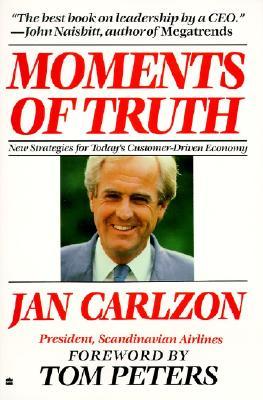
Kategoriat
Uncategorized

Cialdini: Influence The Psychology of Persuasion

About the book

What a great book! Filled with insights, deep understanding of human behavior and wealth of data. I suggest that everybody should read this.

Having said that I dislike the idea that the book sees (potential) customers as victims ”move its victims to fulfil their agreements and to engage in further such agreements.”

What are the key learnings?

Key learning of the book is that “all the weapons of influence discussed in this book work better under some conditions than under others. If we are to defend ourselves adequately against any such weapon, it is vital that we know its optimal operating conditions in order to recognize when we are most vulnerable to its influence.”

Key learning is also that “internal consistency is a hallmark of logic and intellectual strength, while its lack characterizes the intellectually scattered and limited among us. Emerson, but in the popular version of what he had said. Actually he wrote, “A foolish consistency is the hobgoblin of little minds.”

Key learning: ““The enemy is the simple state of uncertainty. Social proof – bystander effect (one vs. three persons) and uncertainty (without a glue one seeks advise from the behaviour of others – while everybody is doing so…:-)”

Key learning: FEW PEOPLE WOULD BE SURPRISED TO LEARN THAT, AS A RULE, we most prefer to say yes to the requests of someone we know and like. The clearest illustration I know of the professional exploitation of the liking rule is the Tupperware party, which I consider the quintessential American compliance setting.

Key Learning: “The joy is not in experiencing a scarce commodity but in possessing it.”

WEAPONS OF INFLUENCE 

Everything should be made as simple as possible, but not simpler. —ALBERT EINSTEIN

WEAPONS OF INFLUENCE:

– ”Because” and then, adding nothing new (Xerox)

– The “expensive = good” stereotype (Turquoise)

– The contrast principle is virtually undetectable. (Sell the expensive suit first)

Provide a reason and use the word BECAUSE: Harvard social psychologist Ellen Langer demonstrated “a well-known principle of human behavior says that when we ask someone to do us a favor we will be more successful if we provide a reason. People simply like to have reasons for what they do.” For example: “Excuse me, I have five pages. May I use the Xerox machine because I have to make some copies? The result was that once again nearly all (93 percent) agreed, even though no real reason, no new information, was added to justify their compliance.”

RECIPROCATION The Old Give and Take… and Take

“The rule for reciprocation. The rule says that we should try to repay, in kind, what another person has provided us. We are human because our ancestors learned to share their food and their skills in an honored network of obligation,” 

“How does liking for a person affects the tendency to comply with that person’s request? People are more willing to do a favor for someone they like. People we might ordinarily dislike can greatly increase the chance that we will do what they wish merely by providing us with a small favor prior to their requests. Another person can trigger a feeling of indebtedness by doing us an uninvited favor.”

For example: “Only after the Krishna member has thus brought the force of the reciprocation rule to bear on the situation is the target asked to provide a contribution to the Society. Of course, the power of reciprocity can be found in the merchandising field as well, for example the “free sample.” The beauty of the free sample, however, is that it is also a gift and, as such, can engage the reciprocity rule.”

“Another consequence of the rule, however, is an obligation to make a concession to someone who has made a concession to us. The reciprocation rule brings about mutual concession in two ways. 

– The first is obvious. It pressures the recipient of an already-made concession to respond in kind. 

– The second, while not so obvious, is pivotally important. Just as in the case of favors, gifts, or aid, the obligation to reciprocate a concession encourages the creation of socially desirable arrangements by ensuring that anyone seeking to start such an arrangement will not be exploited.”

Large-request-then-smaller-request: First to make a larger request of me, one that I will most likely turn down. Then, after I have refused, you would make the smaller request that you were really interested in all along. Provided that you have structured your requests skillfully, I should view your second request as a concession to me and should feel inclined to respond with a concession of my own, the only one I would have immediately open to me—compliance with your second request.”

Case: “By presenting the zoo trip as a retreat from our initial request, our success rate increased dramatically. Three times as many of the students approached in this manner volunteered to serve as zoo chaperons.” 

Case: “Labor negotiators, for instance, often use the tactic of beginning with extreme demands that they do not actually expect to win but from which they can retreat in a series of seeming concessions designed to draw real concessions from the opposing side. Rejection-then-retreat technique shows that if the first set of demands is so extreme as to be seen as unreasonable, the tactic backfires.

 “A important goal was to obtain from prospects the names of referrals. The percentage of successful door-to-door sales increases impressively when the sales operator is able to mention the name of a familiar person who “recommended” the sales visit.”

Rules:

– The rule for reciprocation. The rule says that we should try to repay, in kind, what another person has provided us.

– The rejection-then-retreat technique—its incorporation of the reciprocity rule.

– This larger-then-smaller-request strategy is effective for a pair of other reasons as well. 

Case: “The tendency of a man to spend more money on a sweater following his purchase of a suit than before: After being exposed to the price of the large item, the price of the less expensive one appears smaller by comparison. In the same way, the larger-then-smaller-request procedure makes use of the contrast principle by making the smaller request look even smaller by comparison with the larger one. If I want you to lend me five dollars, I can make it seem like a smaller request by first asking you to lend me ten dollars.”

Case Watergate: In the context of Liddy’s initial extreme requests, it seems that “a quarter of a million dollars” had come to be “a little something” to be left as a return concession. ‘I have a plan to burglarize and wiretap Larry O’Brien’s office,’ we might have rejected the idea out of hand. Instead he came to us with his elaborate call-girl/ kidnapping/ mugging/ sabotage/ wiretapping scheme…. He had asked for the whole loaf when he was quite content to settle for half or even a quarter.” 

The clearest utilization of this aspect of the larger-then-smaller-request sequence occurs in the retail-store sales practice of “talking the top of the line.” Here the prospect is invariably shown the deluxe model first. If the customer buys, there is frosting on the store’s cake. However, if the customer declines, the salesperson effectively counteroffers with a more reasonably priced model.

Case Brunswick: During the first week, customers… were shown the low end of the line… and then encouraged to consider more expensive models—the traditional trading-up approach…. The average table sale that week was $ 550…. However, during the second week, customers… were led instantly to a $ 3,000 table, regardless of what they wanted to see… and then allowed to shop the rest of the line, in declining order of price and quality. The result of selling down was an average sale of over $ 1,000.

How to say NO? But how does one go about neutralizing the effect of a social rule like that for reciprocation? It seems too widespread to escape and too strong to overpower once it is activated. Perhaps the answer, then, is to prevent its activation.

COMMITMENT AND CONSISTENCY Hobgoblins of the Mind 

It is easier to resist at the beginning than at the end. —LEONARDO DA VINCI

“Psychologists have long understood the power of the consistency principle to direct human action. Prominent theorists such as Leon Festinger, Fritz Hieder, and Theodore Newcomb have viewed the desire for consistency as a central motivator of our behavior. But is this tendency to be consistent really strong enough to compel us to do what we ordinarily would not want to do? There is no question about it. The drive to be (and look) consistent constitutes a highly potent weapon of social influence, often causing us to act in ways that are clearly contrary to our own best interests.” 

Case: “Take, as proof, what happened when psychologist Thomas Moriarty staged thefts on a New York City beach to see if onlookers would risk personal harm to halt the crime. In the study, a research accomplice would put a beach blanket down five feet from the blanket of a randomly chosen individual—the experimental subject. After a couple of minutes on the blanket spent relaxing and listening to music from a portable radio, the accomplice would stand up and leave the blanket to stroll down the beach. A few minutes later, a second researcher, pretending to be a thief, would approach, grab the radio, and try to hurry away with it. As you might guess, under normal conditions, subjects were very reluctant to put themselves in harm’s way by challenging the thief—only four people did so in the twenty times, that the theft was staged. But when the same procedure was tried another twenty times, with a slight twist, the results were drastically different. In these incidents, before taking his stroll, the accomplice would simply ask the subject to please “watch my things,” which each of them agreed to do. Now, propelled by the rule for consistency, nineteen of the twenty subjects became virtual vigilantes, running after and stopping the thief, demanding an explanation, and often restraining the thief physically or snatching the radio away.”

COMMITMENT IS THE KEY “What produces the click that activates the whirr of the powerful consistency tape? Social psychologists think they know the answer: commitment. If I can get you to make a commitment (that is, to take a stand, to go on record), I will have set the stage for your automatic and ill-considered consistency with that earlier commitment. Once a stand is taken, there is a natural tendency to behave in ways that are stubbornly consistent with the stand. As we’ve already seen, social psychologists are not the only ones who understand the connection between commitment and consistency. Commitment strategies are aimed at us by compliance professionals of nearly every sort.

Click & whirr “For the salesperson, the strategy is to obtain a large purchase by starting with a small one. Almost any small sale will do, because the purpose of that small transaction is not profit. It is commitment. Further purchases, even much larger ones, are expected to flow naturally from the commitment. The tactic of starting with a little request in order to gain eventual compliance with related larger requests has a name: the foot-in-the-door technique. You can use small commitments to manipulate a person’s self-image; you can use them to turn citizens into “public servants,” prospects into “customers,” prisoners into “collaborators.”

“One final tip before you get started: Set a goal and write it down. Whatever the goal, the important thing is that you set it, so you’ve got something for which to aim—and that you write it down. There is something magical about writing things down. So set a goal and write it down. When you reach that goal, set another and write that down. You’ll be off and running. Yet another reason that written commitments are so effective is that they require more work than verbal ones.”

Commitment… “It appears that commitments are most effective in changing a person’s self-image and future behavior when they are active, public, and effortful. But there is another property of effective commitment that is more important than the other three combined. To understand what it is, we first need to solve a pair of puzzles in the actions of Communist interrogators and fraternity brothers.

Lowball…..a way to mess with your client…. No matter which variety of lowballing is used, the sequence is the same: An advantage is offered that induces a favorable purchase decision; then, sometime after the decision has been made but before the bargain is sealed, the original purchase advantage is deftly removed. It seems almost incredible that a customer would buy a car under these circumstances. Yet it works—not on everybody, of course, but it is effective enough to be a staple compliance procedure in many, many car showrooms.

SOCIAL PROOF Truths Are Us 

Where all think alike, no one thinks very much. —WALTER LIPPMANN

In this topic there is a resemblance to the wisdom of crowds…. “The principle of social proof. It states that one means we use to determine what is correct is to find out what other people think is correct. The principle applies especially to the way we decide what constitutes correct behavior. As a rule, we will make fewer mistakes by acting in accord with social evidence than contrary to it.”

CASE: In the case of canned laughter, the problem comes when we begin responding to social proof in such a mindless and reflexive fashion that we can be fooled by partial or fake evidence.

“Since 95 percent of the people are imitators and only 5 percent initiators, people are persuaded more by the actions of others than by any proof we can offer.”

“The principle of social proof says so: The greater the number of people who find any idea correct, the more the idea will be correct.”

Standing in queue…. “In general, when we are unsure of ourselves, when the situation is unclear or ambiguous, when uncertainty reigns, we are most likely to look to and accept the actions of others as correct.”

“Especially in an ambiguous situation, the tendency for everyone to be looking to see what everyone else is doing can lead to a fascinating phenomenon called “pluralistic ignorance.”

“Bystander angle”:

– The first reason is fairly straightforward. With several potential helpers around, the personal responsibility of each individual is reduced: “Perhaps someone else will give or call for aid, perhaps someone else already has.” So with everyone thinking that someone else will help or has helped, no one does.

– The second reason is the more psychologically intriguing one; it is founded on the principle of social proof and involves the pluralistic ignorance effect. Very often an emergency is not obviously an emergency. What is going on? In times of such uncertainty, the natural tendency is to look around at the actions of others for clues. We can learn, from the way the other witnesses are reacting, whether the event is or is not an emergency.

Single person acts, groups DO not…. “The smallest number of bystanders took action, though, when the three-person groups included two individuals who had been coached to ignore the smoke; under those conditions, the leaks were reported only 10 percent of the time.

“All the conditions that decrease an emergency victim’s chances for bystander aid exist normally and innocently in the city: (1) In contrast to rural areas, cities are more clamorous, distracting, rapidly changing places where it is difficult to be certain of the nature of the events one encounters. (2) Urban environments are more populous, by their nature; consequently, people are more likely to be with others when witnessing a potential emergency situation. (3) City dwellers know a much smaller percentage of fellow residents than do people who live in small towns; therefore, city dwellers are more likely to find themselves in a group of strangers when observing an emergency.”

Call for help… “The key is the realization that groups of bystanders fail to help because the bystanders are unsure rather than unkind. They don’t help because they are unsure of whether an emergency actually exists and whether they are responsible for taking action. When they are sure of their responsibilities for intervening in a clear emergency, people are exceedingly responsive!”

“Embarrassment is a villain to be crushed here. In the context of a possible stroke, you cannot afford to be worried about the awkwardness of overestimating your problem.”

“Stare, speak, and point directly at that person and no one else: “You, sir, in the blue jacket, I need help. Call an ambulance.” Isolate one individual from the crowd.”

“In general, then, your best strategy when in need of emergency help is to reduce the uncertainties of those around you concerning your condition and their responsibilities. Be as precise as possible about your need for aid. Do not allow bystanders to come to their own conclusions because, especially in a crowd, the principle of social proof and the consequent pluralistic ignorance effect might well cause them to view your situation as a nonemergency.”

“Pick out one person and assign the task to that individual. The principle of social proof operates most powerfully when we are observing the behavior of people just like us. But, in addition, there is another important working condition: similarity.” 

CASE In 1977, the Reverend Jim Jones: In the alien, Guyanese environment, then, Temple members were very ready to follow the lead of others. The first was the initial set of their compatriots, who quickly and willingly took the poison drafts.

LIKING The Friendly Thief 

The main work of a trial attorney is to make a jury like his client. —CLARENCE DARROW

Liking and people we know helps us achieving a YES. “Other compliance professionals have found that the friend doesn’t even have to be present to be effective; often, just the mention of the friend’s name is enough. Although it is generally acknowledged that good-looking people have an advantage in social interaction, recent findings indicate that we may have sorely underestimated the size and reach of that advantage.”

CASE: “A study of the Canadian federal elections found that attractive candidates received more than two and a half times as many votes as unattractive candidates. In fact, the attractive defendants were twice as likely to avoid jail as the unattractive ones.”

Similarity…. “Dress is a good example. Several studies have demonstrated that we are more likely to help those who dress like us. As trivial as these similarities may seem, they appear to work. One researcher who examined the sales records of insurance companies found that customers were more likely to buy insurance when the salesperson was like them in such areas as age, religion, politics, and cigarette-smoking habits.”

Compliments…. “We are phenomenal suckers for flattery. Although there are limits to our gullibility – we tend, as a rule, to believe praise and to like those who provide it, oftentimes when it is clearly false.”

Lunch…. “The least recognized benefit, however, may be the one uncovered in research conducted in the 1930s by the distinguished psychologist Gregory Razran. Using what he termed the “luncheon technique,” he found that his subjects became fonder of the people and things they experienced while they were eating. It was a literature dedicated to the study of the association principle and dominated by the thinking of a brilliant man, Ivan Pavlov. Razran’s luncheon technique. Obviously, a normal reaction to food can be transferred to some other thing through the process of raw association. Razran’s insight was that there are many normal responses to food besides salivation, one of them being a good and favorable feeling. Therefore, it is possible to attach this pleasant feeling, this positive attitude, to anything (political statements being only an example) that is closely associated with good food.”

HOW TO SAY NO 

“We don’t attempt to restrain the influence of the factors that cause liking. Quite the contrary. We allow these factors to exert their force, and then we use that force in our campaign against them. The stronger the force, the more conspicuous it becomes and, consequently, the more subject to our alerted defenses.

“In the twenty-five minutes I’ve known this guy, have I come to like him more than I would have expected?”

AUTHORITY Directed Deference 

Follow an expert. —VIRGIL

CASE Professor Stanley Milgram and electric shocks: “It is the extreme willingness of adults to go to almost any lengths on the command of an authority that constitutes the chief finding of the study.”

“There are several kinds of symbols that can reliably trigger our compliance in the absence of the genuine substance of authority:

– Titles Titles are simultaneously the most difficult and the easiest symbols of authority to acquire.

– Clothes A second kind of authority symbol that can trigger our mechanical compliance is clothing. Less blatant in its connotation than a uniform, but nonetheless effective, is another kind of attire that has traditionally bespoken authority status in our culture: the well-tailored business suit.

– Trappings owners of prestige autos receive a special kind of deference from us.”

SCARCITY The Rule of the Few 

The way to love anything is to realize that it might be lost. —G. K. CHESTERTON

Potential unavailability…. “With the scarcity principle operating so powerfully on the worth we assign things, it is natural that compliance professionals will do some related operating of their own. Probably the most straightforward use of the scarcity principle occurs in the “limited-number” tactic, when the customer is informed that a certain product is in short supply that cannot be guaranteed to last long. As opportunities become less available, we lose freedoms; and we hate to lose the freedoms we already have.”

“Romeo and Juliet effect.” Do couples suffering parental interference react by committing themselves more firmly to the partnership and falling more deeply in love? According to a study done with 140 Colorado couples, that is exactly what they do. that interference also made the pair feel greater love and desire for marriage.”

Whenever we confront the scarcity pressures surrounding some item, we must also confront the question of what it is we want from the item.

How to avoid? 

– Think straight, do not panic with scarity.

– Think the reason why you want owning or the functinality.

How should we change according to the book?

Maintain the internal consistency, because it “is a hallmark of logic and intellectual”.

What should I personally do?

Defend myself from the “the joy of possessing a scarce commodity”.

Summary

The book in six words – ”Pay every debt, as if God wrote the bill.” (Ralph Waldo Emerson)

Kategoriat
Uncategorized

Manson: Kuinka olla piittaamatta p4skaakaan

Kirjasta

Todennäköisesti viimeinen itseapuopas – vähään aikaan, joka on lukulistallani. 

Manson pyrkii välttämään ajattelun roskaruokaa. Hän haluaa antaa paljon syvällistä ajateltavaa, mutta kuitenkin melko kevyessä muodossa. Tehokeinoina ovat voimasanat sekä hänen omat kokemukset.

Mitkä ovat kirjan keskeiset ideat? 

Mark Manson kirjoitti kirjan, koska halusi auttaa lukijoita päättämään ”mille asioille pitää antaa painoarvoa ja mitkä jättää omaan arvoonsa”. Tämä on eräänlainen sovellus tai työkalu, jolla voit hallita kurjuutta.

Kirjan keskeinen viesti on, että pitää keskittyä (fokusoida) ja valita (priorisoida) itselleen tärkeät asiat. Niiden lisäksi olisi hyvä, jos ei keskittyisi muihin kuin itselleen tärkeisiin asioihin (olla piittaamatta p4skaakaan). Jälkimmäinen jakautuu kolmeen osataitoon:

1.   Oikeista asioista välittäminen.

2.   Vastoinkäymisistä ei pidä välittää.

3.   Välittäminen on valinta.

Kirjassa puhutaan paljon arvoista. Mark Manson määrittelee, että ”arvoissa on kyse priorisoinnista” ja hyvä niin. ”Parempia arvoja valitsemalla omat voimavarat voi keskittää merkityksellisiin asioihin”. Aristoteletä siteeraten arvojen määrittelyssä kannattaa ”punnita ajatusta hyväksymättä sitä”. Eli hyvät arvot seuloutuvat myös itselleen epäolennaisten ajatusten läpi.

Arvoissa Manson preferoi prosessikeskeisiä arvoja esim. ”Kerron rehellisen mielipiteen”. Hän kirjoittaa myös mitkä ovat surkeita arvoja mm. nautinto, aineelliset saavutukset, oikeassa oleminen ja myönteisyys. Hankalaa sinällään, että Manson määrittelee väärät arvot, koska ne ovat aina henkilökohtaiset sekä subjektiivisesti määritellyt. Ei pisteitä siitä Markille. 

Hyvät arvot hän kiteyttää seuraavasti:

·     Perustuu tosiasioihin.

·     Hyödyttävät myös toisia.

·     Toteuttaminen on sidoksissa tekijän tahtoon ja sitä myötä myös onnistuvat.

Esimerkiksi rehellisyys täyttää kaikki Mansonin kriteerit.

Yksi hienoimpia ja itselleni sopivimpia tehokeinoja oman elämän johtamiseen on tavoitteelliset sekä erityisesti vieläpä numeraalisesti mitattavat asiat. Mm. kirjailijoille hän suosittelee esim. 200 sanan päivä tavoitetta. Tekemisen makuinen neuvo, sanoisin.

Toinen hyvä knoppi, jota Manson tarjoilee on (pari)suhteisiin liittyvä. Hän suosittelee suhdetta, jossa kumpikin osapuoli kestää kielteisen vastauksen. Ja/tai siis sallii sen. Annetaan mahdollisuus löytää ja pitää yhteiset rajat eli kantaa vastuuta.

Jännittävin löytö on ”kuolemattomuusprojekti”, jossa ihminen pyrkii varmistamaan ”käsitteellisen minä säilymisen fyysisen minän kuoleman jälkeen”. Löydön isäksi nimetään Ernest Becker kirjassaan ”The Denial of Death”.

Mitä meidän pitäisi tehdä kirjan perusteella?

Mitä meidän pitäisi tehdä? Tutkia ja määritellä omat arvot.

Mitä minun pitäisi itse tehdä? 

What me? Kts. edellinen vastaus.

Yhteenveto

Kirja kuudella sanalla – ”Teot ovat myös motivaation lähde”

Kategoriat
Uncategorized

Brorström, Palmgren, Väkiparta: Luksus – Suomalainen osaaminen kilpailuetuna

Kirjasta

”We are Ladies and Gentlemen serving Ladies and Gentlemen” (Ritz-Carlton).

Minkälainen kirja oli?

Kirja oli yllättävä löytö suomalaisen tietokirjallisuuden joukosta. Mutta opettavainen ja erittäin syvälliseen ajatteluun innostava.

Mitkä ovat kirjan keskeiset ideat? 

Luksusliiketominnan pääedellytys on ennakoluulottomuus ja yksityiskohtien hallinta. Kiehtovuus syntyy ristiriidoista ja ääripäistä. ”Erikoisuus, erilaisuus ja oman jutun tekeminen ovat luksuksen peruselementtejä”. Differentiate or die!

Luksuksen pääkohderyhmä ovat superrikkaat, miljonäärit sekä hybridikuluttajat. On myös syntynyt uusi luksus ja sillä on hybridiluonne:

1)   Erinomainen tuote sisältää myös palvelun.

2)   Uusi luksus on myös suunniteltu käytettävyys mielessä.

3)   Se on myös saavutettavissa hintansa puolesta.

Toinen muutos on, että uusi luksus on siirtynyt verkkoon. Kohderyhmiä suunniteltaessa on hyvä huomioida kaksi kohderyhmää – turistit sekä kiinalaiset, japanilaiset sekä amerikkalaiset.

”Virheiden ennakointi on osa luksuspalvelun suunnittelua”.

Miksi suomalainen luksus? Hyvä luksus rakentuu brändin ympärille, jossa on tarina ja elämys. Ne liittyvät yleensä tuotteen tai palvelun historiaan. Suomen edellytykset ovat hyvät, koska meillä tuotetut tuotteet ovat lähtökohtaisesti hyvin tehtyjä, muotoiltuja ja korkealaatuisia. Sen lisäksi Suomeen liittyvä eksoottisuus on hyvä tarina, syrjäisyys on eksoottista, mutta tänne on silti hyvät lentoyhteydet. Meissä yhdistyy puhdas luonto ja vaatimattomuus sekä rehellisyys, ujous ja aitous. Toisaalta taas hyperrikkaiden viehtymys olla näyttämättä vaurauttaan on kasvamassa, johon sopii suomaliset luonteen piirteet. Suomalaisen luksuksen ainoa heikkous on funktionaalisuus ja suomalaisen luksuksen haasteita on tunnistettavuus.

Mitä meidän pitäisi tehdä kirjan perusteella?

Rakentaa WOW-tarina luksuksen ympärille?

1)   Prosessi kuten esim. käsityöperinne ja Macallan

2)   Palvelu kuten esim. Ritz-Carlton

3)   Illuusio kuten esim. Coco Chanelin elämä

4)   Elämyksellisyys kuten esim. Rolls-Royce tai Björn Weckströmin korut.

Mitä minun pitäisi itse tehdä? 

Kokeilla suomalaista luksusta.

Yhteenveto

Kirja kuudella sanalla – ”Luksus on välttämättömyyttä, joka alkaa siitä, mihin välttämättömyys loppuu.” (Coco Chanel)

Kategoriat
Uncategorized

Jordan Peterson: 12 Rules for Life: An Antidote to Chaos

About the book

Originally the idea of the book came from one of Peterson’s answer in Quora service. In a way the book is a super-extended version of the Quora reply.

What are the key learnings?

Key question to Jordan Peterson is order, chaos and shared beliefs that helps people maintain orderly social contract. System of beliefs is also important part of his thinking.

“Order is where the people around you act according to well-understood social norms, and remain predictable and cooperative. Chaos, by contrast, is where—or when—something unexpected happens.”

Peterson is a kind of modern Darwinist. He sees that “chaos and order are two of the most fundamental elements of lived experience—two of the most basic subdivisions of Being itself.” So work is typically chaos. Home is order. “Chaos and order are fundamental elements because every lived situation (even every conceivable lived situation) is made up of both.” Bible is present fairly often and it’s a kind of very North American way of seeing things. But he also mixes in the book the Taoist way of living.

“A shared belief system, partly psychological, partly acted out, simplifies everyone—in their own eyes, and in the eyes of others. Shared beliefs simplify the world, as well, because people who know what to expect from one another can act together to tame the world.”

“A shared cultural system stabilizes human interaction, but is also a system of value—a hierarchy of value, where some things are given priority and importance and others are not.”

Comparison to Harari’s thinking is evident…. “So: no value, no meaning. Between value systems, however, there is the possibility of conflict.

Responsibility…. “We must each adopt as much responsibility as possible for individual life, society and the world.”

Why these rules…. “It indicates clearly that people need ordering principles, and that chaos otherwise beckons. We require rules, standards, values—alone and together.“

Meaning…. “It’s there we find the meaning that justifies life and its inevitable suffering.“

Last, but not least…. “Perhaps, if we lived properly, we wouldn’t have to turn to totalitarian certainty to shield ourselves from the knowledge of our own insufficiency and ignorance. Perhaps we could come to avoid those pathways to Hell—and we have seen in the terrible twentieth century just how real Hell can be.”

RULE 1 STAND UP STRAIGHT WITH YOUR SHOULDERS BACK

Christ: “to those who have everything, more will be given; from those who have nothing”.

We are like lobsters…. “The part of our brain that keeps track of our position in the dominance hierarchy is therefore exceptionally ancient and fundamental. It is a master control system, modulating our perceptions, values, emotions, thoughts and actions. It powerfully affects every aspect of our Being, conscious and unconscious alike. This is why, when we are defeated, we act very much like lobsters who have lost a fight. Our posture droops. We face the ground. We feel threatened, hurt, anxious and weak. If things do not improve, we become chronically depressed. Under such conditions, we can’t easily put up the kind of fight that life demands, and we become easy targets for harder-shelled bullies. And it is not only the behavioural and experiential similarities that are striking. Much of the basic neurochemistry is the same.”

Fixing things…. “It is for such reasons that I always ask my clinical clients first about sleep. Do they wake up in the morning at approximately the time the typical person wakes up, and at the same time every day? If the answer is no, fixing that is the first thing I recommend. It doesn’t matter so much if they go to bed at the same time each evening, but waking up at a consistent hour is a necessity. Anxiety and depression cannot be easily treated if the sufferer has unpredictable daily routines. The systems that mediate negative emotion are tightly tied to the properly cyclical circadian rhythms.”

“The next thing I ask about is breakfast. I counsel my clients to eat a fat and protein-heavy breakfast as soon as possible after they awaken (no simple carbohydrates, no sugars, as they are digested too rapidly, and produce a blood-sugar spike and rapid dip). This is because anxious and depressed people are already stressed, particularly if their lives have not been under control for a good while. Their bodies are therefore primed to hypersecrete insulin, if they engage in any complex or demanding activity.”

Stand-up, eat breakfast and sleep on predictable schedule…. “I have had many clients whose anxiety was reduced to subclinical levels merely because they started to sleep on a predictable schedule and eat breakfast.”

The end-result is…. “People, including yourself, will start to assume that you are competent and able (or at least they will not immediately conclude the reverse).”

RULE 2 TREAT YOURSELF LIKE SOMEONE YOU ARE RESPONSIBLE FOR HELPING

“People are better at filling and properly administering prescription medication to their pets than to themselves.”

Biblical answer. Not my cup of tea and surprising from a scientist…. “And so we return to our original query: Why would someone buy prescription medication for his dog, and then so carefully administer it, when he would not do the same for himself? Now you have the answer, derived from one of the foundational texts of mankind. Why should anyone take care of anything as naked, ugly, ashamed, frightened, worthless, cowardly, resentful, defensive and accusatory as a descendant of Adam?

RULE 3 MAKE FRIENDS WITH PEOPLE WHO WANT THE BEST FOR YOU

“You are not morally obliged to support someone who is making the world a worse place. Quite the opposite. You should choose people who want things to be better, not worse. It’s a good thing, not a selfish thing, to choose people who are good for you. It’s appropriate and praiseworthy to associate with people whose lives would be improved if they saw your life improve.”

“Friendship is a reciprocal arrangement.” 

RULE 4 COMPARE YOURSELF TO WHO YOU WERE YESTERDAY, NOT TO WHO SOMEONE ELSE IS TODAY

“Be cautious when you’re comparing yourself to others. You’re a singular being, once you’re an adult. You have your own particular, specific problems—financial, intimate, psychological, and otherwise. Those are embedded in the unique broader context of your existence. Your career or job works for you in a personal manner, or it does not, and it does so in a unique interplay with the other specifics of your life. You must decide how much of your time to spend on this, and how much on that. You must decide what to let go, and what to pursue.”

“Here’s a hint. The future is like the past. But there’s a crucial difference. The past is fixed, but the future—it could be better.”

RULE 5 DO NOT LET YOUR CHILDREN DO ANYTHING THAT MAKES YOU DISLIKE THEM

“Some localize all such problems in the adult, whether in the parent or broader society. “There are no bad children,” such people think, “only bad parents.” Because children, like other human beings, are not only good, they cannot simply be left to their own devices, untouched by society, and bloom into perfection. Even dogs must be socialized if they are to become acceptable members of the pack—and children are much more complex than dogs. This means that they are much more likely to go complexly astray if they are not trained, disciplined and properly encouraged.” 

“Rewarding good behaviour can be very effective. The most famous of all behavioural psychologists, B.F. Skinner, was a great advocate of this approach. He was expert at it. He taught pigeons to play ping-pong, although.”

“Discuss your likes and dislikes with regards to your children with your partner or, failing that, a friend. But do not be afraid to have likes and dislikes. You take responsibility for the mistakes you will inevitably make while disciplining. You can apologize, when you’re wrong, and learn to do better.”

RULE 6 SET YOUR HOUSE IN PERFECT ORDER BEFORE YOU CRITICIZE THE WORLD

“Have you cleaned up your life? If the answer is no, here’s something to try: Start to stop doing what you know to be wrong.”

RULE 7 PURSUE WHAT IS MEANINGFUL (NOT WHAT IS EXPEDIENT)

“It is better to have something than nothing. It’s better yet to share generously the something you have. It’s even better than that, however, to become widely known for generous sharing. That’s something that lasts. That’s something that’s reliable.”

Main message: “It was from this that I drew my fundamental moral conclusions. Aim up. Pay attention. Fix what you can fix. Don’t be arrogant in your knowledge. Strive for humility, because totalitarian pride manifests itself in intolerance, oppression, torture and death. Become aware of your own insufficiency—your cowardice, malevolence, resentment and hatred. Consider the murderousness of your own spirit before you dare accuse others, and before you attempt to repair the fabric of the world. Maybe it’s not the world that’s at fault. Maybe it’s you.”

Well said: “To have meaning in your life is better than to have what you want.”

RULE 8 TELL THE TRUTH—OR, AT LEAST, DON’T LIE

Untruth corrupts the soul and the state alike, and one form of corruption feeds the other.

RULE 9 ASSUME THAT THE PERSON YOU ARE LISTENING TO MIGHT KNOW SOMETHING YOU DON’T

“Psychotherapy is genuine conversation. Genuine conversation is exploration, articulation and strategizing. When you’re involved in a genuine conversation, you’re listening, and talking—but mostly listening. Listening is paying attention.”

“People think they think, but it’s not true. It’s mostly self-criticism that passes for thinking. True thinking is rare—just like true listening. Thinking is listening to yourself. It’s difficult. To think, you have to be at least two people at the same time. Then you have to let those people disagree. Thinking is an internal dialogue between two or more different views of the world.”

“Assume that the person you are listening to might know something you don’t.”

RULE 10 BE PRECISE IN YOUR SPEECH

RULE 11 DO NOT BOTHER CHILDREN WHEN THEY ARE SKATEBOARDING

Freud, Jung, Nietzsche—and Orwell—that I always wonder, “What, then, do you stand against?” whenever I hear someone say, too loudly, “I stand for this!” I believe it was Jung who developed the most surgically wicked of psychoanalytic dicta: if you cannot understand why someone did something, look at the consequences—and infer the motivation.

RULE 12 PET A CAT WHEN YOU ENCOUNTER ONE ON THE STREET

“Tajfel’s studies demonstrated two things: first, that people are social; second, that people are antisocial. People are social because they like the members of their own group. People are antisocial because they don’t like the members of other groups.”

How should we change according to the book?

Hard to say. It depends on your personal circumstances.

What should I personally do?

Enjoy the silence?

Summary

The book in six words – ”Dreams shed light on the dim places where reason itself has yet to voyage”

Kategoriat
Uncategorized

Järvinen: Kyberuhkia ja somesotaa

Kirjasta

Petteri Järvinen uusi kirja – ”Kyberuhkia ja somesotaa”, on hengästyttävän kattava kuvaus digitalisaation myötä syntyneisiin vaaratilanteisiin. Tietosisältö, josta lukija pääsee oppimaan on kaikkea kodin kyberturvasta aina valtion huoltovarmuuteen. Siinä välissä toki käsitellään somesodat ja verkkovaikoilut.

Minkälainen kirja oli?

Olipa lukija sitten digitalisaation noviisi tai 90-luvun internetveteraani, niin jokaiselle on opittavaa sekä uusia näkökulmia. Itselleni mielenkiintoisinta sisältöä oli sodankäynnin digitalisointi. Opin Järviseltä, että kybersodat ovat suosittuja, koska niiden kustannukset ovat pienemmät kuin varsinaisen aseellisen konfliktin. Siksi Venäjä on ahkera informaatiovaikuttamisen käyttäjä, koska sen taloudelliset resurssit ovat olemattomat muihin suurvaltoihin verrattuna. Järvinen sai minut pohtimaan, että onko informaatiovaikuttaminen ja informaatiosota sodankäynnin digitalisoimista. Vai onko se digitoimista?

Mitkä ovat kirjan keskeiset ideat? 

Petteri Järvinen kirjoitti kirjansa, koska halusi nostaa esille kaksi teemaa – pelko ja kansalaisten vastuun. Pelkoa hän halusi käsitellä, koska uskoo sen määrittelevän melko pitkälti ihmisten tapaa ajatella tulevaisuutta. Kansalaisten vastuu limittyy pitkälti kansallisen turvallisuudesta huolehtimiseen.

Yksi keskeinen oppi on, että kaivataan asiallista uutisointia, koska se vaikuttaa ensisijaisesti miten ihmiset näkevät ja kokevat tulevaisuuden. Järvisen kirjan ehdotonta antia on case-kuvaukset. Hän on koonnut kirjaan mitä mielikuvitellullisempia keinoja mm. komentaa digivakoojia. Työkaluina voivat olla esim. Britney Spearsin Instagram-tilin kommenttikenttä tai morsettavat kovalevyt tai tietokoneiden mikrofonit sekä kaiuttimet. Tai esim. Dellin yrityskauppa, jolla se estettiin valumasta esim. Kiinan vaikutuksen piiriin.

Kirjan sisällöstä huolimatta kirjoittaja on säilyttänyt sävyn neutraalina, jopa uteliaan tunnelman. Teoriat kirjailija kiertää kaukaa, vaikka itse olisin mielelläni oppinut niistä myös. Ja onneksi kirjassa ei ajauduta pelottelemaan lukijaa. Järvinen juoksuttaa kirjan sivuilla satoja case-tyyppisiä kuvauksia aiheisiin liittyen. Ehkä paikotellen caset muuttuvat jo uuvuttavaksi knoppologiaksi.

Mitä meidän pitäisi tehdä kirjan perusteella?

Meidän pitäisi oppia tunnistamaan valeuutiset. Järvinen ehdottaa miten lukija voi tunnistaa valeuutisen:

–      Tekstissä viitattujen lähteiden arviointi.

–      Tekstin tuottaneen kirjoittajan validointi.

–      Julkaisulla tai medialla ei ole kirjoittajan sähköpostiosoitetta tai puhelinnumeroa tai katuosoitetta.

–      Oikaisuja ei julkaista.

–      Kuvien analysointi.

Mitä minun pitäisi itse tehdä? 

Lukea vain luotettaviksi tunnistettuja medioita.

Yhteenveto

Kirja kuudella sanalla – ”Turvallisuus on tunne ja tapa toimia”

Kategoriat
Uncategorized

Kees van der Heijden: Scenarios – The Art of Strategic Conversation

About the book

This book is the book in the field of scenario planning. The first time I read it was approximately 21 years ago. I was forced to read it again, because Risto Siilasmaa told in his “Paranoid Optimism” book that he is devoted user of scenarios. Maybe because of Siilasmaa’s book the scenario planning methods will see some kind of renaissance. Anyways I’m ready for the scenario planning tsunami.

van der Heijden wrote the book for “practitioners of strategic management” who could make thoughtful decisions and they can “take account of longer-term aims in their daily decision making”. The aim is superior overall results.

What are the key learnings?

Scenarios are memories of the future. Scenarios are also always a testbed for something. Scenarios can be both organizational and leadership tools. There are two types of scenarios:

–      External scenarios which are “intended to be representative of the ranges of possible futures”.

–      Internal scenario is “a causal line of argument, linking an action option with a goal”.

Scenario planning is an organizational learning process which aims to build common understanding and base for different projects which are aimed to make the organization fit for future. A solid strategy requires to based on the following elements:

–      Aims of the organization

–      Assessment of the organization

–      Assessment of the environment, current and future

–      Assessment of the fit between the two

–      Development of policies, decisions and actions

Scenario planning provides a structure, it identifies uncertainty, it creates dialectic conversation, it taps into knowledge, it brings external perspectives and forms basis for corporate strategic considerations. The scenario planner “is to create a more adaptive organization which recognizes change and uncertainty, and uses it to its advantage”. (S)he is also a process facilitator who provides key stories to become part of the company language. (S)he also helps to build a successful competitive strategy that is an original invention. Scenarios a needed to:

1)   Prepare the organization to generate projects and decisions “that are more robust under a variety of alternative futures”.

2)   Building better future.

3)   Enhancing corporate perception.

4)   Energizing management.

Shell has always been forerunner of scenario planning.

Even today you can find scenarios developed by their internal scenario team (https://www.shell.com/energy-and-innovation/the-energy-future/scenarios.html). Shell’s experience has highlighted that:

–      Sound strategies reduce the complexity of the management task.

–      Devote management’s time on strategic conversation.

–      Incorporate common sense and good strategy.

Three different paradigms within strategic management:

1)   The rationalist school tries to get as close as possible to the best solution or one right answer. The IBM mainframe business case is a classic example of this school.

2)   The evolutionary school believes that strategy is emergent in it’s behavior.

3)   The processual school is in between the two previous schools and it is more like a living organism. This school is quite close to Lean way of development by learning loops.

Scenario planning needs a Business Idea.

It is the mental model of forces behind the organisation’s current and future success. The Business Idea has to have profit potential and distinctive competencies. The ideal Business Idea is:

–      A new way of creating value for customer

–      A combination of competencies

–      Unique value

–      Offering creates value to both seller and buyer.

Scenario planning aims to strengthen Business Idea. Scenarios are a windtunnel for the Business Idea. Can it stand the winds of future?

Fundamental source of distinctiveness are:

1)   Networked people.

2)   Embedded processes.

3)   Investment in reputation.

4)   Legal protection.

5)   Specialized assets.

Solid Business Idea is built on competitive advantage, differentiation and cost leadership. But uncertainty in the forms of risks and unknowables will be on the path for sure. Scenario planning will definitely help managers to bear the uncertainty. And not all uncertainty is uncomfortable. Scenarios will bring understanding of the environment, put structural uncertainty on the agenda and scenarios will help the organization to become more adaptable. In a way scenario planning is a risk management tool.

Iceberg analysis is a vital tool for scenario planning, because with the Iceberg analysis you will identify events, trends & patterns and structures that will affect to your business. Typically future analysis is done by forecasting which will not take into consideration events that have no historical data available. “Scenarios let the decision makers look not just an outcomes, but also at the driving forces which could move the business one way or the other.” For example could taxi industry have been able to build a scenario where Uber will rock the boat. And if yes could the taxi industry have made some pre-emptive strikes before Uber hit the fan.  

Scenario planner has to take two elements into consideration – know you customer and plausibility. The scenarios are made to be used by the customer and (s)he should be able to execute according. Secondly (s)he should be able to see that the potential scenarios are plausible. Scenarios are “a bridge between existing understanding and new alternative future framework”. 

Scenario analysis should follow these principles:

–      Start with the platform of the existing “consensus view”.

–      Recognise the uncertainty and complexity.

–      Stretch by the introduction of new knowledge from inside and outside the organization.

–      Provide structure to seemingly unrelated environmental insights.

–      Time limits will kill creativity.

First step

In the first step in building scenarios the planners typically use:

–      Customer insight,

–      Group brainstorming,

–      SWOT,

–      Individual interviews and

–      Feedback.

Second step

Second step is to essential to find the driving forces – external and internal. “September” formula is used to categorize the environment:

–      Societal development

–      Economic development

–      Political development

–      Technological development.

Scenario planner needs also analysis of the competing forces (Porter):

–      Generic competing forces in the industry

–      Relative power of suppliers

–      Relative power of buyers

–      Relative power of potential new entrants

–      Potential influence of substitute products.

After these steps one has to build a scenario agenda which has a list of four to five broad themes. These themes are typically something that the client is concerned about. The themes should be very independent. The scenario horizon can be years or in the major capital investment it can also be up to 20 years.

While building the scenarios the management team will have time to evaluate that what does drive success in the future. Typically the drivers of the business success are:

–      The customer value created.

–      The competitive advantage.

–      The Distinctive Competencies.

–      A positive feedback loop. 

Re-build Business Idea

After the scenarios the management team needs to re-build the Business Idea. The process behind it is the following:

1.     Deciding on the company’s Competitive Advantage

2.    Addressing the Devil’s Advocate question (what are the unique factors of Competitive Advantage)

3.    Developing a cause and effect picture/diagram

4.    Completion of the diagram

5.    Identifying the Distinctive Competencies

6.    Cleaning up the diagram

7.    Review of the Business Idea (3E test, SWOT)

8.    Drawing out the essentials

9.    Strategic implications

After the Business Idea is reviewed with the help of scenarios the management team can start analyzing it’s position in the playing field (competitive positioning):

1.    Identifying potential customers

2.    Testing the business definitions

3.    Identifying the competitors

4.    Competitive cost driver analysis

5.    Competitor response profiles

6.    Summarising the most important competitors.

 A Scenario Team and the project

The team working with the scenarios should be multi-disciplinary and embracing diversity team. They should promote disbelief, think the unthinkable, let intuition and premonitions flow freely. The target for the team should be novelty and relevance to the client. For the client most important part is to deliver on time. Developing scenarios should be seen as a project. The work is typically done in workshops. Typically off-site workshops taking two to three days. They should also have a dedicated workroom or space. The team uses data to find common and historical variables. These datapoints will turn into driving forces and conceptualization of variables along with the Iceberg analysis (events, trends, patterns and structures). 

After the scenario team has gathered the data – the team will start formulizing scenarios which has a consistent story line. The story lines can be built based on

1)   Inductive (used with divergent client group),

2)   Deductive (used when client group thinks cohesively) and

3)   incremental (used in step by step approach) scenario structuring methods.

The scenarios are tested by:

–      Quantification (causal models) or

–      Actor testing (most important actors in business environment).

Scenarios are not one size fits all. Those can be:

–      Surprise-free scenarios.

–      Challenge scenarios.

–      Phantom scenarios.

Scope of the scenario projects can be:

–      Strategy projects.

–      Project development.

–      Short-term/tactical decision making.

–      Crisis management.

–      Exploration (consensus building) scenarios.

–      Morale building projects.

How should we change according to the book?

“The strength of every Business Idea will deteriorate over time with the depreciation of their Distinctive Competencies.” To address this fact the scenarios should be used to:

–      Identify and evaluate options

–      Build scenario/option matrix

–      Test the end-results with the most important stakeholders and actors

–      Integrate the findings into the overall strategy.

Plan for action:

1.    Define current position

2.    Define desired future state

3.    Define steps to make transition

4.    Execute

Scenarios should be guiding the strategic conversation.

What should I personally do?

Find the Radiolinja’s scenario planning results.

Summary

The book in six words – ”Business Idea is not valid forever”