Kategoriat
Uncategorized

Aki Kangasharju: Käänne – Suomen lamaantuminen ja uusi nousu

Kirjasta

Talouspolitiikalla tavoitellaan lyhyellä aikavälillä mahdollisimman tasaista ja pitkällä aikavälillä mahdollisimman nopeaa hyvinvoinnin kohenemista. Kangasharju kirjoitti kirjansa, koska haluaa mahdollistaa talouspolitiikan toteutumisen tulevaisuudessa sekä hän halusi myös tehdä tilinpäätöksen talouden vaaran vuosista (2009-2018).

Tätä ajanjaksoa hän kutsuu lamaantumaksi, joka on ”enemmän kuin taantuma, mutta vähemmän kuin lama”. Hän halusi tutkiskella syitä, jotka johtivat lamaantumaan. Kirjan lopussa Kangasharju paljastaa talouspolittiiset suositukset, joilla Suomi säilyttää asemansa kolmen A:n luottoluokassa.

Minkälainen kirja oli?

Hieno sukellus taloustieteen maailmaan ja erinomainen kertaus talouden realiteetteihin. Ymmärrys Suomen talouden kulmakivistä syveni taas piirun verran. Tiestikö, että esim. vientiteollisuus työllistää Suomessa vain 430 000 palkansaajaa?

Mitkä ovat kirjan keskeiset ideat? 

Tulevaisuuden lähtökohdat:

1)   Digitalisaatiosta tulossa keskeinen kasvuntekijä.

2)   Ikääntyvä Suomi tuottaa kestävyysvajetta.

3)   Suomen julkinen alijäämä sekä valtiolla on liikaa julkista velkaa.

4)   Työmarkkinat ovat jäykät ja palkkaliukumat toimivat vain ylöspäin.

5)   Suomen syrjäistä sijaintia on vaikea muuttaa kilpailueduksi.

6)   Kaupungistuminen polarisoi yhteiskuntaa.

Tulevaisuuteen valmistautuminen edellyttäisi Suomelta seuraavia asioita:

1)   Digitalisaation tuoman investointiaallon kääntäminen uudeksi suomalaiseksi kasvun lähteeksi innovaatioiden sekä koulutuksen kautta.

2)   Työllisyystavoite pitäisi nostaa 79 %:n, koska tarvitsemme 200 000 uutta työllistä.

3)   Yritysten sopeuttamisessa pitäisi mahdollistaa myös palkkaliukumat alaspäin, eikä pelkästään työntekijöiden määrän kautta.

4)   Vastaanottaa lisää turvapaikanhakijoita.

5)   Ottaa tavoitteeksi korvata robotisaatiolla ikääntyvä työväestö.

6)   Työntekoon kannustaminen reaaliaikaisen verotuksen, sosiaaliturvan sekä tulorekisterin avulla.

7)   EU-tason taistelu verokilpailun poistamiseksi.

8)   ACE-uudistus eli yritysten oman pääoman tuominen samalle viivalle kuin vieraan pääoman käyttö investointien rahoittamiseksi.

9)   Maaseudun subventointia kasvukeskusten kustannuksella arvioitava.

10) SOTE-uudistuksessa hyödynnettävä yhteistä tietojärjestelmää sekä digitalisaation tuomia synergiaetuja.

11)Yliopistokuntien elinkeinopolitiikan ja kaupungistumisen esteiden purkaminen.

Miten mahdollistaa 79%:n työllisyystavoite?

–      Mahdollistetaan matalapalkkatyön syntyminen, jossa mm. pakolaiset voitaisiin työllistää.

–      Kannustetaan osa-aikatyöhön, joka itsessään kasvattaisi työllisyysasteen 6%-yksiköllä Ruotsin mallin mukaan.

–      Muokataan asenteita, että työntekeminen on aina kannattavampaa kuin kotona oleminen.

–      Puretaan kannustinloukkuja, ettei työnvastaanottaminen heikennä taloudellista asemaa.

–      Kriisilausekkeet työehtosopimuksiin, jotta yritykset voivat toimia ennen kuin vaikeudet ovat voittaneet yhtiön.

–      Palkansaajien irtisanomissuojan heikentäminen pienissä mikroyrityksissä.

Kangasharju ehdottaa, että työnvastaanottamisen tulisi lisätä käteen jäävää tuloa. Hyvä tavoite sekin, mutta absurdi ajatus että se olisi ainoa motivaatio työllistyä. Tavoite pitäisi olla, että työnteko on kunniallinen tapa tulla toimeen ja työttömyys on epämiellyttävä tavoite. Työllistyminen pitäisi nähdä porttiteoriana parempaan elämään, vaikka tulotaso ei paranisi lyhyellä aikataululla.

Alkuasetelma on herkullinen ja hän jopa kutsuu sitä kauniiksi historiaksi. Suomen elintaso on noussut 18-kertaiseksi 150 vuodessa. Sinä aikana Suomesta on saanut 10 % reaalituoton, kun verrokkimaissa se on ollut 6 %. Eli seitsemän vuoden välein omaisuus on kaksinkertaistunut. Meitä paremmin on pärjännyt vain Japani, Romania ja Norja.

Mitä tapahtui vuonna 2008? Talous supistui 8,3 %, kehysriihessä tehtiin 11,5 %:n ennustevirhe ja Suomen julkinen alijäämä kasvoi 12,6 mrd. euroon. Samaan aikaan Nokia-klusteri kriisiytyi, eukalyptuspuun tarjonta heikensi ja digitalisaatio vähensi kysyntää metsäteollisuudessa ja metallien hinnat romahtivat.

Suomen käänne tapahtui vuoden 2015 loppupuolella. Kangasharjun mielestä suurin yksittäinen selittävä tekijä on Kiina.

Tulot korreloivat onnellisuuden kanssa voimakkaasti ja erityisesti pienituloisille lisätulot tuovat mielihyvän tunnetta ja suurituloisille kokemusta menestyksestä elämässä. Bruttokansantuote on ”kelpo mittari kuvaamaan hyvinvoinnin kehitystä”. Talouden kasvaessa erilaisuutta hyväksytään paremmin, koska olotila kohentaa moraalisia arvoja. Kasvu on tärkeää, koska myös luonnonresursseja käytetään tehokkaammin ja niihin liittyvät innovaatiota lisääntyvät.

Rahapolitiikan tärkein tehtävä on pitää rahan arvon vakaana.

Talouspolitiikasta

Talouspolitiikka epäonnistuu aina, paitsi sattumalta. Kolme syytä:

1)   Taloustieteellä on poliittisia intressejä. Esim. oikea-vasen.

2)   Taloustiede ei osaa analysoida talouspolitiikan sisäisiä tekijöitä. Esim. virkamiehet käytännön toteuttajina.

3)   Poliitikot optimoivat omia tarpeitaan. Esim. uudellenvalinta.

Suomi tarvitsee työelämän uudistuksia, koska palkat ovat jäykät ja liukumat toimivat vain ylöspäin.

Tulevien tuotteiden tekijöillä ei ole puolesta puhujaa ellei Peter Vesterbackaa sellaiseksi lasketa.

T&k-investoinneista:

1)   T&k-investoinnit tuottavat yhteiskunnalle ulkoisvaikutuksina kaksin verroin sen mitä ne tuottavat yrityksille itselleen. Kyseisen syyn takia valtion on edullista tukea t&k-investointeja.

2)   Tuki pitäisi antaa suorana tukena eikä epäsuora verotuki.

3)   Yliopistoille pitäisi antaa kannustimia tutkimustyönsä hyödyntämistä t&k-yhteistyönä yritysten kanssa.  

Suomessa on liikaa julkista velkaa, koska meillä on 60% velkaa suhteessa bruttokansantuotteeseen. Katto ko. velka-asteelle on 65 %, mutta seuraavaan lamaan meillä ei ole varaa mennä velkaelvytyksellä. Samaan aikaan meillä on kestävyysvaje, joka on 6 mrd euroa eli 3 % BKT:sta.

Ikääntymisen aiheuttama kestävyysvaje tuo tarpeen sopeuttaa. Keinoja on kaksi – pienentää julkisia menoja tai korottamalla veroja. Tutkimustiedon varassa menojen pienentäminen on kannattavampaa kuin verojen korottaminen. Kataisen hallitus sopeutti korottamalla veroja ja Sipilän hallitus on sopeuttanut pienentämällä menoja sekä toteuttamalla sisäisen devalvaation. Sen sijaan koulutuksen ja innovaatiopolitiikan säästö heikentävät Suomen kyvykkyyksiä digitalisaatiossa, joka on keskeinen talouskasvun tekijä. 

Raamatun kultainen sääntö: ”Ihmisen tulee tehdä muille niin kuin he tahtovat muiden tekevän itselleen”.

Sisäinen devalvaatio eli lasketaan työn hintaa suomalaisen työvoiman keskuudessa ja saadaan siten aikaiseksi kilpailukykyä. Käytännössä se tarkoittaa, että siirretään kustannuksia työnantajalta työntekijöille. Omassa valuutassa oli mahdollista tehdä ulkoista devalvaatiota eli saada enemmän rahaa ulkomaisesta myynnistä, mutta tuontiavarasta maksavat enemmän palkansaajille.  

Kikystä

Kiky-sopimuksessa pyrittiin parantamaan kilpailukykyä, koska suomalaiset palkansaajat tekevät tunnin lyhyempää työpäivää kuin ruotsalaiset ja puolitoista tuntia lyhyempää kuin saksalaiset. Suomessa tavoiteltiin kuuden minuutin lisäystä työaikaan. Miksi työajan pidennys tehtiin?

1)   Työn sivukulujen karsiminen jäi liian pieneksi.

2)   Nimellispalkkojen laskeminen ei onnistunut.

3)   Maltillinen palkkaratkaisu ei parantaisi Suomen kilpailukykyä nopeasti.

Kangasharju olettaa, että robotisaatio ja automaatio ei johda teknologiseen singulariteettiin eli työn häviämiseen nykymuodossaan sekä ”Ateenan vapaiden miesten”-yhteiskuntaluokan syntymiseen. Päinvastoin hän uskoo, että Suomessa on mahdollista korvata ikääntyvän väestön jättämä työvoimapula robotisaatiolla ja automaatiolla. OECD:n laskelmien mukaan 14% työpaikoista on uhattuna automaation takia ja Suomessa vain 7% työpaikoista on uhattuna. Ainoa uhka Suomelle on veropohjan häviäminen. 

Mitä meidän pitäisi tehdä kirjan perusteella?

Kangasharjun mukaan meidän pitäisi:

–      Jatkettava palkkakuria.

–      Uudistettava kilpailukykyämme.

–      Kiihdytettävä kaupungistumista.

–      Varmistettava työmarkkinoiden toimivuus.

–      Kuntarajat ylittävä elinkeinotoiminnan kehittäminen.

–      Kannustettava aineettomiin investointeihin ja innovaatioihin.

–      Parannettava koulutussektorin mahdollisuuksia tuottaa osaavaa työvoimaa.

–      Asuntopolitiikan on alennettava asumiskustannuksia ja tuettava työvoiman liikkuvuutta.

Mitä minun pitäisi itse tehdä? 

Lukea Kangasharjun kirja uudestaan.

Yhteenveto

Kirja kuudella sanalla – ”Kaikki onnelliset perheet ovat toistensa kaltaisia, jokainen onneton perhe on onneton omalla tavallaan” (”Anna Karenina” – Leo Tolstoi)

Kategoriat
Uncategorized

Poijula: Resilienssi

Kirjasta

Mitä on resilienssi? Se on selviytymiskyky. Resiliensin ”missio on positiivisten tavoitteiden muodostamiseen”.

Tarkemmin sanottuna resilienssi on ”dynaamisten järjestelmien kykyä sopeutua onnistuneesti häiriöihin, jotka uhkaavat systeemin toimintaa, elinvoimaisuutta ja kehitystä”.

Aaron Antonovskyn oivalluksesta on lähtenyt liikenteeseen resilienssiymmärrys kun hän kehitti terveyslähtöisen teorian, jonka mukaan ”vastoinkäymiset ja ongelmat kuuluvat elämään ja että tärkeintä on ymmärtää miksi jotkut selviytyvät melkein mistä tahansa”.

Minkälainen kirja oli?

Tässä kirjassa kerrotaan mitkä tekijät tuottavat resilienssiä ihmisille ja miten niitä voi kehittää, vaikka lopullista selitystä ei saada. 

Mitkä ovat kirjan keskeiset ideat? 

Resilienttien ihmisten kyky päättää oman kohtalonsa hallinnasta ja luoda merkitys vastoinkäymiselle. He eivät vetäydy tai ajaudu apatiaan, vaan panostavat elämään omistautumalla sekä osallistumalla jatkuvasti. Sen sijaan resilienssi ei ole persoonallisuuden piirre eikä mielenterveyttä. Se ei myöskään ole pysyvä ilmiö, ”joka voi rakentua tai hävitä ajan kuluessa”. Yksimielisyyttä ei myöskään ole onko resilienssi prosessi, piirre, tulos ja hybridi em. tekijöistä.

Resilienssin synnyttää palautumisen toimintaan entistä ”tehokkaampana kokonaisuutena” – suorastaan eteenpäin ponnahtamisena. Mutta sitä ei voi mitata absoluuttisen määrenä, koska resilienssi on suhteessa ”vastoinkäymiseen”. ”Stressin sietokyky on yhtä yksilöllinen kuin allekirjoitus. Parhaiten stressaavista tilanteista selviävät ne, jotka käyttävät monia erilaisia selviytymiskeinoja”.

Keskeiset tekijät resilienssissä ovat:

1)   Toipuminen.

2)   Kestävyys.

Resilienssin kehittymiseen vaikuttavat:

–      Yksilön,

–      perheen ja

–      laajennetun sosiaalisen yhteisön ominaisuudet.

Mistä tunnistat resilientit yksilön? Persoonallisuuden kautta, johon liittyy:

1)   Itsetunto, jossa yhdistyy omanarvontunnetta, itsekunnioitusta ja itsensä hyväksyntää.

2)   Itsensä ymmärtämiseen.

3)   Myönteinen suhtautuminen tulevaisuuteen.

Löytyvätkö nämä piirteet myös resilienteistä organisaatioista?

Resilientit persoonallisuudet ensinnäkin luottavat omaan selviytymiskykyyn, valitsevat positiivisia asioita sekä selittävät vastoinkäymiset mahdollisuuksien kautta. Vastoinkäymiset selittyvät – ainakin viipeellä, tulevaisuudella.

Tarkemmin sanottuna resilientti yksilöllä on seuraavia ominaisuuksia:

–      huumori,

–      rohkeus,

–      luottamus,

–      motivaatio,

–      suunnitelmallisuus,

–      realistinen optimismi,

–      myönteinen ajattelu ja riskinotto,

–      aktiivinen selviytyminen,

–      tuvallinen kiintymyssuhde,

–      anteliaisuus ja altruismi,

–      hyvät sosiaaliset taidot ja verkosto,

–      suuri selviytymisen minäpysyvyys,

–      hyvä kognitiivinen toiminta ja autonomia.

Melko pitkä lista, mutta uskotaan että kirjailija on huolella ne valinnut.  

Avaintekijöitä selviytymiseen ovat:

–      selviytyminen (coping)

–      henkilökohtainen toimijuus,

–      tarkoituksen tunne,

–      myönteinen emotionaalinen sitoutuminen arkielämään kotona,

–      työ ja leikki,

–      kielteisten tunteiden hallinta ja kyky kognitiiviseen uudelleen arviointiin,

–      tunteiden säätely ja

–      fysiologinen joustavuus (sykevaihtelu).

Yksittäisenä tekijänä nousee älykkyys, mutta se selittää myös monia muita tekijöitä. Psyykkisille ”puolustusmekanismeille on ominaista, että uhkaava tilanne havaitaan realistisesti, mutta uhkaan liittyvät tunteet hallitaan, kunnes tilanne on ohi”.  

Miten voit parantaa resslienssiäsi?

–      Viljelemällä positiivista huumoria.

–      Kehittämällä kykyä tuntea positiivisia tunteita.

–      Valmistautumalla kehittämällä useita selviytymisstrategioita.

–      Altistumalla hyvälle stressille.

–      Mindfulness- ja meditaatio-harjoituksilla.

–      Käyttämällä vertaistukea.

–      Jopa luonnossa vietetty aika saattaa parantaa sietokykyäsi.

Resilientin asenteen vahvistamiseen kuuluu:

–      Aktiivinen optimismi,

–      toimijuus,

–      moraalinen kompassi (kunnia, rehellisyys, uskollisuus ja eettisyys),

–      kestävyys ja omistautuminen sekä

–      toisten ihmisten tuki.

Perheresilienssin avainprosessit ovat:

–      Uskomusjärjestelmä (merkityksen luominen), joka on perheresilienssin sielu ja sydän.

o  Uskomukset eivät synny tyhjästä, vaan ne luodaan tarinoilla ja sosiaalisesti.

–      Organisationaaliset prosessit (kyky sopeutua).

o  Vastavuoroisuus.

–      Kommuinikaatioprosessit (selkeä tieto).

o  Emotionaalinen jakaminen.

Nämä saattaisivat päteä myös työyhteisöihin.

Perheresilienssiä voi kehittää:

–      Edistämällä johonkin kuulumista.

–      Viettämällä löhöilyaikaa.

–      Kehittämällä perherituaaleja.

–      Tukemalla spontaanisuutta ja uteliaisuutta.

–      Rakastamalla erilaisuutta.

–      Johtamalla hyväntahoista diktatuuria.

–      Olemalla yhdenmukainen kasvatuksessa.

–      Opettamalla itsetunnon taitoja.

–      Osaamalla olla eri mieltä.

–      Olemalla luotettavan ennustettava.

Mikä on organisaatioiden resilienssi? Onko digitalisaatio häiriö ja voiko organisaatiot toteuttaa omaa resilienssiään suhteessa transformaatioon? Onko resilientit organisaatiot menestyksekkäämpiä kuin niiden verrokit.

Kirjallisuudesta voidaan todeta, että Viktor Frankl tai ”Tuntematon sotilas” ovat resilienssin ruumiillistumia. Resilienssi on ”seurausta toistuvasta mukautuvasta selviytymisestä”. Suomalaisille resilienssi on koettu olevan hyvin pragmaattista, rakentavaa toimintaa. Mutta rajansa kaikella, myös suomalaisella resilienssillä. Jokaisella ihmisellä on murtumispisteensä.

Mitä meidän pitäisi tehdä kirjan perusteella?

Resilientti yksilö toipuu nopeammin, kestää enemmän ja soputuu myönteisemmin.

”Emme koskaan saan unohtaa, että voimme löytää merkityksen elämällemme, vaikka kohtaisimme toivottoman tilanteen” (Viktor Frankl). Merkityksen voi löytää yleiseltä tasolta tai tilanteeseen liittyen.

Mitä minun pitäisi itse tehdä? 

Kasvaa selviytymiskykyiseksi.

Yhteenveto

Kirja kuudella sanalla –  ”Voinko selvitä seuraavasta minuutista?” 

Kategoriat
Uncategorized

Fisher & Ury: Getting to YES

About the book

Getting to YES is a book about negotiating agreement without giving in. As Robert Fish and William Ury states in the book – negotiation is a fact of life. We are always making trade-offs, but the best part is that you get to choose what you want. It’s a back-and-forth communication designed to reach an agreement.

“Getting to YES”-method is about using independent standards to discuss the fairness of a proposal, getting to you what you deserve and protect you from getting taken.

What are the key learnings?

The key learning of the book is that the agreement is often based on disagreement and with principled negotiation you can reach a deal.

“Substantive issues need to be disentangled from relationship and process issues. The content of a possible agreement needs to be separated from questions how you talk about it and how deal with the other side. Each set of issues needs to be negotiated on its own merits:

–      Substantive issues

o  Terms

o  Conditions

o  Prices

o  Dates

o  Numbers liabilities

–      Relationship issues

o  Balance of emotions and reasons

o  Ease of communications

o  Degree of trust and reliability

o  Attitude of acceptance (or rejection)

o  Relative emphasis on persuasion (or coercion)

o  Degree of mutual understanding

There is no trade-off between pursuing a good outcome and pursuing a good relationship.”

The Principled Negotiation

Before you anything – start by “envisioning what a successful agreement might look like.”

In the principled negotiation the negotiator looks for mutual gains and when interests conflict, “the negotiator should insist that the result be based on some fair standards independent of the will of either side”.

The principled negotiation method is totally apart from hard and soft methods. In soft negotiation the negotiator wants to avoid personal conflict and in hard negotiation the negotiator” sees any situation as a contest of wills”.

The “Getting to YES” or principled method has four major parts:

1)   PEOPLE: Separate the people form the problem.

2)   INTERESTS: Focus on interests, not positions.

3)   OPTIONS: Invent options fort mutual gain.

4)   CRITERIA: Insist on using objective criteria.

When evaluating the end-result – agreement, you should consider is the agreement:

·     Wise agreement.

·     Efficient.

·     Improve relationships (or at least not damage).

People

Separate the people form the problem or “don’t bargain over positions” means that people should be attacking the problem, not each other. “Being nice is no answer” means that you are dealing with either hard or soft negotiation. When you take the soft position you loose your shirt. When you are driving a hard negotiation you are about to loose your face.

When building the people problem, you should remember three things – perception, emotion and communication:

–      In perception you should put yourself into their shoes. Ask their perception or advise and give them some credit/stake in the outcome.

–      In emotions pay attention to “core concerns”, make emotions legitimate and allow the other side to let off steam and use symbolic gestures (shake hands, eat together).

–      In communication remember to talk to each other (acknowledge what is being said – repeat what you heard), make sure they are listening (speak to explain to be understood) and avoid misunderstanding (speak about yourself and for a purpose).

Prevention works best and by building a working relationship does help, because then you have “a foundation of trust to build upon in a difficult situation”. It helps to meet unofficially and knowing their likes and dislikes.

Interests

“A wise solution reconcile interests, not positions”. To identify interests you should ask “Why” and “Why not”. Find out their interests, because each side has multiple interests and positions. When knowing the interest you can start evaluating possible trade-offs or options to deal with. The most powerful interests are basic human needs:

–      Security.

–      Economic well-being.

–      A sense of belonging.

–      Recognition.

–      Control over one’s life.

Start by documenting the interests, write a list. Then remember to explain your own interests and talk about those – in great detail, so that the other side knows your motivation behind the negotiation. Be specific, use concrete details and invite the other side to “correct me if I’m wrong”.

Options

Try to expand the pie before dividing it and do not leave money on the table. Methods how you can invent options:

1)   Avoid premature judgement.

2)   Do not search for a single answer.

3)   The pie is not fixed.

4)   Consider trying to solve their problem also.

Prescription for inventing creative options:

–      Separate the act of inventing options from the act of judging them.

–      Broaden the options to multiple answers.

–      Search for mutual gains and weights for the gains (!!! Basis of the agreement !!!).

o  Shared interests are typically latent

o  Shared interests are opportunities, not godsends.

o  Makes the negotiations smoother and more amicable.

–      Invent ways of making their decisions easy (who’s shoes, who’s making the decision).

Types of differences are:

–      Difference in interests.

–      Different beliefs.

–      Different values placed on time.

–      Different forecasts.

–      Differences in aversion to risk.

Dovetailing – “look for items that are of low cost to you and high benefit to them and vice versa”. And remember – do not leave money on the table.

Objective Criteria

Start by committing yourself reaching a solution based on principle, not pressure. The objective criteria can be fair standards (market value, scientific judgement, costs etc.), fair procedures (one cuts and the other chooses, taking turns, drawing lots, letting someone else decide):

1)   Frame each issue as a joint search for objective criteria.

2)   Reason and be open to reason.

3)   Never yield to pressure.

BATNA

BATNA is Best Alternative To a Negotiated Agreement. It has two sides – protect yourself and make most out of it.

Negotiation Jujitsu

–      Don’t attack their position, look behind it.

–      Don’t defend your ideas, invite criticism and advise.

–      Recast an attack on you as an attack on the problem.

–      Ask questions and be silent.

Dirty Tricks

Rules for the game when the other side is using dirty tricks:

–      Recognize the tactic.

–      Raise the issue explicitly.

–      Question the legitimacy and desirability.

Tricky Tactics

All these three might occur simultaneously:

–      Deliberate deception

o  Phony facts, ambiguous authority, dubious intentions, less than full disclosure.

–      Psychological warfare

o  Stressful situations, personal attacks, goo-guy/bad-guy routine, threats.

–      Positional pressure tactics

o  Refusal to negotiate, extreme demands, escalating demands, lock-in tactics, hardhearted partner, a calculated delay, “take it or leave it”

But remember not be a victim in any dirty or tricky tactics games.

Conclusion

1.   You know all of this by heart.

2.   Learn from doing.

3.   Winning in negotiations is about way-of-working, not luring your opponent to a bad deal. It’s all about how to do well in a negotiation.

How should we change according to the book?

We should learn “how to get what we are entitled to while still getting along with the other side”.

What should I personally do?

Remember

1.   BATNA.

2.   Shared interests are opportunities, not godsends.

Summary

The book in six words – “Be hard on the problem, soft on the people”.

Kategoriat
Uncategorized

Hantula & Korkman: Tutkimusmatka teknolandiaan

Kirjasta

Tämä on ihana kirja. Mieleeni tulee Mika Pantzarin ”Tulevaisuuden koti – arjen tarpeita etsimässä”, jonka aionkin lukea uudestaan. Hantula ja Korkman kamppailevat Pantzarin kanssa tulevaisuuskirjallisuuden Finlandia-palkinnosta.

Teknologian tarkoitus on kasvattaa tehokkuuttamme ja tuottavuuttamme. Kirjoittajat kysyvät voisiko teknologialla olla muita tavoitteita kuin tehokkuus tai tuottavuustekijät. He väittävät, että emme pysty näkemään metsää puilta, koska olemme keskellä metsää. Kirja perustuu heidän tekemiin globaaliin haastattelututkimukseen, joissa tutkitaan miten teknologia on vaikuttanut sosiaalisten suhteiden muuttumiseen. Tämä on kirjan keskeinen tavoite.

Kirjaa lukiessa jäin miettimään, että kuinka paljon sisältöön vaikuttaa kirjoittajien oma vanheneminen. Olisiko milleniaalien tulkinta ollut samanlainen?

Minkälainen kirja oli?

Kirjassa käsitellään viittä eri teemaa:

–      Yksilökeskeisen teknologian vaikutukset perhesuhteisiin.

–      Riippumattomuutta lisäävän teknologian vaikutukset avunantoon ja yhteistyöhön perustuviin suhteisiin.

–      Suoraviivaisuutta ja tehokkuutta korostavan teknologian vaikutukset ystävyyssuhteisiin.

–      Ohikiitävien sisältöjen vaikutukset tuottavuussuhteisiin.

–      Megatrendien vastareaktioina kehittynyt kaipuu paikalliseen yhteisöllisyyteen.

Mitkä ovat kirjan keskeiset ideat? 

Kirjan keskeinen idea on esittää kolme konkreettista ehdotusta nykyistä sosiaalisemman teknologian kehittämiseksi:

1)   Elämänlaatu on heikentynyt.

2)   Sosiaalinen konteksti puuttuu.

3)   Tarvitsemme sosiaalisen majakan.

Elämänlaatu on heikentynyt

Yksilöllisen riippumattomuuden lisääntyminen on heikentänyt elämänlaatu, jota Hantula ja Korkman ovat tutkineet haastattelemalla eri puolella maapalloa ihmisiä ja heidän suhdetta teknologiaan. Kirjoittajien ratkaisuehdotus tähän ongelmaan on palveluiden käsityksen laventaminen liittyen jakamiseen. Heidän mielestä pitäisi päästä ”mekaanisesta” jakamisesta. Tai Facebookin aiheuttamasta ”kateuden spiraalista”. Pitäisi päästä eroon minä-keskeisestä ja nopeatempoisesta jakamisesta, joka heikentää ”pitkäaikaista, vastavuoroista ja keskinäistä riippuvuutta perustuvaan suhteeseen”. Paluu ystävien lörpöttelyyn, ”jutellaan ei-mistään” sekä ystävyyden historian tuottaman ”yhteiseen kieleen”. Avun saaminen ja pyytäminen sekä yhdessä jaetut hetket luovat perustan pitkäkestoisille suhteille. Nykypalveluista puuttuu siis vastavuoroisuus.   

Ratkaisuehdotus on luoda palveluita, joissa ”palvelunkäyttäjät voisivat kokea asioita rinta rinnan, oppia toinen toisiltaan tai tavoitella määrätietoisesti ja pitkäjännitteisesti yhteistä päämäärää”

Sosiaalinen konteksti puuttuu

Koska teknologialla ei ole sosiaalinen kontekstin ymmärrystä, niin se häiritsee läheisiä ihmissuhteitamme. Alexander Graham Bell ja Mark Weisner Xerox PARCista näkivät teknologian tuomat tilanteet. Bell tiesi, että ihmiset tulevat käyttämään puhelinta ”lörpöttelyyn” ja Weisner koki, että tietokoneet tulevat varastamaan ihmisten huomion. Kirjoittajien vastaus on, että esim. puheohjatut kodin assitenttien sisältöjen tulisi olla sellaisia, että ne eivät liikaa varasta huomiota eivätkä häiritse tärkeitä sosiaalisia tilanteita. Pois notifikaatiot!

Automaattinen personointi ja algoritmit ovat syyllisiä sosiaalisen kontekstin puuttumiseen. Ne olettavat laskentamalleissaan, että miten kannattaa sisältöjä personoida. Se on ollut hieno teknologinen innovaatio – personoinnin automatisointi. Koska käyttäjältä puuttuu insentiivi personoida digitaalisia palveluita, niin palveluntuottajalla on vähintäänkin tarve varmistaa, että ”asiakas” käyttää palveluita uudestaan.

Ratkaisuehdotus on, että uusien sisältöjen pitäisi olla sellaisia, että ne eivät pääse hyökkäämään tai pilaamaan ihmisten välisiä leirinuotioita, vaan rytmittyisivät osaksi ihmisten sosiaalista kanssakäymistä.

Tarvitsemme fyysisen sosiaalisen majakan

Ystävyyden peruskallio on tehottomuus, jossa aikaa on tuhlattu yhteisen kielen synnyttämiseen. Ja ihmiset ovat alkaneet kaipaamaan pakoa pois digitaalisesta maailmasta koti turvallisia ja tuttuja fyysisiä ympäristöjä sekä paikallisuuden tunnetta. Tilaan, jossa esineet vanhenevat kanssamme. Tilaan, jossa ystävyyssuhteet perinteisesti syntyvät – työpaikat, koulut, oppilaitokset, koirapuistot, metsästysretket jne. Esim. digitaalisten kuvakehysten epäonnistuminen perustui siihen, että ihmiset eivät halua että lasten valokuvat vaihtuvat koko ajan, vaan he toivovat saada katsella niitä samoja kuvia ”koko ajan”.

Ratkaisuehdotus on pysyvät digitaaliset sisällöt läsnä elämässämme ja niiden tulee antaa vanheta kanssamme.

Mitä meidän pitäisi tehdä kirjan perusteella?

Pois globaalin sosiaalisten palveluiden megatrendistä ja tuoda yhteisöllisyys takaisin ihmisten kanssakäymisen kontekstiin. Esim. irtaantua ”sosiaalisen median riikinkukoista” ja Instagram-tyylisestä ja mainontaa muistuttavasta visuaalisesta kielestä. ”Vaatimukset ihmissuhteisiimme paremmin mukautuvasta teknologiasta saattavat käydä paljon äänekkäämmäksi”.

Mitä minun pitäisi itse tehdä? 

Tehdä leirinuotion kunnianpalautus. Perehtyä paikallisuuden ja yhteisöllisyyden voimaantumiseen. Tutkia miten yhteisöllisyys toimii esim. yhteisöllisissä hotelleissa kuten citizenM, pienimuotoiset sekä paikalliset tislaamot, artesaanijäätelötehtaat tai pienpaahtimot.

Yhteenveto

Kirja kuudella sanalla –  ”Se on liian NYT!” 

Kategoriat
Uncategorized

Alfred P. Sloan: Vuoteni General Motorsissa

Kirjasta

Saako aloittaa valittamalla? Tässä kirjassa on huono suomennos, IMHO. Erinomaisen hyvän kirjan lukukokemus häiriintyy, koska suomennos on vailla mielekästä yhteyttä yrityselämän keskeisiin termeihin. ”Executive board”, ”kick off”, ”opportunity” ja ”decentralization” sanat ovat kääntyneet esimerkiksi seuraavasti ”toimeenpaneva toimikunta”, ”avauspotku” ja ”hajautus”. Käännöstyö on tehty 1960-luvulla, jolloin johtoryhmä, mahdollisuus tai kick-off eivät kuuluneet suomalaisen liike-elämän sanavarastoon. Tästä voidaan oppia kuinka tärkeää on onnistunut käännöstyö. Siihen kannattaa siis panostaa!

Minkälainen kirja oli?

Alfred P. Sloanin kirja ei pääse tietokirjojen top10-kirjojen joukkoon, mutta on lukemisen arvoinen kirja. Annan kirjasta lukusuosituksen.

Kirjoittaja ei ole halunnut tehdä itsestään numeroa tai hakeutua parrasvaloihin 88-vuotiaana. Sloan on selkeästi kirjoittanut kirjan jakaaksensa osaamista tuleville sukupolville sekä selittääkseen General Motorsin kehittymistä.

Yleisesti ottaen voisi luonnehtia GM:ää aikanaan innovatiiviseksi yhtiöksi. Esimerkiksi osamaksurahoitus lanseerattiin kuluttajakaupassa heti ensimmäisen maailman sodan jälkeen jo 1919. GM:ssä tunnistettiin, että henkilöautosta tulee yleisin kulkuväline ja keskiluokka tulee määrittelemään ostovoimallaan tyylisuunnat. Samoin GM:ssä lähdettiin hyvin varhain tekemään loikkaa ulkomaille eli kansainvälistymään yritysostojen kautta mm. Vauxhallin avulla Iso-Britanniaan ja Opelin kautta Saksaan. Ja mikä tärkeintä – myyntitoimintaa pidettiin arvossa arvaamattomassa.

Kirjassa on paljon ja pitkiä kuvaksia GM:n liiketoiminta-alueista, yrityshistoriikista sekä muista yritysjohtajista. Ne ovat mielenkiintoisia kirjan tunnelman kannalta sekä muistutuksena, että liiketoiminta ei ole aina ollut sitä mitä me teemme nykyään.

Meille suomalaisille mielenkiintoinen kuriositeetti on, että kirjassa esiintyvät Eliel ja Eero Saarinen. He suunnittelivat GM:n kampuksen Detroittiin.

Mitkä ovat kirjan keskeiset ideat? 

Alfred P. Sloan aloitti yhtiön palveluksessa vuonna 1918 ja vuonna 1956 hänet nimitettiin johtokunnan kunniapuheenjohtaja. Tuohon uraan mahtui siis operatiivista johtamista 23 vuotta ja hallitustyöskentelyä 43 vuotta.

Kirjan tärkein oppi löytyy seuraavasta lauseesta eli ”hyvä liikkeenjohto perustuu keskityksen ja hajautuksen yhteen sovittamiseen, eli yhteinäistetysti valvottuun hajautukseen”. Suomentaja on todennäköisesti joutunut hieman arpomaan mitä Sloan on tarkoittanut. Koko kirjan ajan Sloan on tarkoittanut, että johtamisjärjestelmä ja tukitoiminteet pitää olla keskitettyä, mutta operatiivinen johto pitää olla liiketoimintayksiköissä. Hänen mielestä keskitetty johtamisjärjestelmä mahdollista kasvun johtamisen, mutta onnistuminen tehdään liiketoimintayksiköissä. Yhteiset tukitoiminteet varmistivat kannattavuuden, niin että esim. jokaisen automerkin varastoarvot eivät rasittaneet tasetta tai että keskitetyn osto-organisaation kautta saatiin volyymihyödyt. Sloan oli isojen ja vahvojen liiketoimintayksiköiden mies. Siis hyvinkin moderni tapa organisoida liiketoimintaa.

”Kun kilpailijat noudattavat esimerkkiämme – siinä on liikemiehen mitali” (Herbert M. Gould)

Sloan rakensi kasvuyhtiötä. Kirjan sivuilla rakentuu kuva optimistisesta keskustelijasta, joka haki kasvua ja kannattavuutta. Sekä mikä tärkeintä onnistui kummassakin tavoitteessa. Sloan myös oli hyvin huolellinen yhtiön maksuvalmiuden kanssa, jopa nykypäivänä tarkasteltuna liiankin huolellinen.

Sloan rakensi GM:ä yhtiön sekä työntekijöille että osakkeenomistajille. Osakkeenomistajat suorastaan kylpivät osinkosateessa, myös niinä vuosina kun tulos ei olisi mahdollistanut osinkojen täysimääräistä maksua. Niinä vuosina Sloan hyödynsi vahvaa kassaa. Työntekijät nauttivat pohjoismaista hyvinvointivaltiota parempaa sosiaaliturvaa työskennellessään GM:n palveluksessa. Palkkaus- ja palkkiojärjestelmät olivat läpinäkyviä ja työntekijöitä pidettiin osana liikkeenjohtoa. Melko tasa-arvoinen työyhteisö.

Ja miten hän teki rakensi kannattavan ja kasvavan GM:n? Selvästi Sloanin tärkeimmät tekijät johtamisessa olivat:

1)   Motivaatio,

2)   keskustelu ja

3)   mahdollisuus.

Sloan näkee että motivaation taustalla on kannustinpalkkiot, keskustelulla varmistetaan sitoutuminen ja mahdollisuudet syntyvät liiketoimintavetoisesta organisaatiomallista.  

Bonusten maksaminen rahana tai osakkeina oli Sloanille tärkeä perusprinsiippi. Hän jopa sanoo palkkiojärjestelmän poistamisesta – ”saattaisi hyvinkin tuhota yhtymän liikkeenjohdon hengen ja organisaation”. Kirjaa kirjoittaessa Sloan oli johtanut GM:ä 45 vuotta ja oli melkein 90-vuotias miljonääri. Tuskin siis puhui omaan pussiinsa, vaan ajatteli yhtiön parasta.

Tänä päivänä on tarkoituksellista synnyttää ideat yhdessä ja niistä valita ratkaisut, jota organisaatio voi noudattaa. Mutta Sloan edusti osallistavaa johtamismallia ja hän halusi saada ihmiset sopimaan yhdessä päätöksistä. Hän uskoi, että siten on syntynyt keskitasoa parempia päätöksiä. ”Johtavilla henkilöillä on usein voimakas houkutus tehdä päätökset itse ilman joskus rasittavaa keskustelun prosessia, mikä edellyttää ideoiden myymistä muille”. 

Strategiasta….

Sloan siteeraa melko paljon kahta miestä – William S. Durant (Buick) ja Henry Ford. Heidän erot olivat Sloanin mukaan ilmeisesti – Ford oli keskittäjä ja Durant hajauttaja. Samoin Ford oli halpuuttaja, kun Durant perusti kaiken differointiin (mallien kuin tekniikan). Yksi mainitsemisen arvoinen tekijä Durantin ajattelussa oli, että hän uskoi yhtenäistettyihin alustoihin osien tai varusteiden osalta. Näistä kahdesta strategiassa Ford onnistui ja Durant ajautui konkurssin partaalle. Durantin raunioista nousi GM ja osa hänen perinöstään jäi elämään mm. differoidulla tuotetarjoomalla.

Sloanin strateginen päämäärä oli vain ja ainoastaan tuotto pääomalle. Sitä hän kutsuu ”liikkeenjohdollisen ajatteluni perustekijäksi”. Pääoman tuottoon Sloan uhraakin paljon ajatuksia, sivuja sekä luettelee monipolvisesti kuinka paljon GM on tuottanut osinkoina omistajilleen eri aikakausina.

”Muistakaa kohtuus kaikissa yhteyksissä”

Johtamisesta… Sloanin mukaan hyvä johtajan ominaisuudet ovat:

·     Arvovalta, mutta ei hierarkiaan perustuva.

·     Kunnioitus saavuttaakseen luottamuksen.

·     Toimialaosaamista.

Johtamismalli:

1)   Liiketoiminta-alueet pitää olla hyvin määritelty,

2)   keskusorganisaation yhtenäistäminen,

3)   valvonta kuuluu pääjohtajalla,

4)   pääjohtajan alaisten määrän rajoittaminen, jotta jää aikaa ajatteluun ja

5)   osaamisalueiden kehittämiseen pitää osallistaa liiketoiminta-alueet.

Liikeideasta ja liiketoimintamallista….

Sloan näki, että GM:n positio toteutuu differoimalla tuotteet – Chevrolet, Oakland (Pontiac), Oldsmobile, Scripps-Booth, Sheridan, Buick ja Cadillac. Kaikki automerkit positioituivat eri kohderyhmille. Chevy halvempaan tuotekategoriaan ja Cadillac yläkvartaaliin. Vastaavasti liiketoimintamallina oli rakentaa tuotteita kaikissa hintaluokissa.

Hinnoittelustrategia oli kolmiportainen:

1)   Hintapisteitä halvimmasta kalleimpaan.

2)   Hintakartassa ei saanut olla aukkoja.

3)   Hinnat eivät saaneet olla päällekkäisiä eri tuotemerkeille.

Myynnistä….

”Piirimyyjän…. Hyvinvoinnin on oltava yhtymän tärkeimpiä kysymyksiä.” Sloan arvosti korkealle myyntityötä. Hän kiersi jälleenmyyjien luona, perusti heille erillisen hallintoneuvoston ja riitatapauksia varten oman sisäisen lautakunnan. Tämän lisäksi hän hoidatutti GM:n kustannuksella piirimyyjien kirjanpitoa sekä teetätti ennustemalleja eri alueiden kysyntäpotentiaalista. Ja selkeästi jälleenmyyjät arvostivat Sloanin panosta, koska he keräsivät Sloanin säätiölle 1,5 mUSD.  

Liiketoimintaa piti analysoida kilpailun, kuluttajien, teknologisen ja ilmeisesti kannattavuuden kautta. Samat periaatteet kuin tänään.

Lempeydestä…..

Ketteringin kuparimoottorin kehittämisen yhteydessä nousi esiin sympaattinen episodi. Charles Kettering niminen innovaattori kehitteli ilmajäähdytteistä moottoria, jossa oli kuparirivat. Työ ei sujunut hyvin ja Kettering alkoi masentua. Lääkkeeksi siihen syntyi neljän johtoryhmän jäsenen kirjoittama kannustuskirje. Kettering toipui tukikirjeen ja jatkoi kehitystyötään. Ehkä toinen suora lainaus kuvastaa myös Sloanin toimintaotetta – ”minusta oli miellyttävää istua noiden loistavien miesten joukossa”.

Sloan ei kirjoittanut kirjaa itsestään, mutta väistämättä myös hänestä rakentui selvä mielikuva. Hyvin kuvaavaa oli, että hän lahjoitti jälleenmyyjiltä saamansa 1,5 miljoonaa dollaria nimeänsä kantavalle säätiölle, jonka tarkoitus oli edistää syöpätutkimusta. Säätiö on muuten nyt kasvanut 1,3 mrd USD arvoiseksi. Melkoinen filantrooppi.

Mitä meidän pitäisi tehdä kirjan perusteella?

Kirjan laajuuden huomioiden sanoisin, että Sloanin johtamisperiaatteet kannattaa monistaa omaan toimintaansa:

1)   Liiketoiminta-alueet pitää olla hyvin määritelty,

2)   keskusorganisaation yhtenäistäminen,

3)   valvonta kuuluu pääjohtajalla,

4)   pääjohtajan alaisten määrän rajoittaminen, jotta jää aikaa ajatteluun ja

5)   osaamisalueiden kehittämiseen pitää osallistaa liiketoiminta-alueet.

Mitä minun pitäisi itse tehdä? 

Lukea Henry Fordin elämänkerta.

Yhteenveto

Kirja kuudella sanalla –  ”En koskaan anna käskyjä – minä myyn ajatukseni liiketovereilleni, jos onnistun”.

Kategoriat
Uncategorized

Ellis & Brown: Hacking Growth

About the book

I’m sorry – this is going to be one of the loooooongest LinkedIn articles that I have ever published. But I’m so excited about the topic and especially the content of the book was spot on – so I’ll forgive myself.

This book is all about breaking the silos within organisations and especially breaking the walls between marketing and engineering.

For me the key question while reading the book was that is growth hacking a new way of doing business development or merely a new way of doing prospecting?

After reading the book I can conclude that growth hacking is kind of next generation war room activity, but without the typical sense of urgency of war room activity. That does not mean that growth hacking would have more time to deliver results. On the contrary growth hacking is very focused on delivering results. But growth hacking teams does not come from an idle world where business has been so gooooood. Growth hackers come from the world of Internet.

“Growth hacking is so much more than a business strategy, or even an ongoing process. It’s a philosophy, a way of thinking, and it’s one that can be adopted in any team or company, big or small.”

What are the key learnings?

“Where did Skype go wrong? Put simply, the product and executive teams failed to grasp the appeal of mobile messaging and perceive how rapidly mobile phones and tablets were being integrated into workplace communication.”

This book has two key learnings:

1)   Customers Relationship

a.   Approaches like these is meant to be used as building, growing, and retaining a customer base.

2)   Ability to Grow

a.   “More important, companies’ growing ability to collect, store, and analyze vast amounts of user data, and to track it in real time, was now enabling even small start-ups to experiment with new business opportunities at an increasingly low cost, much higher speed, and greater level of precision.”

Lead your business via measuring:

–      Aha moment

o  “Vital step in determining whether your product has the aha potential is to seek out truly avid fans by mining user data and feedback, and then to search for any similarities in the ways these people use the product.”

–      Retention

o  “Whether or not you’ve achieved must-have status is your product’s retention rate.”

The way of working is a “process is a continuous cycle comprising four key steps”:

(1) ANALYZE:

a.   Data analysis and insight gathering;

(2) IDEATE:

a.   Idea generation;

(3) PRIORITIZE:

a.   Experiment prioritization; and

(4) TEST:

a.   Running the experiments, and then circles back to the analyze step to review results and decide the next steps.”

North Star

Choosing your North Star is a crucial part of the Growth Hacking operations:

–      “To determine what that is you must ask yourself: Which of the variables in your growth equation best represents the delivery of that must-have experience you identified for your product?”

–      “The North Star should be the metric that most accurately captures the core value you create for your customers.

–       “The North Star may change over time as the company grows and initial goals are achieved.”

By far the best part of the book is about almost classic cases:

–      “Hotmail, for example, was one of the first to tap into the viral quality of Web products—and their ability to “sell themselves”—when it added the simple tagline “P.S: Get Your Free Email at Hotmail” at the bottom of every email that users sent, with a link to a landing page to set up an account.”

–      “LinkedIn, which had struggled to gain traction in its first year, saw their growth begin to skyrocket in late 2003, when the engineering team worked out an ingenious way for members to painlessly upload and invite their email contacts stored in their Outlook address book, kicking network effects growth into high gear.”

–      “How would you feel if you could no longer use Dropbox?” Users could respond “Very disappointed,” “Somewhat disappointed,” “Not disappointed,” or “N/A no longer using the product” (I wrote the question this way because I found that asking people if they were satisfied with a product didn’t deliver meaningful insights; disappointment was a much better gauge of product loyalty than satisfaction). I had found that companies where more than 40 percent of respondents said they would be “very disappointed” if they could no longer use the product had very strong growth potential, where those that fell under that 40 percent threshold tended to face a much harder path in growing the business (due to user apathy).” 

Growth hacking as a way of working

Growth hacking is combination of new tools and old tricks. “Growth was about engineer[ing] systems of scale and enabling our users to grow the product for us. The Lean Startup adopted the practice of rapid development and frequent testing, and added the practice of getting a minimum viable product out on the market and into the hands of actual users as soon as possible, to get real user feedback and establish a viable business. Growth hacking adopted the continuous cycle of improvement and the rapid iterative approach of both methods and applied them to customer and revenue growth.”

How to organize?

“At LinkedIn, for example, the growth team has evolved from an initial 15-person unit to comprise 120-plus members, broken down into five units dedicated to: network growth; SEO/SEM operations; onboarding; international growth; and engagement and resurrection of users.13 At Uber, by contrast, the growth team is divided into groups, including those who focus on adding more drivers, growing the pool of riders, expanding internationally, and more.”

Benefits of growth hacking

SURVIVING DISRUPTION

⁃ They risk being disrupted by a competitor who has growth hacking methods.

THE NEED FOR SPEED

⁃ Start-ups and established companies alike, in other words, simply can’t afford to be slowed down by organizational silos

MINING DATA GOLD

⁃ Growth hacking cultivates the maximization of big data through collaboration and information sharing.

THE RISING COSTS AND DUBIOUS RETURNS OF TRADITIONAL MARKETING

⁃ Growth hacking empowers companies to achieve breakout growth without pouring money into outdated and horribly expensive marketing campaigns of questionable business value.

GETTING THE JUMP ON NEW TECHNOLOGY

⁃ Seizing these opportunities requires tech and marketing teams to work closely together.

(VIRAL CHANNEL EFFECTIVENESS is rapidly changing)

Myth busting

0. First, the process is not, as it’s been misunderstood by some, about discovering one “silver bullet” solution.

0. Second, many companies believe they can simply hire a single Lone Ranger to be the growth hacker, who will swoop in with a bag of magic tricks to bring growth to their business. This, too, is badly misguided. Throughout the book we show that, in reality, growth hacking is a team effort, that the greatest successes come from combining programming know-how with expertise in data analytics and strong marketing experience, and very few individuals are proficient in all of these skills.

0. Growth hacking is often characterized as being specifically about bringing in new users or customers. But in fact, growth teams are, and should be, tasked with much broader responsibilities:

A) They should also work on customer activation. In addition, growth teams should work on finding ways to 

B) retain and 

C) monetize customers.

Part I: Method

Building Growth Teams

Breaking silos…. “This kind of collaboration between marketing and product teams is woefully uncommon. As the BitTorrent team soon realized, often the best ideas come from this type of cross-functional collaboration, which, again, is why it’s a fundamental feature of the growth hacking process. P.S. BitTorrent was a company that had 50 people in their pay roll.”

“The success of this data-driven approach to growth and product development prompted the BitTorrent executives to invest more heavily in data science and staff up its analytics team.”

THE WHO

These positions can be also seen as functions or responsibilities if they cannot be identified/dedicated as persons to the growth team.

A) THE GROWTH LEAD

“The growth lead sets the course for experimentation as well as the tempo of experiments to be run, and monitors whether or not the team is meeting their goals.

All growth leads require a basic set of skills: fluency in data analysis; expertise or fluency in product management (meaning the process of developing and launching a product); and an understanding of how to design and run experiments.”

B) PRODUCT MANAGER

“The role is well suited to assisting in the growth hacking mission of breaking down the silos between departments and identifying good candidates in engineering and marketing to help start the growth team.”

C) SOFTWARE ENGINEERS

“Recall that at BitTorrent, the engineers were invaluable in recommending the development of the lucrative battery saver feature. The very essence of growth hacking is the hacker spirit that emerged out of software development and design of solving problems with novel engineering approaches. Growth teams simply don’t work without software engineers being a part of them.”

D) MARKETING SPECIALISTS

“The cross-pollination of expertise between engineering and marketing can be particularly fruitful in generating ideas for hacks to try.”

E) DATA ANALYSTS

“Understanding how to collect, organize, and then perform sophisticated analysis on customer data to gain insights that lead to ideas for experiments, is another of the cornerstone requirements for teams. A growth team might not include an analyst as a full-time member, but rather have an analyst assigned to it who collaborates with the team but performs other work for the company as well. “

“What is essential is that data analysis not be farmed out to the intern who knows how to use Google Analytics or to a digital agency, to cite extreme but all too frequent realities.”

F) PRODUCT DESIGNERS

“Having design experience on a team often improves the speed of execution of experiments, because the team has a dedicated staff person to immediately produce whatever design work may be involved.”

THE SIZE AND SCOPE

“If you’re just starting to form a growth team, then bringing over one or two individuals from different departments to get the team started may be a good way to get the ball rolling, and the size of the team can grow over time.”

THE HOW

“The process is a continuous cycle comprising four key steps:

(1) ANALYZE: Data analysis and insight gathering;

(2) IDEATE: Idea generation;

(3) PRIORITIZE: Experiment prioritization; and

(4) TEST: Running the experiments, and then circles back to the analyze step to review results and decide the next steps.”

<= Check also the process behind The Lean Startup (Build-Measure-Learn).

Churn – is it a new business opportunity?

“An in-depth analysis of customer churn (meaning identifying those who recently abandoned the product) might reveal that the people who are defecting haven’t made use of a particular feature of the product that is popular with avid users.

Growth cannot be a side project

You need a Executive sponsor…. “Growth teams must be worked into the organizational reporting structure of a company with total clarity about to whom the growth lead reports. It is imperative that a high-level executive is given responsibility for the team, in order to assure that the team has the authority to cross the bounds of the established departmental responsibilities. Growth cannot be a side project. Without clear and forceful commitment from leadership, growth teams will find themselves battling bureaucracy, turf wars, inefficiency, and inertia.”

THE REPORTING STRUCTURES FOR TEAMS

THE PRODUCT-LED MODEL

Growth team is under vice president for products.

–      Acquisition = New Business

–      Activation = Current customers

–      Retention = Retention

In addition to Pinterest, companies that follow this model include LinkedIn, Twitter, and Dropbox.

THE INDEPENDENT-LED MODEL

“Independent teams are most easily established early in a company’s development before corporate structures have crystallized and ownership battles over resources and reporting formalize. When the turf isn’t yet claimed, there are fewer complaints against redistributing responsibility and headcount to a growth team. That said, it’s not impossible to introduce independent growth teams in established, larger companies.”

Chapter 2 Must-have product

The Cardinal Rules of Growth Hacking

“One of the cardinal rules of growth hacking is that you must not move into the high-tempo growth experimentation push until you 

1. know your product is must-have, 

2. why it’s must-have, and 

3. to whom it is a must-have: in other words, what is its core value, to which customers, and why.”

“The opportunity costs of pushing for growth too soon are twofold. 

0. First, you’re spending precious money and time on the wrong efforts (i.e., on promoting a product that no one wants); and 

0. second, rather than turning early customers into fans, you’re making them disillusioned, even angry, critics. Remember that viral word of mouth can work two ways; it can supercharge growth or it can stop it in its tracks.”

“Many other products that achieved rocket-like growth by pushing too hard too soon for adoption have flamed out in similarly spectacular fashion. Which is why all growth hackers must always keep in mind that, as the growth team at Airbnb says, “love creates growth, not the other way around.”

“And for there to be love, there needs to be that aha moment.” 

WHAT’S THE AHA MOMENT?

“Identifying what a product’s aha moment is can sometimes be quite tricky.”

Find your true believers: “Vital step in determining whether your product has the aha potential is to seek out truly avid fans by mining user data and feedback, and then to search for any similarities in the ways these people use the product.”

For example at Slack the 2 000 messages is a threshold. “A team chat and messaging product designed to eliminate internal corporate email threads (and one of the fastest-growing business applications of all time), data showed that once team members had sent and received 2,000 messages to one another, the team became far more likely to make Slack a core part of their communication workflow and upgrade to a paid plan with premium features.”

“The good news is that while discovering how to make a product deliver an aha moment can be very difficult, determining whether or not your product meets the baseline requirement generally doesn’t require elaborate diagnostics. We advise a simple two-part assessment.”

THE MUST-HAVE SURVEY

This Must-Have Survey begins with the question: 

How disappointed would you be if this product no longer existed tomorrow? 

a) Very disappointed 

b) Somewhat disappointed 

c) Not disappointed (it really isn’t that useful) 

d) N/ A—I no longer use it

Now this is important!

–      “Interpreting the results is simple enough; if 40 percent or more of responses are “very disappointed,” then the product has achieved sufficient must-have status, which means the green light to move full speed ahead gunning for growth.”

–      “If 25 to 40 percent of respondents answer “very disappointed,” then often what’s needed are tweaks either to the product or to the language used to describe the product and how to use it. If less than 25 percent answer “very disappointed,” it’s likely that either the audience you’ve attracted is the wrong fit for your product, or the product itself needs more substantial development before it’s ready for a growth push.”

–      “In these cases, a set of additional questions on the Must-Have Survey will help to point you toward your next steps: What would you likely use as an alternative to [name of product] if it were no longer available? I probably wouldn’t use an alternative I would use: What is the primary benefit that you have received from [name of product]? Have you recommended [name of product] to anyone? No Yes (Please explain how you described it) What type of person do you think would benefit most from [name of product]? How can we improve [name of product] to better meet your needs? Would it be okay if we followed up by email to request a clarification to one or more of your responses?”

“The question about alternative products can help identify your chief competition for customers.”

MEASURING RETENTION 

“The second measure to use in assessing whether or not you’ve achieved must-have status is your product’s retention rate.” 

Achieving stable retention should not be viewed as a benchmark that once passed can be assumed has been accomplished and that the team is done with; teams must expect to continue to work on sustaining retention. And, in fact, they should keep working to improve the retention rate.

Remember that “according to data published by mobile intelligence company Quettra, most mobile apps, for example, retain just 10 percent of their audience after one month, while the best mobile apps retain more than 60 percent of their users one month after installation.” 

“And fast-food restaurant chains see month-over-month retention of customers ranging from 50 to 80 percent. For example, McDonald’s saw 78 percent of their customers come in every month to their restaurants in 2012.14 A 2013 study concluded that credit card companies in the US see annual churn rates of roughly 20 percent, while European cellphone carriers see churn of anywhere between 20 and 40 percent.” 

“Be aware of the feature creep; that is, adding more and more features that do not truly create core value and that often make products cumbersome and confusing to use.”

How to find your true believers?

Innovators and Etsy…. “Etsy discovered the network power of “Stitch ’n Bitch” groups, comprised of feminist crafters who were a key force in the growth of the craft movement.”

Proximity and Tinder… “Yet Tinder faced a unique challenge in gaining early adopters that wasn’t an issue for Etsy—people are only interested in finding dating prospects who are fairly close by.”

Preexisisting communities… “Preexisting communities to target for insight into how to achieve the aha moment can also.”

House of Cards…. “For example, at Netflix, by examining the movies and shows that customers were watching, the company found that Kevin Spacey films and political drama series were both hugely popular with their customers. That insight gave the company confidence to green-light the development of House of Cards, which became not only a huge hit, but also a must-have experience for many subscribers.”

Instagram… “Systrom and cofounder Mike Krieger realized that taking and sharing photos was the aha experience they should redesign around.”

YouTube…. “Similarly, though it is hard to believe today, YouTube started as a video dating site, pivoting to be the home for all video online only once the founders saw that users weren’t only uploading video profiles to find dates, but rather sharing videos of all types.”

“A minimum viable test (MVT), the least costly experiment that can be run to adequately vet an idea.”

“One particularly powerful and typically inexpensive method is A/ B testing.”

DRIVING TO THE AHA 

–      Focus…. “Remember that all of this experimentation and analysis should be focused on discovering the aha moment you are offering, or can offer, customers.

–      New customers…. “Once the conditions that create that magical experience have been identified, the growth team should turn its attention to getting more customers to experience that moment as fast as possible.”

Companies deploy many additional tactics to drive users to the aha, such as product tours, email communication, special offers, and more, and we’ll cover when and how to implement each type more fully in the later chapters.

III. Identifying your growth levers

HACKING YOUR GROWTH STRATEGY

Growth strategy…. “Creating an aha moment and driving more people to it is the starting point for hacking growth. The next step is to determine your growth strategy.”

Mad scientist…. “You must be rigorously scientific in identifying the kind of growth you need and the levers that will drive it.”

Build your own growth equation.

Uber…. “For Uber, for example, one crucial factor is the number of drivers, because there must be enough of them in any given location to ensure the aha moment of a ride showing up quickly. The number of riders is also crucial, not only for generating revenue, but for assuring that there’s enough demand for drivers so that those who do sign on keep driving. This is why the growth team at Uber is tasked specifically with improving these two core metrics.”

LinkedIn…. “But for LinkedIn, the large pool of people who have simply filled in their work profiles, even if they hardly ever visit the site, is the fundamental basis of the site’s value.”

eBay…. “By contrast, for eBay, one of the metrics that matters most is not daily users or new users but the number of items listed for sale.”

CHOOSING A NORTH STAR

“Some in the growth community refer to this one key metric as the One Metric That Matters, while others call it the North Star.”

“The North Star should be the metric that most accurately captures the core value you create for your customers. To determine what that is you must ask yourself: Which of the variables in your growth equation best represents the delivery of that must-have experience you identified for your product?”

WhatsApp… “WhatsApp’s North Star was therefore the number of messages sent.”

AirBnB… “For Airbnb, the North Star was nights booked.”

“The North Star may change over time as the company grows and initial goals are achieved.”

“As companies grow, they also create more product and growth teams, which have their own North Stars, even while the company may still have its one overridingly important metric.”

Picking the right North Star helps to reorient growth efforts to more optimal solutions.

IT’S NOT ALL ABOUT THE NUMBERS

Dashboards…. “For small start-ups such as Geckoboard and Klipfolio, to enterprise solutions such as Tableau and Qlik Sense and dozens more.”

Twitter…. “Three cohorts: core users, who visited at least seven times a month; casual users, who visited less often; and cold users, who never came back after a first visit.”

IV. Testing at high tempo

“Learning more by learning faster is also the goal—and the great benefit—of the high-tempo growth hacking process.”

Mannaryyni-strategia… “Remember that, generally, big successes in growth hacking come from a series of small wins, compounded over time.”

“Many of the leading growth teams regularly run 20 to 30 experiments a week, and some run many more.” 

THE GROWTH HACKING CYCLE

Recall that the stages of the process are: 

0. Analyze – data analysis and insight gathering, 

0. Ideate – idea generation, experiment prioritization, 

0. Test – running the experiments, and 

0. Analyze – then returning to the analyze step to review results and decide next steps, in a continuous loop.

“In the very first growth meeting, you won’t yet be making decisions about which tests to run. Rather, team members will take the next week to brainstorm and percolate ideas for what experiments to run in the first cycle.”

As Linus Pauling said, “The best way to have a good idea is to have lots of ideas.”

“Ideas should be submitted to an idea pipeline, following a templated format by which they should be submitted. It’s important to standardize the format so that ideas can be quickly evaluated, without the team needing to ask lots of questions.”

HYPOTHESIS

“Like in any other type of experiment, the hypothesis should be a simple proposition of expected cause and effect.

You ultimately want ideas coming in not only from the members of the team, but from people all around the company.

Before an idea is ready to be considered by the team, it must be scored. ICE score system, with ICE standing for 

0. Impact, 

0. Confidence, and 

0. Ease. 

When submitting ideas, the submitter should rate each idea on a ten-point scale, across each of the following three criteria: the idea’s potential impact, the submitter’s level of confidence in how effective it will be, and how easy it will be to implement.

It’s true that scoring your own ideas can be challenging, as they do require relative subjectivity and some degree of trying to predict the future.

While we like to use the ICE system, many other scoring systems have been created by fellow growth hackers. Bryan Eisenberg, considered the godfather of conversion optimization, recommends his TIR system, which stands for Time, Impact, and Resources. 3 Another system is PIE, for Potential, Importance, and Ease.” 

BACK TO STAGE

“ANALYSIS AND LEARNING The analysis of the test results should be conducted by either the analyst or the growth lead, if he or she has the expertise.

It should also be added to a database where you store all test summaries, which we call the knowledge base. Create a “Wins” email distribution list.”

War Room schedule

Your weekly schedule:

–      Monday

o  On Monday, the members check in on experiments in progress to identify any that can be concluded, or to collect data to update the team on during the meeting.

–      Tuesday

o  The growth meeting is held on Tuesdays, which provides the team with a day at the beginning of the week to finish some of the requisite prep work.

o  The growth team lead does a review of the activity from the prior week, including:

§ Look at the number of experiments successfully launched and compare it to the velocity goal of the team

§ Confer with the data analyst to update all of the key metrics they’re following so that she can brief the team about them, perhaps distributing reports

§ Gather the data about any tests that were concluded

§ Conduct a high-level assessment of the previous week’s activity and results, including a summary of findings about both the positive and negative effects on growth discovered from the experiments

§ Compile this information and include it with the meeting agenda, which acts as a living document and is shared with the team beforehand. Some teams keep this document as a file that lives in the cloud, such as in Google Docs or Dropbox, while others use an internal wiki page in software such as Google Sites, Confluence, or the corporate intranet.

Meeting schedule:

–      15 MINUTES: METRICS REVIEW AND UPDATE FOCUS AREA

–      10 MINUTES: REVIEW LAST WEEK’S TESTING ACTIVITY

–      15 MINUTES: KEY LESSONS LEARNED FROM ANALYZED EXPERIMENTS

–      15 MINUTES: SELECT GROWTH TESTS FOR CURRENT CYCLE

–      5 MINUTES: CHECK GROWTH OF IDEA PIPELINE

PART II: GROWTH HACKING PLAYBOOK

V. Hacking acquisition

“The first phase of work in scaling up your acquisition of customers should be devoted to achieving two additional types of fit: 

–      Language/ market fit, which is how well the way you describe the benefits of your product resonates with your target audience, and 

–      Channel/ product fit, which describes how effective the marketing channels are that you’ve selected to reach your intended audience with your product, such as paid search advertising or viral, or content, marketing.”

“The term language/ market fit was coined by James Currier to refer to how well the language you use to describe and market your product to potential users resonates with them and motivates them to give it a try.

Research has shown that the average attention span (the amount of time we focus on a new piece of information online) of humans is now eight seconds.”

“This means that the language you use must directly and persuasively connect with a need or desire they have in order to hook them—in eight seconds or less!”

“Most email marketing systems, such as Salesforce Marketing Cloud and MailChimp, make it easy to test specific pieces of your email copy, such as the subject line or call to action.”

LANGUAGE FIT HELPS HONE YOUR PRODUCT, NOT JUST YOUR BRANDING 

“Sometimes the changes in wording you arrive at will lead you to additional changes to make.”

Don’t diversify:

–      “In stock market investing, experts agree that it’s best to spread your money across a wide swath of diverse types of businesses and sectors. But this is not the right strategy when it comes to finding the channels for marketing and distributing your product (which in Web business are often one and the same).

–      Marketers commonly make the mistake of believing that diversifying efforts across a wide variety of channels is best for growth. As a result, they spread resources too thin and don’t focus enough on optimizing one or a couple of the channels likely to be most effective.

–      Most often it’s better, as Google founder and CEO Larry Page has said, to put “more wood behind fewer arrows.” Or as Peter Thiel, cofounder of PayPal, Palantir, and the first outside investor in Facebook, tells start-up founders, “It is very likely that one channel is optimal.

–      Most businesses actually get zero distribution channels to work. Poor distribution—not product—is the number one cause of failure.

–      If you can get even a single distribution channel to work, you have great business. If you try for several but don’t nail one, you’re finished.” 

There are two phases in which to home in on your best channels:

1)   Discovery and

2)   Optimization.

“You’ll often need to offer users an incentive. The best way to do this is to create a double-sided incentive, that is, one that offers something to both the sender and the recipient.”

CREATE AN INCENTIVE THAT’S IN SYNERGY WITH YOUR PRODUCT’S CORE VALUE

“Cash offers can work also, but for the best effect, it’s important that they’re also related to the core value of the product.”

EXPERIMENT, EXPERIMENT, EXPERIMENT

“The point is: many of the best hacks are unanticipated discoveries. The methods you read about are designed to help you find them—strategically, efficiently, and at low cost.”

VI. Hacking activation

“The first step in hacking activation is to identify each point in your customers’ journey toward the aha moment.”

CREATING A FUNNEL REPORT OF CONVERSIONS AND DROP-OFFS 

“One of the best ways to measure conversion rates is through a funnel report, a tool that displays the rates at which people who come to your product are moving on to each of the key steps in the customer journey.”

SURVEY DOS AND DON’TS

“We advise asking one or two questions at maximum, which either can be open-ended or can offer a set of answers to select from. 

We have a preference for open-ended questions because they don’t shoehorn people into your preconceived notions of what the problems users are encountering are. Letting them respond with whatever they feel like sharing allows them to surprise you.”

“The key takeaway here is that you cannot know ahead of time which experiments are going to be most effective.”

“The bottom line is: there are no shortcuts. But if you follow the three steps we have outlined above, you will rapidly discover ideas and insights that will produce dramatic gains in activation for your product. To recap, those steps are: 

–      map all of the steps that get users to the aha moment; 

–      create a funnel report that profiles the conversion rates for each of the steps and segments users by the channel through which they arrive; and 

–      conduct surveys and interviews both of users who progressed through each step where you’re seeing high drop-offs, and those who left at that point to understand the causes of drop-off.”

ERADICATING FRICTION

“In user experience design, friction is the term used to refer to any annoying hindrances that prevent someone from accomplishing the action they’re trying to complete, such as ads that pop up in the middle of an article you’re reading.”

DESIRE – FRICTION = CONVERSION RATE

Important…. “In order to improve activation, you can either increase your customers’ desire or reduce the friction they experience.”

OPTIMIZING THE NEW USER EXPERIENCE 

First rule…. “The first rule of designing and optimizing your NUX is to treat it as a unique, onetime encounter with your product.”

Second rule…. “The second rule is that the first landing page of the NUX must accomplish three fundamental things: communicate relevance, show the value of the product, and provide a clear call to action.”

“Flip the funnel, meaning to allow visitors to start experiencing the joys of your product before asking them to sign up.”

THE POWER OF POSITIVE FRICTION 

“One of the great ironies of improving activation is that not all friction is bad.

Learn flow is Elman’s definition of a new user experience that’s designed to more than just sign people up, but rather purposefully educates new users about the product, its benefits and value.”

THE ART OF THE QUESTIONNAIRE 

“Neil Patel, a leading expert in growth hacking, has highlighted the effectiveness of asking users a set of questions as you greet them.

A key caution here is that you also don’t want to ask too many questions. Patel recommends no more than five, and making them multiple-choice rather than open-ended.”

GAMIFICATION PROS AND CONS 

“Gamification is, in essence, offering rewards, such as perks and benefits not available to all people, to customers for taking certain actions.”

INS AND OUTS OF TRIGGERS

“Triggers are any sort of prompt that provokes a response from people, common ones being email notifications, mobile push notifications, and, less obtrusively, calls to action on a landing page.

There is no denying that triggers are one of the most powerful tactics for increasing the use of your product.

A great rule of thumb about deploying triggers is that your rationale for getting in touch with the users should be to alert them of an opportunity of clear value to them. For example, the grocery app team could send notifications when an item that a person has saved in their shopping list goes on sale.

The bottom line is: do experiment with triggers, because they can be extraordinarily effective, but do so with a very thoughtful understanding of how they can actually be of service to your users.”

VII. Hacking retention

“Legendary business expert Peter Drucker famously wrote many years ago that the purpose of business is to create and keep a customer.”

“Frederick Reichheld of Bain & Company has shown that a 5 percent increase in customer retention rates increases profits by anywhere from 25 to 95 percent.”

WHAT DRIVES RETENTION? 

“What builds customer loyalty and keeps customers coming back.”

THE THREE PHASES OF RETENTION

1. “The initial retention period is the critical time during which a new user either becomes convinced to keep using or buying a product or service, or goes dormant after one or a few visits.

2. “Medium retention phase, a period when the interest in a product’s novelty often fades.”

3. “Long-term retention. This is the phase in which growth teams can help to assure that a product keeps offering customers more value.”

“For e-commerce, the basic metric of retention is the repurchase rate of customers, which might, for example, be the number of times customers make a purchase per month.”

IDENTIFY AND CHART YOUR COHORTS

Cohort analysis….. “This allows you to probe more deeply into your data to make discoveries about why those who are staying are doing so—and why others are not.”

HACKING INITIAL RETENTION 

“Once you’ve analyzed the cohort data to identify drop-off points in initial retention and deployed surveys to probe into the causes of the defections, you can begin to experiment with solutions.”

“One general rule that holds true across most product types is that improving the perceived value of the rewards leads to greater retention.”

“Teams should be creative about thinking of ideas for such nontangible rewards to offer, and they should also experiment with blending both tangible rewards and experiential and social ones.” Such as:

1.   BRAND AMBASSADOR PROGRAMS

2.   RECOGNITION OF ACHIEVEMENTS

3.   CUSTOMIZATION OF THE RELATIONSHIP

“Promise of new features as a retention hook. “Coming Soon” hack.”

LONG-TERM RETENTION 

“Once you’ve achieved strong retention for a good base of users, the next step is to focus on continuing to keep them happy and highly active over the long haul. Here we recommend a two-pronged approach that involves:

(1) optimizing the current set of product features, notifications, and subsequent rewards from repeated use; and

(2) introducing a steady stream of new features over a long period of time.”

ONGOING ONBOARDING 

As new features are added, and also as more discoveries are made about how the most avid and satisfied of your customers are using your product, it’s important to continue to educate your customers about the value they can be deriving from your product.”

RESURRECTING “ZOMBIE” CUSTOMERS 

“Winning back users who’ve abandoned a product is called resurrection in growth circles. The growth hacking process can again help you discover experiments to run to win back “zombie customers” who have disappeared off your radar.”

VIII. Hacking monetization

MAP YOUR MONETIZATION FUNNEL 

“As with all growth hacking efforts, the first step is to perform data analysis that will help you home in on the highest-potential experiments. When it comes to monetization, analysis starts by returning to the basic mapping of the entire customer journey.”

ASK CUSTOMERS WHAT BENEFITS THEY WANT 

“Growth teams should also again make use of surveys and find out directly from customers what improvements in the product, such as possible new features, new plan levels, or perhaps improved selection of items for sale, each of your key customer segments would most like to see.”

DON’T BE INTRUSIVE 

“An important word of caution about customizing is that it can backfire if you’re not sensitive about how you’re doing it. If you seem to be prying too deeply into people’s lives, customization becomes, for lack of a better word, creepy.”

OPTIMIZING YOUR PRICING

“William Poundstone cites the power of using “charm prices,” those that purposefully end with a 9 or 99 or 98 or 95 instead of the full round dollar amount. Hard as it may be to believe, those pricing strategies actually work; Poundstone writes, “In 8 studies published from 1987 to 2004, charm prices were reported to boost sales by an average of 24 percent relative to nearby prices.” 

LESS IS NOT ALWAYS MORE

“Psychologist and bestselling author Robert Cialdini explains this phenomenon: he says this is the result of people using price as a signal for quality, and it’s particularly common in markets such as technology and professional services.”

“Moreover, monetizing free users through ads, or by charging for add-on features, can be extremely lucrative.”

How should we change according to the book?

“Certain species of sharks must always keep moving to survive; if they stop swimming, they literally die. Growth teams are like those sharks. Teams that aren’t constantly innovating, that aren’t continuously diving into customer data and surveying, and that aren’t rapidly experimenting and producing results are not long for the world.”

What should I personally do?

I’m glad that I’ve studied statistics, because doing Internet business for 22 years has required basic understanding on statistical analysis. How little did I know back in the university days that statistics will be so useful in my career. My learning would that you should always study topics that might not seem super relevant “right at the moment”.

I should venture into new areas and educate myself.

And…. Try Kissmetrics.

Summary

The book in six words – “Love creates growth, not the other way around”.
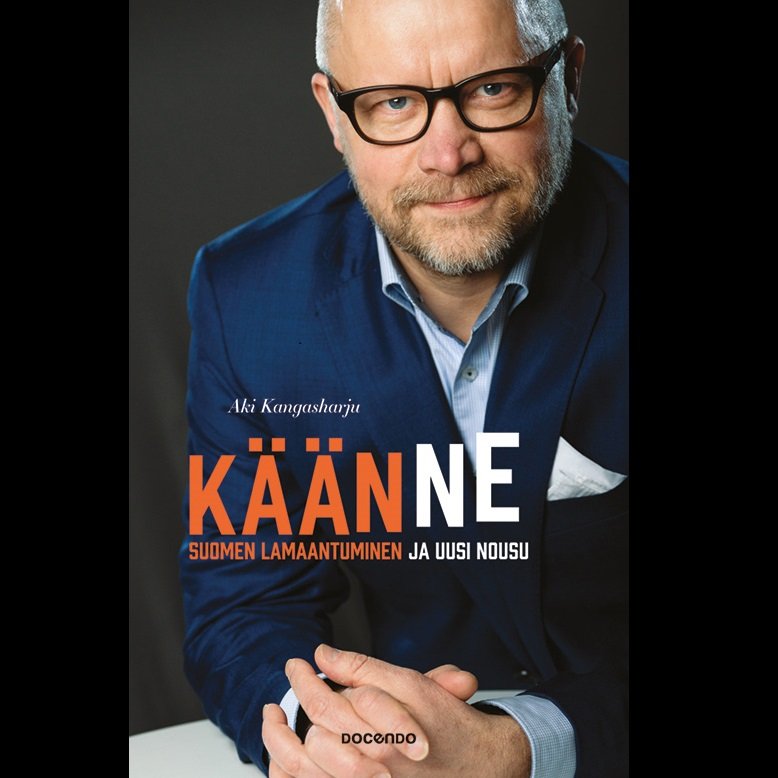
Kategoriat
Uncategorized

Kai-Fu Lee: AI Superpowers

About the book

This is one of the ”The Economist’s books of the year”. It is also a very political book and everyone who is interested about foreign policy should read this.

Like electricity…. “Deep-learning pioneer Andrew Ng has compared AI to Thomas Edison’s harnessing of electricity: a breakthrough technology on its own, and one that once harnessed can be applied to revolutionizing dozens of different industries. Just as nineteenth-century entrepreneurs soon began applying the electricity breakthrough to cooking food, lighting rooms, and powering industrial equipment, today’s AI entrepreneurs are doing the same with deep learning. Much of the difficult but abstract work of AI research has been done, and it’s now time for entrepreneurs to roll up their sleeves and get down to the dirty work of turning algorithms into sustainable businesses.”

Harnessing the power of AI today—the “electricity” of the twenty-first century—requires four analogous inputs:

–      abundant data,

–      hungry entrepreneurs,

–      AI scientists and

–      an AI-friendly policy environment.

What are the key learnings?

This is a boring book if you have already read five other AI-books for business people. Kai-Fu Lee uses the same examples that are already widely used. For example why we are currently living in a AI-era? Because of the computing power and data. ”Both data and computing power were in short supply at the dawn of the field in the 1950s.” Or ”The turning point came in 2012, when a neural network built by Hinton’s team demolished the competition in an international computer vision contest.” Or “Deep learning is what’s known as “narrow AI”—intelligence that takes data from one specific domain and applies it to optimizing one specific outcome.”

Key learnings:

–      Copycat Era

o  Chinese startup ecosystem. The copycat era had forged world-class entrepreneurs, and they were just beginning to apply their skills to solving uniquely Chinese problems.

§ They burn cash like crazy and rely on armies of low-wage delivery workers to make their business models work. It’s a defining trait of China’s alternate internet universe that leaves American analysts entrenched in Silicon Valley orthodoxy scratching their heads.

–      Saudi-Arabia of Data

o  These companies are turning China into the Saudi Arabia of data.

–      O2O Evolution

o  Online-Merge-Offline

o  Analysts dubbed the explosion of real-world internet services that blossomed across Chinese cities the “O2O Revolution,” short for “online-to-offline.”

o  Uber may have given an early glimpse of O2O, but it was Chinese companies that would take the core strengths of that model and apply it to transforming dozens of other industries.

o  But the O2O revolution showcased an even deeper—and in the age of AI implementation, more impactful—divide between Silicon Valley and China—what I call “going light” versus “going heavy.” The terms refer to how involved an internet company becomes in providing goods or services. They represent the extent of vertical integration as a company links up the on-and offline worlds. When looking to disrupt a new industry, American internet companies tend to take a “light” approach. Going heavy means building walls around your business, insulating yourself from the economic bloodshed of China’s gladiator wars.

–      AI expertise and government support.

Other learnings are that:

–      Hail China…

o  But around 2013, China’s internet took a right turn. Rather than following in the footsteps or outright copying of American companies, Chinese entrepreneurs began developing products and services with simply no analog in Silicon Valley.

–      Half of the AI-market will go to China…..

o  “PricewaterhouseCoopers estimates AI deployment will add $ 15.7 trillion to global GDP by 2030. China is predicted to take home $ 7 trillion of that total, nearly double North America’s $ 3.7 trillion in gains.”

–      Entrepreneurs….

o  The most valuable product to come out of China’s copycat era wasn’t a product at all: it was the entrepreneurs themselves.

–      Key message of the book…..

o  Corporate America is unprepared for this global wave of Chinese entrepreneurship because it fundamentally misunderstood the secret to The Cloner’s success.

The Four Waves of AI

The complete AI revolution will take a little time and will ultimately wash over us in a series of four waves:

1)   Internet AI i.e. Optimization of user behaviour

2)   Business AI i.e. Optimization of business data

3)   Perception AI i.e. Optimizing online and offline environment

4)   Autonomous AI i.e. Optimizing machine learning and perception

“The first two waves—internet AI and business AI—are already all around us.

Perception AI is now digitizing our physical world, learning to recognize our faces, understand our requests, and “see” the world around us. This wave promises to revolutionize how we experience and interact with our world, blurring the lines between the digital and physical worlds.

Autonomous AI will come last but will have the deepest impact on our lives. As self-driving cars take to the streets, autonomous drones take to the skies, and intelligent robots take over factories, they will transform everything from organic farming to highway driving and fast food.”

FIRST WAVE: INTERNET AI (optimization of user behaviour)

“Internet AI is largely about using AI algorithms as recommendation engines: systems that learn our personal preferences and then serve up content hand-picked for us.

Average people experience this as the internet “getting better”—that is, at giving us what we want—and becoming more addictive as it goes.”

This is the Technolandia.

SECOND WAVE: BUSINESS AI (optimization of business data)

“For instance, insurance companies have been covering accidents and catching fraud, banks have been issuing loans and documenting repayment rates, and hospitals have been keeping records of diagnoses and survival rates. All of these actions generate labeled data points.

Business AI mines these databases for hidden correlations that often escape the naked eye and human brain.

Optimizations like this work well in industries with large amounts of structured data on meaningful business outcomes. In this case, “structured” refers to data that has been categorized, labeled, and made searchable. Prime examples of well-structured corporate data sets include historic stock prices, credit-card usage, and mortgage defaults.

There’s no question that China will lag in the corporate world, but it may lead in public services and industries with the potential to leapfrog outdated systems.”

THIRD WAVE: PERCEPTION AI (optimizing online and offline environment)

“Third-wave AI is all about extending and expanding this power throughout our lived environment, digitizing the world around us through the proliferation of sensors and smart devices.

Amazon Echo is digitizing the audio environment of people’s homes. Alibaba’s City Brain is digitizing urban traffic flows through cameras and object-recognition AI. Apple’s iPhone X and Face + + cameras perform that same digitization for faces, using the perception data to safeguard your phone or digital wallet.

Important…… I call these new blended environments OMO: online-merge-offline. OMO is the next step in an evolution that already took us from pure e-commerce deliveries to O2O (online-to-offline) services. Each of those steps has built new bridges between the online world and our physical one, but OMO constitutes the full integration of the two.

True application… One KFC restaurant in China recently teamed up with Alipay to pioneer a pay-with-your-face option at some stores. Customers place their own order at a digital terminal, and a quick facial scan connects their order to their Alipay account—no cash, cards, or cell phones required…. Pay-with-your-face applications.

Central to that system is the Mi AI speaker, a voice-command AI device similar to the Amazon Echo but at around half the price, thanks to the Chinese home-court manufacturing advantage. That advantage is then leveraged to build a range of smart, sensor-driven home devices: air purifiers, rice cookers, refrigerators, security cameras, washing machines, and autonomous vacuum cleaners. Xiaomi doesn’t build all of these devices itself. Instead, it has invested in 220 companies and incubated 29 startups—many operating in Shenzhen—whose intelligent home products are hooked into the Xiaomi ecosystem. Together they are creating an affordable, intelligent home ecosystem, with WiFi-enabled products that find each other and make configuration easy.

Third-wave AI products like these are on the verge of transforming our everyday environment, blurring lines between the digital and physical world until they disappear entirely.

These third-wave AI innovations will create tremendous economic opportunities and also lay the foundation for the fourth and final wave, full autonomy.”

FOURTH WAVE: AUTONOMOUS AI

For example…. “Shenzhen is home to DJI, the world’s premier drone maker and what renowned tech journalist Chris Anderson called “the best company I have ever encountered.” DJI is estimated to already own 50 percent of the North American drone market and even larger portions of the high-end segment.”

Perfect is the enemy of the good

“Perfect vs. Incremental vs. the Chinese mentality is that you can’t let the perfect be the enemy of the good. Indeed, local officials are already modifying existing highways, reorganizing freight patterns, and building cities that will be tailor-made for driverless cars.

America’s global juggernauts seek to conquer these markets for themselves, China is instead arming the local startup insurgents.

There are already some precedents for the Chinese approach. Ever since Didi drove Uber out of China, it has invested in and partnered with local startups fighting to do the same thing in other countries: Lyft in the United States, Ola in India, Grab in Singapore, Taxify in Estonia, and Careem in the Middle East.

An alternate model of AI globalization: empower homegrown startups by marrying worldwide AI expertise to local data.”

Utopia vs. Dystopia

“It has fed a belief that we’re on the verge of achieving what some consider the Holy Grail of AI research, artificial general intelligence (AGI)—thinking machines with the ability to perform any intellectual task that a human can—and much more. Some predict that with the dawn of AGI, machines that can improve themselves will trigger runaway growth in computer intelligence. Often called “the singularity,” or artificial superintelligence, this future involves computers whose ability to understand and manipulate the world dwarfs our own, comparable to the intelligence gap between human beings and, say, insects. Such dizzying predictions have divided much of the intellectual community into two camps: utopians and dystopians.

Getting to AGI would require a series of foundational scientific breakthroughs in artificial intelligence, a string of advances on the scale of, or greater than, deep learning. These breakthroughs would need to remove key constraints on the “narrow AI” programs that we run today and empower them with a wide array of new abilities: multidomain learning; domain-independent learning; natural-language understanding; commonsense reasoning, planning, and learning from a small number of examples.

General Purpose Technologies (GPTs)

Like the utopian and dystopian forecasts for AGI, this prediction of a jobs and inequality crisis is not without controversy. A large contingent of economists and techno-optimists believe that fears about technology-induced job losses are fundamentally unfounded.

These are what economists call General Purpose Technologies, or GPTs. In their landmark book The Second Machine Age, MIT professors Erik Brynjolfsson and Andrew McAfee described GPTs as the technologies that “really matter,” the ones that “interrupt and accelerate the normal march of economic progress.”

Three technologies that receive broad support: the steam engine, electricity, and information and communication technology (such as computers and the internet).”

Consulting firm PwC predicts that AI will add $ 15.7 trillion to the global economy by 2030.

Important…. Artificial intelligence will be the first GPT of the modern era in which China stands shoulder to shoulder with the West in both advancing and applying the technology.”

Leap and Data

“In deep learning, there’s no data like more data.

The country’s massive number of internet users—greater than the United States and all of Europe combined—gives it the quantity of data, but it’s then what those users do online that gives it the quality.

Hardly anyone noticed when the world’s most powerful app waltzed onto the world stage. The January 2011 launch of WeChat, Tencent’s new social messaging app, received only one mention in the English-language press, on the technology site the Next Web.

Airbnb largely remains a lightweight platform for listing your home, the company’s Chinese rival, Tujia, manages a large chunk of rental properties itself. For Chinese hosts, Tujia offers to take care of much of the grunt work: cleaning the apartment after each visit, stocking it with supplies, and installing smart locks.

Leap…. But that leap to mobile payments wasn’t just a product of weak incumbents and independent consumer choices. Alibaba and Tencent accelerated the transition by forcing adoption through massive subsidies, a form of “going heavy” that makes American technology companies squirm.

Imporant once again…. Data from mobile payments is currently generating the richest maps of consumer activity the world has ever known, far exceeding the data from traditional credit-card purchases or online activity captured by e-commerce players like Amazon or platforms like Google and Yelp.

Something new was emerging from all those rides: perhaps the world’s largest and most useful internet-of-things (IoT) networks.

THE STUFF OF AN AI SUPERPOWER

“As I laid out earlier, creating an AI superpower for the twenty-first century requires four main building blocks: abundant data, tenacious entrepreneurs, well-trained AI scientists, and a supportive policy environment. We’ve already seen how China’s gladiatorial startup ecosystem trained a generation of the world’s most street-smart entrepreneurs, and how China’s alternate internet universe created the world’s richest data ecosystem.”

About workforce and the future of workforce

Jobs….” The OECD team instead proposed a task-based approach, breaking down each job into its many component activities and looking at how many of those could be automated. In this model, a tax preparer is not merely categorized as one occupation but rather as a series of tasks that are automatable (reviewing income documents, calculating maximum deductions, reviewing forms for inconsistencies, etc.) and tasks that are not automatable (meeting with new clients, explaining decisions to those clients, etc.). The OECD team then ran a probability model to find what percentage of jobs were at “high risk” (i.e., at least 70 percent of the tasks associated with the job could be automated). As noted, they found that in the United States only 9 percent of workers fell in the high-risk category. Applying that same model on twenty other OECD countries, the authors found that the percentage of high-risk jobs ranged from just 6 percent in Korea to 12 percent in Austria.”

Kai-Fu Lee: “I also respectfully disagree with the low-end estimates of the OECD.”

“But beyond that disagreement over methodology, I believe using only the task-based approach misses an entirely separate category of potential job losses: industry-wide disruptions due to new AI-empowered business models. Separate from the occupation-or task-based approach, I’ll call this the industry-based approach.”

Theory or Paradox… “Core to this logic is a tenet of artificial intelligence known as Moravec’s Paradox. Hans Moravec was a professor of mine at Carnegie Mellon University, and his work on artificial intelligence and robotics led him to a fundamental truth about combining the two: contrary to popular assumptions, it is relatively easy for AI to mimic the high-level intellectual or computational abilities of an adult, but it’s far harder to give a robot the perception and sensorimotor skills of a toddler.”

“Within fifteen years I predict that we will technically be able to automate 40 to 50 percent of all jobs in the United States. That does not mean all of those jobs will disappear overnight, but if the markets are left to their own devices, we will begin to see massive pressure on working people.

What about Europe? Is our future the Dataslavery…..

No Europeans in the AI race…. “The seven that have emerged as the new giants of corporate AI research—Google, Facebook, Amazon, Microsoft, Baidu, Alibaba, and Tencent.” If Europe cannot race with the AI Superpowers we have to cope.

How to cope with AI? THE THREE R’S:

–      REDUCE,

–      RETRAIN

–      REDISTRIBUTE

“Many of the proposed technical solutions for AI-induced job losses coming out of Silicon Valley fall into three buckets: retraining workers, reducing work hours, or redistributing income.”

Those advocating the retraining of workers tend to believe that AI will slowly shift what skills are in demand, but if workers can adapt their abilities and training, then there will be no decrease in the need for labor. Those advocates of reducing work hours believe that AI will reduce the demand for human labor and feel that this impact could be absorbed by moving to a three-or four-day work week, spreading the jobs that do remain over more workers. The redistribution camp tends to be the most dire in their predictions of AI-induced job losses. Many of them predict that as AI advances, it will so thoroughly displace or dislodge workers that no amount of training or tweaking hours will be sufficient.

How should we change according to the book?

“AI today—the “electricity” of the twenty-first century”. We should invent the applications that will be using AI?

What should I personally do?

Check this out…. www.arxiv.org

Summary

The book in six words – “You can’t connect the dots looking forward. You can only connect them looking backwards. So you have to trust that the dots will somehow connect in your future.” (Steve Jobs)

Kategoriat
Uncategorized

Ries: The Startup Way

About the book

“Nobody wants to work at an old-fashioned company. Nobody wants to buy products from an old-fashioned company. And nobody wants to invest in an old-fashioned company” (Jeff Immelt / General Electric).

The ambition of the book is to create a system that helps companies to create long-term growth and flexibility.

Second ambition is to teach that entrepreneurship is not only for entrepreneurs.

Make a Leap!

What are the key learnings?

The key learning of the book is:

A.   How to use The Startup Way as an organizational capability for continuous transformation.

B.   Innovation Accounting as a tool to understand the commercial potential of business development..

The ultimate goal is “to enable the entire organization to function as a portfolio of startups” and the new way of working becomes the culture. Driving forces can be crisis of any sort or new strategy or hyper-growth.

Lean Startup Method

In a nutshell the tool is the Lean Startup method. And the Lean Startup method is all about vision and how to find the fastest way on realizing the vision:

1)   Leap of Faith Assumptions (LOFA) are “the beliefs what must be true in order for the startup to succeed.

2)   Minimum Viable Products (MVP) are experiments where you test the assumptions “as quickly and as inexpensively as possible”. What people actually want?

3)   Validate Learning and think like a scientist. Follow the 3A rule:

o  Actionable (clear cause and effect).

o  Accessible (share the data).

o  Auditable (data must be credible).

4)   Build-Measure-Learn feedback loop is the tool. Take the learning from the experiments and start the loop again. Like in Growth Hacking?

5)   Cadence-Pivot-Persevere means that you should at least every six (6) weeks:

o  Regularly meet to learn from the experiments by asking questions.

§ What did you learn? How do you know it?

o  Make change in the strategy according the learnings.

o  Pivot or stay on course. Famous pivot stories: PayPal went from Palm Pilots to web-based version and Netflix moved from DVDs to streaming.

These are the topics on building a corporate version of the Lean Startup

A) MVP   

o How to use MVPs (minimum viable products) in corporate environments.

B)   Small Teams

It’s all about teams and small teams beat big teams:

o  Small teams have the bond and the communication in is intense due to the proximity.

o  Small teams are like hunting parties, desperately seeking for product/market fit.

C)   Pivot

a.   “A change in strategy without a change in vision” and “without a vision you cannot pivot”.

D)   Scarcity

a.   No extra time, no extra money, no extra people. Corporate death is around the corner.

E)   You have to focus.

a.   A true customer problem is the very first thing a team focuses on.

F)   Financializing learning.

a.   “Equity ownership is not a cash bonus. It’s a measurement of what the startup has learned about far future profits. Equity ownership is the least distortionary set of incentives”

Accountability is the foundation of management:

1)   Accountability

a.   “The systems, rewards and incentives drive employees’ behaviour and focus their attention”.

2)   Process

a.   “The process is the tools and tactics that employees habitually use every day to get work done”.

3)   Culture

a.   “Beliefs that determine what employees believe to be possible”.

4)   People

a.   “The success of any organization depends on the calibre of the people it is able to attract and retain”.

Recovery process is needed when 5hit hits the fan. Obey these rules:

Rule 1: The war room is the place where the problems are solved, not for shifting blame.

Rule 2: Talking is allowed only to the people who know most about the issues.

Rule 3: We need to stay focused. 

The “How” behind the startup way

Any corporate can develop it’s way of working towards startup way with three phases – critical mass, scaling up and deep systems.

In critical mass you get the leadership into the movement and spreading the word out companywide. In scaling up you have enough political capital to bypass any issues arising from the startup method. Last but not least this will lead into an organizational capability for continuous transformation.

Create a one-pager for the internal startup teams how to deploy MVPs:

–      A pre-approved MVP makes life easier. The pre-approved MVP formula goes like this – it is an experiment “with fewer than X customers possibly affected, total liability of Y and a cost of Z”.

–      If the experiment is a success and you want to scale it make sure that the experiment is “a) built on an initial MVP and b) you get managerial sign-off”.

–      “If you want build bigger and more complex – talk with legal and finance. Here is the hotline to call….”

Innovation Accounting

Innovation accounting is a tool to recognize “the early signs of success as worthy of further investment”. It is “a way of evaluating progress when all the metrics typically used in an established company are effectively zero.” The typical company metrics are revenue, customers, ROI, market share). Innovation accounting enables you to apples-to-apples comparison and gives you:

–      A framework.

–      A focusing device.

–      A common mathematical vocabulary.

–      A way to tyie long-term growth and R&D.

The Innovation Accounting has three levels:

1)   Dashboard

2)   Business Case

3)   Net Present Value

Dashboard is built around per-customer input. Aim of the dashboard is to help the team to see the customer as a flow and help them on focusing in customers. Learning metrics can be:

–      Conversion rates.

–      Revenue per user.

–      Lifetime value per customer.

–      Retention rate.

–      Cost per customer.

–      Referral rate.

–      Channel adoption.

Second Level

Second level is Business Case level will validate the leap-of-faith assumptions and business case. Sensible metrics are built around value and growth hypothesis.

–      Value metrics should be about repeat purchase, retention, willingness to pay premium or referral.

–      Growth metrics are based on the law of sustainable growth – word-of-mouth, paid engine of growth or viral engine of growth. Important is that it indicates a number that shows “it can grow sustainably”.

Net Present Value is the last level in innovation accounting. Here “the goal is to translate learning into dollars by rerunning the full business case after each new data point”.

Eric Ries even built a “Bingo Card” of the key questions to support the Innovation Accounting. That is worth checking out.

How should we change according to the book?

We avoid the economic stagnation:

1)   An epidemic of Short-termism is the rise of management through financial engineering instead of customer value creation.

2)   Lack of entrepreneurial opportunity is about massive reduction in opportunities for regular small business.

3)   A loss of leadership is about “preserving the results of past investments than investing in the future.”

4)   Low growth and instability.

What should I personally do?

Two things:

–      Face the challenges and being brutal honest about the facts.

–      “Plans are useless, but planning is indispensable” (Dwight D. Eisenhower).

Summary

The book in six words – “Hypergrowth for a company also requires hypergrowth of the people inside it”.

Kategoriat
Uncategorized

Collins & Hansen: Great by Choice

About the book

I just the love Mr. Jim Collins and his research team has conducted. No man on earth has made as much as Mr. Collins to help leaders to stay on track. The current business systems wouldn’t be the same without his insights, creative writings and evidence based analysis. We can easily promote Jim Collins to the same category as Peter Drucker.

“One should… be able to see that things are hopeless and yet be determined to make them otherwise.” —F. Scott Fitzgerald

What are the key learnings?

Key question… “What does it take to build a great company?”

This is the recipe…. “Bill Gates didn’t just get a lucky break and cash in his chips. He kept pushing, driving, working:

1)   staying on a 20 Mile March;

2)   firing first bullets, then big calibrated cannonballs;

3)   exercising productive paranoia to avoid the Death Line;

4)   developing and amending a SMaC recipe;

5)   hiring great people;

6)   building a culture of discipline; never deviating from his monomaniacal focus—and sustained his efforts for more than two decades.”

1 THRIVING IN UNCERTAINTY

Meaning of the book…. “All of this led us to a simple question: Why do some companies thrive in uncertainty, even chaos, and others do not? We began the nine-year research project behind this book in 2002, when America awoke from its false sense of stability, safety, and wealth entitlement.”

“We selected on performance plus environment for two reasons:

1)   First, we believe the future will remain unpredictable and the world unstable for the rest of our lives, and we wanted to understand the factors that distinguish great organizations, those that prevail against extreme odds, in such environments.

2)   Second, by looking at the best companies and their leaders in extreme environments, we gain insights that might otherwise remain hidden when studying leaders in more tranquil settings.”

FINDING THE 10X CASES

“We spent the first year of our efforts identifying the primary study set of 10X cases, searching for historical cases that met three basic tests:

1)   The enterprise sustained truly spectacular results for an era of 15 + years relative to the general stock market and relative to its industry.

2)   The enterprise achieved these results in a particularly turbulent environment, full of events that were uncontrollable, fast-moving, uncertain, and potentially harmful.

3)   The enterprise began its rise to greatness from a position of vulnerability, being young and/ or small at the start of its 10X journey.

The crucial question is “What did the great companies share in common that distinguished them from their direct comparisons?”

Leaders…. Entrenched myth: Successful leaders in a turbulent world are bold, risk-seeking visionaries. Contrary finding: The best leaders we studied did not have a visionary ability to predict the future. They observed what worked, figured out why it worked, and built upon proven foundations.

They were not:

·     more risk taking,

·     bolder,

·     more visionary, and

·     more creative than the comparisons.

They were:

·     more disciplined,

·     more empirical, and

·     more paranoid.

Innovation…. “Entrenched myth: Innovation distinguishes 10X companies in a fast-moving, uncertain, and chaotic world. Contrary finding: To our surprise, no. Yes, the 10X cases innovated, a lot. But the evidence does not support the premise that 10X companies will necessarily be more innovative than their less successful comparisons; and in some surprise cases, the 10X cases were less innovative. Innovation by itself turns out not to be the trump card we expected; more important is the ability to scale innovation, to blend creativity with discipline.”

Speed….. “Entrenched myth: A threat-filled world favors the speedy; you’re either the quick or the dead. Contrary finding: The idea that leading in a “fast world” always requires “fast decisions” and “fast action”—and that we should embrace an overall ethos of “Fast! Fast! Fast!”—is a good way to get killed. 10X leaders figure out when to go fast, and when not to.”

Change…. “Entrenched myth: Radical change on the outside requires radical change on the inside. Contrary finding: The 10X cases changed less in reaction to their changing world than the comparison cases. Just because your environment is rocked by dramatic change does not mean that you should inflict radical change upon yourself.”

Luck…. “Entrenched myth: Great enterprises with 10X success have a lot better luck.  Contrary finding: The 10X companies did not generally have more luck than the comparisons. Both sets had luck—lots of luck, both good and bad—in comparable amounts. The critical question is not whether you’ll have luck, but what you do with the luck that you get.”

Peter Drucker taught, “the best—perhaps even the only—way to predict the future is to create it.

2 10XERS

“Victory awaits him who has everything in order—luck people call it. Defeat is certain for him who has neglected to take the necessary precautions in time; this is called bad luck.” —Roald Amundsen, The South Pole

“Amundsen’s philosophy: You prepare with intensity, all the time, so that when conditions turn against you, you can draw from a deep reservoir of strength. And equally, you prepare so that when conditions turn in your favor, you can strike hard.”

“Unlike Scott, Amundsen systematically built enormous buffers for unforeseen events.”

“A single detail aptly highlights the difference in their approaches: Scott brought one thermometer for a key altitude-measurement device, and he exploded in “an outburst of wrath and consequence” when it broke; Amundsen brought four such thermometers to cover for accidents.”

DIFFERENT BEHAVIORS, NOT DIFFERENT CIRCUMSTANCES

“We’re not saying that 10Xers lacked creative intensity, ferocious ambition, or the courage to bet big. They displayed all these traits, but so did their less successful comparisons. So then, how did the 10Xers distinguish themselves?

1)   Control: First, 10Xers embrace a paradox of control and non-control. On the one hand, 10Xers understand that they face continuous uncertainty and that they cannot control, and cannot accurately predict, significant aspects of the world around them.

2)   Fate: On the other hand, 10Xers reject the idea that forces outside their control or chance events will determine their results; they accept full responsibility for their own fate.

10Xers then bring this idea to life by a triad of core behaviours:

·     Fanatic discipline,

·     Empirical creativity, and

·     Productive paranoia.

FANATIC DISCIPLINE

“Both Kelleher and Lewis, like all the 10Xers we studied, were nonconformists in the best sense. They started with values, purpose, long-term goals, and severe performance standards; and they had the fanatic discipline to adhere to them.”

(if you’re a hammer, everything you see looks like a nail).

EMPIRICAL CREATIVITY

Like scientists….. “CEOs of the 10Xers were like scientists. Working based on the data and evidence.”

“Social psychology research indicates that at times of uncertainty, most people look to other people—authority figures, peers, group norms—for their primary cues about how to proceed.

10Xers, in contrast, do not look to conventional wisdom to set their course during times of uncertainty, nor do they primarily look to what other people do, or to what pundits and experts say they should do. They look primarily to empirical evidence.”

“But the 10Xers had a much deeper empirical foundation for their decisions and actions, which gave them well-founded confidence and bounded their risk. The 10Xers don’t favor analysis over action; they favor empiricism as the foundation for decisive action.”

PRODUCTIVE PARANOIA

“Like Amundsen with his huge supply buffers, 10Xers maintain a conservative financial position, squirreling away cash to protect against unforeseen disruptions.”

“In short, we found no consistent pattern in the backgrounds of 10Xers relative to the comparison leaders.”

3 20 MILE MARCH

“The 20 Mile March is more than a philosophy. It’s about having concrete, clear, intelligent, and rigorously pursued performance mechanisms that keep you on track.”

“The 20 Mile March creates two types of self-imposed discomfort:

(1) the discomfort of unwavering commitment to high performance in difficult conditions, and

(2) the discomfort of holding back in good conditions.”

Important…. “We found that every 10X company exemplified the 20 Mile March principle during the era we studied.”

WHY 20 MILE MARCHERS WIN?

“20 Mile Marching helps turn the odds in your favor for three reasons:

1. Confidence: It builds confidence in your ability to perform well in adverse circumstances.

2. Prevent: It reduces the likelihood of catastrophe when you’re hit by turbulent disruption.

3. Self-control: It helps you exert self-control in an out-of-control environment.”

“Having a clear 20 Mile March focuses the mind; because everyone on the team knows the markers and their importance, they can stay on track.”

ARTHUR LEVINSON: TEACHING A COMPANY TO MARCH

A good 20 Mile March has the following seven characteristics:

1. Clear performance markers.

2. Self-imposed constraints.

3. Appropriate to the specific enterprise.

4. Largely within the company’s control to achieve.

5. A proper timeframe—long enough to manage, yet short enough to have teeth.

6. Imposed by the company upon itself.

7. Achieved with high consistency.

“Key question? What is your 20 Mile March, something that you commit to achieving for 15 to 30 year?”

4 FIRE BULLETS, THEN CANNONBALLS

A BIG SURPRISE

About innovation…. “The evidence from our research does not support the premise that 10X companies will necessarily be more innovative than their less successful comparisons. And in some surprise cases, such as Southwest Airlines versus PSA and Amgen versus Genentech, the 10X companies were less innovative than the comparisons.”

About pioneering…. “Tellis and Golder also found that 64 percent of pioneers failed outright.

Good for society, bad for pioneers…. “It seems that pioneering innovation is good for society but statistically lethal for the individual pioneer!”

The level of innovation…. “We’re not saying that innovation is unimportant. Every company in this study innovated. It’s just that the 10X winners innovated less than we would have expected relative to their industries and relative to their comparison cases; they were innovative enough to be successful but generally not the most innovative.”

CREATIVITY AND DISCIPLINE

“Of course, it is not discipline alone that makes greatness, but the combination of discipline and creativity.”

“Fire bullets, then fire cannonballs. First, you fire bullets to figure out what’ll work. Then once you have empirical confidence based on the bullets, you concentrate your resources and fire a cannonball. After the cannonball hits, you keep 20 Mile Marching to make the most of your big success.”

<= Just like in the “Lean Startup Way”

Bullets… “Acquisitions would be made with little or no debt, and only when the balance sheet would remain strong after the purchase, thereby ensuring that acquisitions would remain low risk, low cost, and relatively low distraction.”

Calibrated cannonballs… “The 10Xers were much more likely to fire calibrated cannonballs, while the comparison cases had uncalibrated cannonballs flying all over the place.”

“And that’s the underlying principle: empirical validation. Be creative, but validate your creative ideas with empirical experience. You don’t even need to be the one to fire all the bullets; you can learn from the empirical experience of others.”

EMPIRICAL VALIDATION, NOT PREDICTIVE GENIUS

APPLE’S REBIRTH: BULLETS, CANNONBALLS, AND DISCIPLINED CREATIVITY

KEY POINTS ► A “fire bullets, then cannonballs” approach better explains the success of 10X companies than big-leap innovations and predictive genius.

5 LEADING ABOVE THE DEATH LINE

“As soon as there is life there is danger.” —Ralph Waldo Emerson

“In this chapter, we explore three core sets of practices, rooted in the research, for leading and building a great enterprise with productive paranoia: ► Productive Paranoia 1: Build cash reserves and buffers—oxygen canisters—to prepare for unexpected events and bad luck before they happen. ► Productive Paranoia 2: Bound risk—Death Line risk, asymmetric risk, and uncontrollable risk—and manage time-based risk. ► Productive Paranoia 3: Zoom out, then zoom in, remaining hypervigilant to sense changing conditions and respond effectively.”

PRODUCTIVE PARANOIA 1: EXTRA OXYGEN CANISTERS-IT’S WHAT YOU DO BEFORE THE STORM COMES

“A Black Swan is a low-probability disruption, an event that almost no one can foresee, a concept popularized by the writer and financier Nassim Nicholas Taleb. Almost no one can predict a particular Black Swan before it hits, not even our 10Xers. But it is possible to predict that there will be some Black Swan, as yet unspecified.”

“When a calamitous event clobbers an industry or the overall economy, companies fall into one of three categories: those that pull ahead, those that fall behind, and those that die. The disruption itself does not determine your category. You do.”

PRODUCTIVE PARANOIA 2: BOUNDING RISK

“To explore this question, we first identified three primary categories of risk relevant to leading an enterprise: (1) Death Line risk, (2) asymmetric risk, and (3) uncontrollable risk. (See Research Foundations: Risk-Category Analysis.)”

“In short, we found that the 10X companies took less risk than the comparison cases. Certainly, the 10X leaders took risks, but relative to the comparisons in the same environments, they bounded, managed, and avoided risks. The 10X leaders abhorred Death Line risk, shunned asymmetric risk, and steered away from uncontrollable risk.”

PRODUCTIVE PARANOIA 3: ZOOM OUT, THEN ZOOM IN

Zoom Out…. “Sense a change in conditions Assess the time frame: How much time before the risk profile changes? Assess with rigor: Do the new conditions call for disrupting plans? If so, how?”

Zoom In…. “Focus on supreme execution of plans and objectives”

LEADING ABOVE THE DEATH LINE KEY POINTS ► This chapter explores three key dimensions of productive paranoia: 1. Build cash reserves and buffers—oxygen canisters—to prepare for unexpected events and bad luck before they happen. 2. Bound risk—Death Line risk, asymmetric risk, and uncontrollable risk—and manage time-based risk. 3. Zoom out, then zoom in, remaining hypervigilant to sense changing conditions and respond effectively.

6 SMaC

“Most men die of their remedies, and not of their illnesses.” —Molière

The “SMaC” is a formula and the word stands for

–      Specific,

–      Methodical, and

–      Consistent.”

“You can use the term “SMaC” as a descriptor in any number of ways: as an adjective (“ Let’s build a SMaC system”), as a noun (“ SMaC lowers risk”), and as a verb (“ Let’s SMaC this project”).”

“A SMaC recipe is a set of durable operating practices that create a replicable and consistent success formula; it is clear and concrete, enabling the entire enterprise to unify and organize its efforts, giving clear guidance regarding what to do and what not to do. A SMaC recipe reflects empirical validation and insight about what actually works and why. Howard Putnam’s 10 points at Southwest Airlines perfectly illustrates the idea.”

7 RETURN ON LUCK

“The real difference between the 10X and comparison cases wasn’t luck per se but what they did with the luck they got. Adding up all the evidence, we found that the 10X cases were not generally luckier than the comparison cases. The 10X cases and the comparisons both got luck, good and bad, in comparable amounts. The evidence leads us to conclude that luck does not cause 10X success. People do. The critical question is not “Are you lucky?” but “Do you get a high return on luck?”

This is just like straight from Malcolm Gladwell’s “Outliers” …. “His friend Paul Allen just happened to see a cover story in the January 1975 issue of Popular Electronics titled “World’s First Microcomputer Kit to Rival Commercial Models.”

Important about the luck…. “Gates did more with his luck, taking a confluence of lucky circumstances and creating a huge return on his luck. And this is the important difference.”

Return on Luck (ROL)….. “Everyone gets luck, good and bad, but 10X winners make more of the luck they get. The Bill Gates story illustrates the upper-right quadrant, getting a great return on good luck.”

10XERS SHINE: GREAT RETURN ON BAD LUCK

“Canadian NHL players with the “bad luck” of being born in the second half of the year have a higher likelihood of making it into the Hall of Fame than those with the “good luck” of being born in the first half of the year!”

About bad luck…. “Nietzsche famously wrote, “What does not kill me, makes me stronger.” We all get bad luck. The question is how to use that bad luck to make us stronger, to turn it into “one of the best things that ever happened,” to not let it become a psychological prison. And that’s precisely what 10Xers do.”

BAD LUCK, POOR RETURN: THE ONE PLACE YOU REALLY DON’T WANT TO BE

LUCK IS NOT A STRATEGY…. “Life offers no guarantees. But it does offer strategies for managing the odds, indeed, even managing luck. The essence of “managing luck” involves four things: (1) cultivating the ability to zoom out to recognize luck when it happens, (2) developing the wisdom to see when, and when not, to let luck disrupt your plans, (3) being sufficiently well-prepared to endure an inevitable spate of bad luck, and (4) creating a positive return on luck—both good luck and bad—when it comes. Luck is not a strategy, but getting a positive return on luck is.”

“The best leaders we’ve studied maintain a paradoxical relationship to luck. On the one hand, they credit good luck in retrospect for having played a role in their achievements, despite the undeniable fact that others were just as lucky. On the other hand, they don’t blame bad luck for failures, and they hold only themselves responsible if they fail to turn their luck into great results. 10Xers grasp that if they blame bad luck for failure, they capitulate to fate. Equally, they grasp that if they fail to perceive when good luck helped, they might overestimate their own skill and leave themselves exposed when good luck runs dry. There might be more good luck down the road, but 10Xers never count on it.”

EPILOGUE GREAT BY CHOICE

Disease…. “We sense a dangerous disease infecting our modern culture and eroding hope: an increasingly prevalent view that greatness owes more to circumstance, even luck, than to action and discipline—that what happens to us matters more than what we do.”

Responsibility…. “Do we want to build a society and culture that encourage us to believe that we aren’t responsible for our choices and accountable for our performance? Our research evidence stands firmly against this view.”

People….“The factors that determine whether or not a company becomes truly great, even in a chaotic and uncertain world, lie largely within the hands of its people.”

Moment of truth…. “When the moment comes—when we’re afraid, exhausted, or tempted—what choice do we make? Do we abandon our values? Do we give in? Do we accept average performance because that’s what most everyone else accepts?”

Deep within…. “The greatest leaders we’ve studied throughout all our research cared as much about values as victory, as much about purpose as profit, as much about being useful as being successful. Their drive and standards are ultimately internal, rising from somewhere deep inside.

How should we change according to the book?

Start the 20 Mile March:

1. Clear performance markers (tavoitteet).

2. Self-imposed constraints.

3. Appropriate to the specific enterprise.

4. Largely within the company’s control to achieve (saavutettavissa).

5. A proper timeframe—long enough to manage, yet short enough to have teeth (aikaikkuna).

6. Imposed by the company upon itself.

7. Achieved with high consistency (osumatarkkuus).

What should I personally do?

“Companies, leaders, organizations, and societies do not thrive on chaos. But they can thrive in chaos.”

Summary

The book in six words – ”When the going gets weird, the weird become CEO.” (Hunter S. Thompson quote with a slight twist)

Kategoriat
Uncategorized

Gladwell: David & Goliath

About the book

The expectations of the book are high due to his “Tipping point” book. David & Goliath is not an disappointment. And if I would have read this as a first Gladwell book and after that the Tipping point I might have found this book better. The thing is that I’m trying to say that Tipping point is a great book. But anyways, don’t get hesitant. Malcom Gladwell’s book about David and Goliath is worth reading. Go!  

How was the actual reading of the book?

This book is for everybody. People who are interested about science, it is for parents, it is for business people and it is for people interested in life in large.

Gladwell tells his story through nine different characters. Those range from modern people to historic figures. Some of the portraits are very detailed and some rather lengthy. 

Malcom Gladwell explains how one should not take the apparent as a fact. He argues that we should look beyond the apparent. For example how parenting economics influence parents ability to raise their children. Or how Impressionists found their place in the world of art. Or how relative deprivation influences the suicide rate of different nations. 

Secondly Gladwell states that underdogs have opportunities that are not apparent. And underdogs have nothing to lose. Famous underdogs are Lawrence of Arabia who defeated Turks. Martin Luther King who defeated racism. And Ferrari which defeated Ford in Le Mans year after year (not an example in the book…;-)  

What are the key learnings of the book? 

Malcom Gladwell has two central ideas and a hint.

1) “Giants are not what we think they are”:

–      “Giants are not what we think they are” is a valuable lesson in the world of Internet.

–      All the current Internet goliaths where actually originally davids. Take any of the top ten Internet sites which did not exist twenty years ago.

2) “Underdogs win all the time”, but underdog strategies are hard:

–      Underdogs and opportunities are packaged for example in a form of dyslexia. Dyslexia is a desirable difficulty and it can be turned into advantage.

–      Not all difficulties are negative, because humans can adapt their behavior. For example a dyslexic became top courthouse lawyer because of compensation learning i.e. his ability to listen and memorize carefully.  

–      But the underdog strategies are hard, because those are not to be found from any books. One have to discover those by themselves.

For giants there is a valuable lesson to be learned:

–      “There comes a point where the best-intentioned application of power and authority begins to backfire.”

–      Northern Ireland is a sad example how power is misused and what went wrong the usage of power.

–      Gladwell advises that one should carefully evaluate how and where to use ones power. And are there other means to an end?

How should we change according to the book?

Goliaths should learn their limits of power and Davids should deploy a suitable strategy to become a giant.

What should I personally do? 

Evaluate ones desirable difficulties. 

Summary

Malcolm Gladwell’s book tells a story about the art of battling giants. He makes his points thoroughly and not only leaning to success stories. In this kind of book it’s important that the reader can relate to the topics. That’s why Gladwell has succeeded again. He has taken into consideration the main target group – his readers.  

The book in six words – Everybody can be David, not Goliath.