Kategoriat
Uncategorized

Moilanen, Niinioja, Honkanen & Seppanen: API-talous 101

Kirjasta

”101 is a topic for beginners in any area. It has all the basic principles and concepts that is expected in a particular field.” (Wikipedia)

Minkälainen kirja oli?

API-talouden historia alkaa kun Ebayllä oli ensimmäinen API vuonna 2000, jota seurasi Amazon sekä Google vuonna 2002.

Kirja alkaa hyvin kuvaamalla case K-Raudan ja sen liiketoimintamallin. Kaikki K-Raudan tuotteet kuljetuksineen on tehty asiakkaalle verkossa selattavaksi API:n avulla. MaaS ja Whim voisivat olla toinen kotimainen esimerkki. Monissa mobiilisovelluksissa hyödynnetään API:ja. API:en avulla voidaan siis tuottaa saumattomia asiakaskokemuksia. Näistä on kyse tässä kirjassa.

Mitkä ovat kirjan keskeiset ideat? 

Kirjasta

”101 is a topic for beginners in any area. It has all the basic principles and concepts that is expected in a particular field.” (Wikipedia)

Minkälainen kirja oli?

API-talouden historia alkaa kun Ebayllä oli ensimmäinen API vuonna 2000, jota seurasi Amazon sekä Google vuonna 2002.

Kirja alkaa hyvin kuvaamalla case K-Raudan ja sen liiketoimintamallin. Kaikki K-Raudan tuotteet kuljetuksineen on tehty asiakkaalle verkossa selattavaksi API:n avulla. MaaS ja Whim voisivat olla toinen kotimainen esimerkki. Monissa mobiilisovelluksissa hyödynnetään API:ja. API:en avulla voidaan siis tuottaa saumattomia asiakaskokemuksia. Näistä on kyse tässä kirjassa.

Mitkä ovat kirjan keskeiset ideat? 

API-taloudessä yhtiöt jakavat rajapintoja ja asiakkuuksia. Keskiössä ovat rajapinnat, eivät alustat. API-talous ilmenee alustojen ulkoreunoilla ja välillä. Alustatalousyhtiöt hallitsevat asiakkaita. API-talousyhtiöt keskittyvät sähköiseen kaupankäyntiin, mobiiliteknologiaan ja sosiaaliseen mediaan. PSD2:n myötä mukaan tulee myös finanssisektori.

Alustatalousyhtiö:

⁃ Tarjoaa asiakkailleen ulkopuolisia resursseja – Uber.

⁃ Luo säännöt ja hallinnoida sekä parantaa vuorovaikutusta – LinkedIn.

⁃ Tuottaa arvoa yhdistämällä asioita uusiksi – Finnair.

⁃ Hyödyntää niukasti käytettyjä resursseja – AirBnB.

⁃ Orkesteroi eniten arvo tuottavaa vuorovaikutusta – Ticknovate.

⁃ Kuluttajista on tullut tuottajia – Facebook.

Alustatalouden kehityssuunnat ovat:

⁃ Tiedon määrän ja käytön muutos, esim. AI.

⁃ Ympäristön lisääntyvä älykkyys.

⁃ Arvonluonnin ja arvon jakautumisen hajaantuminen.

⁃ Alustatalouden käyttäytymismallien hapuilu.

API-strategian toimenpiteet voisivat perustua kehittäjäkokemuksen johtamiseen, B2D-ohjelmaan (business to developper), käyttäjäyhteisön hackathon-tapahtumaan, kumppaniohjelmaan ja aktiiviseen markkinointiin. Aktiivinen markkinointi voi olla myös kehittäjäyhteisön omaa sisältömarkkinointia.

Liiketoiminnallisesti API on resurssi, jota myydään ja ostetaan. Monetisaatio on paljon monimutkaisempi. Esim. maksujenvälitysverkostossa yleinen tapa monetisoida on komissio tai freemium-malli. API-yhtiölle asiakas on yleensä B2D. Käytössäolevia liiketoimintamalleja voi olla yhteensä jopa noin 20 kappaletta.

Toinen tärkeä elementti API-taloudessa on kehittäjäkokemus, joka on verrannollinen asiakaskokemukseen sekä asiakaspolkuun. Co-creation on yleisesti käytetty toimintamalli kehittäjäverkostoissa. 

API-talous on Sinisen meren strategia, koska digitaaliset alustat ovat ”hallintajärjestelmiä, joilla kontrolloidaan, vuorovaikutetaan ja jalostetaan datan arvoa”. Esim. Finnairin MaaS-palvelu on Sinisen meren strategiaa.

API on tapa kommunikoida tai tapa parantaa tiedon laatua tai vähentää kustannuksia. Tai se voi olla vetovoimatekijä miksi joku yritys valikoituu kumppaniksi. Viimeisessä tapauksessa nousee esille mm. kehittäjäkokemus. Huomionarvoista on, että APIt muuttavat organisaatiota. Siksi se tarvitsee oman API-strategian sekä johtamista, ettei synny systeemitason virhettä.

API:t ovat tuotteita tai palveluita samalla tavalla kuin muutkin tuotteet ja se tarvitsee myös elinkaariajattelua. API pitää tuotteistaa esim. Lean Startupin oppien mukaan paperiprotosta MVP:n. API:t pitää palvelumuotoilla, käytettävyystestata ja auditoida (Plan, Do, Check, Act) kuten muutkin tuotteet.

API:n tuottama lisäarvo:

⁃ Vähentää monimutkaisuutta ja standardoi tehtävän toteutuksen

⁃ Tarjoaa paremman pääsyn tietoon avoimuudella

⁃ Mahdollisuus vaikuttaa sisältöjen kehitykseen

⁃ Alentaa riskiä, koska riippuvuus yhteen rajapintaan on pieni

⁃ Parantaa palvelun näkyvyyttä, innovaatiotoiminta ja havainnollistaa avoimen datapolitiikan hyödyt.

⁃ Kasvattaa liikevaihtoa, tuo kustannussäästöjä, asiakasuskollisuutta ja/tai innovaatioita.

Mitä meidän pitäisi tehdä kirjan perusteella?

Suomalaisilla yrityksillä eikä Suomen valtiolla ole ilmeistä strategiaa saavuttaa API-taloudessa markkinaosuutta. Amazonin Jezz Bezos on antanut mandaatin APIn pakollisuudesta. Kone Oyj:llä on API-strategia, koska sillä voidaan automatisoida mm. hissien huoltoa.

Mitä minun pitäisi itse tehdä? 

Asiakasodotukset ovat yleensä, että API on tehokas, luotettava ja helppokäyttöinen. Ja se noudattelee 3-30-3 -sääntöä. Asiakas ymmärtää 3 sekunnissa miksi API on olemassa, pääsee kokeilemaan APIa 30 sekunnissa ja 3 minuutin sisällä API löytyy omasta koodista. Ymmärränkö minä?

Yhteenveto

Kirja kuudella sanalla – ”Joko sinun kahvinkeittimessäsi on API?”

Alustatalousyhtiö:

⁃ Tarjoaa asiakkailleen ulkopuolisia resursseja – Uber.

⁃ Luo säännöt ja hallinnoida sekä parantaa vuorovaikutusta – LinkedIn.

⁃ Tuottaa arvoa yhdistämällä asioita uusiksi – Finnair.

⁃ Hyödyntää niukasti käytettyjä resursseja – AirBnB.

⁃ Orkesteroi eniten arvo tuottavaa vuorovaikutusta – Ticknovate.

⁃ Kuluttajista on tullut tuottajia – Facebook.

Alustatalouden kehityssuunnat ovat:

⁃ Tiedon määrän ja käytön muutos, esim. AI.

⁃ Ympäristön lisääntyvä älykkyys.

⁃ Arvonluonnin ja arvon jakautumisen hajaantuminen.

⁃ Alustatalouden käyttäytymismallien hapuilu.

API-strategian toimenpiteet voisivat perustua kehittäjäkokemuksen johtamiseen, B2D-ohjelmaan (business to developper), käyttäjäyhteisön hackathon-tapahtumaan, kumppaniohjelmaan ja aktiiviseen markkinointiin. Aktiivinen markkinointi voi olla myös kehittäjäyhteisön omaa sisältömarkkinointia.

Liiketoiminnallisesti API on resurssi, jota myydään ja ostetaan. Monetisaatio on paljon monimutkaisempi. Esim. maksujenvälitysverkostossa yleinen tapa monetisoida on komissio tai freemium-malli. API-yhtiölle asiakas on yleensä B2D. Käytössäolevia liiketoimintamalleja voi olla yhteensä jopa noin 20 kappaletta.

Toinen tärkeä elementti API-taloudessa on kehittäjäkokemus, joka on verrannollinen asiakaskokemukseen sekä asiakaspolkuun. Co-creation on yleisesti käytetty toimintamalli kehittäjäverkostoissa. 

API-talous on Sinisen meren strategia, koska digitaaliset alustat ovat ”hallintajärjestelmiä, joilla kontrolloidaan, vuorovaikutetaan ja jalostetaan datan arvoa”. Esim. Finnairin MaaS-palvelu on Sinisen meren strategiaa.

API on tapa kommunikoida tai tapa parantaa tiedon laatua tai vähentää kustannuksia. Tai se voi olla vetovoimatekijä miksi joku yritys valikoituu kumppaniksi. Viimeisessä tapauksessa nousee esille mm. kehittäjäkokemus. Huomionarvoista on, että APIt muuttavat organisaatiota. Siksi se tarvitsee oman API-strategian sekä johtamista, ettei synny systeemitason virhettä.

API:t ovat tuotteita tai palveluita samalla tavalla kuin muutkin tuotteet ja se tarvitsee myös elinkaariajattelua. API pitää tuotteistaa esim. Lean Startupin oppien mukaan paperiprotosta MVP:n. API:t pitää palvelumuotoilla, käytettävyystestata ja auditoida (Plan, Do, Check, Act) kuten muutkin tuotteet.

API:n tuottama lisäarvo:

⁃ Vähentää monimutkaisuutta ja standardoi tehtävän toteutuksen

⁃ Tarjoaa paremman pääsyn tietoon avoimuudella

⁃ Mahdollisuus vaikuttaa sisältöjen kehitykseen

⁃ Alentaa riskiä, koska riippuvuus yhteen rajapintaan on pieni

⁃ Parantaa palvelun näkyvyyttä, innovaatiotoiminta ja havainnollistaa avoimen datapolitiikan hyödyt.

⁃ Kasvattaa liikevaihtoa, tuo kustannussäästöjä, asiakasuskollisuutta ja/tai innovaatioita.

Mitä meidän pitäisi tehdä kirjan perusteella?

Suomalaisilla yrityksillä eikä Suomen valtiolla ole ilmeistä strategiaa saavuttaa API-taloudessa markkinaosuutta. Amazonin Jezz Bezos on antanut mandaatin APIn pakollisuudesta. Kone Oyj:llä on API-strategia, koska sillä voidaan automatisoida mm. hissien huoltoa.

Mitä minun pitäisi itse tehdä? 

Asiakasodotukset ovat yleensä, että API on tehokas, luotettava ja helppokäyttöinen. Ja se noudattelee 3-30-3 -sääntöä. Asiakas ymmärtää 3 sekunnissa miksi API on olemassa, pääsee kokeilemaan APIa 30 sekunnissa ja 3 minuutin sisällä API löytyy omasta koodista. Ymmärränkö minä?

Yhteenveto

Kirja kuudella sanalla – ”Joko sinun kahvinkeittimessäsi on API?”

Kategoriat
Uncategorized

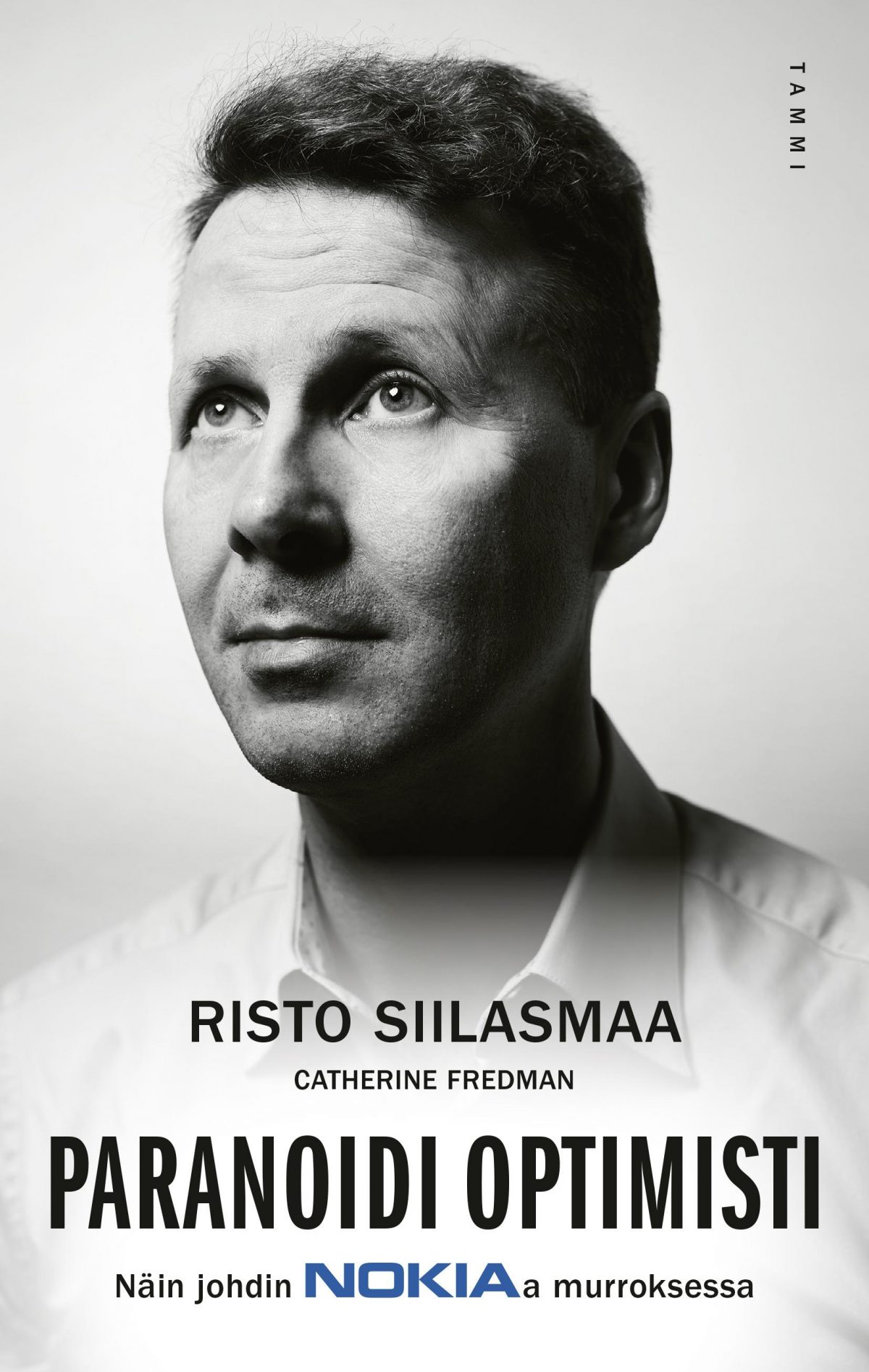
Siilasmaa: Paranoidi optimisti

Kirjasta

Missä olit kun Stephen Elop julkisti Windows Phone –strategian? Minä muistan elävästi missä olin silloin. Tässä kirjassa voit palata niihin hetkiin kun suomalainen moninkertainen matkapuhelinalan voittaja myytiin pois.

Minkälainen kirja oli?

Kirja sopii lukijoille, jotka ovat kiinnostuneet lukemaan suomalaisen huippujohtajan menetelmistä, tavoista toimia ja johtamisfilosofiasta. Se on myös harvinainen sisäpiiriläisen kokemusperäinen selostus Nokia-tarinan käänteistä 2010-luvulla.

Jokainen johtamistyötä tekevä voi samaistua tilanteisiin, joita kirjassa esitellään olkoonkin että Siilasmaan mittaluokka on vailla vertaa. Se mikä on uniikkia kirjassa, niin on Siilasmaan omien tuntemusten esitteleminen. Se yhdistettynä Nokian yrityshistoriaan suorastaan pakotti minut lukemaan kirjan yhdellä istumalla. 

Mitkä ovat kirjan keskeiset ideat? 

Kirjan kolme keskeistä ideaa ovat:

1)   Skenaariotyöskentelyn paluu osaksi ylimmän johdon työskentelyä.

2)   God lives in details.

3)   Kurjasta tilanteesta huolimatta yritys voi aina keksiä itsensä uudelleen.

Kirjan tarkoituksen Siilasmaa kiteyttää seuraavasti: ”tärkeä syy siihen, miksi päätin ryhtyä työhön, on se, että Nokian tarina ansaitsee tulla kerrotuksi.” Ja siitä pitää olla kahta kautta kiitollinen. Nokia kiinnostaa meitä ja harva sisäpiiriläinen paljastaa itseään sekä tapahtumia näin tiivistunnelmaisesti.

Risto Siilasmaa on optimisti, joka suhtautuu vainoharhaisesti tulevaisuuteen. Tulevaisuutta ja tekemistään hän hallinnoi kahdella eri työkalulla – OneNote-muistilistoilla sekä skenaariotyöskentelyllä. Samaten Siilasmaa paljastaa kirjan sivuilla olevansa pikkutarkka yksityiskohtien ystävä.

Julkisuudessa on esiintynyt paljon klikkiuutisotsikkoja. Avoimuuttaan hän perustelee seuraavasti: ”Minulle olisi huomattavasti helpompaa olla käsittelemättä tiettyjä yksityiskohtia siitä mitä Nokiassa tapahtui, mutta se lasikatto on rikottava. 

·     Jos yksikin yhtiö pelastuu näillä sivuilla jakamieni kokemusten avulla, työni on maksanut vaivan. 

·     Jos edes muutama hallitus ja johtoryhmä lähentyvät ja oppivat toimimaan paremmin yhdessä, sekin olisi kelpo palkkio. 

·     Jos suuret yhtiöt muuttuvat yrittäjähenkisemmiksi, se olisi toiveideni täyttymys, ja jos pienet startup-yritykset oppivat suunnittelemaan tulevaisuutta systemaattisemmin, kirjalla on ollut positiivinen vaikutus.”

Siilasmaassa ja hänen tavassaan toimia yksilönä on paljon ihailtavaa. Mm. ”olen myös oppinut näinä vuosina paljon ja haluan jakaa saamiani oppeja. Oppimiseen kuuluu aina älyllinen rehellisyys, ja rehellisyys saattaa tuottaa joskus tuskaa. Oppimiseen kannustavan yrityskulttuurin vastakohta on kulttuuri, jossa huonot uutiset tukahdutetaan, johtajien tuhoisaa toimintaa suvaitaan eikä uusia asioita kokeilla, koska epäonnistumisesta rangaistaan.

Johtamistyyli

Omaa johtamistyyliään Siilasmaa kutsuu yrittäjämäiseksi johtajuudeksi. Hänen mukaan: ”yrittäjämäinen johtajuus tarkoittaa käytettävissä olevien resurssien arvioimista ja niiden käyttämistä parhaalla mahdollisella tavalla yhtiön suorituskyvyn ja kilpailukyvyn kehittämiseksi. Yrittäjämäinen johtaminen tarkoittaa myös oppimista – jokaisen haasteen, jokaisen ongelman, jokaisen huonon uutisen näkemistä mahdollisuutena oppia ja kehittyä. Olen saanut oppia paljon.

Siilasmaan opit tiivistyvät seuraaviin kuuteen kohtaan:

·     Opin, että riittävän paranoidi asenne ja suunnitelmien tekeminen pahimman varalta itse asiassa mahdollistavat optimistisen suhtautumisen tarjolle tuleviin tilaisuuksiin. 

·     Opin, että erityisesti kiperissä tilanteissa luottamus on öljy, joka pitää rattaat pyörimässä, ja liima, joka pitää kaiken koossa. 

·     Opin, että omistajuuden ja vastuullisuuden tunnetta on luottamuksen lailla vaalittava jatkuvasti. 

·     Opin myös, että yrittäjämäisen johtajuuden oppien valama vankka perusta antaa rohkeutta suuriin unelmiin – jopa suurempiin kuin aiemmin olisi uskaltanut kuvitellakaan.

·     Opin myös taitoja, joilla oppeja toteutetaan käytännössä.

·     Lisäksi opin jotakin onnesta, hyvästä tuurista. 

Kuinka opin johtamaan paranoidin optimismin avulla?

”Paranoidi optimismi on ajattelutapa, jossa valppaus ja aimo annos todellisuudentajuista pelkoa yhdistyvät optimistiseen tulevaisuudenasenteeseen. Paranoidi optimisti tarkastelee tulevaisuutta skenaarioiden valossa. (Kerron skenaariotyöskentelystä tarkemmin yhdennessätoista luvussa.) Paranoidi ajattelu herkistää omat ja johdettavien ihmisten vaistot, mutta jatkuva paranoia lannistaa ja on epäterveellistä, ellei sitä tasapainoteta optimismilla, joka perustuu vaihtoehtoisten skenaarioiden tunnistamiseen ja tutkimiseen. Paradoksaalisesti optimismi on suoraa seurausta paranoidista ajattelusta. Paranoidi ajattelu auttaa näkemään ennalta pahimmat vaihtoehdot, jolloin on mahdollista suunnitella, miten ne vältetään. Kun johtaja totuttaa lähipiirinsä miettimään pelottaviakin skenaarioita, huonot uutiset eivät tule järkytyksenä, koska pahimman vaihtoehdon vaikutusten lieventämistä on pohdittu jo etukäteen. Jos johtaja ei ole optimisti, hän ei pysty kannustamaan muita. Toisaalta, jos ihmisiä ei auteta torjumaan pahimpia tulevaisuudennäkymiä, yritykselle ei kehity resilienssiä. Olennaisinta on, että paranoidi ajattelu antaa varaa optimismiin. Juuri tosiasioihin ankkuroitu optimismi on se, mitä johtajalta odotetaan erityisesti kriisitilanteissa. Kriisissä yritykseltä saattaa jäädä huomaamatta, että käynnissä on useita samanaikaisia tapahtumaketjuja, ja sen sijaan ne kaikki tulkitaan yhdeksi kausaaliseksi kokonaisuudeksi.”

Yrittäjämäinen johtajuus

1.   ”Vastuuntunto.

a.   Ensimmäinen ja tärkein asia on välittää – välittää aidosti – kaikesta, mitä tapahtuu. Yrittäjän tavoin ajatteleva ihminen kantaa vastuuta kaikesta. Hän välittää aidosti ja osoittaa sen teoillaan selkeästi.

2.   Tosiasioiden tunnustaminen.

a.   Huonojen uutisten vastaanottaminen positiivisessa hengessä on ainoa tapa varmistaa, että johtajalle ja koko tiimille kerrotaan asioiden todellinen tila. Tosiasioille ei pidä koskaan suuttua eikä varsinkaan niille ihmisille, jotka niitä kertovat. Mitä huonompi uutinen johtajalle kerrotaan, sitä kiitollisemmin siihen tulisi suhtautua. Näin ihmisiä kannustetaan välittämään huonot uutiset hyvissä ajoin jatkossakin.

3.   Sinnikkyys.

a.   Tosiasioista ei tarvitse pitää. Mutta erityisesti silloin, kun tosiasiat eivät miellytä, ne on kohdattava ja ratkaistava viipymättä. Yrittäjällä ei ole varaa antaa periksi. Jokin ratkaisu on olemassa aina. 

4.   Riskienhallinta.

a.   Yrittäjä ottaa riskejä. Mitään merkittävää ei saavuteta, jos ei tutkita ja vallata uusia alueita. Riskien ottaminen ei tarkoita hyppäämistä veteen sokkona, aivan kuten riskien hallinta ei tarkoita niiden välttämistä. Riskienhallinta ei myöskään tarkoita riskien minimoimista vaan sitä, että valitaan silmät auki ja analyyttisesti, millaisia riskejä otetaan. Luettelo tehtävistä asioista on tärkeä, mutta luettelo asioista, jotka päätetään jättää tekemättä, on toisinaan vieläkin tärkeämpi.

5.   Opinjano.

a.   Jokainen haaste, jokainen ongelma ja jokainen huono uutinen ovat tilaisuuksia oppia ja kehittyä. Ole opinjanoinen ja yritä tartuttaa se muihinkin. Jos lakkaa oppimasta, lakkaa pian elämästä.

6.   Herpaantumaton fokus.

a.   Kun oikein mietitään, hyvin harva asia on lopulta todella tärkeä. Tavalla tai toisella kaikki tiivistyy yrityksen tuotteisiin ja asiakkaisiin. Kun fokus on selvillä, kaikki toiminta on mietittävä ja suunniteltava sen näkökulmasta. Harhapoluille on helppo lipsahtaa.

7.   Katse taivaanrantaan.

a.   Pidä katseesi koko ajan horisontissa, myös silloin kun sammutat palonalkuja jalkojesi juuressa. Tämä on erityisen vaikeaa johtajalle. 

8.   Mukavien ja arvostamiesi ihmisten tiimi.

a.   Yrittäjä tietää, että hän joko voittaa tai häviää yhdessä tiiminsä kanssa. 

9.   Kysy miksi.

a.   Tämä on hyvin yksinkertainen asia, joka unohtuu usein. Meillä on tapana kysyä aivan liian usein ”mitä?” erityisesti verrattuna siihen, kuinka usein kysymme ”miksi?” Esimerkiksi kun tiimi esittelee strategiaansa strategiatyöpajassa, tyypillisin sille esitetty kysymys on ”mitä”: Mitkä ovat tärkeimmät tavoitteenne? Mikä on toimintasuunnitelmanne? Kysymys, joka pakottaa ihmiset todella ajattelemaan, on sen sijaan: ”Miksi tämä on mielestänne hyvä strategia?”

10. Älä lakkaa unelmoimasta.

a.   Robert Kennedyn (ja alun perin George Bernard Shaw’n) kuuluisan toteamuksen sanoin: ”Jotkut näkevät asiat sellaisina kuin ne ovat ja kysyvät miksi. Minä unelmoin sellaisesta, mitä ei ole koskaan ollutkaan, ja kysyn miksi ei.””

Yrittäjämäisessä johtamisessa on paranoidin optimismin voimaa

·     ”Yrittäjämäisen johtajuuden ydin edellyttää paranoidia optimismia. Paranoidi optimismi kuulostaa ristiriitaiselta, mutta ei ole sitä. Kyse on kolikon kahdesta eri puolesta.

·     Paranoidi optimismi tarkoittaa sitä, että kaiken pelon ja hämmennyksen keskellä voi olla optimisti, koska on vakuuttunut siitä, että käsillä oleviin ongelmiin on olemassa ratkaisu. Samalla on kuitenkin oltava paranoidi sen suhteen, mikä voi kenties mennä vikaan. Näin varaudutaan ongelmiin, sillä ongelmia on aina, myös silloin kun muut väittävät, ettei niitä ole. Kun ongelmia tunnistetaan, selviää, miten ne voidaan välttää tai niiden vaikutuksia minimoida. Vaikka ongelmien ennalta ehkäiseminen ei onnistuisikaan, optimisti on vuorenvarma, että niistä selvitään.

·     Paranoidi optimismi on oivallinen tapa selvitä vaikeista ajoista. Valppaus ja aimo annos realistista pelkoa yhdistyvät myönteiseen asenteeseen ja tulevaisuudenuskoon.

·     Käytännössä paranoidi optimismi vaatii johtajaa perehtymään mitä erilaisimpiin skenaarioihin: parhaaseen ja pahimpaan mahdolliseen vaihtoehtoon ja kaikkeen siltä väliltä. ”

Yrittäjäksi

Kirjoittaja kuuluu siihen oikeaan ikäpolveen kuin muut Piilaakson muut high tech-yrittäjät, jotka löysivät itsensä tietokoneiden parista ja ponnisti sitä kautta yrittäjyyteen. ”Olin tietokonehullu. Olin ostanut ensimmäisen tietokoneeni – Commodore 64:n – teini-ikäisenä palkkarahoilla.” Kirjaa lukiessa tulee mieleen Gladwellin ”Outliers”-kirja, jossa hän kuvaa eritystiä menestystä aikaansaaneita yksilöitä seuraavasti “to become successful you need:

·     Accumulative advantage,

·     You have to be skilled-talented-driven -type of person and

·      (Second) chance.

Toisekseen Siilasmaa noudatti ”Kirjoittamalla yrittäjäksi”-kaavaa, niinkuin ystäväni Ville Tolvanen. ”Kirjoitin seikkailupelin tekemisestä artikkelin ja lähetin sen Mikrobitti-lehdelle. Artikkeli kasvoi artikkelisarjaksi, ja pian kirjoitin juttuja Mac-lehtiin, PC-lehtiin ja tietokonepelilehtiin.”

Nokian matkapuhelinliiketoiminta

Minun mielestä kirjan kovin väite liittyi yhtiön strategiaan: ”Huolia yhtiön strategiasta ei kuitenkaan otettu vakavasti, vaihtoehtoja ei analysoitu eikä niistä edes keskusteltu, ei ainakaan hallituksen kokouksissa. Omat yritykseni ottaa asioita puheeksi sivuutettiin.”

Kirjaa lukiessa on hyvä muistaa, että mitkä olivat juurisyyt Nokian matkapuhelin liiketoiminnan vastoinkäymisiin Siilasmaan mukaan:

·     Epäonnistunut tuotejohtaminen ja –hallinta.

o  ”2000-luvun ensimmäisen vuosikymmenen puolivälissä Nokia kuitenkin toi markkinoille joukoittain Symbian-laitteita joka vuosi, ja uusissa malleissa oli usein varta vasten räätälöity versio käyttöjärjestelmästä. Seurauksena oli häkellyttävä määrä rinnakkaisia puhelimia ja ohjelmistoversioita, outoja erityispiirteitä ja yleistä sekasotkua. Symbian ei ollut selvästi hahmottuva puu, vaan monihaarainen – monien mielestä suorastaan läpitunkematon – ryteikkö, johon jokainen sen kanssa tekemisissä ollut sotkeutui ja takertui.”

·     Nokia näki itsensä puhelinvalmistajana.

o  ”Nokia piti edelleen käyttöjärjestelmää alisteisena laitteille eikä suinkaan mobiilimaailman ytimenä.”

·     Disruption tarve puuttui.

o  ”Vika ei ollut siinä, etteikö Nokia olisi toiminut oikein, vaan siinä, että se toimi oikein liian pitkään.” 

Konkurssit ja muut vaikeudet yritystoiminnassa ovat verrannollisia lentkokoneonnettomuuksiin, jossa selittäviä tekijöitä on useita – väsyneet lentäjät, huonot sääolosuhteet, teknisiä vikoja jne. Nokialla ne olivat 

·     Kumppanuuksien hoito: ”F-Secure teki tietoturvaohjelmia myös Windowsiin, Linuxiin, joihinkin Unix-versioihin ja Applen Macintosh-tuotteisiin, ja niihin verrattuna työskentely Nokian kanssa oli kuin päivä ja yö. Ja Symbian oli vasta vaikeuksien jäävuoren huippu.”

·     ”Lakiasioissa Nokia toimi hitaasti ja byrokraattisesti (kuten toki moni muukin maailmanlaajuinen suuryritys).” 

·     Aggressiivinen kustannustietoisuus. ”Yhteistyökumppanien kanssa Nokiaa näytti kiinnostavan vain ohjelmistojen hankkiminen mahdollisimman pienin kustannuksin sen sijaan, että olisi rakennettu kestäviä kumppanuussuhteita toimivien tuotteiden kehittämiseksi. Se oli mielestäni väärä tapa toimia, sillä ohjelmiston kaltainen innovatiivinen tuote on ratkaiseva osa lopputuotteen kilpailukykyä.”

Siilasmaa kuvaa kuinka hän palvoi ja ihaili Nokiaa yhtiönä ”Teroitin usein itselleni, että Nokian palveluksessa oli tuhansittain Suomen – ja maailman – parhaita ja luovimpia ihmisiä. Täytyihän heidän tajuta tilanne minua paremmin. Loppujen lopuksi olin vain yhden pienen ja suhteellisen tuntemattoman yrityksen johtaja ja Nokia oli jättiläinen, joka viitoitti koko maailman tietä tulevaisuuteen. Yritin ottaa heistä esimerkkiä. Halusin oppia heidän salaisuutensa.”

Ollilasta

Jorma Ollilan roolista Siilasmaalla on paljon sanottavaa kirjassa. Esim. Ollila ”teki minulle selväksi, ettei hallituksen ollut tarpeen puuttua ”operatiiviseen toimintaan”. Pelko hallituksen ryhtymisestä ”operatiiviseksi” on ase, jota voidaan käyttää koska tahansa ”asioihin puuttuvaa” hallitusta vastaan. Pelkkä syytös liiallisesta operatiivisuudesta riittää. Väitettä on hyvin vaikea osoittaa paikkansapitämättömäksi, ja niin hallitus yleensä perääntyy. Varsinkin silloin, kun puheenjohtaja syyttää kysymyksiä esittävää hallituksen jäsentä puuttumisesta operatiiviseen toimintaan, vallitsevaa tilannetta on todella vaikea muuttaa.” Sen sijaan Olli-Pekka Kallasvuon tai muun johtoryhmän osuutta Nokian matkapuhelinliiketoimintaan käsitellään melko vähän.

Työskentelystä

Elähdyttävää on, että kirjassa nousee esille erilaisia tietoiskuja yritystoimintaan liittyen. Esimerkiksi mitä hallitus tekee?

·     ”Hallitus edustaa yrityksen osakkeenomistajia (poikkeuksena ne maat, joissa hallitus edustaa myös muita sidosryhmiä, kuten työntekijöitä). Tämän vuoksi osakkeenomistajat valitsevat tavallisesti hallituksen jäsenet yhtiökokouksessa. Yhtiön osakkeenomistajien edustajina hallituksen tärkeimpänä tehtävänä pidetään toimitusjohtajan palkkaamista ja erottamista.

·     Hallituksen tehtävä on yrityksen strategian hyväksyminen. Hallitus ei siis laadi strategiaa vaan hyväksyy sen.

·     Kolmanneksi tärkein tehtävä on varmistaa, että yhtiötä johdetaan hyvin. Tämä tarkoittaa usein yhteistyötä tilintarkastajan kanssa sen varmistamiseksi, että yhtiön talous on kunnossa ja että yhtiön hallinto, tilinpito, lakiasiat ja henkilöstöasiat hoidetaan asianmukaisesti.

·     Neljäs tehtävä on päättää palkoista ja palkkioista erityisesti yhtiön ylimmän johdon osalta.”

Tai hallitustyöskentelystä. ”Yleensä hallitus kokoontuu korkeintaan kerran kuukaudessa, ja keskimäärin kokouksia lienee noin kuusi kertaa vuodessa. Pienen yrityksen kokous kestää ehkä kolme tuntia, ja suuryrityksen kokous saattaa kestää kaksi päivää. Kokouksessa käsiteltävien asioiden määrä voi olla hyvinkin suuri, ja kokouksen alla on joskus luettava jopa satoja sivuja ennakkomateriaalia. Uudelta hallituksen jäseneltä kestää usein 8–12 kuukautta oppia tuntemaan yritys kunnolla.”

Kolme kysymystä faktojen selvittämiseksi:

·     Puhummeko oikeista asioista?

·     Keskustelemmeko oikeista aiheista oikein?

·     Onko avainjohtajien näkemyksiä lupa haastaa?

Myrkyllisen menestyksen oireet

Tämä on tärkeä oppi ellei melkein tärkein oppi koko kirjassa – myrkyllisen menestyksen neljän oireen tunnistaminen:

·     ”Huonot uutiset eivät tavoita sinua tai tiimiäsi. Emme vaatineet johtoryhmää selittämään, miksi epäonnistuimme. Joka kerta, kun epäonnistumisen syyt jätettiin selvittämättä pohjia myöten, vahvistimme johtoryhmän jäsenten omaksumaa käytöstapaa ja annoimme heille roolimallin, jota he saattoivat toistaa omissa tiimeissään.

·     Tiimi ei etsi huonoja uutisia eikä kovia faktoja. Tiedon on kuljettava kahteen suuntaan. Huonojen uutisten on saavutettava johto, ja johdon on myös etsittävä huonoja uutisia.

·     Päätöksiä lykätään ja vesitetään jatkuvasti. jokainen on vakuuttunut, että hänellä on veto-oikeus missä tahansa päätöksessä, mutta kenestäkään ei tunnu, että hänellä on oikeus ajaa jokin päätös läpi. 

·     Usein on olemassa vain yksi suunnitelma ilman vaihtoehtoja.”

Kriisin aikana

·     ”Symboleissa on voimaa.

o  Jokaisen johtajan, erityisesti jos hän on ulkopuolelta palkattu muutosjohtaja, on syytä kiinnittää erityishuomiota symboleihin ja oltava varovainen sen suhteen, mitä hän muuttaa, miten hän sen tekee, millaisen viestin muutos välittää ja miten se välitetään.

·     Punainen joukkue.

o  Kun on tehtävä yrityksen kohtalon kannalta ratkaiseva päätös, kannattaa harkita yhden tai kahden ryhmän jäsenen nimittämistä punaiseksi joukkueeksi. Sen tehtävänä on keskittyä huonoihin puoliin, tuoda esiin riskit ja pitää kaikkien jalat maassa. Meidän tapauksessamme kaikki olivat sinisten puolella.

·     Viesti superaktiivisesti – mutta mieti, mitä sanot.

o  Jälkikäteen arvioituna Stephen ja viestintätiimi tekivät virheen jättäessään huomiotta sen mahdollisuuden, että muistiosta tulisi maailmanlaajuinen ilmiö (palava lautta-muistiosta).

·     Minusta yrittäjän ei pidä koskaan luovuttaa.”

Selviytymistaistelusta 

·     ”Ensinnäkin kustannuksia on leikattava niin paljon, että yrityksellä on mahdollisuus selviytyä ja se voi lisätä investointeja tulevaisuuden kannalta tärkeimmille kehitysalueille. Me teimme tämän irtisanomalla henkilöstöä ja karsimalla voittoa tuottamattomia toimintoja. 

·     Toiseksi on jatkettava ydintoimintojen pitkän tähtäimen kehittämistä tavoitteena nopeampi kasvu ja parempi kannattavuus. Me valitsimme ne markkina-alueet, joiden katerakenne oli paras (Japanin, Etelä-Korean ja Yhdysvallat), ja asetimme etusijalle näillä alueilla toimivien asiakkaiden tarpeisiin räätälöidyn tutkimuksen, tuotekehityksen ja asiakaspalvelut huonompaa katetta tuottavimarkkinoiden kustannuksella. 

·     Kolmanneksi on investoitava tulevaisuuteen. Meidän tapauksessamme se tarkoitti 5G:tä ja pilvipalveluja. Työ käynnistyi vuoden 2011 lopulla ja alkoi tuottaa tuloksia vuoden 2013 alkupuolella.

·     Ja mikä tietenkin tärkeintä, on pidettävä huolta ihmisistä! Erityisesti kriisiaikoina. Kun ihmisiä on pakko irtisanoa, heitä on kohdeltava kunnioittavasti, ja jäljelle jääville on annettava runsaasti syitä luottaa siihen, että valittu tie on oikea.”

Kultaiset säännöt

Siilasmaa teki yhdessä oman hallituksensa kanssa kultaiset säännöt:

·     Oleta aina, että muut toimivat hyvissä aikeissa. Ole avoin, rehellinen ja suorapuheinen ja edellytä samaa muilta.

o  Toimintafilosofiamme perustuu tietoon ja analyysiin. Pyrimme aina kartoittamaan analyyttisesti yhtiön vaihtoehtoiset tulevaisuudenskenaariot ja yritämme ymmärtää kunkin skenaarion synty- ja vaikutusmekanismit. Tämän vuoksi hallitustyölle on uhrattava toisinaan enemmän aikaa kuin muissa hallituksissa, mutta uskomme, että vaivannäkö tuottaa tulosta pitkällä aikavälillä.

·     Perehdy yhtiön liiketoimintaan ja pidä yllä tiivistä vuoropuhelua yhtiön johdon kanssa. Johdolta on lupa odottaa tukea pyrkimyksille oppia lisää sekä avointa, suoraa ja paneutuvaa suhtautumista hallitukseen.

·     Ole valmis keskustelemaan ja väittelemään, mutta tee se asiapohjalta, kiihkottomasti ja kunnioittavasti. Tue tehtyjä päätöksiä, vaikka näkökantasi ei olisikaan voittanut.

·     Johtoryhmä on haastettava päättäväisesti ja kunnioittavasti pitäen kuitenkin mielessä, että hallitus menestyy vain silloin, kun johtoryhmäkin menestyy.

·     Pyrimme kehittymään jatkuvasti kaikessa mitä teemme. Kaikkien hallituksen jäsenten odotetaan osallistuvan työn, työkalujen ja toimintatapojen kehittämiseen unohtamatta tapaa, jolla työskentelemme tiiminä.

·     Kannustamme yritysjohtoa ja hallituksen jäseniä olemaan tekemisissä toistensa kanssa myös hallituksen kokousten ulkopuolella.

·     Hallitus toimii mahdollisimman epämuodollisesti ja asiakeskeisesti.

Siilasmaan hallitus keskittyi seuraaviin, jotka ”ovat keskeisiä asioita missä tahansa yrityksessä, mutta erityisesti kriisiyrityksessä:

·     Tekniikkaan,

·     tuotteisiin,

·     henkilöstöön,

·     asiakkaisiin ja

·     kilpailijoihin sekä

·     yrityksen kilpailukykyyn nyt ja tulevaisuudessa.

Luottamuksesta

Luottamuksesta – ”luottamus perustuu kahteen kulmakiveen: läpinäkyvyyteen ja tasa-arvoon. Läpinäkyvyys tarkoittaa tiedon jakamista, systemaattisen analyysin kehittämistä ja hallituksen jäsenten kannustamista keskusteluihin toimitusjohtajan ja johtoryhmän kanssa sekä käytyjen keskustelujen asiasisällön jakamista kaikille. Tasa-arvo merkitsee monenlaisia asioita alkaen siitä, että kaikille annetaan yhtäläinen mahdollisuus tulla kuulluiksi, aina siihen asti, että kehitetään tiimihenkeä ajamalla samalla bussilla.”

Skenariotyöskentelystä

·     Paranoidi optimismi suorastaan pakottaa skenaariotyöskentelyyn. Mielikuvitusta on mahdotonta estää kehittelemästä erilaisia menestys- ja romahdusskenaarioita – ja keksimästä keinoja vaikuttaa niiden toteutumiseen.

·     Skenaariotyöskentely on keino tuoda kuria ja järjestystä tulevaisuuden ajatteluun ja toisaalta väline, jolla suuret ongelmat puretaan hallittaviksi osiksi, joita voidaan käsitellä yksi kerrallaan. Skenaariotyöskentelyn tuloksellisuus riippuu näkemysten laajuudesta ja syvyydestä: ensin varteenotettavat vaihtoehdot luetteloidaan ja sitten poraudutaan syvälle kunkin mahdollisuuden avainkohtiin.

·     Skenaariotyöskentelyyn sisältyi lupaus siitä, että epämiellyttäviltä yllätyksiltä vältyttäisiin. Pyrimme siihen pyytämällä johtoryhmää esittelemään hallitukselle vaihtoehtoisia skenaarioita. 

Neuvotteluista

Tuloksekkaiden neuvottelujen tärkeimmät tekijät ovat seuraavat

·     ”Maksimoikaa kasvokkain vietetty neuvotteluaika.

·     Pitäkää neuvotteluryhmät pieninä ja keskustelujen tunnelma intiiminä.

·     Etsikää jokaiselle neuvottelijalle oikea vastinpari. Esimerkiksi lakiasiainjohtajamme ja talousjohtajamme olivat luontaisia pareja. Minä itse olin oikea pari Steve Ballmerille.

·     Suunnitelkaa neuvottelutaktiikka etukäteen. Varautukaa kaikkiin vaihtoehtoihin.

·     Vaatimusten tulee olla johdonmukaisia ja selkeitä. On tunnettava rajansa, tiedettävä mistä ei tingitä ja ymmärrettävä, milloin on aika joustaa.

·     Pitäkää hallituksenne tilanteen tasalla joka käänteessä.

·     Pitäkää neuvottelut käynnissä, älkää antako liikkeen pysähtyä. Varmistakaa, että seuraavasta askeleesta on aina sovittu yhdessä.

·     Pyytäkää rohkeasti sitä, mitä tarvitsette. Perustelkaa pyyntö selvästi. Älkää pelätkö menevänne liian pitkälle, mutta keskittykää toimimaan tavalla, joka todennäköisimmin tuottaa halutun tuloksen.

·     Yhteistyösuhteen rakentaminen on tärkeä osa neuvotteluja. Luottamus pitää viestintäyhteydet avoimina, vaikka neuvottelut katkeaisivatkin, ja niin keskustelut voidaan käynnistää uudelleen. Luottamus on öljyä, jonka voitelemana kaikki rullaa sujuvammin.

·     Ongelmat ovat tilaisuus luoda luottamusta.

·     Jättäkää egot neuvotteluhuoneen ovelle.”

Tulevaisuutta Siilasmaa näkee seuraavasti

·     ”HERE oli pilvipohjainen yritys, jonka ideana oli vastata kysymykseen ”Missä?” aivan kuten Google vastasi kysymykseen ”Mitä?” ja Facebook kysymykseen ”Kuka?”

·     Ohjelmoitavan maailman ideana on reaalimaailman jatkuva analysointi miljardien sensorien avulla, eli tapahtumia pyritään ymmärtämään keräämällä tietoja ja punomalla niistä verkko, joka muuttaa arkisen maailmamme muokattavaksi ympäristöksi. Tätä ilmiötä kutsutaan myös esineiden internetiksi (Internet of Things, IoT) tai kaiken internetiksi (Internet of Everything, IoE). Se on nopeasti kehittyvän tekoälyn ja koneoppimisen maailman ytimessä.

·     Bruce Brown, P&G:n teknologiajohtaja, ehdotti menetelmää nimeltä ”tulevaisuudesta takaisin” (”Future Back”).6 Se on strateginen ajattelutapa, jossa kuvitellaan ensin kunnianhimoinen tulevaisuudennäkymä ja palataan sitten askel askeleelta kohti nykyhetkeä ja hahmotellaan, miten tavoitteeseen päästään.”

Saneerauksesta

•              Älä ikinä valehtele.

•              Jos tilanne sallii, on viisainta myöntää avoimesti, ettet voi puhua aiheesta.

•              Selitä, miksi et voi puhua siitä.

•              Kun puhut oman väen kesken, sano kaikki mitä suinkin voit ja tee se minkä voit, jotta he tajuavat, että sinä teet parhaasi kertoaksesi niin paljon kuin mahdollista ja ehkä vähän enemmänkin.

•              Jos et voi puhua lopputuloksesta, kerro valintaan johtavasta prosessista.

Neljä arvoa

Neljä arvoa vastaavat lähes täsmälleen yrittäjämäisen johtajuuden periaatteita:

 • Kunnioitus tarkoittaa tinkimätöntä rehellisyyttä. Ihmisten kunnioittava kohtelu on perusta luottamuksen rakentamiselle.

 • Tavoitteiden saavuttaminen tarkoittaa vastuuntuntoa – ei ainoastaan korkeaa vaatimustasoa vaan jatkuvaa kehitystä, joka kohottaa jatkuvasti omaa ja kollegoiden rimaa.

• Haaste tarkoittaa, ettei saa sortua itsetyytyväisyyteen. Toisin sanoen on tutkittava vaihtoehtoisia skenaarioita, otettava huonot uutiset vastaan ja hyödynnettävä paranoidin optimismin voimaa.

 • Uudistuminen tarkoittaa halua kuunnella ja oppia, kehittää taitoja, mukauttaa tapoja ja muuttua muuttuvan liiketoimintaympäristön mukana.

Uusi Nokia

Siilasmaan analyysi miksi Nokia selviytyi vaikeuksista. ”Seuraavat neuvot auttoivat meitä hitsautumaan yhtenäiseksi tiimiksi, saamaan voimaa toisiltamme ja luomaan mallin, josta muut saattoivat ottaa oppia sovellettavaksi omissa ryhmissään:

 • Paranoidi optimismi. On keskusteltava avoimesti ja rehellisesti pahimmastakin mitä voi tapahtua. Meidän tapauksessamme tämä hälvensi pelkoja ja toi tietoisuuden siitä, että vaihtoehtoja on olemassa. Niin kauan kuin vaihtoehtoja on olemassa, voimme vaikuttaa siihen, millaisten vaihtoehtojen haluamme toteutuvan. Se luo optimismia. Kun johto säteilee aitoa optimismia, se tarttuu muihinkin.

 • Vastuuntuntoisuuteen kannustaminen. Halusimme jokaisen ajattelevan kuin johtaja, joten annoimme ihmisille laajat valtuudet. Yritimme maksimoida niiden ihmisten määrän, joilla on mielestään tilanteen vaatiessa lupa sanoa ”Minä teen sen” tai ”Minä päätän tästä”, minimoidaksemme johdon päätettäviksi vietävien asioiden määrän.

 • Skenaarioajattelun edistäminen. Halusimme, että jokainen miettii aina mahdollisia vaihtoehtoja. Tavoitteena on paitsi havaita kulloinkin tarjolla olevat vaihtoehdot myös kuvitella ja jopa luoda erilaisia tilaisuuksia ja mahdollisuuksia, niin kielteisiä kuin myönteisiäkin, samoin kuin mahdollisuuksiin liittyviä toimenpiteitä.

 • Luottamuksen rakentaminen. Luottamus on öljy, joka saa asiat luistamaan. Lakkaamatta muuttuvassa toimintaympäristössämme, jossa ongelmia putkahteli kuin tyhjästä, luottamus oli myös polttoaine, joka piti meidät liikkeessä. Se pakotti toimimaan avoimesti, kohtelemaan kollegoita kunnioittavasti ja kertomaan huonotkin uutiset viivyttelemättä.

 • Maltin säilyttäminen joka tilanteessa. Mitä kireämpi tilanne, sitä tyynempänä on pysyttävä. Mitä enemmän pelottaa, sitä kylmempänä pää on pidettävä. Kun suuttumisen mahdollisuus on poissa laskuista, sitä on itse asiassa helppo välttää. Suuttuminen on mahdollista vain silloin, kun sen ylellisyyden suo itselleen.

 • Naurunaiheiden löytäminen. Nauru – tai jo pelkkä hymy – lievittää kummasti jännitystä, hälventää levottomuutta ja saa ihmiset ajattelemaan tuloksekkaammin.

Paikkoja

Mielenkiintoista kirjassa oli myös paikat, joita Siilasmaa luetteli. Siis paikkoja missä Nokian historiaa tehtiin:

•              Lontoossa hotelli Berkeleyssä, Connaughtissa ja Savoyssa Lontoossa.

•              Pekingin Ritz-Carltonista. 

•              Båtvikissa Kirkkonummella. 

•              Pariisissa ravintola Laurentissa. 

Mitä meidän pitäisi tehdä kirjan perusteella?

Yksityiskohdista

”Kun naula puuttui, menetettiin hevosenkenkä. Kun hevosenkenkä puuttui, menetettiin hevonen. Kun hevonen puuttui, hävittiin taistelu. Kun taistelu hävittiin, kaatui kuningaskunta – ja kaikki vain yhden puuttuvan naulan takia.” Paranoidi optimisti näkee mielessään juuri tämän skenaarion ja pureutuu yksityiskohtiin varmistaakseen, että kaikki naulat ovat paikoillaan.

Mitä minun pitäisi itse tehdä? 

Milloin pitää toimia? ”Hyvät ajat ovat paras hetki ryhtyä paranoidiksi optimistiksi. Vaaran merkkejä kannattaa etsiä juuri siksi, että yrityksellä on vielä riittävästi resursseja, joilla korjata kurssia kohti selviä vesiä.”

Yhteenveto

Tästä kirjasta löytyi enemmän kuin yksi kuuden sana tiivistystä, joten arvoisa lukija saat valita parhaimman:

Kuusi sanaa…. ”Minusta miksi on aina tärkeämpi kysymys kuin mitä ja miten.”

Kuusi sanaa…. ”Jos näin käy, leukemiaa saatetaan hoitaa kipsaamalla vasen jalka.”

Kuusi sanaa…. ”Risto, miksi vitussa sinun pitää työntää nenäsi joka paikkaan?”

Kuusi sanaa…. ”If you see something, say something.”

Kuusi sanaa…. ”Tieto ei korvaa ymmärrystä.”

Kuusi sanaa…. “This is what I want you to take back to your board.”

Kuusi sanaa…. ”Mitä enemmän harjoittelen, sitä useammin minulla on tuuria.”

Kategoriat
Uncategorized

Harari: 21 Lessons for the 21st Century

About the book 

The ”21 Lessons for the 21st Century” book must have been one of the most expected books of the year. Harari’s previous books – Homo Sapiens and Homo Deus, have been so successful that this book must be at least successful. In that sense and without hesitation we can say that these books should not be compared. The 21/21 book is polemic and contemporary.  

How was the book?

First and foremost Yuval Noah Harari is a historian. He sees and thinks great many things as a historical continuum. Most probably Harari’s latest work will been seen not as book by a professor of history rather than a book by a philosopher of our time. If you are expecting a typical self-help book with a list of 21 things you should do, then this is not a book for you. Harari surely has 21 topics that he covers, but without direct “call-to-action”. The 21 topics are not ”a historical narrative, but rather as a selection of lessons.” Actually Harari has divided the book into five major topics:

1)   technological change,

2)   political change,

3)   despair and hope,

4)   truth and

5)   resilience.

Within these five topics he analyses future of humanity. I enjoyed reading ”21 Lessons for the 21st Century” book, but it is not in the same category as Homo Sapiens or Homo Deus. 

What are the key learnings?

”History gives no discounts. If the future of humanity is decided in your absence, because you are too busy feeding and clothing your kids – you and they will not be exempt from the consequences.”

To start with here are the 21 lessons for the 21st century:

1 DISILLUSIONMENT The end of history has been postponed

2 WORK When you grow up, you might not have a job

3 LIBERTY Big Data is watching you

4 EQUALITY Those who own the data own the future

5 COMMUNITY Humans have bodies

6 CIVILISATION There is just one civilisation in the world

7 NATIONALISM Global problems need global answers

8 RELIGION God now serves the nation

9 IMMIGRATION Some cultures might be better than others

10 TERRORISM Don’t panic

11 WAR Never underestimate human stupidity

12 HUMILITY You are not the centre of the world

13 GOD Don’t take the name of God in vain

14 SECULARISM Acknowledge your shadow

15 IGNORANCE You know less than you think

16 JUSTICE Our sense of justice might be out of date

17 POST-TRUTH Some fake news lasts for ever

18 SCIENCE FICTION The future is not what you see in the movies

19 EDUCATION Change is the only constant

20 MEANING Life is not a story

21 MEDITATION Just observe

Yuval Noah Harari has a task and it is to empower. ”Even if a handful of additional people will join the debate about the future of our species, I have done my job.” He wants to ”zoom in on the here and now” and his focus ”is on current affairs and on the immediate future of human societies.” His agenda is global and he explores the ”major forces that shape societies all over the world, and that are likely to influence the future of our planet as a whole.”

Key learnings are:

– Stay relevant. 

– Teach the four C’s.

– I am the hero of the future.

– Once a lie, always the truth.

– The ambition is to build drama.

– Modern humans have lost their story.

– What we ultimately ought to protect is humans –not jobs.

Stay relevant

When you reach the age of fifty you should start considering to re-invent yourself. ”To stay relevant – not just economically, but above all socially – you will need the ability to constantly learn and to reinvent yourself, certainly at a young age like fifty.”

”The harder you’ve worked on building something, the more difficult it is to let go of it and make room for something new. You might still cherish new experiences and minor adjustments, but most people in their fifties aren’t ready to overhaul the deep structures of their identity and personality.”

”By the time you are fifty, you don’t want change, and most people have given up on conquering the world. Been there, done that, got the T-shirt. You much prefer stability. You have invested so much in your skills, your career, your identity and your world view that you don’t want to start all over again.”

Teach the four C’s.

We should be teaching ‘the four Cs’ –critical thinking, communication, collaboration and creativity. ”A baby born today will be thirty-something in 2050. If all goes well, that baby will still be around in 2100, and might even be an active citizen of the twenty-second century. What should we teach that baby that will help him or her survive and flourish in the world of 2050 or of the twenty-second century? What kind of skills will he or she need in order to get a job, understand what is happening around them, and navigate the maze of life?”

I am the hero of the future

The liberal story was the story of ordinary people. The good story of the society and the liberal story and are connected. ””A good story need not extend to infinity, it must extend beyond my horizons.”

We need once again the attitude that ordinary people can say that ”I am the hero of the future”. This is why Trump is so popular, because people can say that they are important. ”Ordinary people may not understand artificial intelligence and biotechnology, but they can sense that the future is passing them by. In 1938 the condition of the common person in the USSR, Germany or the USA may have been grim, but he was constantly told that he was the most important thing in the world, and that he was the future (provided, of course, that he was an ‘ordinary person’ rather than a Jew or an African). He looked at the propaganda posters –which typically depicted coal miners, steelworkers and housewives in heroic poses –and saw himself there: ‘I am in that poster! I am the hero of the future!’”

The liberal story is in crisis. ”In 1938 humans were offered three (the fascist story, the communist story, and the liberal story) global stories to choose from, in 1968 just two, in 1998 a single story seemed to prevail; in 2018 we are down to zero.”

Liberal story has ”triumphed over imperialism, over fascism, and over communism by adopting some of their best ideas and practices. In particular, the liberal story learned from communism to expand the circle of empathy and to value equality alongside liberty. This is not the first time the liberal story has faced a crisis of confidence. Ever since this story gained global influence, in the second half of the nineteenth century, it has endured periodic crises. The first era of globalisation and liberalisation ended in the bloodbath of the First World War. During the Che Guevara moment, between the 1950s and the 1970s, it again seemed that liberalism was on its last legs, and that the future belonged to communism.” And even today – who wants to move to Russia? At least Harari has not met ”a single person who dreams of emigrating to Russia.”

Most humans never enjoyed greater peace or prosperity than they did under the aegis of the liberal order of the early twenty-first century. But liberalism has no obvious answers to the biggest problems we face: ecological collapse and technological disruption. But here is hope ”at the end of the day, humankind won’t abandon the liberal story, because it doesn’t have any alternative. People may give the system an angry kick in the stomach but, having nowhere else to go, they will eventually come back.

Democracy is based on Abraham Lincoln’s principle that ‘you can fool all the people some of the time, and some of the people all the time, but you cannot fool all the people all the time’.”

Once a lie, always the truth

Goebbels: ‘A lie told once remains a lie, but a lie told a thousand times becomes the truth.’ ”Humans have this remarkable ability to know and not to know at the same time. Truth and power can travel together only so far. Sooner or later they go their separate ways. If you want power, at some point you will have to spread fictions.”

Digital dictatorships might be around the corner. ”In the late twentieth century democracies usually outperformed dictatorships because democracies were better at data-processing. And why? Democracy diffuses the power to process information and make decisions among many people and institutions, whereas dictatorship concentrates information and power in one place. We cannot predict what will be the motivations and powers of digital dictatorships in 2084, but it is very unlikely that they will just copy Hitler and Stalin.”

How can we avoid the mistakes of the past? ”First, if you want reliable information – pay good money for it. The second rule of thumb is that if some issue seems exceptionally important to you, make the effort to read the relevant scientific literature. And by scientific literature I mean peer-reviewed articles, books published by well-known academic publishers, and the writings of professors from reputable institutions.”

The ambition is to build drama

The ambition of terrorist is to build drama. ”Terrorists don’t think like army generals. Instead, they think like theatre producers. The public memory of the 9/ 11 attacks testifies that everyone understands this intuitively. If you ask people what happened on 9/ 11, they are likely to say that al-Qaeda knocked down the twin towers of the World Trade Center. Yet the attack involved not merely the towers, but two other actions, in particular a successful attack on the Pentagon. How come few people remember that?

How then should the state deal with terrorism? A successful counter-terrorism struggle should be conducted on three fronts:

1) Governments should focus on clandestine actions against the terror networks.

2) The media should keep things in perspective and avoid hysteria. The theatre of terror cannot succeed without publicity. Unfortunately, the media all too often provides this publicity for free. It obsessively reports terror attacks and greatly inflates their danger, because reports on terrorism sell newspapers much better than reports on diabetes or air pollution.

3) The imagination of each and every one of us. Terrorists hold our imagination captive, and use it against us. Again and again we rehearse the terrorist attack on the stage of our mind –remembering 9/ 11 or the latest suicide bombings. The terrorists kill a hundred people –and cause 100 million to imagine that there is a murderer lurking behind every tree. It is the responsibility of every citizen to liberate his or her imagination from the terrorists, and to remind ourselves of the true dimensions of this threat. It is our own inner terror that prompts the media to obsess about terrorism, and the government to overreact.

Modern humans have lost their story

”A good story need not extend to infinity, it must extend beyond my horizons. Most successful stories remain open-ended. They never need to explain where meaning ultimately comes from, because they are so good at capturing people’s attention and keeping it inside a safe zone. While a good story must give me a role, and must extend beyond my horizons, it need not be true. A story can be pure fiction, and yet provide me with an identity and make me feel that my life has meaning. Not only our personal identities but also our collective institutions are built on the story.”

What we ultimately ought to protect is humans –not jobs

The famous last words are ”Who wants to buy yoga lessons from a robot?” Obviously everybody willl be buying yoga lessons from a robot. ”We have no idea what the job market will look like in 2050. It is generally agreed that machine learning and robotics will change almost every line of work – from producing yoghurt to teaching yoga. Redundant drivers and doctors will just have to find something else to do.”

Automation of different areas of life or process has not ended the original activity. TV didn’t stop people from listening and Internet didn’t stop people from watching. And we haven’t stopped playing chess although Deep Blue beat Garry Kasparov in 1997. ”Rather, thanks to AI trainers human chess masters became better than ever, and at least for a while human–AI teams known as ‘centaurs’ outperformed both humans and computers in chess. AI might similarly help groom the best detectives, bankers and soldiers in history.”

Universal Basic Income could be one way to protect humans, but the the people who really need UBI do not live in Finland. They live in Bangalore. Secondly ”Homo sapiens is just not built for satisfaction. Human happiness depends less on objective conditions and more on our own expectations. Expectations, however, tend to adapt to conditions, including to the condition of other people.” So to protect people we should avoid the increase in the standard of living.

How should we change according to the book?

We should regulate the ownership of data.

We must set the relevant ethical standards and we cannot rely on the machine to do it.

We should commit to truth and compassion which will result to equality.

What should I personally do?

I should constantly learn and to reinvent yourself.

Summary

The book in six words – ”Do not write off the future ”

Kategoriat
Uncategorized

Parker, Van Alstyne, Choudary: Platform Revolution

How was the book?

How AirBnB got started? ”If you’re heading out to the ICSID/ IDSA World Congress/ Connecting ’07 event in San Francisco next week and have yet to make accommodations….” And then Chesky and Gebbia recruited a third friend, Nathan Blecharczyk, to help them make affordable room rentals a long-term business. Their first big hit at the 2008 South by Southwest festival in Austin.

– Uber was launched in San Francisco in March 2009. Today the valuation exceeds  $ 50 billion and is present in 200 global cities.

– China-based retailing giant Alibaba handles 80% of ecommerce in China, it has nearly a billion different products and is “the world’s biggest bazaar” without it’s own inventory.

– ”Facebook is arguably the world’s biggest media company—all without producing a single piece of original content”.

This book is a handbook of platform economy and the book should be part of every leaders curriculum.

What are the key learnings of the book? 

”Why network effects? The reason Instagram sold for $ 1 billion is not its thirteen employees; the reason WhatsApp sold for $ 19 billion wasn’t its fifty employees. The reasons were the same: the network effects both organizations had created.”

Network effect is a kind of:

– growth building strategy and

– new customer acquisition strategy.

Business model for a platform company is Network effect + Price effects + Brand effects = Market building tools.

”Price effects and brand effects have their place in a startup’s growth strategy. But only network effects create the virtuous cycle we described above, which leads to the building of a longlasting network of users—a phenomenon we called lock-in. Curious about what separated the successful companies from those that failed, we examined dozens of cases and found that the failures mostly relied on price or brand effects.”

Key learnings is that…

1) First the industries likely to target for the platform disruption are:

– Information-intensive industries (media/telecom)

– Industries with non-scalable gatekeepers (retail/publishing)

– Highly fragmented industries (Uber / AirBnB)

– Industries characterized by extreme information asymmetries (used cars/houses)

2) Second the industries that are not likely to be target of the platform disruption are:

– Industries with high regulatory control (banking/health care)

– Industries with high failure cost (where risk for the consumer to fail is high)

– Resource-intensive industries

3) Third key learning is that regulators must adjust and adapt their thinking from the pipe-line businesses to platform economy.

Developing the metrics for a platform company one must design those from the core interactions and benefits for producers and consumers? Measure what you are supposed to do. Not normal KPIs. Measure core interactions!

What is a platform?

”A platform is a business based on enabling value-creating interactions between external producers and consumers. The platform provides an open, participative infrastructure for these interactions and sets governance conditions for them. The platform’s overarching purpose: to consummate matches among users and facilitate the exchange of goods, services, or social currency, thereby enabling value creation for all participants.”

”A platform is fundamentally an infrastructure designed to facilitate interactions among producers and consumers of value. These two basic types of participants use the platform to connect with each other and to engage in exchanges—first, an exchange of information; then, if desired, an exchange of goods or services in return for some form of currency.”

”Strategy has moved from controlling unique internal resources and erecting competitive barriers to orchestrating external resources and engaging vibrant communities.”

”Positive network effects are the main source of value creation and competitive advantage in a platform business.”

In the case of Uber, two sides of the market are involved: riders attract drivers, and drivers attract riders. So Uber has created two-sided network effects.

Eight Ways to Launch a Successful Platform

1. The follow-the-rabbit strategy. Case Intel and challenge in demonstrating the value of wireless technology.

2. The piggyback strategy.  Case Paypal. PayPal used this strategy when it piggybacked on eBay’s online auction platform.

3. The seeding strategy. Case Android. When Google launched its Android smartphone operating system to compete with Apple’s, it seeded the market by offering $ 5 million in prizes to developers who came up with the best apps in each of ten categories, including gaming, productivity, social networking, and entertainment. Winners not only got the prize money but became market leaders in their categories, attracting large numbers of customers as a result.

Case Adobe. Adobe launched its now-ubiquitous PDF document-reading tool in part by arranging to make all federal government tax forms available online.

4. The marquee strategy. Provide incentives to attract members of a key user set onto your platform. Case Swiss Post and iPads.

5. The single-side strategy. Case OpenTable.

6. The producer evangelism strategy. Case Kickstarter.

7. The big-bang adoption strategy. Case Twitter/Tinder/Foursqaure.

8. The micromarket strategy. Case Facebook.

Capturing the Value Created by Network Effects:

1. CHARGING A TRANSACTION FEE. Case AirBnB

2. CHARGING FOR ACCESS. Case Dribble.

3. CHARGING FOR ENHANCED ACCESS. Case Yelp.

4. CHARGING FOR ENHANCED CURATION. Case Sittercity.

Defining What Platform Users and Partners Can and Cannot Do

There are three kinds of openness decisions that platform designers and managers need to grapple with. These are:

– Decisions regarding manager and sponsor participation. Case Visa.

– Decisions regarding developer participation. Case API’s and Amazon.

– Decisions regarding user participation. Case Wikipedia / ETSY.

Policies to Increase Value and Enhance Growth

Three fundamental rules of good governance:

1. Always create value for the consumers you serve;

2. Don’t use your power to change the rules in your favor

3. Don’t take more than a fair share of the wealth.

How Platform Managers Can Measure What Really Matters

Startup phase and core interaction: ”In the startup phase, it is critical to have simple measures to guide decision-making around key questions of platform design and launch, including the design of the core interaction; the development of effective tools to pull users, facilitate interactions, and match producers with consumers; the creation of effective systems of curation; and decisions about how open the platform should be to various kinds of participants. The startup phase must track the growth of their most important asset: active producers and consumers who are participating in a large volume of successful interactions.”

Monetization phase and conversion. ”Once the platform has reached critical mass and users are gaining significant value from the platform, the focus of metrics can shift to customer retention and the conversion of active users to paying customers. This is the phase in which monetization becomes a crucial issue.”

Innovation phase and innovation: ”Finally, as the platform matures and a self-sustaining business model has been developed, the challenge of user retention and growth requires the platform to innovate. This is the best way to maintain and enhance the business’s value proposition relative to competing platforms.”

Measure what matters:

1. Revenue. ”Platforms whose revenue is based on claiming a share of the value of any interaction—a commission fee based on a percentage of the interaction, for example—may choose to measure interaction capture.”

2. Content. ”Platforms that focus on content creation require different metrics. For example, some measure co-creation (the percentage of listings that are consumed by users) or consumer relevance (the percentage of listings that receive some minimum level of positive response from potential consumers). These metrics focus on interaction quality and reflect the skill with which production is being curated.”

3. Market access. ”Platforms focus on market access—the effectiveness with which users have been able to join the platform and find or connect with one another, regardless of whether a complete interaction has occurred.”

4. Producers. ”Some measure producer participation—that is, the rate at which producers join the platform and the growth of this rate over time. Dating and matrimonial sites often talk about number of women registered, since this metric serves as a useful proxy for the value that other users of the site can expect to receive. In a somewhat different fashion, OpenTable tracks restaurant reservations.”

Try to avoid:

”Overcomplex metrics make management less effective by introducing noise, discouraging frequent analysis, and distracting from the handful of data points that are most significant.”

“Vanity metrics,” such as total sign-ups—a relatively meaningless statistic that often increases even as the volume of interactions is flat or actually declining. Vanity metrics fail to indicate accurately whether the business is really achieving critical mass or the liquidity it needs.”

How should we change according to the book?

We should consider two things – unicorns and multipliers.

Why China and USA has the most unicorns? Because of the single market….. How to compete? What could EU do to enhance European platform companies?

Which of these companies you want to be? Deloitte published research that sorts companies into four broad categories based on their chief economic activity:

•                             Asset builders (Ford/Walmart),

•                             Service providers (Accenture),

•                             Technology creators (Microsoft),

•                             Network orchestrators (AirBnB).

A bonus is that platform businesses on average enjoy a market multiplier (based on the relationship between a firm’s market valuation and its price-to-earnings ratio) of 8.2. Technology creators multiplier is 4.8, 2.6 for service providers, and 2.0 for asset builders.

What should I personally do? 

Three things:

1) Design core interaction

2) Design the platform design

3) Curation

1) Participants + Value Unit + Filter → Core Interaction

Platforms are designed one interaction at a time. Thus, the design of every platform should start with the design of the core interaction that it enables between producers and consumers.

When designing a platform, your first and most important job is to decide what your core interaction will be, and then to define the participants, the value units, and the filters to make such core interactions possible.

The core interaction involves three key components:

•                             The participants,

•                             The value unit, and

•                             The filter.

2) Pull + Facilitate + Match → Platform Design

”The platform must pull the producers and consumers to the platform, which enables interactions among them. It must facilitate their interactions by providing them with tools and rules that make it easy for them to connect and that encourage valuable exchanges (while discouraging others). And it must match producers and consumers effectively by using information about each to connect them in ways they will find mutually rewarding.”

”Platform designers should always leave room for serendipitous discoveries, as users often lead the way to where the design should evolve.”

3) ”Quality through curation”

”These early days in the life of a platform can be difficult. However, over time, as the curation mechanism starts to work, the platform improves its ability to match consumers with relevant and high-quality content, goods, and services from producers.”

Summary

The book in six words – ”Measure core interactions! Not normal KPIs”.

Kategoriat
Uncategorized

Rosling: Faktojen maailma

Kirjasta

Kirja oli erittäin nopea lukea, hauska ja positiivinen sävyltään. Hans Rosling määritteli itsensä possibilistiksi ja sen kyllä huomaa. Tämän kirjan ahmaiset tuossa tuokiossa ja se on lukukokemuksena hauska.

Minkälainen kirja oli?

Pettymys, kirja oli pettymys. Minun mielestä kirja on saanut poikkeuksellisen paljon ylistävää näkyvyyttä. Jopa suorastaan hurmoshenkistä kiitosta on sadellut kirjalle. En voi samaistua Bill Gatesin kokemukseen että kirja on ”one of the most important”. Roslingin ”Faktojen maailma” ei pääse minun top10-kirjoihin.

Plussaa kirjassa on, että se on parantumattoman optimistin kirjoittama, vaikka kirjalilija määrittelee itsensä seuraavasti: ”Minä en ole optimisti. Se saa minut kuulostamaan sinisilmäiseltä. Olen hyvin vakava ”possibilisti”, mahdollisuuksien etsijä”. Miinusta kirjassa on, että osa opetuksista on kerrottu jo tilastotieteen perusopinnoissa. Ja ensimmäistä kertaa tällä vuosikymmenellä on pakko todeta, että käännös on huono, oikoluku jäänyt tekemättä koska se sisältää kirjoitusvirheitä ja jotkut ajatukset on epäselvästi käännetty.

Älä pety näihin sanoihin, koska kirja on lukemisen arvoinen.  

Mitkä ovat kirjan keskeiset ideat? 

Hans Roslingin perusviesti on, että ”aste asteelta, vuosi vuodelta, maailma muuttuu paremmaksi. Maailma on tänään parempi paikka kuin menneisyydessä, jonne ei missään nimessä pidä haaveilla paluuta. Rosling haluaa opettaa faktatietoisuutta , jolla voi taistella ylidramaattisuutta vastaan. Tai kuten Rosling määrittelee kirjan tarkoituksen olevan seuraava: ”Tämä kirja on viimeinen taistelu elämänmittaisessa tehtävässäni tuhoisaa globaalia tietämättömyyttä vastaan.” 

Faktatietoisuuden pitäisi kuulua arkielämääsi siinä missä terveellinen ruokavalio ja säännöllinen liikunta. Alettuasi harjoittaa faktatietoisuutta pystyt korvaamaan ylidramaattisen maailmankuvan sellaisella, joka perustuu faktoihin.

Kirja opettaa mitä voit tehdä faktatietoisuuden avulla ja ”miten se voi muuttaa olosi positiivisemmaksi, stressittömämmäksi ja toiveikkaammaksi, kun astut sirkusteltasta takaisin maailmaan. Meidän on opittava kontrolloimaan draaman määrää. Draamannälkä menee kontrolloimattomana liian pitkälle, estää näkemästä maailman sellaisena kuin se on ja vie meidät pahasti harhaan.”

”Kun ongelma näyttää kiireelliseltä, ensimmäiseksi ei pidä parkua sutta vaan organisoida data. Dataa on käytettävä kertomaan totuus eikä yllyttämään toimintaan, olivatpa aikomukset kuinka jaloja tahansa.”

”Faktatietoisuutta on tunnistaa, milloin päätös tuntuu kiireelliseltä ja muistaa, että se harvoin on sitä.” 

Faktatietoisuuden lisäksi meille länsimaisen hyvinvointivaltion asukkailla ei ole hajuakaan missä todellisuudessa keskeinen osa maapallon väestöstä elää. Kirja on eräänlainen ”reality check”. Kaikilla ei ole kahta autoa ja rivitaloa. Hyvä jos muilla kuin ”meillä” on oma hammasharja. 

Kirjassa esitellään kymmenen draamavaisto. Ne estävät ihmisiä näkemästä asioita niin kuin ne oikeasti ovat 

1. KUILUVAISTO

”Tarkoitan vastustamatonta houkutusta jakaa kaikenlaiset asiat kahteen erilliseen ja usein vastakkaiseen ryhmään, joita erottaa kuviteltu juopa – valtava epäoikeudenmukaisuuden kuilu. Luku käsittelee sitä, miten kuiluvaisto luo ihmisten päähän kuvan maailmasta, joka jakaantuu kahdenlaisiin maihin tai kahdenlaisiin ihmisiin: toisaalta rikkaisiin toisaalta köyhiin.”

Miten hallita kuiluvaistoa?

”Tavallisesti nähdään kolme varoitusmerkkiä, kun joku kertoo sinulle (tai sinä kerrot itsellesi) ylidramaattista kuilukertomusta ja laukaisee kuiluvaistosi. Kutsukaamme niitä: 

– Keskiarvojen vertailuiksi. Keskiarvot johtavat harhaan kätkemällä hajonnan (eri lukujen vaihteluvälin) yhteen numeroon. Toisin sanoen näemme aukkoja, joita ei todellisuudessa ole olemassa. Miehet vastaan naiset. Totta kai aukkokertomukset voivat heijastaa todellisuutta. Etelä-Afrikan apartheidissa mustat ja valkoiset elivät eri tulotasoilla ja niiden välillä oli todellinen kuilu eikä juuri lainkaan päällekkäisyyttä. Eri ryhmien juopakertomus oli ehdottomasti merkitsevä. Apartheid oli kuitenkin hyvin epätavallista. Paljon useammin kuilukertomukset ovat harhaanjohtavaa ylidramatisoimista

– Äärimmäisyyksien vertailuiksi ja äärimmäisyyksien olemassaolo ei vielä kerro paljon. Enemmistö löytyy yleensä keskeltä, ja se kertoo hyvin erilaista tarinaa.

– Ylhäältäpäin katseluksi. Alaspäin katsottaessa näkymä vääristyy. Kaikki muu näyttää tasaisen matalalta, vaikka niin ei ole.

2. KIELTEISYYSVAISTO 

”Ihmisillä on viehtymyksestä kielteisyyteen: taipumuksestamme nähdä paha pikemmin kuin hyvä. On helppo tiedostaa kaikki pahat asiat, joita maailmassa tapahtuu. Vaikeampaa on tietää hyvistä asioista.” Suureksi osaksi se johtuu viehtymyksestä kielteisyyteen – paha kiehtoo meitä enemmän kuin hyvä. Siihen vaikuttaa kolme seikkaa:

1. menneisyyden väärin muistaminen,

2. journalistien ja aktivistien valikoiva raportointi sekä

3. tunne, että niin kauan kuin asiat ovat huonosti, on sydämetöntä sanoa niiden muuttuvan paremmiksi.”

Miten kielteisyysvaistoa hallitaan 

”Negatiivisen vaiston hallitsemiseksi odota huonoja uutisia.

• Parempi ja paha. Harjoittele erottamaan taso (esimerkiksi huono) ja muutoksen suunta (esimerkiksi parempi) toisistaan. Vakuuta itsellesi, että asiat voivat olla sekä paremmin että huonosti.

• Hyvä uutinen ei ole uutinen. Hyvistä uutisista ei usein kerrota. Siksi uutiset ovat melkein aina huonoja. Kun näet huonoja uutisia, kysy, olisiko yhtä lailla positiivinen uutinen tavoittanut sinut.

• Vähittäinen parannus ei ole uutinen. Kun trendi paranee asteittain mutta tilapäisin notkahduksin, todennäköisesti huomaat notkahdukset paremmin kuin yleisen parantumisen.

• Lisää uutisia ei merkitse lisää kärsimystä. Huonojen uutisten lisääntyminen johtuu joskus siitä, että kärsimystä seurataan tarkemmin, ei siitä että maailmaa muuttuu huonommaksi.

• Varo ruusuista menneisyyttä. Usein ihmiset kaunistelevat kokemuksiaan ja kansakunnat kiillottavat menneisyyttään.”

3. VIIVASUORUUSVAISTO

Suorat viivat ovat paljon harvinaisempia kuin kuvittelemme, mutta jotkut viivat ovat suoria.

Miten hallitaan viivasuoravaistoa eli kaikki viivat eivät ole suoria

Viivasuoruusvaiston hallitsemiseksi kannattaa muistaa, että käyriä on monenmuotoisia.

• Älä oleta suoria linjoja. Monet trendit eivät noudata suoria viivoja vaan ovat S-mutkia, liukumäkiä tai tuplaantuvia linjoja. Yksikään vauva ei ole koskaan kasvanut samaa vauhtia tultuaan puolivuotiaaksi eikä kukaan vanhempi ole sitä odottanutkaan. 

4. PELKOVAISTO

”Kenelläkään meistä ei ole niin paljon henkistä kapasiteettia, että kykenisimme käyttämään kaiken ulkopuolisen informaation. Epätavalliset tapaukset ovat suurempia uutisia kuin tavanomaiset. Suhdelukuja hirvittämistä tapahtumista: luonnonkatastrofeja (0,1 prosenttia kaikista kuolemista), lentokoneonnettomuuksia (0,001 prosenttia), murhia (0,7 prosenttia), ydinvuotoja (0 prosenttia) ja terrorismia (0,05 prosenttia).”

”Vuonna 2016 kaikkiaan 40 miljoonaa kaupallista matkustajalentokonetta laskeutui turvallisesti määränpäähänsä. Vain kymmenen joutui vakavaan onnettomuuteen. Totta kai juuri niistä journalistit kirjoittivat: 0,000025 prosenttia kaikista. Vuosi 2016 oli toiseksi turvallisin vuosi ilmailun historiassa. Myöskään se ei ole uutisarvoista.” 

”Jos on olemassa ihmisryhmä, joka on ymmärtänyt pelkovaiston voiman täydellisesti, se ei ole journalistit. Se on terroristit. Vuodesta 2007 vuoteen 2016 terroristit tappoivat tason 4 maissa kaikkiaan 1 439 ihmistä. Edellisinä kymmenenä vuotena surmattuja oli 4 358.”

”Faktatietoisuutta on havaita, milloin pelottavat asiat vievät huomiomme, ja muistaa, että ne eivät välttämättä ole kaikkein vaarallisimpia. Luontainen pelkomme väkivaltaa, loukkuun joutumista ja saastutetuksi tulemista kohtaan saa meidät liioittelemaan näitä riskejä järjestelmällisesti.”

”Pelkovaiston hallitsemiseksi pitää arvioida riskit.

• Pelottava maailma: pelko vastaan todellisuus. Maailma näyttää pelottavammalta kuin se on, koska se mitä kuulemme siitä on oman huomiosuodattimen tai median valitsemaa – juuri siksi että se on pelottavaa.

• Riski = vaara × alttius. Omaan itseen kohdistuva uhka ei riipu siitä, miten pelokkaaksi se tekee olon, vaan se on kahden seikan yhdistelmä. Miten vaarallinen se on? Ja miten alttiina sinä itse olet?

• Pysähdy rauhoittumaan. Pelon vallassa maailman näkee eri tavalla. Tee mahdollisimman vähän päätöksiä kunnes paniikki on helpottanut.”

5. KOKOVAISTO

”Kokovaisto ohjaa rajallisen huomiomme ja resurssimme yksittäisiin tapauksiin ja tunnistettaviin uhreihin, konkreettisiin asioihin aivan silmiemme edessä. Tärkein seikka, jolla välttää arvioimasta väärin jonkin asian tärkeyttä, on karttaa yksittäisiä lukuja. Älä ikimaailmassa tyydy ainokaiseen lukuun. Älä koskaan usko, että yksi ainoa luku voi olla merkitsevä. Jos sinulle tarjotaan yhtä lukua, pyydä aina vähintään toinen lisää. Jotain mihin verrata. Ole erityisen varovainen suurten lukujen kanssa. Omituista kyllä, mutta tietyn koon ylittävät numerot näyttävät aina suurilta, jos niitä ei verrata mihinkään. Ja miten jokin voi olla iso olematta tärkeä?”

Faktatietoisuutta on huomata, milloin yksittäinen luku näyttää vaikuttavalta (pieneltä tai suurelta), ja muistaa, että voisi saada päinvastaisen vaikutelman, jos lukua vertaa tai jos sen jakaa toisella relevantilla luvulla.

Kokovaistoa hallitaan panemalla asiat oikeisiin mittasuhteisiin.

• Vertaa. Suuret numerot näyttävät aina suurilta. Yksittäiset luvut sellaisinaan ovat harhaanjohtavia ja niiden pitäisi herättää epäilyksiä. Hae aina vertailukohtia. Ihannetapauksessa jaa ne jollain.

• 80/20. Oletko saanut pitkän luettelon? Etsi siitä muutamat suurimmat kohdat ja selvitä ne ensin. Ne ovat hyvin todennäköisesti tärkeämpiä kuin kaikki muut kohdat yhteensä.

• Jaa. Määrät ja suhteet voivat kertoa hyvin erilaisia tarinoita. Suhteet ovat merkitsevämpiä varsinkin kun verrataan erikokoisia ryhmiä. Hae varsinkin henkeä kohti laskettuja määriä, kun tehdään vertailuja maiden tai alueiden välillä.

6. YLEISTÄMISVAISTO

Jokainen ihminen luokittelee ja yleistää automaattisesti koko ajan. Tiedostamattaan. Kyse ei ole ennakkoluuloisuudesta tai valistuneisuudesta. Kuiluvaisto jakaa maailman ”meihin” ja ”heihin” ja yleistämisvaisto saa ”meidät” pitämään kaikkia ”heitä” samanlaisina. On hyödyllistä olettaa aina, että kategoriasi ovat harhaanjohtavia.”

”Faktatietoisuutta on tunnistaa, milloin kategoriaa käytetään selityksenä, ja muistaa, että kategoriat voivat olla harhaanjohtavia. Emme voi lakata yleistämästä eikä sitä pidä edes yrittää. Sen sijaan meidän pitäisi välttää yleistämästä väärällä tavalla.”

”Pitääksesi yleistämisvaiston hallinnassa epäile kategorioitasi.

• Hae ryhmien sisäisiä eroja. Varsinkin kun ryhmät ovat suuria, koeta jakaa niitä pienemmiksi, täsmällisemmiksi kategorioiksi.

• Hae yhtäläisyyksiä ryhmien välillä. Jos huomaat hämmästyttäviä yhtäläisyyksiä eri ryhmien välillä, harkitse ovatko kategoriasi relevantteja. Mutta myös…

• Hae eroja ryhmien välillä. Älä oleta, että se mikä pätee yhteen ryhmään (esimerkiksi sinuun ja muihin tasolla 4 eläviin ihmisiin tai tiedottomiin sotilaisiin) pätee toiseen (kuten ihmisiin, jotka eivät elä tasolla 4 tai nukkuviin vauvoihin).

• Varo ”enemmistöä”. Enemmistö tarkoittaa ainoastaan yli puolta. Kysy, tarkoittaako se 51:tä prosenttia, 99:ää prosenttia vai jotain siltä väliltä.

• Varo räikeitä esimerkkejä. Vahvat kuvat on helpompi muistaa, mutta ne voivat olla poikkeus eikä sääntö.

• Oleta, että ihmiset eivät ole idiootteja. Kun jokin näyttää oudolta, ole utelias ja nöyrä ja ajattele: Millä tavoin tämä on neuvokas ratkaisu?”

7. KOHTALOVAISTO

”Kohtalovaiston tavallinen ilmentymä on edinburghilaisen herrasmiehen ajatus, että Afrikka tulee aina olemaan konkurssissa eikä saa ikinä Eurooppaa kiinni. Kohtalovaiston kurissa pitäminen edellyttää, että ei sekoiteta hidasta muutosta muuttumattomuuteen. Ei pidä vähätellä vuotuista muutosta – edes 1 prosentin vuotuista muutosta – siksi että se vaikuttaa liian pieneltä ja hitaalta.” 

”Faktatietoisuutta on oivaltaa, että monet asiat (mukaan lukien ihmiset, maat, uskonnot ja kulttuurit) näyttävät olevan aina samat juuri siksi, että muutos tapahtuu hitaasti, ja muistaa, että jopa pienistä, hitaista muutoksista kasvaa vähitellen suuria muutoksia.” 

”Kohtalovaiston kurissa pitämiseksi muista, että hidas muutos on silti muutos.

• Seuraa vähittäisiä parannuksia. Pieni muutos joka vuosi voi merkitä valtavaa muutosta vuosikymmenten mittaan.

• Päivitä tietosi. Jotkut tiedot vanhenevat nopeasti. Teknologia, maat, yhteiskunnat, kulttuurit ja uskonnot ovat jatkuvassa muutoksessa.

• Puhu isoisäsi kanssa. Jos haluat muistutuksen siitä miten arvot ovat muuttuneet, ajattele isovanhempiesi arvoja ja miten ne eroavat sinun arvoistasi.

• Kokoa esimerkkejä kulttuurin muutoksista. Epäile ajatusta, että tämän päivän kulttuurin on oltava sama kuin eilen ja että se on sama vielä huomennakin.”

8. AINOAN NÄKÖKULMAN VAISTO

”Kaikilla ongelmilla on yksi ainoa syy – jota meidän on aina ehdottomasti vastustettava. Tai kaikilla ongelmilla on yksi ainoa ratkaisu, jota meidän on aina ehdottomasti puolustettava. Kaikki on yksinkertaista. Siinä on vain yksi pikku juttu. Me ymmärrämme maailman täysin väärin. Kutsun tätä mieltymystä ainoihin syihin ja ainoihin ratkaisuihin ainoan näkökulman vaistoksi.”

”Sen sijaan etsi aina lempi-ideoittesi heikkouksia. Suhtaudu nöyrästi asiantuntemuksesi laajuuteen. Suhtaudu uteliaasti sekä uuteen tietoon, joka ei sovi kuvaan, että muiden alojen informaatioon. Älä puhu vain samaa mieltä olevien kanssa tai kokoa ideoihisi sopivia esimerkkejä, vaan pidä vastaan inttäviä, eri mieltä olevia ja erilaisia ideoita esittäviä ihmisiä hyvänä mahdollisuutena ymmärtää maailmaa.”

Kuuba: ”Me emme ole köyhistä terveimmät, me olemme terveistä köyhimmät.”

USA: Yhdysvallat: Rikkaista sairaimmat

”Faktatietoisuutta on huomata, että yksi ainoa näkökulma voi rajoittaa mielikuvitustasi, ja muistaa, että on parempi tarkastella ongelmia monesta kulmasta, jotta alkaisi ymmärtää tarkemmin ja löytäisi käytännöllisiä ratkaisuja.” 

”Ainoan näkökulman vaiston hallintaan tarvitaan työkalupakki, ei vasaraa.

• Testaa ideasi. Älä pelkästään kerää esimerkkejä siitä, kuinka erinomaisia lempi-ideasi ovat. Hanki eri mieltä olevia ihmisiä testaamaan ideoitasi ja huomaamaan niiden heikkoudet.

• Rajallinen asiantuntemus. Älä väitä olevasi asiantuntija oman alasi ulkopuolella: suhtaudu nöyrästi siihen mitä et tiedä. Tiedosta myös muiden asiantuntemuksen rajat.

• Vasara ja naula. Jos olet hyvä käyttämään yhtä työkalua, haluat kenties käyttää sitä liian usein. Jos olet setvinyt ongelmaa perusteellisesti, voit päätyä liioittelemaan ongelman tai oman ratkaisusi tärkeyttä. Muista, että mikään työkalu ei ole hyvä kaikkeen. Jos mieli-ideasi on vasara, etsi kollegoita, joilla on ruuvimeisseleitä, jakoavaimia ja mittanauhoja. Ole avoin muiden alojen ideoille.

• Numeroita mutta ei pelkkiä numeroita. Maailmaa ei voi ymmärtää ilman numeroita, mutta sitä ei voi ymmärtää ainoastaan numeroilla. Arvosta numeroita, koska ne kertovat todellisesta elämästä.

• Varo yksinkertaisia ideoita ja yksinkertaisia ratkaisuja. Historia on täynnä visionäärejä, jotka yksinkertaisilla utopistisilla näyillä perustelivat hirvittäviä tekoja. Suhtaudu myönteisesti monimutkaisuuteen. Yhdistele ideoita. Tee kompromisseja. Ratko ongelmia tapaus tapaukselta.”

9. SYYTTELYVAISTO 

”Syyttelyvaisto on viehtymys etsiä selvä, yksinkertainen syy siihen miksi jotain pahaa on tapahtunut.”

”Sama syytteluvaisto laukeaa, kun asiat sujuvat hyvin. ”Maine” tulee aivan yhtä helposti kuin ”moite”.”

”Syyttelypeli paljastaa usein mitä me pidämme tärkeimpinä asioina. Etsimme helposti pahiksia, jotka vahvistavat olemassa olevia uskomuksiamme. Vilkaistaanpa muutamaa ihmistä, joita mieluiten osoitamme sormella: sydämetöntä liikemiestä, valehtelevaa journalistia ja ulkomaalaisia.” 

”Samaten hillitse intoa syyttää mediaa valehtelemisesta (enimmäkseen se ei valehtele) tai vääristyneen maailmankuvan antamisesta (minkä se useimmiten tekee, mutta usein ei tahallaan). Vältä syyttämästä asiantuntijoita siitä, että he keskittyvät liikaa omiin intresseihinsä ja erikoisaloihinsa tai käsittävät asiat väärin (minkä he joskus tekevät, mutta usein hyvää tarkoittaen).”

”Vältä todella syyttämästä ketään yksittäistä ihmistä tai ihmisryhmää mistään. Koska ongelma on siinä, että kun yksilöimme pahiksen, ajattelu lakkaa. Ongelma on melkein aina mutkikkaampi. ” 

”Faktatietoisuutta on huomata, milloin etsitään syntipukkia ja muistaa, että yksilön syyttäminen vie usein huomion muista mahdollisista selityksistä ja kyvyn estää samanlaiset ongelmat tulevaisuudessa.”

”Syyttelyvaiston hallitsemiseksi vastusta syntipukin hakemista.

• Etsi syitä, älä pahiksia. Kun jokin menee pieleen, älä etsi yksilöä tai ryhmää syytettäväksi. Hyväksy se, että pahoja asioita tapahtuu ilman että kukaan on aikonut niin käyvän. Sen sijaan käytä energiasi ymmärtämään moninkertaisia keskinäisiä syitä tai järjestelmää, joka on tilanteen aiheuttanut.

• Etsi järjestelmiä, älä sankareita. Kun joku väittää saaneensa aikaan jotain hyvää, kysy olisiko niin tapahtunut joka tapauksessa, vaikka kyseinen yksilö ei olisi tehnyt mitään. Anna järjestelmälle edes vähän tunnustusta.”

10. HÄTÄVAISTO

Hätävaisto saa meidät haluamaan suoraa toimintaa välittömäksi koetun uhan edessä.

”Opi hallitsemaan hätävaistoa. Erikoistarjous! Vain tänään! Kun minun käsketään toimia heti, alan epäröidä. Useimmiten minut koetetaan vain saada lakkaamaan ajattelemasta selvästi.” 

Käytännön faktatietoisuutta on, ”että vuodesta 2014 lähtien Ruotsi seuraa kasvihuonekaasupäästöjä neljännesvuosittain (ensimmäisenä ja yhä ainoana maana maailmassa). Tämä on käytännön faktatietoisuutta. Kun sinua kutsutaan mukaan toimintaan, joskus hyödyllisintä on parantaa dataa.”

”Hallitaksesi hätävaistoa, ota pieniä askelia.

• Vedä henkeä. Kun hätävaistosi on lauennut, myös muut vaistot tulevat mukaan ja analysointi loppuu. Pyydä lisää aikaa ja tietoa. Asia on harvoin nyt tai ei koskaan ja harvoin joko/tai.

• Vaadi dataa. Jos jokin on kiireellistä ja tärkeää, se pitäisi mitata. Varo dataa, joka on asiaankuuluvaa mutta epätarkkaa tai tarkkaa mutta asiaankuulumatonta. Vain asiaankuuluva ja tarkka data on hyödyllistä.

• Varo povareita. Kaikki tulevaisuuden ennusteet ovat epävarmoja. Varo ennusteita, jotka eivät sitä myönnä. Vaadi skenaarioista koko vaihteluväli, ei vain parasta tai pahinta tapausta. Kysy miten usein kyseiset ennusteet ovat aiemmin osuneet oikeaan.

• Varo radikaalia toimintaa. Kysy mitkä tulevat olemaan sivuvaikutukset. Kysy miten ajatusta on testattu. Vaiheittaiset käytännön parannukset ja niiden vaikutuksen arviointi ovat vähemmän dramaattisia mutta tavallisesti tehokkaampia.” 

Mitä meidän pitäisi tehdä kirjan perusteella?

”Viisi globaalia uhkaa, joista meidän pitäisi kantaa huolta:

1. Globaali pandemia,

2. talousromahdus,

3. maailmansota,

4. ilmastonmuutos ja

5. äärimmäinen köyhyys.

”Niiden toteutuminen on hyvin mahdollista: kolme ensimmäistä ovat tapahtuneet jo aiemminkin ja kaksi muuta ovat parhaillaan käynnissä; lisäksi niistä jokaisella on mahdollisuus aiheuttaa valtaisaa kärsimystä joko suoraan tai välillisesti pysäyttämällä ihmiskunnan kehityksen vuosiksi tai vuosikymmeniksi.” 

Mitä minun pitäisi itse tehdä? 

Opetella faktojen maailma, koska:

”1. Faktoihin perustuvasta maailmankuvasta on enemmän hyötyä kun haetaan suuntaa elämässä, aivan kuten tarkasta GPS:stä on enemmän hyötyä kun etsitään tietä kaupungissa.

2. Faktoihin perustuva maailmankuva on mukavampi. Se aiheuttaa vähemmän stressiä ja toivottomuutta kuin dramaattinen maailmankuva yksinkertaisesti siitä syystä, että dramaattinen kuva on niin kielteinen ja pelottava.”

Yhteenveto

Kirja kuudella sanalla – ”Maailmaa ei voi ymmärtää ilman numeroita, ei myöskään pelkästään numeroilla. ”.

Kategoriat
Uncategorized

Swan: Blockchain – Blueprint for a New Economy

How was the book?

According to Swan her intention to write the books was following ”the book is intended as an exploration of the broader concepts, features, and functionality of Bitcoin and blockchain technology, and their future possibilities and implications; it does not support, advocate, or offer any advice or prediction as to the industry’s viability.”

What are the key learnings of the book? 

What is Bitcoin and Blockchain?

• ”Bitcoin is digital cash. It is a digital currency and online payment system in which encryption techniques are used to regulate the generation of units of currency and verify the transfer of funds, operating independently of a central bank. Bitcoin was created in 2009 (released on January 9, 20096) by an unknown person or entity using the name Satoshi Nakamoto.

• The Blockchain is the public ledger of all Bitcoin transactions that have ever been executed. It is constantly growing as miners add new blocks to it (every 10 minutes) to record the most recent transactions.”

 Pros:

• Economify: Blockchain can economify ways of making business i.e. lower the cost of transactions.

• Decentralize: Blockchain can carry platform agnostic information and decentralize the information.

• Programmable: With blockchain one can make smart, programmable contracts.

• Push technology: ”One of the great advantages is that blockchain is a push technology (the user initiates and pushes relevant information to the network for this transaction only), not a pull technology (like a credit card or bank for which the user’s personal information is on file to be pulled any time it is authorized).”

Cons:

• Latency: Bitcoin and the Ethereum network transaction block can take minutes, even tens of minutes.

• Size: One blockchain takes huge amount of data. Bitcoin blockchain is currently 173 GB in size. 

• Throughput: Blockchain is extremely slow technology compared to technology such as Visa-credit card is deploying. Currently Bitcoin can process approx. 3 transaction per second and the Ethereum network can process 6 tps. Visa can process 2.000 transaction per second and 10.0000 tps in peak-hours.

What is Blockchain in large?

• ”The blockchain is most centrally an information technology.

• The blockchain as decentralization is a revolutionary new computing paradigm.

• The blockchain is the embedded economic layer the Web never had.

• The blockchain is the coordination mechanism, the line-item attribution, credit, proof, and compensation rewards tracking schema to encourage trustless participation by any intelligent agent in any collaboration.

• The blockchain “is a decentralized trust network.

• The blockchain is Hayek’s multiplicity of private complementary currencies for which there could be as many currencies as Twitter handles and blogs, all fully useful and accepted in their own hyperlocal contexts, and where Communitycoin issuance can improve the cohesion and actualization of any group.

• The blockchain is a cloud venue for transnational organizations.

• The blockchain is a means of offering personalized decentralized governance services, sponsoring literacy, and facilitating economic development.

• The blockchain is a tool that could prove the existence and exact contents of any document or other digital asset at a particular time.

• The blockchain is the integration and automation of human/ machine interaction and the machine-to-machine (M2M) and Internet of Things (IoT) payment network for the machine economy.

• The blockchain and cryptocurrency is a payment mechanism and accounting system enabler for M2M communication.

• The blockchain is a worldwide decentralized public ledger for the registration, acknowledgment, and transfer of all assets and societal interactions, a society’s public records bank, an organizing mechanism to facilitate large-scale human progress in previously unimagined ways.

• The blockchain is the technology and the system that could enable the global-scale coordination of seven billion intelligent agents.

• The blockchain is a consensus model at scale, and possibly the mechanism we have been waiting for that could help to usher in an era of friendly machine intelligence.”

The key question is distinguishing the economic principles needed for the different range of functions with which blockchain technology could be helpful. However, not every operation is one of value registration and exchange.

Blockchain can ”economify” transactions and make smart contracts. The ambition is to lower demurrage. Within the notion of currency is the idea of a demurrage currency. Demurrage means carrying cost —that is, the cost to carry an asset. Blockchain technology could become the seamless embedded economic layer the Web has never had, serving as the technological underlay for payments, decentralized exchange, token earning and spending, digital asset invocation and transfer, and smart contract issuance and execution.

”A 2010 communication from Satoshi Nakamoto indicates that “the design supports a tremendous variety of possible transaction types that I designed years ago. Escrow transactions, bonded contracts, third-party arbitration, multiparty signature, etc. If Bitcoin catches on in a big way, these are things we’ll want to explore in the future, but they all had to be designed at the beginning to make sure they would be possible later.”

Roadmap of Blockchain:

• Blockchain 1.0: Currency “Internet of Money,”

• Blockchain 2.0: Contracts

• Blockchain 3.0: Justice Applications Beyond Currency, Economics, and Markets Blockchain

Internet of Money:

• ”The world is already being prepared for more pervasive Internet-based money: Apple Pay (Apple’s token-based ewallet mobile app) and its competitors could be a critical intermediary step in moving to a full-fledged cryptocurrency world in which the blockchain becomes the seamless economic layer of the Web.

• It may become the “Internet of Money,” connecting finances in the way that the Internet of Things (IoT) connects machines.

• Alternative currencies make sense based on an economic argument alone: reducing worldwide credit card merchant payment fees from as much as 3 percent to below 1 percent has obvious benefits for the economy, especially in the $ 514 billion international remittances market, where transaction fees can run from 7 to 30 percent.

• The core functionality of blockchain currencies is that any transaction can be sourced and completed directly between two individuals over the Internet.”

• Gartner estimates the Internet of Things will comprise 26 billion devices and a $ 1.9 trillion economy by 2020.9 A corresponding “Internet of Money” cryptocurrency is needed to manage the transactions between these devices, 10 and micropayments between connected devices could develop into a new layer of the economy.

• Cisco estimates that M2M (machine-to-machine) connections are growing faster than any other category (84 percent), and that not only is global IP traffic forecast to grow threefold from 2012 to 2018, but the composition is shifting in favor of mobile, WiFi, and M2M traffic.

• Some examples of interdevice micropayments could be connected automobiles automatically negotiating higher-speed highway passage if they are in a hurry, microcompensating road peers on a more relaxed schedule. Coordinating personal air delivery drones is another potential use case for device-to-device micropayment networks where individual priorities can be balanced.

Decentralization:

• Bitcoin and blockchain technology, as a mode of decentralization, could be the next major disruptive technology and worldwide computing paradigm (following the mainframe, PC, Internet, and social networking/ mobile phones), with the potential for reconfiguring all human activity as pervasively as did the Web.

Blockchain 2.0: Contracts

”Whereas Blockchain 1.0 is for the decentralization of money and payments, Blockchain 2.0 is for the decentralization of markets more generally, and contemplates the transfer of many other kinds of assets beyond currency using the blockchain, from the creation of a unit of value through every time it is transferred or divided.

• The key idea is that the decentralized transaction ledger functionality of the blockchain could be used to register, confirm, and transfer all manner of contracts and property.

• All financial transactions could be reinvented on the blockchain, including stock, private equity, crowdfunding instruments, bonds, mutual funds, annuities, pensions, and all manner of derivatives (futures, options, swaps, and other derivatives).

• Digital identity can be confirmed with the blockchain through securely encoded driver’s licenses, identity cards, passports, and voter registrations.

• Private records such as IOUs, loans, contracts, bets, signatures, wills, trusts, and escrows can be stored.

• For example, to protect an idea, instead of trademarking it or patenting it, you could encode it to the blockchain and you would have proof of a specific cargo being registered with a specific date time stamp for future proof.

• Crowdfunding …..The idea is that peer-to-peer fundraising models such as Kickstarter can supplant the need for traditional venture capital funding for startups.

• The blockchain can be used for any form of asset registry, inventory, and exchange, including every area of finance, economics, and money; hard assets (physical property); and intangible assets (votes, ideas, reputation, intention, health data, and information).

• Each party must trust the other party to fulfill its side of the obligation. Smart contracts feature the same kind of agreement to act or not act, but they remove the need for one type of trust between parties. This is because a smart contract is both defined by the code and executed (or enforced) by the code, automatically without discretion.

• We should think of smart contracts as applications that can themselves be decentralized, autonomous, and pseudonymously running on the blockchain. Thus, the blockchain could be one potential path to artificial intelligence (AI) in the sense that smart-contract platforms are being designed to run at graduated stages of increasing automation, autonomy, and complexity.

Applications of the blockchain contract could include expiry, ownership, dataprivacy. Or for Veikkaus ”the simplest smart contract might be a bet between two parties about the maximum temperature tomorrow. Tomorrow, the contract could be automatically completed by a software program checking the official temperature reading (from a pre-specified external source or oracle (in this example, perhaps Weather.com), and transferring the Bitcoin amount held in escrow from the loser to the winner’s account.” Even library could be arranged by blockchain!

In fact, three elements of smart contracts that make them distinct are autonomy, self-sufficiency, and decentralization:

• Autonomy means that after it is launched and running, a contract and its initiating agent need not be in further contact.

• Second, smart contracts might be self-sufficient in their ability to marshal resources —that is, raising funds by providing services or issuing equity, and spending them on needed resources, such as processing power or storage.

• Third, smart contracts are decentralized in that they do not subsist on a single centralized server; they are distributed and self-executing across network nodes .

”One blockchain infrastructure project aiming to deliver a Turing-complete scripting language and Turing-complete platform is cakked Ethereum. Ethereum is a platform and a programming language for building and publishing distributed applications. More fundamentally, Ethereum is a foundational general-purpose cryptocurrency platform that is a Turing-complete virtual machine (meaning that it can run any coin, script, or cryptocurrency project).”

Blockchain 3.0: Justice Applications Beyond Currency, Economics, and Markets Blockchain

Real-time digital identity verification services could be quite crucial; already the worldwide market size for identity authentication and verification is $ 11 billion annually. => “Login with Bitcoin”.

A key point of Bitcoin neutrality is that the real target market for whom Bitcoin could be most useful is the “unbanked,” individuals who do not have access to traditional banking services for any number of reasons, estimated at 53 percent of the worldwide population. Even in the United States, 7.7 percent of households are forecast to be unbanked or underbanked.

Bitcoin could trigger extremely fast uptake in underbanked markets, continuing the trend of 31 percent of Kenya’s GDP being spent through mobile phones.

”Attorneys, clients, and public administrators could use the Proof of Existence blockchain functionality to prove the existence of many documents including wills, deeds, powers of attorney, health care directives, promissory notes, the satisfaction of a promissory note, and so on without disclosing the contents of the document. With the blockchain timestamp feature, users can prove that a document (like a will) they will be presenting to a court in the future is the same unaltered document that was presented to the blockchain at a prior point in time.”

Blockchain Government

The idea of using blockchain technology to provide services traditionally provided by nation-states in a decentralized, cheaper, more efficient, personalized manner. An example of personalized governance services might be that one resident pays for a higher-tier waste removal service that includes composting, whereas a neighbor pays for a better school package. Personalization in government services, instead of the current one-size-fits-all paradigm, could be orchestrated and delivered via the blockchain. The world’s first blockchain-recorded marriage occurred at Disneyworld, Florida, on October 5, 2014. The same services a traditional “fiat” government carries out could be delivered in a cheaper, distributed, voluntary way by using blockchain technology. The blockchain lends itself well to being a universal, permanent, searchable, irrevocable public records repository.

Blockchain Health in the future. There might be different kinds of blockchains (ledgers) for recording and tracking different kinds of processes, and exchanging and providing access to different kinds of assets, including digital health assets. Notary Notary-type proof-of-existence services are a common need in the health industry. Proof of insurance, test results, prescriptions, status, condition, treatment, and physician referrals are just a few examples of health document–related services often required. Health documents can be encoded to the blockchain as digital assets, which could then be verified and confirmed in seconds with encryption technology as opposed to hours or days with traditional technology. The private-key functionality of the blockchain could also make certain health services and results delivery, such as STD screening, more efficient and secure.

Blockchain health could create more of a two-way market for all health services. Doctors and health practices could bid to supply medical services needed by patient-consumers. Just as Uber drivers bid for driver assignments with customers, doctor practices could bid for hip replacements and other needed health services —for example, in Healthcoin —at minimum bringing some degree of price transparency and improved efficiency to the health sector.

Blockchain in Learning: Bitcoin MOOCs and Smart Contract Literacy Blockchain-based smart contracts could have myriad uses. One possibility is smart literacy contracts. Bitcoin MOOCs (massive open online courses) and smart literacy contracts encompass the idea of opening up emerging-market smart-contract learning to all individuals worldwide the same way that traditional MOOCs opened up educational courses to all individuals worldwide. A key part of the value chain is having a reporting mechanism (enabled and automated by Ethereum smart contracts, for example) to attest to learner progress. Satisfying the learning contract could then automatically trigger the disbursement of subsequent funds for the next learning modules.

Altcurrencies: More broadly, we are living in an increasingly multicurrency society with all kinds of monetary and nonmonetary currencies. First, there is currency multiplicity in the sense of monetary currency in that there are many different fiat currencies (USD, CNY, EUR, GBP, etc.). Second, there are many other nonfiat, non-blockchain-based currencies like loyalty points and airline miles; one estimate is that there are 4,000 such altcurrencies.

A demurrage currency. It would be an action-inciting currency, a stimulatory currency, because it gets you to do something. Fitbit is a demurrage (action-inciting) health currency, a currency that prompts you to take action. The demurrage (incitory) mechanism is that perhaps in the evening, you see a notification on your Fitbit or smartwatch telling you that you have taken 19,963 steps today, thus encouraging you to reach 20,000; the way that Fitbit and smartwatch present information is a demurrage mechanism that encourages you to take action.

How should we change according to the book?

We should define a Blockchain startegy before we get into the Blockchain hype. Especially we should list what NOT to do:

• ”Not all processes need an economy or a payments system, or peer-to-peer exchange, or decentralization, or robust public record keeping.

• Further, the scale of operations is a relevant factor, because it might not make sense to have every tiny microtransaction recorded on a public blockchain; for example, blog-post tip-jar transactions could be batched into sidechains in which one overall daily transaction is recorded.

• Sidechains are more broadly proposed as an infrastructural mechanism by which multiblock chain ecosystems can exchange and transfer assets.

• With M2M/ IoT device-to-device communication, there are many open questions about the most effective ways to incorporate market principles (if at all) to coordinate resources, incentivize certain goal-directed behavior, and have tracking and payments remuneration.

• Even before we consider the potential economic models for M2M/ IoT payments, we must work out general coordination protocols for how large swarms of devices can communicate, perhaps deploying control system and scheduling software for these machine social networks, adding new layers of communication protocols like a “chirp” for simple microcommunications.

• Second key question is that the blockchain is not for every situation is because we do not want to “economify” everything. We do not want to reduce the qualitative aspects of life to a purely and nakedly economic situation. The idea of a remunerative coin accompanying many more situations and making the economics of situations more explicit

• Not all of the ideas described need a blockchain; they do not require sequential, public, and distributed data storage. They could instead be implemented through other technology such as cloud storage or distributed computing models more generally.”

What should I personally do? 

Keep learning about Blockchain and it’s applications.

Summary

The book in six words – ”Economify, Decentralize, Programmable and Push”.

Kategoriat
Uncategorized

Sun Tzu: Sodankäynnin taito

Kirjasta

Sun Tzun ”Sodankäynnin taito” on kuin Senecan ”Elämän lyhyydestä”. Kummatkin ovat mainioita kirjoja. Eikä pelkästään sivumäärän takia.

Minkälainen kirja oli?

Kuin 2000-vuotta vanha twiitin mittainen opas sodasta ja sodankäynnistä.

 Mitkä ovat kirjan keskeiset ideat? 

 Viisi perusasiaa:

1.   Moraalinen vaikutusvalta

2.   Sää

3.   Maasto

4.   Johto

5.   Oppi

Ensimmäinen perusasia on moraalinen vaikutusvalta, joka on hyväntahtoista, oikeudenmukaista, oikeamielistä ja heille osoitetaan luottamusta. Liiketoiminnassa tätä kutsutaan arvopohjaiseksi johtamiseksi.

Toiseksi säällä tarkoitetaan, että sotatoimia johdetaan sopusoinnussa vuodenaikojen kanssa. Liiketoiminnassa tätä kutsutaan suhdanteiksi.

Kolmanneksi maasto tarkoittaa etäisyyksiä, helppokulkuisuutta ja onko se suojaton. Liiketoiminnassa tätä kutsutaan toimialaksi.

Neljäs eli johdolla tarkoitetaan kenraalin viisautta, rehellisyyttä, inhimillisyyttä, rohkeutta ja tinkimättömyyttä.

Viimeinen eli opilla tarkoitetaan organisaatiota, valvontaa, oikeiden arvojen määräämistä upseereille, huoltoyhteyksien järjestämistä ja tärkeimpien armeijan tarvitsemien tarvikkeiden hankkimista. Liiketoiminnassa tätä kutsutaan liiketoiminnanjohtamiseksi.

Viisas voittaa viekkaudella. Viholliselle tulee uskotella olevansa heikompi ja rohkaista hänen ylimielisyyttään. Ja sitten käyttää yllätystä eduksesi. Sodassa on kyse harhaanjohtamisesta ja sodankäynti perustuu harhaanjohtamiseen. Hyökkää paikkaan mitä vihollinen ei suojele ja puolusta mihin vihollinen ei hyökkää. Käytä rumpuja, soihtuja, viirejä ja lippuja vaikuttaaksesi joukkojen näköön ja kuuloon.

Viisi lähtökohtaa, joista voitto voidaan ennustaa:

·        Voittoisa on se, joka tietää koska voi käydä taisteluun ja koska ei.

·        Voittoisa on se, joka ymmärtää käyttää sekä suuria että pieniä joukkoja.

·        Voittoisa on se, jonka joukkoja yhdistää yhteinen päämäärä.

·        Voittoisa on se, joka on varovainen ja väijyy vihollista, joka ei ole varuillaan.

·        Voittoisa on se, jonka kenraalit ovat kykeneviä ja välttävät hallitsijan asioihin puuttumisen.

 Mitä meidän pitäisi tehdä kirjan perusteella?

Yleensä monien johtaminen on sama kuin harvojen johtaminen. On kyse organisaatioista.

 Mitä minun pitäisi itse tehdä? 

 Noudattaa kenraalin viisautta, rehellisyyttä, inhimillisyyttä, rohkeutta ja tinkimättömyyttä.

 Yhteenveto

 Kirja kuudella sanalla – ”Sodassa suurinta etevyyttä on hyökätä vihollisen suunnitelmia vastaan”.

Kategoriat
Uncategorized

Lacity, Willcocks & Craig: Robotic Process and Cognitive Automation

How was the book?

If you are as a business leader interested about a step-by-step way forward with Robotic Process Automation (RPA) and Cognitive Automation (CA) – then this a great book for you. It also delivers also business cases with a triple win methodology. Bonus part is that you can get easily understanding about the solutions that are available for both domains – RPA and CA.

This book should also be mandatory for all leadership teams, because this way you will get an understanding what other industries are going through.

What are the key learnings of the book? 

Key question to all business leadership teams is that do we have a strategy that links automation with other digital technologies. Do you?

If not – start developing one and simultaneously test your service automation strategy with proof-of-concepts and piloting. There is a need for strategy that ”sees technology augmenting, complementing and amplifying humans skills”. Managers should be able to answer based on the new strategy how they will prepare and train their people to seize the new business opportunities. Can you?

RPA can be a strategic enabler. RPA Strategic usage is built on:

·       Understanding and planning for the mid-term and long-term endpoint

·       Aiming for the ”triple-wins” for shareholders, customers and employees

·       Resourcing RPA as a strategic business project

·       Ensuring the C-suite is completely on board with the strategic vision

·       Identifying and managing change and implementation challenges from the start

·       Centralizing automation capability to accelerate scaling

RPA/CA will be game changers. This phase will take us to year 2027 and the game will be guided by human intelligence. Bigger picture of future of automation is that:

·       RPA & CA are only part of bigger technological developments

·       RPA & CA will have an important role within social, political, economic, legal and regulatory context.

If the RPA/CA is a game changer – how will businesses deploy RPA/CA, Internet of Things and business analytics to gain competitive advantage?

·       Acceleration,

·       Employment,

·       Security,

·       Privacy and

·       Environmental sustainability.

About RPA/CA market

First are foremost everybody should understand that human capabilities are not easy to replicate. Especially if we are talking about capabilities such as leadership, empathy, creativity, sense-making, intuition and so on. Secondly, the vast and popular debate about Artificial Intelligence (AI) is more or less Cognitive Automation (CA). Service automation is divided into:

·       Robotic Process Automation (RPA)

·       Cognitive Automation (CA)

If you want to get readiness to deploy these technologies you should do research around service automation:

·       Why clients are adopting automation?

·       What outcomes are they achieving?

·       What practices distinguish service automation outcomes?

There are 45 companies that provide RPA solutions. Popular RPA companies are Blue Prism, Automation Anywhere and UiPath. Advisors in the RPA space are Symphony Ventures, ISG, KPMG, EY, Accenture. Redwood software provides Accelerated Robotic Automation (ARA) and it is connected with APIs to the ERP. By the way Finnish OpusCapita is mentioned as a decent service provider. Size of RPA market is 250 mUSD (2016) to 2,9 billion USD (2021).

AI or CA solutions provides 120 companies. Popular AI companies IBM Watson, Workfusion, IPsoft, Expert System, Nuance and Digital Reasoning. Size of the CA market is 1 billion USD (2018) to 11 billion (2024). AI is cognitive automation. AI mimics cognitive functions

What happens to workforce? Nearly half (49%) have redeployed the FTEs within their unit. Only third (32%) reduced the number of FTEs. Half (51%) of the users where satisfied with their RPA deployment. And half (52%) where satisfied with their cost savings. RPA might provide 30% improvement and other positive outcomes. Triple-win companies (shareholder, customers and employees) are Associated Press, Telefonica O2 and Xchanging.

The RPA market took off during the 2016-2018 period. 51% of hi-tech and 44% of banking&insurance companies will invest into RPA solutions. RPA PoC are deployed by 51% of companies across industries. Only 32 % rely on their current providers i.e. there is a huge potential for new business. RPA is alive and well plus growing exponentially.

Blockchain is to transaction, what Internet was to information. Blockchain will decentralize, democratize and disintermediate transactions. RPA/CA is that to business operations.

RPA as a business transformation process

Important to incorporate RPA into corporate strategic thinking, service automation, digital developments and business strategic intent. The Royal DSM case shows that RPA is best treated as a strategic long-term investment and not as a one-off tactical initiative. Do not buy technology, buy business solutions that fits into your agenda.

RPA deployments have seven risk areas:

·       Strategy

·       Sourcing selection

·       Tool selection

·       Stakeholder buy-in

·       Automation launch

·       Operations/change management

·       Road to maturity

Action principles to follow in a RPA deployment:

·       Cultural adoption by C-suite for the Strategic RPA

·       Let business operations lead RPA

·       Send the right messages to staff

·       Evolve the composition of RPA teams over time

·       BIG THING: Identify process and sub-process attributes ideally suited for automation

·       Prototype continually as RPA expands to new business contexts

·       Re-use components to scale quickly and to reduce development costs

·       Bring IT on-board early

·       Build robust infrastructure

·       Consider RPA as a complement to enterprise systems (automate systems that ERP does not cover)

RPA is not for quick wins. The evolution goes typically:

1.  Phase is Hype & Fear

2.  Phase is Focus primarily on ROI

3.  Phase is Focus on the Triple-Wins

4.  Phase is Institutionalized

RPA should be seen as a change management program. You should try to combine RPA, BPO and ERP. However, RPA and CA are complementary technologies.

RPA can deliver:

·       Processes automated

·       FTE savings

·       Process time savings

·       Increase productivity

RPA could enhance:

·       Quality issues

·       Regulatory compliance difficulties

·       Customer dissatisfaction

·       Labor shortages

·       Widespread use of temporary workforce

·       Cost & process inefficiencies

The RPA value proposition is real but different in a complex, low volume service environment:

·       Changing the content of labor

·       Upskilling

·       Driving focus from back office data processing into front office

Cognitive automation

CA systems do not think or understand – they manipulate symbols based on algorithms. Nowadays we are talking about how BPM (business process management) and RPA joins forces, but CA is still for early adopters. Period 2018-2020 will be a major period for automation strategy and cognitive automation. Cognitive automation is about machine learning, image processing, natural language processing and fast computes.

Three specific CA tools:

·       IBM Watson

·       IPSoft Amelia

·       Expert System’s Cogito

Machine Learning:

·       When supervised Machine Learning gets new data the algorithm instructs the computer to match the new input to the closest pattern.

·       In unsupervised Machine Learning the algorithm extracts patterns based on the data, but it needs vast amount of data to perform competently.

·       In deep learning the algorithms build a hierarchy of equitation’s for processing the data inputs and the data can be labeled or not.

Image processing and machine learning:

·       For example, alphabetic characters and image processing / ML is a good case example. Too many characters and handwriting styles.

·       In supervised training human teaches that which character is which letter. In unsupervised the algorithm commands the computer to categorize the data by finding patterns among the elements. This requires massive amount of data – upwards of tens of thousands of examples.

Natural language processing

·       This more complex than image processing, because the algorithm must be extracting the semantic intent of text or speech from the relationship among words and sentences.

·       This is relatively old technology, because the NLP algorithms have been around for 50 years. NLP machine learning has been available since the 1980s

·       Data extraction is used for example in Zurich Insurance to extract data from handwritten medical report with the help of OCR and CA

·       Classification is used in Virgin Train to filter and categorizes 470 types of email correspondence with a CA tool by Celaton called inSTREAM. Daily processing time dropped from 32 man-hours to four. It means six (6) FTEs.

·       Language translations is used in SEB and they used few weeks to train IPsoft

·       Amelia to execute Swedish in banking processes.

The wrenches hinder the usage of RPA or CA technology.

Dara wrenches are:

·       Data wrenches are difficult data (fuzzy images) – OCR can recognize 98% of images,

·       Dark data is 80% of organizations data (emails, text messages, videos etc.)

·       Dirty data is missing, incomplete, incorrect etc.

The Algorithm Wrench

Limitations of today’s Machine Learning Algorithms

·       We don’t know how to build algorithms for ”one-shot” learning

·       The algorithm cannot explain its actions and there is no audit-trail for humans to supervise the actions

IBM Watson and Blue Prism

Year 2011 Watson won from Jeopardy one million dollars. It was triumph of Machine Learning when IBM Watson won the Jeopardy using supervised machine learning (SML). Before SML the hit rate for IBM Watson was 10%, but after SML and upload of 10.000 Jeopardy questions the hit rate was close to 90% and similar to humans.

Triple WIN Business case – Zurich Insurance and Blue Prism:

·       5 mUSD yearly savings

·       39 000 hours saved per annum or freed up to other activities

·       Time to analyze a medical report was taken from 58 min to five seconds!!!!!!

Action principles from Zurich Insurance:

·       Strategy drives CA investment

·       Use RPA as forward reconnaissance

·       Manage as an innovation process

·       Put in place a strong in-house team

·       Don’t look for a Swiss army knife

·       Test the providers tool with a controlled experiment

·       Manage expectations

·       Create new process flow

Automation and the Future of Work Revisited

Are going live in an Automotopia, a well-run technologized world? Alternatively, are we going to live in an Automageddon where humans are replaced with robots?

Problem with predictions about future of work by Frey & Osborne, 2013:

·       The study do not take into consideration the jobs that are created by the change.

·       The study focus on job and occupation, but not with the activities nor the amount of work that needs to be done.

·       The long road to diffusion of dilemma is ignored.

Three engineering barriers to computerization and these qualities are needed at work:

·       Complex perception and manipulation tasks

·       Creative intelligence

·       Social intelligence

In work we need 18 human capabilities and with the help of automation we can perform 11 capabilities at human level within 15 to 50 years. New technologies will enable new products and services alas new work. For every 20 jobs that are lost another 13 are created. An overall job loss and creation estimate is that 12-14 percent across the top 20 economies of the world within the next 15 years.

When looking at RPA/CA the key questions are:

·       Will the technology itself provide advantage? (Key success factors etc.)

·       What will be the innovation implementation process? (silos, legacy systems, organizational politics)

USA is short of workforce and Japan’s workforce is already shrinking. To achieve required aggregate GDP per capita growth of 2,9% we need to grow the size of our workforce. The automation could increase economic growth by 0,8 – 1,4 % annually.

We are seeing sources of more work comes from:

·       Exponential data explosion leads to massive amount of work to be done with collection and analysis of the work

·       The cross sectional explosion of audit, regulation and bureaucracy combined with need for transparency

·       Technology’s double-edged capacity to provide solutions that also create additional problems such as cybersecurity

The diffusion of new technologies typically take 4-5 years in major organizations. This is what we are looking for in RPA and CA. It will take eight to 28 years to reach 90% adaptation level.

How should we change according to the book?

If you believe in game changers, now it is time to act.

What should I personally do? 

Draw few pics based on the book.

Summary

The book in six words – ”RPA is a business transformation process”.

Kategoriat
Uncategorized

Stephens-Davidowitz: Everybody Lies

How was the book?

What a great book! Seth Stephens-Davidowitz really has a point and it is that social science is becoming real science with the help of data science and Big Data.

The book is almost hair-rising experience and an eye-opener, because Stephens-Davidowitz showcases with the help of data from Google and PornHub how Big Data turns aggregated data into action.

What are the key learnings of the book? 

We lie to people, we don’t tell the truth to surveys and in our Facebook or Instagram accounts we might show alternative facts, but for Google Search nobody lies.

The goal of the book is to provide missing evidence of what can be done with the Big Data and demystify data science. The book is built around three major topics or three powers of Big Data:

·      Data reimagined = Offering new types of data is the first power of Big Data.

·      The Digital Truth Serum = Providing honest data is the second power of Big Data.

·      Zooming in = Allowing us to zoom in on small subsets of people and allowing us to do many causal experiments.

In digital age we still hide our embarrassing thoughts, but not from internet and Google searches. Data science is about spotting patterns and making predictions. And for Big Data you don’t need tons of data – you need right data. Data size, by itself, is overrated. People lie to people, but not to Google Search and because people are honest you can get also narrow data! Due to these facts with data analysis from Big Data you are most probably searching for causality or correlation.  

Case New York Times. Stephens-Davidowitz brings up also the sentiment analysis and uses New York Times as an example. NYT has shared an insight that people typically share positive articles. So positive stuff gets viral. The old journalist adage says that ”if it bleeds, it leads”. The new adage could that ”if it smiles, it’s emailed”.

During his research Stephens-Davidowitz developed two cosepts – digital truth serum and lies:

·      Digital truth: searches, views, clicks, swipes

·      Digital lies: social media posts, social media likes, dating profiles

Internet does not generate a political bubble – IRL does. Internet generates more political desegregation than your everyday life. This happens in news sites as well in Facebook. Internet brings people with different views together. On social media sites we don’t have an incentive to tell the truth. We how our cultivated our political views for example in Facebook. With the help of digital truth serum the Internet helps us, because there we are not alone with our insecurities and embarrassing behavior. Internet also provides peer-support.

Some data points from the book:

·      Why people are smiling so much in Social Media? Because Kodak started to advertise that taking pictures is associated with having a good time.

·      A/B testing…. 80 % of all tests fail. Only 20% prove some issue.

·      Google searches related to crimes correlate with actual crimes. Murders of Muslims 1 to 10.000 ”kill Muslims” searches. Data could be used to predict certain behavior.

·      Only 7 % of people finish Kahnemans ”Thinking, fast and slow”.

How should we change according to the book?

Big Data truth: ”Never compare your Google Searches to everyone else’s social media posts.” Google Search:

·      Can alert us to people who are suffering.

·      It has the ability to lead us from problems to solutions.

What should I personally do? 

Imagine my own Big Data dream.

Summary

The book in six words – ”If it smiles, it’s emailed”.

Kategoriat
Uncategorized

Coughter: The Art Of The Pitch

About the book

”I apologize for the length of this letter, but I didn’t have time to make it shorter.” said Mark Twain. And I apologize also, because Peter Coughter engaged me so much that I could not make a shorter analysis of his book.

How was the book?

The most important target in any presentation is that you know what should happen after the presentation. This book will help you to learn and evaluate your art in the form of a presentation.  

What are the key learnings?

Everything is a presentation and all decisions are trade-offs. Presentation is like a conversation and you are giving a gift to your audience. And someone is evaluating you always. Start by setting the bar for the presentation:

·       Three points. You are only going to be able to make two or three key points. Make them and make them memorable. ”The audience will not remember vast majority of what you say.”

·       Twitter-moment. Try to make a Twitter-moment into your presentations. Build a thing that makes people to take a photo of your presentation. And maybe share it!

·       Silence. More is often communicated with silence than with words.

You have a symbiotic relationship with your audience, don’t worry about yourself. Don’t mind that you are worrying about what the audience might think about you. Worry about how you’ll get the conversion happen. The essence is what makes the audience clicking the buttons that your presentation is trying achieve. Make things click. Ask yourself:

  • What do you like about presentations?
  • What do you hate?
  • What sort of thing would you find interesting and entertaining?
  • What would you find boring?

What does an effective presentation look like?

  • It’s a conversation, only you’re doing most of the talking
  • Be yourself, build some mistakes into your presentation, create authenticity and don’t be a game show host.
  • Tell stories, because everyone loves a story. Make it matter. Make listeners relate to you. Innovate ”a real attention-getting opening” and a powerful close. No jokes, please.
  • Know your stuff, don’t memorize it. When you know your stuff, you are free to concentrate why you are there – the audience. Know the ideas, don’t parrot.
  • Relax and be personable.
  • Teamwork counts and conflict between members will ruin your gig.
  • Make it personal – people respond to people. Presenting is art of seduction, not debate.
  • Know your audience. ”You must know what they like in order to give them what they need.” Don’t talk to strangers.
  • Show no fear and everyone gets nervous, but transmit only confidence and comfort. ”Audiences tend to mirror the emotions we express.”
  • Rehearse. Together with the team. Out loud. And everyone has to be there – no excuses from veterans or executives. Restructure the presentation and recraft the individual sections after the rehearsal.
  • Know why you are there. This idea has to to be present when you are crafting, designing and presenting. Don’t lose ”sight of why you are there.”
  • You are there to get to ”yes”.

Tips for the presentation:

  • Start at the end.
  • Make a storyboard of the presentation.
  • White space is good.
  • Use small font and write down only one idea per slide.
  • Eight words is enough.
  • The first slide of the presentation could a black slide. Use blank i.e. black or white slides to give time for the audience to reflect.
  • Time is the rarest of currencies.
  • The Pitch Ayatollah takes care of timing.
  • Change volume of your voice during the presentation.
  • Smile and more.
  • Ask questions.
  • Keep eye contact, spread the love.
  • Do not tell jokes, but you can tell funny stories for example about your colleagues.
  • Invest in a remote, otherwise you’ll loose the eye contact between the first and last sentence.
  • Finish before the audience does.

Tricks for the presentation:

  • Change volume of your voice during the presentation.
  • Smile and more.
  • Ask questions.
  • Keep eye contact, spread the love.
  • Do not tell jokes, but you can tell funny stories for example about your colleagues.
  • Invest in a remote, otherwise you’ll loose the eye contact between the first and last sentence.
  • Finish before the audience does.

How to start a presentation?

  • Be silent, get the attention. Silence is our friend.
  • Use black slide.
  • Say you are glad being there.
  • Pause.
  • Tell what you are going to tell.
  • Show a slide.

How to engage your audience?

  • Ask a question 
  • Get them talking
  • Talk about them
  • Show their products
  • Pay tribute to their brand.
  • Start with an emotional story
  • Begin with a video

ACTION format might help you evaluate your presentation:

  • Attention = start by getting attention.
  • Capsule = two or three sentences that sum up the entire presentation.
  • Theme = that holds the presentation together.
  • Information = stuff that you have to show/tell.
  • Open to listening.
  • Next steps = what you want accomplish.

Presenting on the phone or in Skype meeting:

  • Control the visuals. Do not send the materials beforehand to the audience.
  • Strat strong. Get their attention.
  • House rules during the call. No emailing or WhatsApping.
  • Interact early. Get them involved.
  • Punctuation. Don’t be afraid of silence.
  • Make it visual. Speak loudly with visual elements.
  • Stay committed. Ask reactions if there is too much silence.
  • Don’t try to do too much. Efficiency is important in Skype meetings.
  • Keep your people in line. Presenters must also be awake.
  • Stand up. Standing up makes the presentation more important.
  • Plan the call. Know what you want from it.
  • Rehearse.

People will remember:

  • The feeling
  • The Twitter-moment
  • Your appearance

How should we change according to the book?

Why is it important to be a great presenter? Dollar sign is always behind every presentation. Somehow you’ll get compensated after every presentation. According to professor Albert Mehrabian (UCLA, 1967) people decide about you based on what they see, what you sound like and what you say. But important is to remember that the weight of these factors are very different:

  • 55% visual communications
  • 38 % tone of voice
  • 7 % actual words

What should I personally do?

Dizzy Gillespie has said that ”It’s taken me all my life to learn what not to play.” This is one of the key learnings from Peter Coughters book. I should start my presentation with a black slide, get the attention of the audience, engage them by asking, use silence as my friend and not to fill the presentation – instead use white space.

I will try to build a Twitter-moment into my presentations. Build a message that makes people to take a photo of my presentation. And maybe share it!

I will not prepare myself for the presentation while I’m driving to the meeting. I should make an ad of my ad (presentation).

I must use ruthless exclusion means that all sections that don’t add value to the presentation have to go. It’s like in a great strategy, you have to decide that in which businesses you are or will not be involved. Leave some ”white space” in order to make an aesthetically pleasing message. This makes us a great presenter.

Be silent. I should build a moment of silence into my presentation so that people can reflect and I will repeat my main message after the silent moment. More is often communicated with silence than with words. I will try to avoid phrases such as ”think about, imagine what, suppose you…..”

Not all presentations are supposed to be funny, but those can be entertaining in the way that the audience will know my stuff and most importantly know how to act. For example.

Sometimes I might be in a situation where the topics is not my core competence and still I have to make the presentation. Then I will definitely need these advices.

Not to forget…. You never know. Take all chances and maybe something extraordinary might happen.

Summary

The book in six words – ”Be a master of minimalism.”