About the book
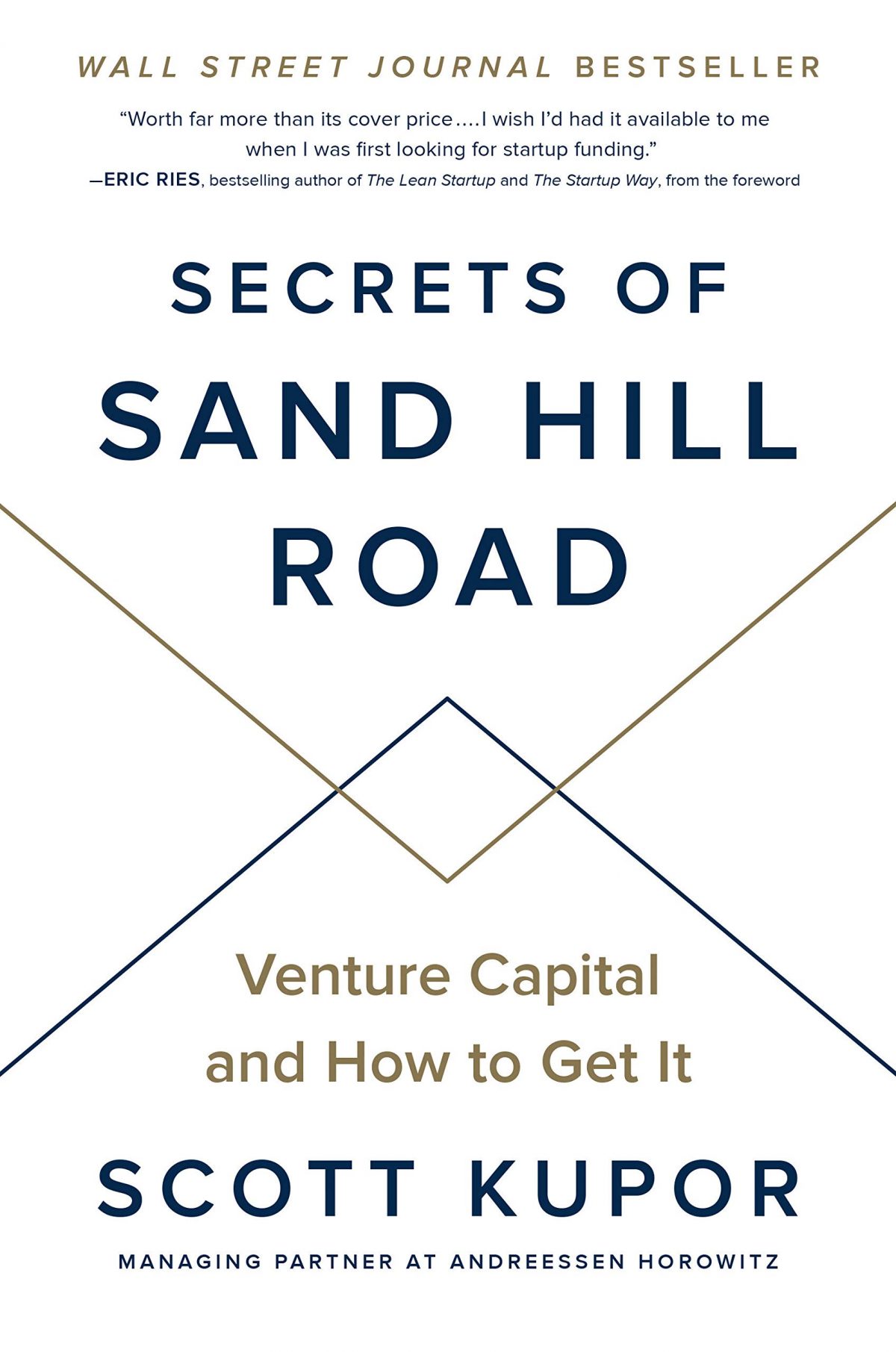
Scott Kupor’s book is very Finnish book. Straight talk, no bells and whistles. Only plain, understandable talk about setting up a growth company.
Three facts why we should care about venture capital:
– “Venture-backed companies now spend 44 percent of the entire R&D budget for American public companies.
– According to a 2015 study by Ilya Strebulaev of Stanford University and Will Gornall of the University of British Columbia, 42 percent of all US company IPOs since 1974 were venture backed.
– Not only are there not enough startups, but the ones that do exist aren’t nearly wide-ranging enough to build the kinds of companies our present and future call for.”
– Bonus track… “Possibly for the first time in history, we’re talent-constrained instead of capital-constrained. How much does it cost to start a business today? It’s cheaper than ever and that way less riskier….”
“The cardinal sins of venture capital is getting the category right (meaning that you correctly anticipated that a big company could be built in a particular space) but getting the company wrong (meaning that you picked the wrong horse to back).”
What are the key learnings?
Kupor wrote the book, because he wanted to inform “you as an entrepreneur need to think about when choosing your venture partner. This will help all entrepreneurs navigate the maze of venture investors and decipher their behavior.”
Key learnings of the book:
– Product first, company second. If the venture has identified a customer need, then the company has solid ground.
– Market, market, market. What matters is the the markets where the venture will be operating.
– Incentives of a General Partner in a VC. Also the motives of the VC must be taken into consideration.
“This book is about helping you to ask the right questions about one of the most important life events for entrepreneurs—your startup and your career—so that you can make an informed decision about how best to proceed. Why? Understand why VCs do the things that they do. In other words, know your partner before you get married.
But something has changed. “About $ 36 billion went into new startups in 1999. Limited partners committed about $ 33 billion in funding in 2017.”
“Startups were also getting to an IPO faster than ever during the dot-com bubble. On average, it was taking companies about four years from founding to go public.”
“Beginning in the early 2000s, though, there were a few significant transformations in the startup ecosystem that would change things in the entrepreneurs’ favor.
– “First, the amount of capital required to start a company began to decline; this continues in earnest even today.
– The second material transformation in the startup ecosystem was the advent of an incubator known as Y Combinator (or YC for short). Cohorts of entrepreneurs joined a “YC batch,” working in an open office space together and going through a series of tutorials and mentorship sessions over a three-month period to see what might come out the other end. Rather, the import of YC, I believe, is that it has educated a whole range of entrepreneurs on the process of starting a company, of which raising capital from VCs is an integral part. That is, YC cracked open the “black box” that was the VC industry, illuminating to entrepreneurs the process of startup company formation and capital raising. Well-known success stories such as Airbnb, Coinbase, Instacart, Dropbox, and Stripe.
– VCs would need to provide something more than simply capital, for that was becoming a commodity. As a result, the “something more” that Marc and Ben decided to build Andreessen Horowitz around was a network of people and institutions that could improve the prospects for founding product CEOs to become world-class CEOs.”
Scott has a sarcastic sense of humor, but in a nice way… “There are other institutions that are in fact the source of “start-up” capital for most new businesses; they’re called banks.”
“The old adage “garbage in, garbage out” is particularly apt for early-stage venture investing. There simply aren’t enough financial metrics to meaningfully model future potential returns for a business that just doesn’t exist beyond the PowerPoint slides the entrepreneur has put together.”
Second key learning…. “There are qualitative and high-level quantitative heuristics that VCs use to evaluate the prospects for an investment. And they generally fall into three categories: people, product, and market.”
1. People and Team
“Many VCs delve deeply into the backgrounds of the founders for clues about their effectiveness in executing this particular idea.
The fundamental assumption here is that ideas are not proprietary. In fact, VCs assume the opposite—if an idea turns out to be a good one, assume there will be many other founders and companies that are created to pursue this idea.
How do you evaluate a founding team? Different VCs of course do things differently, but there are a few common areas of investigation.
– “First, what is the unique skill set, background, or experience that led this founding team to pursue this idea? My partners use the concept of a “product-first company” versus a “company-first company.” The product-first company really speaks to the organic nature of company formation. Product-market fit speaks to a product being so attractive to customers in the marketplace that they recognize the problem it was intended to solve and feel compelled to purchase the product. Consumer “delight” and repeat purchasing are the classic hallmarks of product-market fit. Airbnb has this, as do Instacart, Pinterest, Lyft, Facebook, and Instagram, among others.
– Founder evaluation for VCs is founder-market fit. As a corollary to the product-first company, founder-market fit speaks to the unique characteristics of this founding team to pursue the instant opportunity. Perhaps the founder has a unique educational background best suited to the opportunity.
– The third big area of team investigation for VCs focuses on the founder’s leadership abilities. “
“Execution ultimately matters, and execution derives from a team’s members being able to work in concert with one another toward a clearly articulated vision.”
2. Product
“Will this product solve a fundamental need in the market (whether or not that need is known currently to customers) such that customers will pay real money to purchase it?”
“Only through iterative testing with real customers will the company get the feedback needed to build a truly breakthrough product.”
“Simply put, it’s hard to get people to adopt new technologies”.
“They need to be ten times better or ten times cheaper than current best in class to compel companies and consumers to adopt.”
Vitamin vs. aspirin…. “Ben Horowitz uses the difference between a vitamin and an aspirin to articulate this point. Vitamins are nice to have; they offer some potential health benefits, but you probably don’t interrupt your commute when you are halfway to the office to return home for the vitamin you neglected to take before you left the house. It also takes a very, very long time to know if your vitamins are even working for you. If you have a headache, though, you’ll do just about anything to get an aspirin! They solve your problem and they are fast acting. Similarly, products that often have massive advantages over the status quo are aspirins; VCs want to fund aspirins.”
3. Market Size
“Market” is the third leg of the stool that VCs use to evaluate early-stage investment opportunities. It turns out that what matters most to VCs is the ultimate size of the market opportunity a founder is going after. If the adage in real estate is “Location, location, location,” the saying in venture capital goes “Market size, market size, market size.” Big markets are good; small markets are bad.
Cardinals sins:
– “Getting the category right but the company wrong.
– Getting the company right but the market wrong, that is, investing in a company that turns out to be a nice, profitable business, with a great team and a great product, but in a market that just isn’t that big.
– What’s not okay is to fail to invest in a company that becomes the next Facebook. Remember, you can’t risk-averse your way to success in this business.”
“The truism that VCs must invest in big-market opportunities. Andy Rachleff, a founder of Benchmark Capital, has said that companies can succeed in great markets even with mediocre teams but that great teams will always lose to a bad market.”
“Market size estimation is easiest when a new product is positioned as a direct substitute for an existing product.“
Great stories…. “There is a story that Queen Isabella of Spain was the first true VC. She “backed” an entrepreneur (Christopher Columbus) with capital (money, ships, supplies, crew) to do something that most people at the time thought was insane and certain to fail (a voyage) in exchange for a portion of the to-be-earned profits of the voyage that, while probabilistically unlikely, had an asymmetric payoff compared to her at-risk capital.”
Even greater stories…. “Fewer than fifty years later, in 1878, J. P. Morgan would act as “venture capitalist” to Thomas Edison, financing the Edison General Electric Company and becoming its first evangelist/ beta tester by having Edison wire Morgan’s New York City home. Rumor has it that not only did Morgan’s house almost burn down from some of the early wiring mishaps, but his neighbors also threatened him as a result of the loud noise emanating from the generators required to sustain the illumination.”
Yale uses what’s called a “smoothing model” to determine the amount of money it contributes each year to the university’s budget:
– Venture capital—Yale has a 16 percent allocation to our good old venture capital category.
“Choosing a firm to work with, it’s reasonable to ask where the firm is in the life cycle of that particular fund. Funds tend to be ten years in life and often can get extended for a few years beyond that.”
Remember to…. “Best thing you can do if you are thinking about starting a company is to invest in a real “clean room” in which to develop your foundational intellectual property.”
Hint…. “The founders put in place an employee option pool equal to 15 percent of the company. (I somewhat arbitrarily picked 15 percent, but this does tend to be the standard size of an initial employee option pool in a startup.)”
Raising Money from a VC and right time to raise capital is when the capital is available. Three very important lessons:
– First, employees do often judge the success of the business at least in part on the external measure of valuation in a financing round.
– Second, even if that valuation looks great in the absolute sense (or in the relative sense, compared with your previous round of financing), employees are likely to compare it to other companies that have raised money recently, in many cases independent of whether those companies are relevant benchmarks.
– Third, never underestimate the value of always maintaining momentum in the business, one measure of which may be a successful financing round.
“Angel or seed investors are often an important source of referrals for VCs. It helps that they are upstream from the VCs in that they are typically investing at an earlier stage in the company’s development than might a traditional VC.”
“Angel and seed investors have a direct interest in seeing the companies in which they have invested raise additional (and usually bigger) capital downstream from VCs, and the VCs are interested in a curated pipeline of interesting opportunities in which to invest.
About pitching:
Pitch Essential #1: Market Sizing
“Your job as an entrepreneur is to fit yourself into that market and explain what macro trends are evolving in that market that create an opportunity for you to own it.”
Pitch Essential #2: Team
“Execution is what sets the winners apart from the pretenders.”
“True storytelling is a remarkable talent in so many endeavors, but particularly in a startup, where you have so little actual proof of success in the early years on which people can base their decision to join the company. Great CEOs find a way to paint a vision for the opportunity that simply makes people want to be a part of the company-building process. These same skills will help you land your first (and future) VC financing partners.”
Pitch Essential #3: Product
“Your product plan comes next in pitching the business opportunity. We mentioned earlier that no VC expects you to be clairvoyant about the precise needs of the market, but they are evaluating the process by which you came to your initial product plan.”
“Walk them through your thought process and demonstrate that you have strong beliefs, weakly held.”
Pitch Essential #4: Go-to-Market
“The go-to-market section is often the most underdeveloped section of the pitch for an early-stage company. That is, how will you acquire customers, and does the business model support customer acquisition profitably? Many entrepreneurs make the mistake of skipping over this at the early stage because the current funding round is not likely to get them meaningfully into market. But it’s important to include this in your pitch, even if just at a high level, as it is foundational to the long-run viability of the business. Are you planning to build a direct, outside sales force, and can the average selling price of your product support this go-to-market? Or are you planning to acquire customers through brand marketing or other online forms of acquisition? If so, how do you think about the costs of such activities relative to the lifetime value of a customer? You don’t need to have robust financial models at this stage of your company’s development, but you ought to have a framework that gives a VC enough fodder to understand your thinking around customer acquisition.”
“One side note on the context of adaptability: A hallmark of startup companies is that they often “pivot”—this is a euphemistic way of saying that the original product, go-to-market, etc., didn’t quite work in the way you expected, so you decide to change that aspect of the business and try again. Some pivots can be minor adjustments, while others might be wholesale changes of direction.”
– “First, VCs understand that, despite the best intentions, most businesses go through some set of pivots along the way, whether small tweaks or almost complete restarts. So, as you pitch, you are not expected to be clairvoyant, nor do VCs expect that everything you say in the pitch will materialize as you have forecast.
– Second, though—and this is really important—you do need to demonstrate to the VCs that you are the master of the domain you are proposing to attack and that you have thought about every important detail of your business in a way that shows depth of preparation and conviction.”
Pitch Essential #5: Planning for the Next Round of Fund-Raising
“You should clearly articulate the milestones you intend to accomplish with the money you are raising at this round. Remember that a VC is likely projecting ahead to the next round of financing to gauge the level of market risk she is taking by funding you at this stage. Are you raising enough money to accomplish the milestones you set out such that the next investor will be willing to invest new money at a substantially higher valuation than the current round? “Substantially higher” is very market dependent, but in general you want to aim toward a valuation that is roughly double your prior round. That momentum will be well received by both your current investors and your employees.”
“Remember that most VCs are building a portfolio of companies as part of a fund, and thus they are looking for some level of diversification across a number of investments. Thus, while they may be investing $ 10 million in your current round and reserving some additional dollars to support future rounds of financing, they are not assuming that they will be the only investor throughout your company’s life cycle. This is why VCs care about the achievability of the milestones you are laying out; in most cases, they don’t want to be, or can’t afford to be, the only capital provider at the next round of financing, so they are trying to estimate the risk of you (and them) getting stranded at the next round. If all else fails and you forget everything we just talked about in the heat of the moment, remember to go back to first principles: How do I convince a VC that my business has a chance to be one of those outsize winners that can make her look like a hero in front of her LPs?”
Manage your board
“The role of the board is not to run the company or dictate the strategy, in particular the product strategy; that is the job of the CEO.”
“More generally, a big part of your job as CEO is to manage the board. That might sound odd in that managing typically applies to your direct reports—whom you have the ability to hire or fire—whereas you serve at the pleasure of the board.”
“There are several things you can do with your board to help manage them indirectly.
– First, set the right expectations up front about what you want from your board members. Many CEOs like to do regular one-on-one meetings with board members to ensure that they have time outside of the board meeting to share information and receive feedback. In addition, do you expect them to help you identify future members of the executive team, interview candidates for executive roles, open their Rolodexes to identify sales prospects, etc.? This goes without saying, but you should also set expectations about how you intend to run the board meetings—e.g., do you expect people to have read the deck beforehand and plan to use the meeting largely as a discussion of open questions?
– Second, get agreement among your board members as to how they will provide you feedback. Some boards ask a single member to consolidate feedback from all the others and deliver it one-on-one to the CEO. Others may have an executive session with just the board and the CEO at the end of each meeting to provide group feedback. There is no required mode of operation, but you should both make clear your interest in hearing the feedback and agree on the best avenue.
– Third, make sure that you and your board agree on engagement outside of a board meeting with members of your executive team. Good board members will make sure that you know if a member of the exec team has reached out to them to meet, and provide appropriate feedback to you as the CEO if critical questions are being raised. Bad board members will interfere with your relationships with your direct reports and likely raise concerns among your team about your viability as the CEO.
– Finally, you need to orchestrate the board meeting itself and the agenda. This doesn’t mean not sharing bad news or being selective in your disclosure of important information to the board, but it does mean figuring out what topics are worthy of board discussion and not spending time on topics that are appropriately delegated to you as the day-to-day manager of the organization. Sitting down with your board members at the outset to solicit their feedback on what they would like to see as part of the board agenda is a great way to avoid missing the mark during the board meeting.
IPO: “Putting aside the reasons why more companies are choosing not to go public, let’s focus for a second on why companies do in fact go public.
– Raising capital
– Branding
– Liquidity
– Customer credibility
– M& A currency”
“Ironically (or maybe not), at the same time that it has become cheaper to start a company, it has become more expensive for companies to win.”
“The bad news is that winning those markets requires a lot of capital to simultaneously capture each one. And with this change has come two important financing trends.”
– First, many of the traditional venture capital firms have increased their fund sizes to be able not only to fund startups in the very early stages, but also to be a source of growth capital throughout their life cycles.
– Second, as companies have elected to stay private longer, more nontraditional sources of growth capital have entered the financing market.”
How should we change according to the book?
“What Might Be the End of Venture Capital as We Know It?
– Crowdfunding is one alternative
– Initial coin offerings (or ICOs) for digital tokens is another potential candidate to replace venture capital.”
“These funding sources ultimately represent two sides of the same coin—each is a way to democratize access to capital beyond the more centralized venture ecosystem that exists today.”
What should I personally do?
”Make New Mistakes” i.e. Learn faster and learn new things.
Summary
The book in six words – “Wearing both a belt and suspenders is a good way to make sure your pants stay up” ….. and….. “So let’s eat our broccoli together.”