Kategoriat
Uncategorized

Taleb: Skin in the Game

About the book

Aim of the book is to be practical discussions, philosophical tales and scientific and analytical commentary on the problems of randomness under uncertainty.

How was the book?

This book is for all the people who live in Ostrobothnia in Finland. All the people who thinks that ”moon oikias, soot vääräs” should read this. The Skin in the Game is a perfect book for them. Nassim Nicholas Taleb writes as everybody else would have wrong opinions. He intended the book to be an oversensitive bu***t detector. He says that the book came after a deep unplanned flirtation with mathematics. Unfortunately the first 40 pages were explanation what the book is about and how Taleb gave birth to it. For me it was a bit too much. Nevertheless I enjoyed reading the book.

What are the key learnings?

If I would have to draw a word cloud of the book it would certainly use three words – freedom, trade-offs and rationality. Putting your skin in the game you are making trade-offs with your freedom and sometimes rationality plays no role. 

Topics of the book are:

  • uncertainty and the reliability of knowledge, 
  • symmetry in human affairs, 
  • information sharing in transactions and 
  • rationality in complex systems and in the real world.

For Taleb skin in the game is about justice, honor and sacrifice. Things that that are existential for humans. Core of the book is rationality and risk bearing. Rationality resides in what you do and it is about survival. Rationality is also risk management.

 Important in the book are thinking flaws and what kind of people there are. The thinking flaws that Taleb brings up are:

  • Incapable of thinking in second steps and unawareness of the need for that
  • Incapable of distinguishing between multidimensional problems and their single-dimensional representations and
  • They can’t forecast the evolution of those one helps by attacking.

There are types of Skin In The Game people:

  • No skin in the game people are those who keeps the upside, transfers downside to others, owns a hidden option at someone’s else’s expense. For example consultants or corporate executives.
  • Skin in the game people are those who keeps his own downside, takes his or her risk. For example entrepreneurs or citizens.
  • Skin in the game of others or soul in the game are those who takes the downside on behalf of others, or for universal values. For example saints, artists, innovators, journalists who expose frauds.

Taleb’s characterization of people is so interesting that the following quote summaries his thinking. ”Beware of the person who gives advice, telling you that a certain action on your part is ”good for you” while it is also good for him, while the harm to you doesn’t directly affect him.” So there is asymmetry of advice is when it is applied to you but not him. As Romans were fully aware, one lauds merrily that merchandise to get rid of it (Horace). Advice and sales should be kept separately. But if the asymmetry or symmetry exists in sales, so how much should the salesperson tell to the buyer? Laws come and go; ethics stay.

 In the same context Taleb sees that peoples thinking and actions should go hand in hand. Those who do should talk and only those who do should talk. Things designed by people without skin in the game tend to grow in complication (before their final collapse). Like Nokia’s strategy department did. Non-skin-in-the-game people don’t get simplicity. Without skin in the game everybody is dumb. If you do not take risks for your opinion, you are nothing.

 Putin against heads of NATO countries is one example of asymmetry. Putin does not have to be re-elected and he does not have to act with the same rules. On the other hand NATO heads have to be thinking what his or hers statements means for his re-election.

 When we think about symmetries or asymmetries we must bear in mind four things:

·       Unconditional symmetry is base of democracy.

·       Symmetries between people and transaction – an eye for one eye.

·       Rhodian law – all must be made up by the contribution to all.

·       Silver rule symmetry: you can practice your freedom of religion so long as you allow me to practice mine.

Minorities are one important form of asymmetries. According to Taleb the dominance of minority has led to manifesto of dictatorship of the minority. For example halal meat or kosher drinks are more widely used than the minority. Lingua franca i.e. English is used as corporate language, because the entry-level of starting to use English is smaller than training everybody to use a new language. This is a case example of asymmetry is our time. Renormalization rule is one form that exist in the minorities’ eco-system. Renormalization means that everybody is using a minority product – lactose free dairy products, halal meat or kosher. To win the game you have to win only small proportion of users and you will get the vast majority as well. Sound, but controversial thinking and maybe a solid marketing strategy.

How minorities rule and make change happen? Societies evolve when few courageous people want to move the needle. ”All one needs is an asymmetric rule somewhere and someone with soul in the game.” Or as Alexander the Great has legendry said – ”I am not afraid of an army of lions led by a sheep; I am afraid of an army of sheep led by a lion.” Meaning that there is a value for active, intolerant and courageous minority. That is short, but elegant summary How Taleb sees people. 

Taleb spends few pages around a concept what he calls ”Intellectual Yet Idiot”. Taleb is suggesting that for example Richard Thaler is a intellectual yet idiot, because of his nudge theory. Btw what is IYI? According to Taleb it is ”one IVY league degree one vote” against one man one vote. Anyways Talebs critic might be in place, but having read The Nudge book I would argue that Taleb and Thaler have different motives. Thaler want’s to help us making positive action. Taleb want’s to grow the readers to become non-traditional thinkers and finding new perspectives. Strategy vs. execution?

Thomas Piketty and his books gets also his share of the IYI analysis. Piketty’s analysis is also seen flawed, because inequality works the other way around according to Taleb. He sees that year to year changes does not happen in the knowledge economy and the people belonging to the ne percent do not change. So the winner takes it all and Piketty does not understand that. According to Taleb. And maybe he is right. The one percent has different tools to protect their wealth than the blue collar workers have in order to accumulate his wealth. 

Taleb is also playing the violin of change in our globalized society. He points out that currently we are witnessing Uberization, birth of city-states and Black Swans. Uberized is a process of being disintermediated. City-states are growing and it will give birth of new governance. What has survived has revealed its robustness to Black Swan events and removing skin in the game disrupts such selection mechanism.

How should we change according to the book?

Why Romans had a slave as a treasurer? Because the laws for a freeman were different compared to a slave. The slave had more skin in the game. Taleb didn’t write this as self-help book, but I think that we can learn from these great ideas that he has. Concept of freedom, risk taking, envy and income mobility might be one of the ideas that might help us change.

Today the best slaves are those who you overpay and the modern slave knows that. For example expat strategy. Even extreme freedom is not freedom, because there lies also a risk. Employees are reliable by design, but you should not trust their ability to make hard decisions, because they are afraid of the risks. For example the tale by Aesop where the ass don’t want the collar of the dog although it gets all the meals. Eventually the free ass was eaten up by a lion. That is real skin in the game. Freedom is never free and life is full of trade-offs.

Salesperson and traders are manageable only when they are not profitable, in which case they were not wanted. When people turn into profit-centers, then no other criterion matters. And then people might turn into wolves again. Or risk takers which can lead that they are also socially unpredictable people. One way to show your freedom is to curse – for example in Twitter. That way you show that they are also competent which is a low-risk strategy to show off. ”Risk takers take risks because it is in their nature to be wild animals.” 

Few notions about work and businesses. Why firms exist? Because it’s too costly to negotiate every transaction and that’s why companies hire employees (like for example The Oktoberfest dilemma). ”What matters isn’t what a person has or doesn’t have; it is what he or she is afraid of losing.” The more you have to lose, the more fragile you are. So lovers of paycheck (employees) have significant skin in the game – their dependability and they have a reputation to protect. How to become financially secure? It’s not about means – it’s about lack of wants. ”F*** your money.”

Envy does not travel long distance or cross many social classes. Envy is apparently being upset that ”less smart” persons are much richer. Typically people envy people how are in the same level. Not the super-rich class. Envy you are more likely to encounter in you kin (Aristotle). So that’s why cobbler envys cobbler.

About income mobility Taleb has made interesting observation. Americans are far better well of than Europeans. American equality is that 10% of Americans will spend at least a year in the top 1 percent, and more than half of all American will spend a year in the top 10 %. But for example 60 % n the French list are heirs and third of the richest Europeans were the richest centuries ago. Make the rich rotate by forcing the rich to be subjected to the risk of exiting from the one percent? Are there mechanisms that is protecting the 1 %? Anyways this tells a bit different story about European and American income mobility.

Taleb’s book is flooding with quotations. Here is a small collection of those:

·       How to find hidden vulnerabilities – ask me why I don’t have a statue rather than why do you have one?

·       You can’t chew with somebody else’s teeth.

·       A bird in the hand is better than ten on the tree.

·       Madness is rare on individuals, but in groups, parties, nations, it is the rule. (Friedrich Nietzsche).

·       Action without talk supersedes talk without action.

What should I personally do?

Ultimate is when you have your skin and soul in the game.

Summary

The book in six words – ”Success is leading a honorable life”

Kategoriat
Uncategorized

Doz & Wilson: Ringtone

About the book

The book by Yves L. Doz and Keeley Wilson is like a detective story. You know what will happen at the end of the story, but you don’t know where exactly did the crime happen.  

I served the mobile communications industry for 12 years and that’s why the ”Ringtone” book is very interesting piece of analysis to me. It’s like an analytical continuum for books such as ”Good to Great” or ”Leading Change”. I can remember great many historical dates and activities that this analysis presents.

How was the book?

In the case on Nokia and it’s mobile phone business we typically analyze the reasons for failure. But in this analysis there is also presented the reasons for the high-growth of the mobile phone business within Nokia. Somehow it is actually more interesting than the failure of the mobile phone business in Nokia. Wouldn’t you like to learn how to grow businesses more than how administer failure.

What are the key learnings?

I remember when I joined Nokia and the CEO of the company was Olli-Pekka Kallasvuo. One of the most impressing moments was when I heard mr. Kallasvuo to end one of his speeches stating that ”Internet is our quest”. Well said, but it was not only our quest, but it was also our destiny.

Nokia didn’t go from good to great. It went slowly from great to bad and then to worse. The old Nokia was once hit by the Schumpetrian creative destruction and it happened long before the mobile era. So actually Nokia has in it’s 153 years of history met disruption at least twice. And survived from both occasions.

According to Doz and Wilson the reasons for success of the mobile phone business in Nokia were:

·       Porter’s theory of competitiveness of nations is one explanation why Nokia and Finland was struck with the phenomenal success.

·       Planetary alignment i.e. good luck.

·       And fragmented and localized structure on Finnish telecoms market.

I think that Nokia was lucky when it got involved in the development work of NMT and later in the development work of GSM specifications. For example roaming was invented in the NMT standardization process and it led to the service development of other complimentary services than voice calls. GSM Standard in was a great business plan for companies that were hungry enough to execute. Nokia with it’s greenfield operator customers were more hungry than the incumbent state owned telecom operators. Radiolinja was one of the hungry customers and so it became the first customer of Nokia for a digital network.

According to Doz and Wilson the reasons for failure were:

·       It was unavoidable a la Schumpeter.

·       Organizational evolution and adaptation gone astray.

·       Failure of management volition.

There is no single decision that explains the failure of Nokia Mobile Phones. It was merely mixture of different and multiple decisions that lead to prolonged deterioration of the mobile phone business. Nokia was declining way before the arrival of new competitors such as Android and iPhone. These competitors were in platform business, but Nokia was still in hardware business. Nokia was caught up with the ”Red Queen” effect. The Red Queen explained that ”My dear, here we must run as fast as we can, just to stay in place. And if you wish to go anywhere you must run twice as fast as that.” Maybe Nokians should have also tried to learn to run other routes. And smarter?

What could have Nokia done differently in order to save it’s mobile phone business?

·       Create and stick with a software-first vision.

·       They should have create a strategy how to compete against Internet companies.

·       Develop proprietary operating system for Nokia.

·       Nokia didn’t have a theory how succeed.  

·       Integrate interdependent decisions.

·       Behave disciplined as the Good to Great companies did.

At the end of the book Doz and Wilson offers some factors that might have saved mobile phones businesss from total destruction:

·       Nokia kept doing the same thing for too long.

·       The innovation center should have been established much earlier to California.

·       MeeGo should have been developed much earlier and in faster pace.

There is also exhaustive list of management lessons which are by far the best outcomes of the research and analysis. My favorite findings are:

·       Success begets failure.

·       Success also breeds conservatism.

·       A new reality of different nature calls for a new strategy-making paradigm.

How should we change according to the book?

As mentioned this book is like a detective story and you don’t know when or where does the crime take in place. Bearing in mind that ”Nokia’s success in mobile phones was neither the fruit of a repeatable recipe, nor an accident”. Due to that reason the Ringtone is somehow a dull book to read, because I was certain that the research team would have found a repeatable recipe.

But we can learn from the book a great deal:

·       We should invest into the future megatrends.

o  As long as GSM specifications was the business plan everything was well. When they had to become a software-first company, the hardware-first attitude overruled the need for change.

·       Never forget your customer.

o  Time consumed in committees was away from the customer centric work. Key driver in change is that change management must never forget the customer.

·       Organizational changes need presence of management

o  Matrix organization and it’s barons turned against each other. They had to compete from the same resources and the leadership team failed to guide these teams. ”Organizations structures do not fail; management fails at implementing them” (Jay Galbraith).

The idea of matrix organization was sensible for Nokia, but it was poorly implemented. Matrix organization is not a dead end, but there are three ways to run a matrix:

·       arbitration,

·       negotiation,

·       decentralization & delegation.

Because Finns have a strong tendency towards consensus Doz and Wilson suggests that in Finnish matrix organizations there should be clear and speedy rules for decision making

Matrix organization managers needs different set of business skills. For example when matrix leaders pushback decisions to managers he needs:

·       collaborative skills,

·       a careful balance of collective interest and self-interest and

·       structural context to match.

What should I personally do?

Read Gary Hamel’s book called ”Competing for the future”.

Summary

The book in six words – ”Lieutenants should not turn into barons” (Jorma Ollila)

Kategoriat
Uncategorized

Esko Valtaoja: Avoin tie – kurkistus tulevaisuuteen

Kirjasta

Esko Valtaoja on Suomen nyky-tiedeyhteisön kruunaamaton valtias. Ei viikkoa etteikö Valtaoja olisi julkisuudessa. Se jopa saattaa nostaa mielenkiintoa kirjaa kohtaan. Universaalista aiheesta huolimatta Valtaojan teos on lukemisen arvoinen eikä sekään vähennä mielenkiintoa, että teos on vuodelta 2004.

Minkälainen kirja oli?

Lukukokemus on humoristinen ja paikoitellen henkilökohtainen, mutta pääsääntöisesti hyvin ajateltuja ja syvällisiä ajatuksia sisältävä teos. Valtaoja on kirjoittanut näkemyksensä optimismista ja tulevaisuudesta. Siinä on kirjan tarkoitus. Juuri edellä mainituista syistä kirja on sekä nautinnollinen ajatuksia herättävä lukukokemus että havahduttava kokoelma tosiasioita. Valtaojalla on paljon ihmiseen ja ihmisyyteen liittyviä havaintoja. Ei hän ehkä yllä Daniel Kahnemanin ”Thinking, fast and slow”-kirjan tasolle, mutta kauas ei jää kotimaisena kilpailijana.   

Valtaojan humoristisuutta kuvaa tarina Kolumbuksesta ja kuunpimennyksestä. Kolumbus tarvitsi vastentahtoisten intiaanien apua ja hankki sitä almanakan avulla. Kolumbuksen idea oli, että uskotteli intiaanit luulemaan, että hän pystyi ”jumaliensa” avulla aikaansaamaan kuunpimennyksen. Almanakan avulla hän tiesi kuunpimennyksen tulevan ja sitä tietoa hyödyntäen intiaanit saatiin yhteistyökykyisiksi. Toisessa Valtaojan tarinassa sama temppu ei toiminut Uuden-Guinean viidakon asukkeihin vuonna 1928. Huijauksen kohteena ollut heimopäällikkö tiesi kuunpimennyksen poistuvan yhtä varmasti kuin se saapui. Tämän lähemmäksi – näitä esimerkkejä lukuun ottamatta, ei Valtaojan kirjassa päästä tulevaisuuden ennustamista. Jos olet kiinnostunut arvioimaan mitä tulevaisuus voi tuoda tullessaan ja haluat lukea aiheesta suomalaista kirjallisuutta, niin Avoin tie kannattaa lukea. Kuten monet tulevaisuutta käsittelevät kirjat – Valtaojankaan, eivät kerro mitä tulevaisuus tuo tullessaan. Ne kertovat enemmän viitteitä siitä mihin tulevaisuus voisi rakentua. Omalla tavallaan Avoin tie muistuttaa paljon Hararin uusinta Homo Deus-kirjaa.

Mitkä ovat kirjan keskeiset ideat? 

Sotahistorioitsijat tietävät, että tasaväkisen taistelun ratkaisee se kumpi puoli jaksaa uskoa voiton mahdollisuuteen. Niin se on myös tulevaisuuteen liittyen. Me jotka olemme kehitysoptimisteja, niin näemme tulevaisuudessa enemmän voittoja kuin häviöitä. Valtaojan sanoin ”pessimismi luo avuttomuutta”.

Toiseksi hän uskoo, että tulevaisuus on aina nykyhetken rappiota. Vertauskuvat Valtaoja löytää niin mongolien verisistä valloitusretkistä sekä niiden tuomista reittien aukeamisista idän ja lännen välille. Tai natsien tuhoamasta Euroopasta, jonka tuloksena elämme nykyisyyttä. Leninin mukaan ”omelettia ei voi tehdä rikkomatta munia”, vaikka hänen johdollaan rikottiin paljon munia ilman, että sitä omelettia syntyi.

Thomas Moren utopia on paikka ei missään. Ja utopisti haluaa aina painaa jarrua. Vastustaa edistystä, joka ei vie muutosta utopiaan. Optimisti on se, joka jaksaa taistella vielä silloinkin, kun toiset ovat luovuttaneet. Kolmas porukka, johon Valtaoja ottaa kantaa ovat anarkistit – hallittujen ja hallitsijoiden väliseen ristiriitaan, sillä he haluavat tehdä niin kuin itse haluavat. Meidän aikaamme johtaa runsauden anarkia, joka näkyy mm. internetissä missä kaikkea on kaikille, liikaa. Suomalainen mökkielämä on anarkismia parhaimmillaan, siellä saat tehdä miten haluat. Ei silti tarvitse tyytyä demokratiaan, jossa pitää tehdä kuten toiset haluavat. ”No man is an island” (John Donne)”.

Uutuus kun vaikuttaa ihmiseen ja ympäristöön, niin tapahtuu muutoksia. Hän luettelee hengästyttävästi tapahtumia ja teknologioita, joiden vaikutus tulevaisuuteen voi olla arvaamaton. Kännykät. Sivilisaation uudet keskukset. Ihmisruumis voidaan erottaa aivoista. Geenimuunneltu ruoka. Fuusiovoimala ITER. Näitä kaikkia edellä mainittuja me koemme ja näemme ympärillämme, mutta osaammeko erottaa niiden tuomat tulevaisuuden teoreettiset vaarat ja saadut hyödyt. Vaaroiksi voidaan mainita esim. Mooren laki, joka sitten muuten ei ole laki vaan havainto. Mooren laki saattaa ennustaa jotain, mutta ei takaa fysiikan lainomaisesti varmuutta tulevaisuudesta.

Aivojen käyttäminen on tärkeä kehittymisen edellytys – ”use it or lose it*. Ehkä juuri siksi oppiminen ja ikääntyminen on Valtaojalle tärkeää. Hän näkee korrelaation iän, oppimisen ja ymmärtämisen välillä. Niiden yhdistelmä – hänen mielestään, johtaa vääjäämättä sivistyneisyyteen, kuten myös monen meidän muun mielestä. Tulevaisuuden rakentamisessa olisi hyvä huomioida edellä mainittu sekä ymmärrys ihmisen pohjautuvan apinaan. Inhimillinen kulttuuri on aivojemme saavutuksia, joka erottaa meidät apinoista ja luo pohjan ihmisyydelle. Valtaoja haluaa, että ymmärrämme eläimellisyytemme, joka voi johtaa kaikkien sotaan kaikkia vastaan.

Valtaoja luettelee myös muita tekijöitä mitkä erottavat meidät apinoista:

1.    kyky sympatiaan ja empatiaan,

2.    arvot ja järjestys,

3.    vastavuoroisuus,

4.    kyky tulla toimeen,

5.    mukautumiskyky ja

6.    älykkyys sekä kyky rationaaliseen toimintaan.

Valtaoja nostaa esille myös perspektiivin käsitteenä. Todennäköisesti me emme edes osaa katsoa tulevaisuuteen, koska pörssianalyytikon näkyvyys on kvartaali ja ihmisen oma näkyvyys on korkeintaan omiin lapsenlapsiinsa. Siihen kun vielä lisätään Teilhardin emergenssi – ennalta aavistamaton, niin ihmisen kyky ennustaa tulevaisuuteen on todennäköisesti olematon. Mutta vain ihminen voi jatkaa evoluutiota. Otetaan esimerkiksi lentäminen. Kului kolme vuosikymmentä Wrigthin veljeksien keksinnöstä ensimmäiseen suihkukoneeseen. Siitä kolme vuosikymmentä ensimmäiseen kuulentoon. Mitä seuraavan kolmen vuosikymmenen jälkeen? Avoin tie johtaa kaikkialle, mutta ei minnekään ilman ihmistä.

Mitä meidän pitäisi tehdä kirjan perusteella?

Valtaoja haukkuu status quota ”himmeäksi ideaksi”. Se on ihmiskunnan kohtalokkain aate. Kirja toivoo – suorastaan vaatii, jokaista meistä muuttamaan sekä muuttumaan. Vaikka henkisesti kaipaamme status quota, niin todellisuudessa emme sitä tarvitse. Muutos on ainoa asia mitä tarvitsemme.  

Mitä minun pitäisi itse tehdä? 

Estää himmeän idean mukanaan tuomaa pysyvää olotilaa.

Yhteenveto

Kirja kuudella sanalla – ”Me kylvämme (itse) oman tulevaisuutemme siemenet”.

Kategoriat
Uncategorized

Kim & Mauborgne: Blue Ocean Shift

About the book

Blue Ocean Shift (BOS) is a systematic process to move you from fierce competition to new markets. You should be looking at wide-open blue oceans, which are without bloody competition and which can also engages company’s workforce. Successful BOS is a humanistic process. It should legitimizes our fears and deal with the issues.

W. Chan Kim and Renee Mauborgne are trying to empower managers to make the shift from red to blue ocean with practical guidance. With these methods you might even win by creating value-cost.

How was the book?

To start with – I’m somehow baffled. The Blue Ocean Strategy book was well advertised and  hyped decade 12 years. Even today you might find people talking about the Blue Ocean Strategy. Secondly the cases they are presenting are minimalistic or to be honest some cases are trivial. Thirdly they are seriously repeating points of views that could be well understood when mentioned only once. Too late, too little and too repetition?

When we forget these issues, I will gladly recommend the book for those who have not read the original Blue Ocean Strategy. It’s a big merit that Kim and Mauborgne have created the Blue Ocean concept. And with this book you get a workbook built within. Those who have already read the Blue Ocean Strategy, I would recommend to read something else unless the original book is your favorite.

What are the key learnings?

Blue Ocean Strategy is about market-competing moves and market-creating moves. It is like two oceans – red is market with fierce competition and blue is market with high growth and profit. Red ocean companies are bureaucratic and resistant to change just like the companies John P. Kotter and Jim Collins are trying to help. For example there is a story about Kimberley-Clark Brazil which is one of the great companies in the ”Good to Great” book by Jim Collins.

Kim and Mauborgne talk a lot about superior technology as one of the key drives of change. Compared to Collins who did not see tech as a driver for a transformation to a good to great company. Kim and Maubrogne combines these ideas and introduces a hybrid term of disruptive creation which combines for example both new technology and the creative usage of it.

Creative destruction by Joseph Schumpeter plays a vital role as a concept in the BOS although the real economic growth comes from the creation of new markets. For example blockchain could be one of those new technologies that enables new markets. The book uses different kind of examples. Such as how to reduce of the cost of petty criminals and prisons in Malaysia? How to define French fry maker market in France? How to create a youth orchestra in Iraqi and travel to international orchestra competitions? How long does it take to make the transformation? New French fry maker – ActiFry, was launched in two years. Iraqi and Malaysian cases ”were made in a year or so”. These and other examples illustrated how BOS works. Three key components to BOS:

1) Adopt a blue ocean perspective to expand horizon and seek for opportunities.

2) To have practical tools for market creation which helps the companies building commercially compelling new offering.

3) A bult-in process that empowers people to ”drive the process for effective execution.

Kim and Mauborge want’s to teach us how to move from market competing to market creating. BOS way of working is to identify and challenge the industry’s fundamental assumptions. Kim and Mauborge introduces five steps to create new markets are. These steps are based on their study about competition and blue oceans:

1. Get started with pioneer-migrator-settler map.

2. Understand where you are now with strategy canvas tool.

3. Imagine where you could be with buyer utility tool.

4. Find how to get there with six paths framework.

5. Make your move with blue ocean fair.

By the way the pioneer-migrator-settler map is kind of BCG Matrix which communicates to the management how fit the company is for the future. And ”to build a shared understanding of the likely consequences of inaction”. Anyways leaders are tied into two fundamentals. Firstly market boundaries and industry conditions are given. Secondly typically organizations make choice between differentiation and low cost. So you can’t offer value (differentiation) and low-cost (cheap) according to this thinking.

Nondisruptive creation can generate new markets like ringtones did for mobile entertainment, life coaching did for personal & professional lives, Sesame Street did for preschool market, Viagra solved dysfunctional erectile or Grameem Bank did with microloans. These did disrupt any market per se. So embrace nondisruptive and disruptive creation in strategic thinking. Comic Relief’s Red Nose-campaign and Salesforce.com’s web-based CRM are examples how to re-define the market and move to blue ocean. A growth model for market-creating strategy:

1. Breakthrough solution for existing problem.

2. Redifining an existing problem and solve it.

3. A brand-new problem and solution for that.

Blue ocean strategist do’s and dont:

• They do aim to make competition irrelevant.

– How to differentiate so that your offering cannot be benchmarked?

• They do focus on creating and capturing new demand.

– Search for new demand from noncustomers.

• They do aim to break the value-cost trade-off.

– They pursue differentiation and low cost, not either-or.

• They don’t take industry conditions as given.

– Industry conditions are created by individual companies and those can be changed by individual companies.

I feel again that I’m reading John P. Kotter or Jim Collins when Kim & Mauborgne starts to talk about humanness. For them it is to help people develop the confidence to act. Way to use humanness are:

1. Atomization = deconstruct the challenge and focus on solving them one at a time

2. Firsthand discovery = let people to discover for themselves the need for change (brutal facts)

3. Exercise of fair process = engagement, explanation and clear expectations.

With the BOS methodology you will create six different blue oceans with strategy canvases, business models, ERRC grids etc. Kim & Mauborgne have a lot of different kind of tools that are freely available for download from HERE. Just to get a glimpse of the tools I’ll present two – The Six Paths and ERRC.

Six-paths to open new value-cost frontier where you:

1. Look across alternative industries

2. Look across strategic groups within your industry

3. Look across the industry buyers and redefine the industry buyer group (Ogilvy & wife)

4. Look across complementary products and services

5. Rethink your functional-emotional orientation of your industry

6. Participate in shaping external trends over time

A useful tool is also the the ERRC grid <= the way you define your blue ocean. For example the hotel chain citizenM is worthwhile of reading on how to deeply the ERRC grid.

– Eliminate factors that are granted. For example citizenM eliminated front desk operations.

– Reduce factors that are below standards. For example citizenM reduced room size.

– Raise factors above the standards. For example citizenM raised the quality of the sleeping environment.

– Create factors that has not been offered. For example citizenM created check-in kiosks.

How should we change according to the book?

Obviously – if you are interested on creating new markets for you company – you should evaluate this methodology. While thinking about the possibility you could start the thinking from ”customer first” to ”noncustomer first”. Secondly we should never forget – today’s negatives can be turned into tomorrows positives. And when building the buyers experience in blue ocean – we should really experience the buyers experience.

What should I personally do?

Start thinking how to move your operations to areas where there is no competition (blue ocean). 

Summary

The book in six words – ”What we look for determines what we see.” 

Kategoriat
Uncategorized

Collins: Good To Great

About the book

This book is pure gold even after 17 years when it was published published.

How was the book?

The Good to Great book by Jim Collins is a story about eleven companies and their comparison companies. But eventually it’s more about people than systems, more about how to facilitate growth than maximizing profit and more about companies that existed in the pre-Internet era.  People and especially the right people are in the heart of the book. Passionate, disciplined and willing to prevail right people. Those people who can execute disciplined actions within the Hedgehog Concept. Then there is the another story about ”exploration and description of the pieces of the buildup-to-breakthrough flywheel pattern” i.e. how to facilitate enduring growth in greatness.

What are the key learnings?

What are great companies? Those are companies that have had cumulative stock returns beating the market on average 6,9 times.

How to become a great company. First you need time from 10 to 20 years. Then you need a board of directors who know what you are doing. And then:

·      You need a Level 5 leader.

·      Get the right people on the bus and the wrong people off the bus.

·      Remember the Stockdale Paradox.

·      Brutal facts.

·      Find you Hedgehog Concept.

·      Make disciplined decisions and actions.

·      The Flywheel loop.

After all this your company is on it’s way from good to great and built to last.

How to describe a great company?

·      Typically the CEO comes from inside.

·      Compensation was not a key driver.

·      Strategy work didn’t differ from other companies.

·      They focused also on the what-not-to-do.

·      Technology was accelerator, but not the cause of transformation.

·      M&A played no role.

·      Scant attention on leading change.

·      No revolutionary process behind the transformation.

·      And greatness was ”matter of conscious choice”.

I will elaborate few topics in more detail such as The Hedgehog Concept and the right people. Let’s start with leadership and right people. Leadership accounts in the transformation from good to great. In these companies leadership rest on two main factors – humility and fearless, modesty and will. Level 5 leader is like a servant leader.

When talking about people Collins scrutinized always about the right people. It all starts from disciplined people. The right people. What do right people want? They want to be part of winning team. Right people are according to Collins people who are disciplined and understand the meaning just like Viktor Frankl descripes. About discipline you must first understand that culture of discipline is born from the work ethic and lack of discipline creates need for bureaucracy. So right people are on the bus, because of the other right people. They don’t need to be motivated and ”great vision without great people is irrelevant”. Collins states that right people is your most important asset. And rigorous people management comes from three practicalities – ”when in doubt, don’t hire – keep looking”, ”when you know you need to make a people change, act” and ”put your best people on your biggest opportunities, not your biggest problems”.

The Hedgehog Concept is the turning point for the good to great companies. The Hedgehog name sounds childish, but it’s actually something that sticks. You cannot become a good to great company without the Hedgehog Concept. So read this very carefully, because with the Hedgehog Concept you will prevail. The Hedgehog concept is like the business idea for a good to great companies. For Wahlgreen the Hedgehog concept was drugstores with high profit per customer visit. Also passion is key ingredient in the concept, so do not think it’s only something that you can measure. And how long does it take to develop a Hedgehog Concept. Typically it took four (4) years for the good to great companies in order to get their Hedgehog concept right.

After you have found your Hedgehog concept you should start spinning the flywheel. It also requires time and effort to get it turning, but when it does start turning it will pay dividends. But avoid the doom loop by changing the direction of the flywheel. Learnings from the doom loop: 

·      ”You absolutely cannot buy your way to greatness”, because two turkey’s won’t make an eagle.

·      The new CEOs typically stop the flywheel process. Obviously backed up by the board of directors.

Doing deals is exciting and that’s why comparison companies had a ”when the going gets tough, we go shopping”-attitude. In good to great enterprises the acquisitions where used after the Hedgehog and the flywheel had built momentum. The executives of good to great companies wanted to accelerate their business after they knew what they were doing.

How should we change according to the book?

More relevant question would be that how to become a great company in today’s business environment. Collins states that ”technology cannot turn a good enterprise into a great one, nor by itself prevent disaster”. 80% of the interviewed executives did not mention technology as a transition factor on becoming a great enterprise.

How about today? Internet technology and it’s applications are pervasive. Did Collins miss this trend? Isn’t the Internet bigger phenomenon than other tech trends that good to great companies deployed? Is technology today merely an accelerator or the cause? Somehow Collins is on the top of the technology when he talks about Boeing. Technology was an accelerator while he analyzed the Boeing’s change from military segment to commercial segment, but I think that he still underscores the essence of Internet. I suppose that the Internet is the commercial airline of worlds boeings. Maybe today we should promote technology to the agenda for the companies on their way from being a good to a great.

To be fair let’s not forget the story about Wahlgreens and Drugstore.com. It was supposed to eat up Wahlgreens businesses. Well, that didn’t happen, because Wahlgreens was a good to great company and Drugstore.com was not. Eventually Wahlgreens bought it

Great enterprises never talked about competitive strategy. They were minding their own business, not competitors. They were not driven by fear. And they were driven by the aspiration of becoming better all the time. This trait is something that can be recognized extremely well from companies minding their own businesses.

What is the key ingredient to ensure that the good to great company will become a built to last company also? In short it’s the core values. ”Core values are essential for enduring greatness, but it doesn’t seem to matter what those core values are”. And how long does it take? For example the buildup-to-breakthrough took two year’s for Fannie Mae’s, but for Circuit City’s it took nine year.

At the end of the book Collins asks ”why greatness?” He replies with two answers – it’s as hard to build a good as it’s hard to build a great company. Secondly we are all looking for meaning and in the great companies people tend to know the meaning. This is what the Good to Great book is all about it. Read it!

What should I personally do?

Five things I should elaborate:

·      ”Sell the mills”.

·      Should I form a council which should iterate at least three times. ”It will not happen overnight”. 

·      Why not do my own ”stop doing”- list? Focus on continual improvements around selected areas.

·      Avoid hoopla and show evidence that the flywheel is turning – short-term wins. Just like Kotter is talking in book about Leading Change .

·      Remember why rinse the cottage cheese when the life is so good? Bank of America syndrome and it’s executive perks.

Summary

The book in six words – Good is the enemy of great. 

Kategoriat
Uncategorized

Bettger: How I Raised Myself from Failure to Success in Selling

About the book

This book was first published in 1947. The reading experience is like von Clausewitzs ”On War”. The similarity with the two books comes from the pioneering spirit. The books are novel and universal at the same time. Those are also like a wayback machines. You can sense things that have changed forever. For example the timeless way of doing business between people from the days of Bettger. Or the manners that people endorsed those days.

Bettger’s book is like a handbook of a salesmen. Or let’s say THE handbook of a salesman. Most of his findings are still here. Maybe today many of his insights are already common understanding, but most probably this was not the case in 1947 or at least not widely known.

How was the book?

I enjoyed reading this Bettgers book, because he believed in the power of enthusiasm. He used his will of power to change conditions and was enthusiastic about selling. According to him the biggest factor of success in sales is being enthusiastic about selling.

Secondly he started to deploy a sales funnel ideology and metrics in his daily operations. The method was simple. He calculated how many sales calls he made, how many of those turned into a meeting and into a closed deal and most importantly what was the actual revenue.

Thirdly Bettger also analyze what is the odds of getting a deal between first and third sales call. By the way his statistics showed that the first and second sales call contributed 93 % of all the deals. Of course sales is art of being enthusiastic, but when you combine it with metrics and analysis – boom! – money keeps litterally pouring in.

He even wrote a kind of poem about making deals. We could call it the Sales Call Poem:

You can’t collect your commission until you make the sale;

You can’t make the sale ’til you write the order;

You can’t write the order ’til you have an interview (sales meeting);

And you can’t have an interview ’til you make the call!

Last, but not least. He also had an ”self-organization day” every Friday morning. It meant that he planned and booked his sales calls with his clients for the coming week or weeks. That way he used to worry about next week’s meetings only once a week.  

What are the key learnings?

11 basic principles in making that sales:

·        Make appointments

·        Be prepared

·        What is the key issue

·        Key Word Notes

·        Ask questions

·        Explode dynamite!

·        Arouse fear

·        Create confidence

·        Express honest appreciation of your listener’s ability

·        Assume a close

·        Put YOU in the interview (sales meeting)

Take enough time to think and plan. The rest is all about execution. Dedicate time to plan your activities. IBM had during Bettger’s days a so called ”Weekly Work Sheet”. That was designed as a planning tool for salesmen. They used the ”Weekly Work Sheet” to fill in his future sales meetings. Bettger used it also to schedule every hour for week the in advance.

Book an hour from every morning or evening for reading and studying. That was Bettger’s ”Six-O’clock Club”. He dedicated time for development.

Bettger had also his question method. Six things you can gain by the question method – Why don’t you ask?

1) Helps you to avoid arguments

2) Helps you to avoid talking too much

3) Enables you to help the other fellow recognize what he wants

4) Helps to crystallize the other person’s thinking

5) Helps you find the most vulnerable point with which to close the sale – the key issue.

6) Gives the other person a feeling of importance

Find out what the other fellow wants and help him to get it. This is ”the most important secret of salesmanship.” The most important word in selling is ”why”. Helps you to remember the importance of being a good listener.

Last, but not least. Bettger had his six ways to win and hold the confidence of others.

1) Deserve confidence

2) Know your business and keep on knowing your business

3) Praise your competitors

4) Bring on your witnesses

5) Look your best

6) Never exaggerate

How should we change according to the book?

Four simple things:

1) A salesman cannot know too much but he can talk too much!

2) Smile when you make sales calls.

3) First sell the appointment and then sell your product.

4) Never forget a customer; never let a customer forget you!

What should I personally do?

Benjamin Franklin’s thirteen subject a la Frank Bettger (see page 186-187).

Summary

The book in six words – The most important word in selling is ”why”. 

Kategoriat
Uncategorized

Gordon Livingston: Toon Soon Old, Too Late Smart

About the book

I was afraid that this book was might be one of those self-improvement books that the market is filled with. No, it’s not.

How was the book?

This is a very elegant book – filled with beautiful and human thoughts. It has 168 pages and the book will create a flow or pull of pages when you read it. The concept is that Gordon Livingston presents ”thirty true things you need to know now”. He does not argue anything and especially does not present any scientific evidence to back-up his ”thirty true things”. The ideas are wisdom of an elderly therapist. You either believe or you don’t believe in the ideas. Having said that – these words will certainly put you think about his ideas.

Somehow Livingston’s book reminds me of Viktor Frankl’s book about ”Man’s Search For Meaning”.   

What are the key learnings?

Gordon Livingston has identified ”thirty true things you need to know now”. I won’t be going through all of those. You have to pick and choose your own favorites. But my favorites are:

·       Only bad things happen quickly.

·       There is nothing more pointless, or common, than doing the same things and expecting different results.

·       High tolerance for boredom.

Actually the last idea is not from the original list, but I took the liberty on pointing it out. Why? Livingston states that it is the most common answer to the secret to a successful marriage. I suppose that people need assurance that life might be seen as dull, but boredom actually totally normal feeling in the long-run. You just have to re-define boredom and make it meaningful.   

Only bad things happen quickly is a sinister idea, because we hope that good changes come quickly, but obviously that’s not the case. Patience and determination are ”life’s primary virtues” when you are looking for happiness-producing processes in our lives, because those take a long time. Only bad things happen quickly is also a sinister idea if you are not prepared for changes.

There is nothing more pointless, or common, than doing the same things and expecting different results idea is a great idea. Without further analysis I can state that it fits well into our protestant work ethic.    

Minor notions which might be helpful:

·       It is hope that I’m really selling.

·       We get what we expect.

·       Selective attention and a sense of humor helps to survive.

·       Past behavior is the most reliable predictor of future behavior.

·       Happiness is built from someone to love, something to look forward to and something to do.

Why do I think this book is worth the time? Because the thinking of the book which is filled with mundane ideas how to survive. No, nothing truly genial scientific analysis nor theories. Only ordinary ideas about survival, hope and happiness. Things that we all can access and most of us even can deploy whenever we want. Forget measuring the ideas – just rely on your feelings.

How should we change according to the book?

·       Be prepared.

·       Endorse patience and determination.

·       Suriving is easy – just remember to love, laugh and tolerate the uncertainty.

What should I personally do?

Read this book once a year.

Summary

The book in ”six” words – Whining is the beginning of the process.

Kategoriat
Uncategorized

Viktor E. Frankl: Man’s Search For Meaning

About the book

There in only one thing that I can say about this book. Read it.  

How was the book?

A flight attendant called Bette Nash has served American Airlines for six decades. Her thing is that she just want’s to say ”Thanks” to the customer. She have found her why. Simon Sinek has dived into the why-question in this excellent book. Viktor Frankl goes deeper. He explains what is the meaning. And how one can identify the meaning.

This book has two totally different faces. The first part is where Frankl tells his personal history and especially about the years he spent in concentration camps. The second part is where he explains the essence of logotherapy. 

Although the book might be considered as a theoretical publication – it is not. On the contrary one feels alomost lured, because Frankl explains logotherapy in great scrutiny.        

What are the key learnings?

I suppose that this book has the essence of my book club. In a way we have dealt this topic numerous times.

Logotherapy is all about how man should a meaningful life. It’s not about analyzing you will or inner drives. It is about future and how the meaning should fulfill the patience. A patient in logotherapy will be ”confronted wit and reoriented toward the meaning of his life.” In logotherapy the primary motivational force is finding a meaning and the patient is assisted ”to find meaning in his life”.

Meaning in life can be discovered in three different ways:

·       ”by creating a work or doing a deed” for Frankl it was a manuscripct while he was in the concentration capm

·       ”by experiencing something or encountering someone” for example by loving another human being

·       ”by the attitude” that we have for example towards unavoidable suffering

But the meaning should be very concrete and ”down to earth”. Level of abstraction should minimal. By the way the cognition of the meaning can consist an ”aha” experience and understanding ”what can be done about a given situation”. 

Lack of meaning can lead to an existential distress. That state has many forms depending on the patient’s situation. One could be for example ”unemployment neurosis”. It is a state ”where people have enough to live by but nothing to live for; they have the means, but no meaning”. Or the existential vacuum which is boredom. Or the ”Sunday neurosis” when void fulfills the patient after busy work week.

Goes without saying that the questions are asked from the patient, not by the patient. He ”can only answer to life by answering for his own life”. Which brings us to another force or stepping stone of logotherapy – responsibleness. In that spirit Frankl suggests that we should build a Statue of Responsibilty, bacuse there is already the Statue of Liberty. Frankl states that man is always free. There is no pre-determined factors that make us live as we live. So the patient is always free to do what ever it takes and he only can take the responsibility.

The logotherapist assists the patient ”to see the world as it really is” by widening and broadening the view. The true meaning is discovered from the real world – not from the patients psyche or from within. And suffering is not necessary on finding the meaning.  

One obvious question is that what happens after the meaning is fulfilled. When the struggling for the worthwhile goal is over. What next?

There is no straight forward answer in the book, but Frankl suggest an analogy to a movie. A movie consist thousands of different pictures and sounds. Maybe the life of a man is not just one picture i.e. meaning. Maybe life it is a movie which is filled with thousands of pictures i.e. meanings.

How should we change according to the book?

Let’s avoid nothingbutness, because we are always something.

·       Man is capable of changing the world for better if possible, and of changing himself for the better if necessary.

Let’s avoid pan-determinism.

·       ”Man does not simply exist but always decides what his existence will be, what he will become in the next moment”.

Remove the cause.

·       If suffereing is unavoidable, remove the cause. ”Unnecessary suffering is masochistic rather than heroic”.

·       ”Priority stays with creatively changing the situation that causes us to suffer”.

·       ”Know-how to suffer, if need be”

Do not remove the assets from the past.

·       If you have possibilities in the future, you should gain access to realities in the past.

What should I personally do?

Be happy

·       ”One must have a reason to ”be happy”. Once the reason is found, however, one becomes happy automatically.”

·       Happiness gives to man the capability to cope with suffering.

Change

·       ”The world is in a bad state, but everything will become still worse unless each of does his best.”

Summary

The book in ”six” words – Happiness cannot be pursued; it must ensue.

Kategoriat
Uncategorized

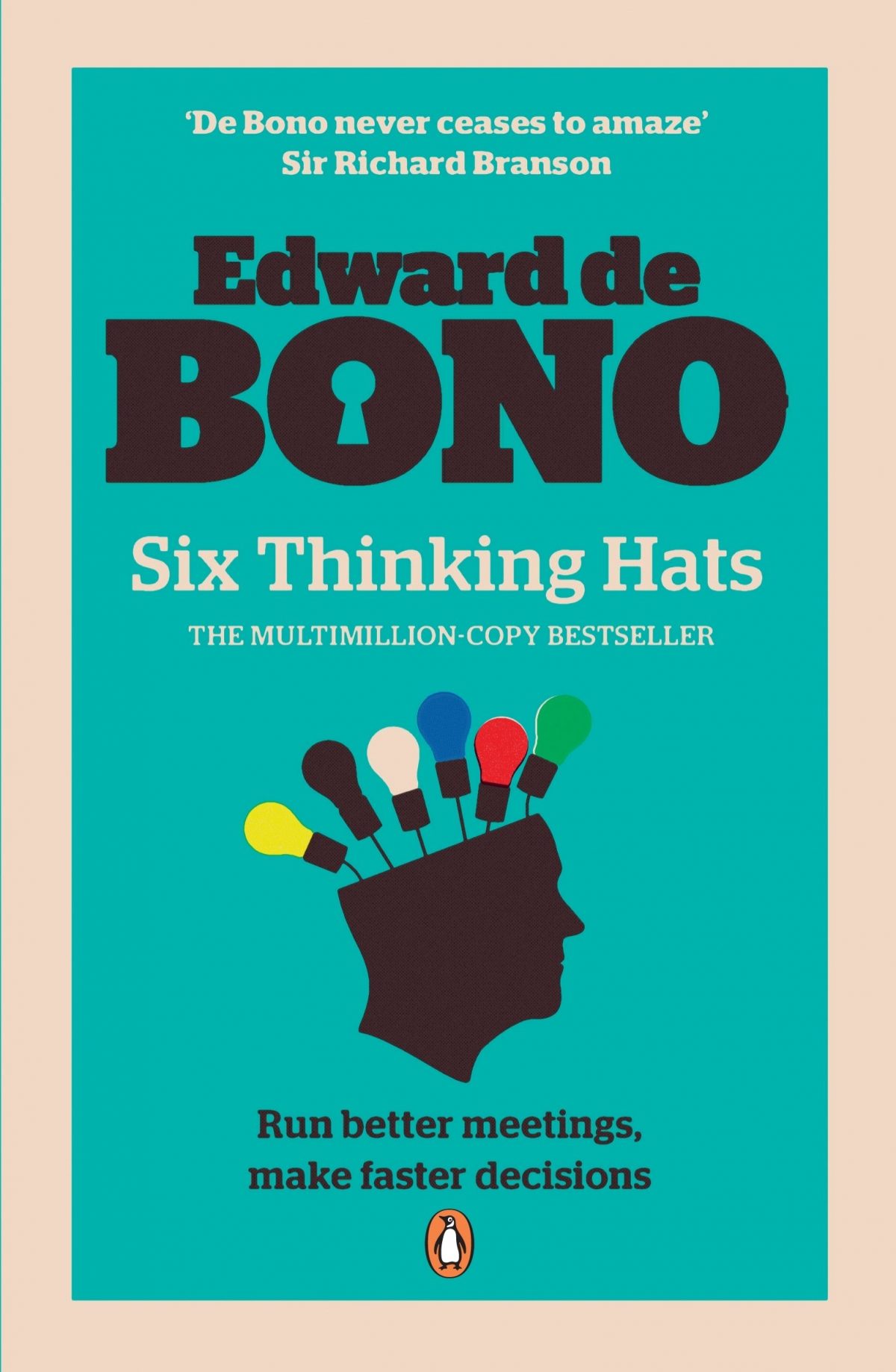
Edward de Bono: Six Thinking Hats

About the book

This book is really quick to read. It has less than 180 pages, fairly light text and lots of examples. You can read it in no time.

How was the book?

Six hat thinking is a concept where the thinker is allowed to do only one thing at a time – and that is called simplify. In this thinking technique for example the feelings is separated from logic. And information from creativity. It also gives people possibility to dive into modes that are not typical for them. Hats are directions of thinking. Participants are supposed to look or think in all possible directions. And it is essential that people will move freely between different hats or modes – from emotional to creative. Showing off is also essential. By showing that you are competent thinker. Not better than other, but better and more competent thinker by wearing all hats.

The hats are:

·       Blue Hat is about the process of thinking. Wear it to start the session and to end the session. This hat is used in that sense only by the facilitator. He indicates the target of the thinking, rules of the game, facilitates the thinking and the end-results of the thinking sessions. Blue hat gives the purpose for the session.

·       Red Hat is emotional view. It is anger, rage and emotions. No need to explain or justify the feelings. Let your emotions come out.

·       White Hat is about information, facts and figures – believed or checked (pls remember to separate those). It is neutral and objective. Share the knowledge of the topic.

·       Yellow Hat is positive opportunity thinking – looking for benefits, dreams, visions. It is all about the great and nice things. Be positive and show it with your words.

·       Black Hat is the negative and critical thinking. It is all about what could be wrong. Important hat, because it will help us survive. Give all possible reasons why this won’t work, but the criticism must be logical – make sense. Remember not to start arguing. Just point out the possible risks. Remember to document all possible problems and obstacles. You will need this as a risk assessment.

·       Green Hat is creative. Here you can invent new possibilities. Be creative, novel and escape from the old. Try to figure out how to overcome problems and obstacles. The aim is to find new ideas, approaches and alternatives. Remember – search for alternatives, the first answer is never the best.

·       Blue Hat again to wrap-up the session and show results of the thinking session. Also to start the implementation of the ideas.

Talk about the hats, refer to different colors – not about their functions. Hats can be used as single hats or in a sequence. The sequence can be evolving or pre-set. The pre-set is preferred mode if the group is novel with the technique. The blue hat facilitator will define in the beginning of the meeting the pre-set sequence. Discipline is important. Everybody must stick with his or her hats. Only the facilitator lets people to change hats. 

Blue hat is used in the beginning to define the target of the meeting. Giving reasoning to the session. And at the end to wrap-up and to make conclusions. The red hat could be used after the blue hat, because that way the feelings are dealt in the beginning of the session. Also one can re-check if the feelings have changed during the session before the last blue hat. Especially if there is knowledge that there are pre-existing feelings. Sometimes it is useful to put yellow hat before the black hat. If the yellow hat session does not bring any value to the idea, there is no idea on moving towards the black hat session. Sometimes it is useful to give people some time to think before hats are changed.

What are the key learnings?

By using this technique, you simply focus on one thing at a time. This technique can be used to whatever intellectual problem that one has. From developing new products to daily operations.

Six Hat Thinking is like gamification of thinking. People are invited to participate in game of thinking. Switching from one mode of thinking into another. This game will be quick. One thinker is typically allowed to take one minute per hat. The thinkers are advised not to respond to others ideas or remarks. You simply state your idea and the next participant will state his idea. No arguments, no nothing.

This technique allows people to be very independent thinkers. They are not tied to their roles nor anybody is expected to argue their ideas. The only expectation is that everybody shares his ideas.

How should we change according to the book?

The first answer is never the best. Seek and test other ideas. We should simplify and switch thinking. Escape from the old.

What should I personally do?

Invest time to make a test-run.

Summary

The book in six words – Confusion is the biggest enemy of good thinking. 

Kategoriat
Uncategorized

Dale Carnegie: Miten pääsen turhista huolista

Kirjasta

Ensimmäinen käännös on tehty 1951, mutta kääntäjä ei ollut kovin perehtynyt englanninkielisiin business-termeihin. Mutta ne eivät pilaa lukukokemusta. Ehkä ennemminkin palauttavat mieleen minkälaista kieli oli 1950-luvulla. Tämä kirja kannattaa silti lukea englanniksi.

Minkälainen kirja oli?

Carnegie määrittelee kirjansa ”kokoelma tehokkaita ja ajan koettelemia reseptejä, joiden avulla voimme vapauttaa elämämme turhista huolista”. Ja näin se käytännössä on. Hän on haastatellut paljon aikalaisiaan ja koostanut heidän kokemuksia kirjaan.

Paikoitellen voimakkaasti uskonnolliset näkemykset ohjaavat kirjailijan näkemyksiä. Mm. Vuorisaarnan idea ”kaikki, mitä tahdotte ihmisten teille tekevän, tehkää myös te heille samoin”. Carnegien oma resepti on Vuorisaarnan toimeenpano.

Winston Churchillin sanoin: ”Minulla on liian kiire. Ei ole aikaa olla huolissaan”. 

Carnegien kirja on yksi ensimmäisiä populäärejä yrityksiä auttaa ihmisiä pääsemän eroon turhista huolista.

Mitkä ovat kirjan keskeiset ideat? 

Dale Carnegien opit:

·      Tahto

o  Ensimmäiseksi ja tärkeimmäksi nousee tahto sekä motivaatio huolien poistamiseen.

·      Priorisoida mikä on tärkeää

o  Älkää hautoko mielessänne ajatuksia tulevaisuudesta turhaan.

·      Määritellä huolet

o  Kannattaa kirjoittaa asiain ja probleemi paperille sekä selkeyttämään mistä huolesta on kyse. Nähdä sen mitä on kirkkaasti edessämme.

·      Kiire on terveellistä

o  Pitäkää itsenne kiireisenä, niin ette ehdi turhia huolehtimaan.

·      Pikkuasiat

o  Emme saa säikähtää pikkuasioita – niitä tulee halveksia ja olla muistelematta.

·      Rajahinta

o  Huolille pitää määrätä raja kuten esim. osakkeille pitää olla rajahinta, jos aikoo niitä myydä.

·      Rukoileminen

o  Rukoileminen auttaa pukemaan ahdistuksen sanoiksi, syntyy tunne että joku kuuntelee meitä ja virittää halun tehdä jotain. Miehiset miehet rukoilevat joka päivä.

·      Kuollutta koira ei potkita

o  ”Epäoikeutettu kritiikki on monesti valepukuista kiitosta.”

·      Väsymys altistaa huolille

o  Winston Churchill teki työtä mm. sängyssä, koska hän ei halunnut toipua väsymyksestä, vaan ehkäistä sitä.

o  Henry Ford vei ajatuksen vielä pitemmälle sanomalla ”En seiso koskaan, kun voin istua, enkä istu, jos voi maata.”

·      Menneisyys

o  Sahajauhoja ei voi sahata eikä menneisyyttä.

o  Paha ei itkien parane.

Mitä meidän pitäisi tehdä kirjan perusteella?

Carnegie oli aikaansa edellä. Hän ehdotti, että työpöytä pitää aina puhdistaa turhista papereista. Pitää laittaa tehtävät tärkeysjärjestykset. Ongelmat pitää ratkaista heti ja töitä pitää osata delegoida. Ehkä hän on ollut innostamassa Konmari-kirjan syntyä.

Mitä minun pitäisi itse tehdä? 

Jack Dempsey psyykkasi itseänsä ennen ottelua. Pitäisikö sitä kokeilla?

Yhteenveto

Kirja kuudella sanalla – ”Elämämme on miksi ajatuksemme sen tekevät”.