Kategoriat
Uncategorized

David Ogilvy: Ogilvy on Advertising

About the book

Classics should be read in the paper format. Which I did, of course. And as mentioned Ogilvy’s book is a classic. Starting from the first page where there is old adverts presenting cigarettes, cars, beer and nude persons. O tempora, o mores? Another example of Ogilvy’s book is that he shows a picture of his medieval castle and Rolls-Royce. It’s his way to motivate readers to excel in being creative?

How was the book?

David Ogilvy has written his book so it would be like a handbook. How to run advertising agency? Or how to make commercially viable TV ads? Or how should direct mails be designed? Excellent lessons and one should not only think his ideas are tide into the era of Mad Men. Last, but not least – Ogilvy’s book is filled this quotes that fit into one tweet.      

What are the key learnings of the book? 

It’s all about ideas. Ogilvy have five questions that he uses to identify a big idea. Did it make you gasp? Are you jealous about the idea? Is it unique? Fit with strategy? Will it last for 30 years? He is talking about the same concept as did Malcolm Gladwell in his “Tipping Point” book. That is that the idea must stand-out. 

The good ones know more

–      For Ogilvy curiosity, common sense, wisdom, imagination and literacy are hard currency.

–      He also believes that what you learn is more important than what you earn.

It’s all about building spirit within the office

–      Caring about the people that work for you and be with them.

–      Start luncheon clubs, start by making the office a fun place and start by advocating honesty.

–      Nurturing characters and self-confidence brings best out of your crown princess.

How to make successful products even more successful

–      Use advertising….:-)

–      Focus on successful products, not on unsuccessful products.

–      Worship your heavy-users.

–      The consumer is not a moron, she is your wife.

Don’t dawdle

–      Make targets for every year and review those.

–      Review results of marketing every 30 days.

Sales meetings in the WC

–      Half-empty auditorium smells of failure.

–      Use the absolute minimum of electrical equipment.

How should we change according to the book?

In advertising, the beginning of greatness is to be different, and the beginning of failure is to do the same-same. Goes with great many other areas of modern work life.

What should I personally do? 

Not to forget Ogilvy’s five questions about ideas. Did it make you gasp? Are you jealous about the idea? Is it unique? Fit with strategy? Will it last for 30 years?

Summary

Would you like to effective marketing and communication? Are you interested in building unique ideas? Would you like to learn about marketing process? Start by reading this book.

The book in six words – From history of advertising to business insights. 
Kategoriat
Uncategorized

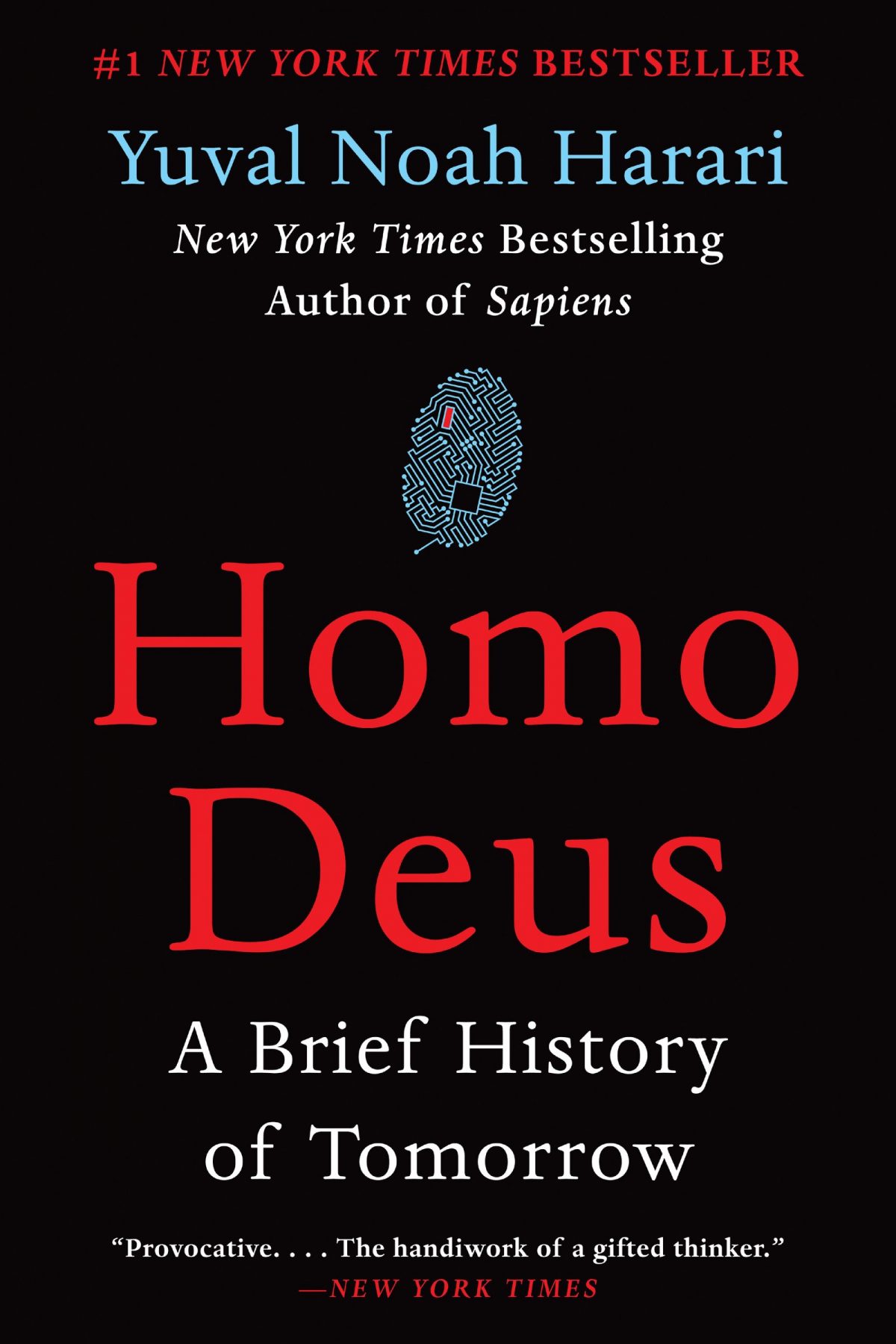
Yuval Noah Harari: Homo Deus – A Brief History of Tomorrow

About the book

Name of the book – “A Brief History of Tomorrow”, might be a bit misleading. The book is approximately 500 pages long. And that might be the only criticism that can be found of the book. This book would be best to read as a e-book. It’s heavy and difficult to manage.

How was the book?

Homo Deus is a book that has multiple levels. From my point of view it is a historical prediction of humankind. It is also a collection of ideas and facts. And mostly it is a possibility for the reader to analyse the future and prepare himself for the issues which might lie ahead. Harari touches several issues that current readers are trying to understand. He interprets issues such as rise of inequality, man vs. technology and of course the rise of the nationalism in forms of Brexit and Trump. The book is as well modern, historical, analytical and as well very topical.  

Harari’s main topic is about how Homo Sapiens will survive from the emerging artificial intelligence and other technological possibilities. He binds this main topic into several waves of history of humankind. Harari sees that we are on the edge of last revolution that Homo Sapiens will experience. That’s why he calls the forthcoming revolution as second Cognitive Revolution. This revolution might lead to the birth of Homo Deus and extinction of Homo Sapiens.

What or who is Homo Deus? It is the result of a quest to upgrade Homo Sapiens into the next level. A superhuman that has reached immortality without a deal with the devil like Dorian Grey did.

Homo Sapiens was able to conquer famine, plague and war. Upgraded Homo Sapiens i.e. Homo Deus has the power of creation. Homo Deus will have happiness and immortality. He will also be seeking the possibility of attaining divinity. Homo Deus has human features, but he has also upgraded physical and mental abilities. Such as possibility continue to live forever, think and make decisions more accurately.

What are the key learnings of the book? 

Homo Deus will be seeking to reach happiness, immortality and attaining divinity. The quest to create Homo Deus is a continuum of Homo Sapiens if humankind will collectively will it to happen.

Unfortunately Harari has no one thing or key learning that he will be sharing. He is drawing a picture of our future. But there are numerous questions that we as individuals and societies must try to figure out before entering into the era of Homo Deus.

Let me divide the main questions into two main themes.

Future of humankind:

–      Is Life time learning our only hope? Should we be trying to develop our narrating self or invest heavily on the development algorithms in large?

–      Should we try to develop new religions such as Dataism or Techo-humanism to replace current humanistic thinking?

–      Should we let the robots do the work and convert current workforce into an unemployable mass?

–      Is our fate of horses when the automobiles replaced those?

–      Which choices should we try to pursue?

Future of artificial intelligence:

–      What should we be thinking about artificial intelligence?

–      What shall we do with artificial Intelligence?

–      Should humankind do a Turing Test every day in order to survive with the potential that AI brings us?

–      Which algorithms should we try to enhance?

–      Should we try to build a warm social logic for AI as humans have?

–      Should we give power to decide and ownership of capitals? Can AI have both? In what way should we give these to AI?

–      Are societies ready for the rise of AI?

What should I personally do? 

I should devote my personal time on exploring the possibilities of artificial intelligence.

Summary

Harari’s Homo Deus is a must read book. He has collected tons of excellent questions. By creating a personal understanding about AI will have value when making decisions. Eventually AI will be affecting our lives. Why not start hacking your future now?

The book in six words: “How to know what to ignore?” 

Kategoriat
Uncategorized

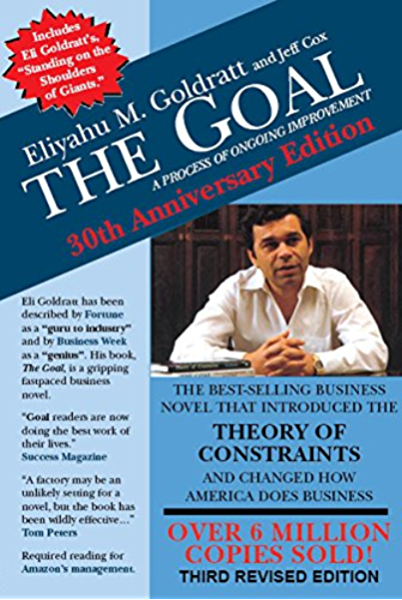
Eliyahu M. Goldratt: The Goal

About the book

If you want to try a business novel – this is the book. The Goal is a great business novel. It is also a shotgun book where the story is so fascinating that you might want to read it in a fast forward mode. The actual book is so heavy that you might want to consider to read it as a e-book or as audiobooks.

How was the book?

The Goal will be inspiring you to think numerous topics such as change management, people management, work-life balance, how to use consults etc. As the title tells us – this book is all about processes. And how to keep continuously improving processes. One special topic is brought up in the end and it’s how to position sales and marketing in a company. There is also a human interest story about a marriage and it makes this business book somewhat different.

The Goal will teach you how to understand processes. The case example in the book is a factory, but the thinking and the methodology of the book can be applied into great many other disciplines than manufacturing industry. 

What are the key learnings of the book? 

Goldratt is teaching us three different concepts. By managing those concepts on can manage ones processes. Key concepts and the definitions of the concepts are:

–      Throughput (incoming money) “is the rate at which the system generates money through sales”.

–      Inventory (money stuck inside) is all the money that the system has invested in purchasing things it intends to sell”.

–      Operational expense (money going out) “is all the money the system spends in order to turn inventory into throughput”.

And what is the plot of the book? The plot is that the people in the factory are searching for a goal. They are forced into the change management situation via an executive decision. With the help of one consultant they come up with the idea that what is the goal. Their “goal is to reduce operational expense and reduce inventory while simultaneously increasing throughput”.   

The operational expense, inventory and throughput are main characters in the business novel. Bottleneck, flow and batch sizes are doing sidekicks. To identify a bottleneck one has to be very familiar with the process and especially with the metrics.

The bottleneck showcases an important learning to the organisation, because “an hour lost at a bottleneck is an hour lost for the entire system”. Flow is a desired state, because it will “balance the flow of product through the factory with the demand from the market”. That way you get process flow into daily operational mode. “Batch sizes” is important in order to understand that with what one can achieve the best performance. 

Goldratt offers five focusing steps to utilize the process of on-going improvement:

–      IDENTIFY the system’s constraint.

–      Decide how to EXPLOIT the system’s constraints.

–      SUBORDINATE everything else to the above decisions.

–      ELEVATE the system’s constraint.

–      If in the previous steps a constraint has been broken – go back to step 1, but do not allow inertia to cause a system constraint.    

The key learning would be common sense, because typically problems are solved with common sense. Not with great theories nor with IT-systems that have too many dimensions. Consultants can bring insight into the problems by asking the right questions. The Goal endorses that the business owners should find answers with their common sense.  

What should I personally do? 

Re-evaluate the operational expense, inventory and throughput in my operations.

Summary

The book in six words: “Common sense is not common at all (Mark Twain).” 

Kategoriat
Uncategorized

Richard H. Thaler & Cass R. Sunstein: Nudge

About the book

I have had this book in my waiting list for at least three years. I should not have waited for this long to read Nudge. Paperback reading experience, again.

How was the book?

In the beginning of the book many of the topics that Thaler and Sunstein brings up are truly topical. And somehow this book reminds me of Kahnemans “Thinking, fast and slow”. Authors wants the reader to think how he can “make things click”. What makes people do things?

Authors come from the tradition of behavioral economics, but they call themselves as choice architects. What are choice architects? They are people who can design approaches that help people to make choices or decisions easily and with low cost.

Basic idea of nudging is part of libertarian paternalism. Libertarian paternalism’s aim is that “people should be allowed to be free to do what they like in order to make their lives longer, healthier and better”. Nudge is the essence of altering people’s behavior. It is “the intervention which is easy and cheap to avoid”. Or people should “go their own way at lowest possible way”. The last concepts which are widely used by the authors are Humans and Econs. Humans behave like humans, but Econs act with rationale in their mind.

I must give credit to Thaler and Sunstein, because at the end of the book they raise critical ideas their writings might arouse. One thing though was not evaluated. Why should we budge people to make decisions when they obviously are not motivated? Authors have numerous cases where people didn’t make active decisions and after the nudging the conversion rate change. Of course Thaler and Sunstein urge choice architects to do their job, because authors want to make “people live longer, healthier and better”. But which decisions people should be budged with nudges?

What are the key learnings of the book? 

Key learnings are of designing a nudge:

–      Rules of thumb are used to make decisions quick and easy. But rules of thumbs include biases also. Nudge would be a rule of thumb.

o  Anchoring into helps to “measure” things, but can also lead to false measures.

o  Availability brings the proximity of an event into our decision, but it can also lead astray.

o  Representativeness helps us to identify, but might give wrong signals to our thinking.

–      Optimism and overconfidence is part of human nature which means also that we might fail to take preventive steps. Nudge would “remind of a bad event”.

–      Gains and losses plays an important role in our thinking, because of loss aversion. Many of us make decision based on the loss aversion if it might occur. People “hate losses twice as much as the like gains”. Nudge would be emphasizing the gains over losses.

–      Status Quo Bias leads to the fact that people “stick with their current situation” and it might lead to lack of attention. Default wins because of status quo bias. But the decision which is default is a strong tool and it should be considered with great detail. Nudge would be default.

–      Framing is a kind of default, but it puts the topic into a perspective. Framing should be used with a caution. Nudge would be the frame.

Understanding the choice environment is a crucial issue. When do we need a nudge? Know that helps on designing the choice environment. We need nudges when the decision includes the following:

–      self-control issues such as benefits now – costs (dieting, exercise) 

–      degree of difficulty is high (choosing a mortgage)

–      frequency is low (choosing a collage)

–      feedback is seldom (long term processes)

–      knowing what you like is untested (a new restaurant).

How to design a choice architecture? Build the architecture based on NUDGES

–      (Wright) iNcentives on the right people

–      Understand mapping what makes people better of

–      Defaults should be yes-or-no decisions and default must the best cost-efficient option available

–      Give feedback, because it improves performance.

–      Expect error, because people will make mistakes

–      Structure complex choices to simply the decision with priorities and cut-off levels.

Two minor learnings are:

–      How to use social influence? It has three aspects such as:

o  Information for example how other have behaved,

o  Peer pressure for example people learn from others. I.e. following the heard. 

o  Priming. For example “Don’t Mess with Texas” anti-littering campaign. Creative nudge which was framed into the sense of belonging.

§ A tip. Ask what will people do and influence behavior. For example shall one eat fatty food.

–      How to use mental accounting? People are good on accounting options. Mental accounting might increase the possibility for people saving money, exercising more, reading etc. 

What should I personally do? 

Give feedback, because it improves performance.

Summary

The book in six words: “Freedom of choice with nudges that improves living.”

Kategoriat
Uncategorized

Malcom Gladwell: Blink

About the book

I recently read Malcom Gladwell’s Tipping Point. Blink was a random chance. The choice was easy to make based on the previous experience. I was betting that the book would be worth having as a paper book. So I bought it as in paper format again.  

What was the book like?

Malcom Gladwell is de-mystifying important psychological process. The topic was already familiar to me as a concept and so it was easy to reflect his ideas.

This book is about the “first impression”. They call it also as adaptive unconscious. It is the part of our thinking that blinks. Blink is the crucial two seconds that will make or brake things in your mind. But it’s not only about the two seconds. The book is about how to use blink. Secondly he wants to help readers to understand the benefits and the disadvantages of blinking. He also took a challenge to describe how you can train your blinking.

In a way Blink is not novel book. I could find from the book similar ideas that I have from the previous books that I have read. For example in Daniel Kahneman’s “Thinking, fast and slow” or Lauri Järvilehto’s Mestariajattelija book about becoming a master in thinking. But the evidence behind his ideas are less than you would find from other books.

What are the key learnings of the book? 

Obvious key learning is that what are our blinks? Our blinks are combination of thin slicing, locked door and priming. Thin slicing is our ability to find unconsiously find patterns on very narrow slices of experience. Locked door is the unconsious where we can’t see. Priming is something that our environment creates into us.

Second learning would be the Warren Harding error. We need to accept our ignorance. We are too quick to come up with explanation for things that we don’t have explanation. The Warren Harding error is about the worst president that USA has had so far. What did happen? Gladwell’s explanation is that voters didn’t dig under the surface. Warren Harding was handsome person. For voters he looked like a president. Gladwell calls Harding as the dark side of rapid cognition.

Similarities can be found from his analysis of American CEO’s. Certain factors can lead into decisions which are superficial. One is that height correlates to the possibility to for leadership positions. He has statistical data that shows that more people who are long people are nominated to leadership positions compared to people who are short. Another Warren Harding error?

How should we change according to the book?

Gladwell has many suggestions how to become aware of your blinks, how to make best out of those and how to educate.

·     Testing.

o  You can test your blinking at www.implicit.harvard.edu

·     Fight against the Warren Harding error.

o  It starts by acknowledging the effect of our environment and experience into our blinking. One can guide blinking with ones values. If racial equality should develop and you personally recognize that you need to shape your attitudes. A simple way to start the fight is for example to expose to minorities.

·     Re-educate your instincts and “find a underlying signature of a complex phenomenon”.

o  For example doctors who treated people who are having heart attack did not have unified way to recognize potential patients coming into to ER. After intensive research doctors were able to diminish factors leading to heart attacks into three risk factors. With the help of these three risk factors doctors were able to started to train their instincts on making proper analysis on people suffering from heart attack.  

·     Less is more.

o  Make better decisions with less information. The key to this advice is in editing. Journalists are good on making decisions, because their profession trains them to make decisions with less information. For example in case of the Japanese attack the journalist were making better analysis about the intentions of Japanese armed forces than the army. Journalist knew less. Seeing forest from the trees.

·     Start reading people.

o  Educate yourself to read peoples emotions. Emotion is automatically expressed via muscles of the face. Face has a mind of it’s own. Microexpressions. Reading people from their faces and make decisions based on that.

·     Start editing.

o  By editing the information and making decisions based on the edit 80 % of information available should lead into 100% decision.  from the edit .

What should I personally do? 

Blink as a book is like a Danish smorgasbord. There is plenty of advice and great many of his advise are fairly action oriented. I would suggest to myself the testing www.implicit.harvard.edu.

Summary

Gladwell promised in the beginning of the book that he will tell us that how to use blink. He also promised to tell when to trust and when not to trust blink. And how to educate your blinking. Besides that he used vivid examples of real life cases to highlight blink. Examples such as Warren Harding, New Coke, Pearl Harbor and many more. He did deliver all the promises. Still the advise that he gives stay at the high-level. Lauri Järvilehto made more compact roadmap for anyone who wants to develop their behaviour.

I enjoyed reading mr. Gladwell’s book. He is an excellent writer. And the book was almost entertaining. But Blink does not cross the chasm like Tipping Point did.  

The book in six words: Use this book as an introduction to rapid cognition.

Kategoriat
Uncategorized

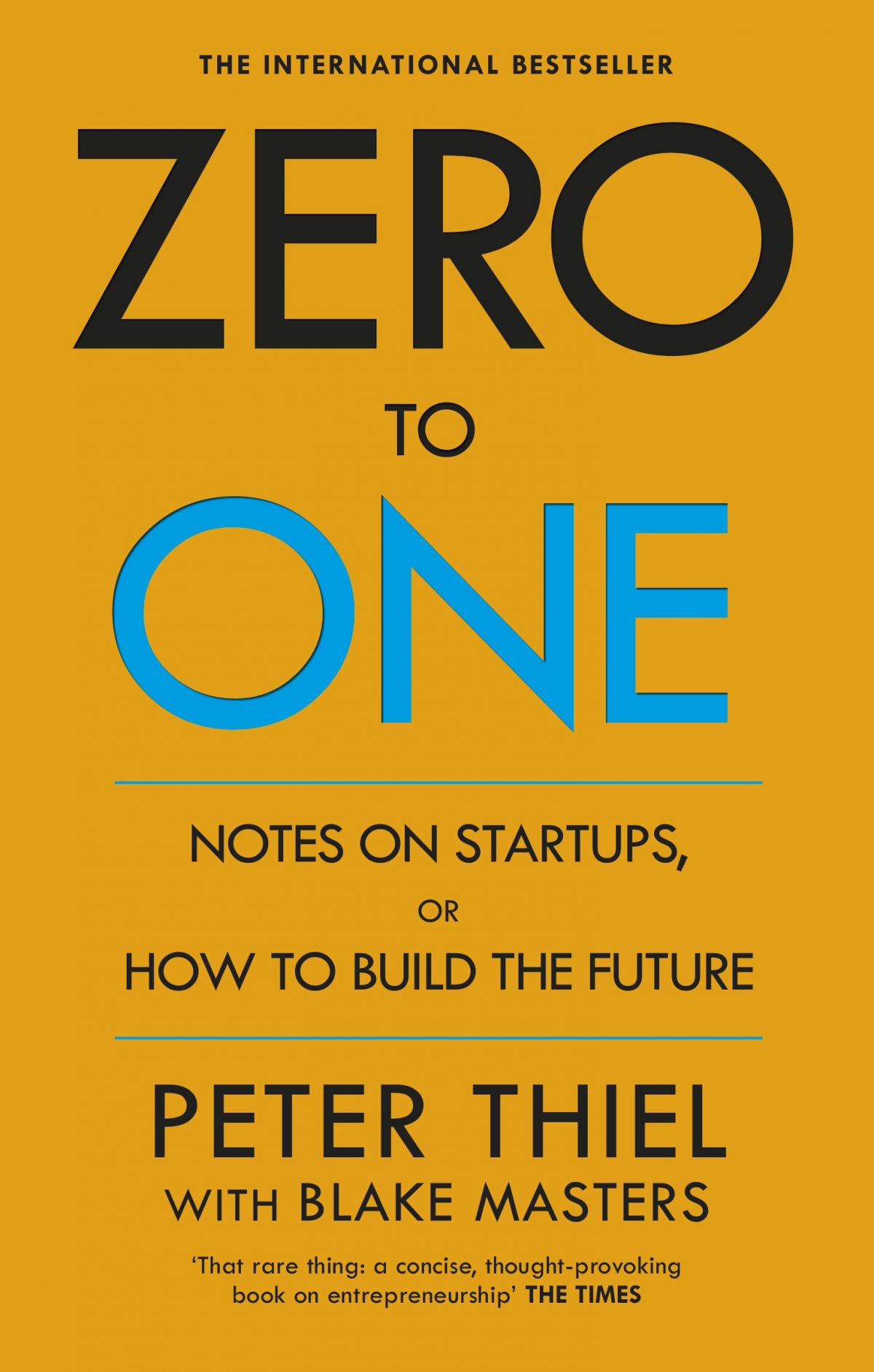
Peter Thiel: Zero to One

About the book

I found this book after Slush in 2016. It didn’t fit into my agenda right after Slush, but was interested to learn his ideas about entrepreneurship. And because he is keen supporter of president Trump. This book is based on his lectures in Stanford University.

What was the book like?

Peter Thiel has an excellent story to tell. Basically he reflects his learnings from startup times of PayPal. Thiel is not explaining about a venture that starts to import some goods to a local market. He is telling a story about the unicorns. Everything he writes tries to explain how to build a successful new venture that didn’t exist before. He also reflects the times of the dot-com boom – before and after. Not forgetting to mention Princes “So tonight I’m gonna party like it’s 1999”.

What are the key learnings of the book? 

Thiel starts with a mysterious question by asking from a startup entrepreneur “what important truth do very few people agree with you on?”. For the investor the question is “what valuable company is nobody building?”. And behind these questions lies his key lesson. Startup solves secrets which are not shared.  

Zero to One

–      Thiel sees that technology enables progress from zero to one. It is intensive progress that will utterly change the way things are. Like PayPal did by introducing email-based payment system. Information technology and communications enables the startups thinking business from scratch. Search engine companies (i.e. Google) are great examples of this.

Startup in a nutshell:

–      Beginnings are special for countries and companies. Get the first things right.

–      Founding matrimony is crucial. Co-founder is like spouse and conflicts are like divorce. It helps if founders have a prehistory.

–      Divided ownership, possession and control. And the ideal board is made of three persons.

–      On the buss or off the buss. Everybody should share the same roof.

–      Cash is not king in startup salaries, ownership is.

–      No to equal shares, but yes to everybody getting their fair share. Vested interests keeps people committed.

–      Extending the founding keeps the company lean and agile as long as possible.

Four big lessons from the dot-com crash.

–      Make only incremental advances. It creates safety for the future. Or “You should not put all-in like Boo.com did” as it was stated in the Medici effect book.

–       Stay lean and flexible means that unplanned helps to change course and iterate when needed.

–      Improve on the competition means that you should be focused on the existing customer, not to new markets that does not exist.

–      Focus on product, not sales.

Every startup should aim to build a monopoly.

–      Start with a very small market like PayPal did.

–      Build proprietary technology like Google’s search algorithms.

–      Create network effects like Facebook did with Harvard MBA students.

–      Target for the economies of scale

–       Do branding like Apple.

The last will be first

–       Try to be the last that will make the great development. Sounds iffy, but if your timing is right this advise might turn you big. If, if and if…

How should we change according to the book?

Thiel explains it. Less than 1 % of new businesses receive venture funding in the U.S. Total VC investments are less than 0,2 % of GDP. Venture funded companies create 11 % of all private sector companies. And the revenues are 21 % of the GDP. Twelve largest technology companies are all venture funded. These dozen companies are worth 2 trillion USD. More than rest of the technology companies all together.

What should I personally do? 

“Everyone of today’s most famous and familiar ideas was once unknown and unsuspected”.

Summary

In great many ways Peter Thiels learnings are worth to be published in a book. I can recommend the Zero to One-book to be used in seminars and in courses to underline certain factors which must be done right when building a startup. 

The book in six words: Do more with less, do 0 to 1.

Kategoriat
Uncategorized

Lauri Järvilehto: Tee itsestäsi mestariajattelija

Kirjasta

Jos kuvittelet palaavasi käsillä olevaan kirjaan – joskus, niin sitä kannattaa harkita paperisena luettavaksi. Hanki tämä. Perustelen paperiversion hankintaa käytettävyydellä sekä että se on näkyvillä muistuttamassa itsestään.

Minkälainen kirja oli?

Aina kun näet mielenkiintoisen kirjan, niin mietit että “onko tämä sen arvoinen?”. Lauri Järvilehdon kirja on sen arvoinen. Tämän kirjatyypin kirjoja julkaistaan Suomessa harvakseltaan. Ja tiiserinä voin sanoa, ettei myöskään näin hyviä. Mikä tästä kirjasta sitten tekee hyvän?

Mitkä ovat kirjan keskeiset ideat? 

”Älykkyys määräytyy sen mukaan, minkälaisia tuloksia saamme aikaiseksi”. Harmillisesti tämä ajatus löytyy kirjan lopusta, mutta siihen tiivistyy kirjan oppi.

Lauri Järvilehdon kirjassa on kaksi erityistä ominaisuutta. Kirjoittaja on tuonut ajatustensa tai neuvojensa tueksi myös tietoa. Sen lisäksi kirja sisältää pikaharjoitteita, joilla voit testata kirjoittajan neuvoja.

Hän aloittaa kertomalla, että ajattelu jakautuu kahteen koulukuntaan – aivo- ja ideakoulukunnaksi. Ajatukset ovat ideoita ja ne ovat aivojen prosesseja. Kirjassa siis yhdistyy kummatkin koulukunnat. Ajatukset saavat alkunsa tahdonvaraisesti, ruumiin sisäisistä muutoksista tai ympäristöstä. Ajatuksista pääsee myös eroon – sulkemalla ne, haarauttamalla ajatukset, niiden mahdottomuus tai muun ajatusprosessin katkaisemana.

Ajattelussa on aina mukana kertauksen laki – toisto vahvistaa ajattelua, ja assosiaation laki – kahden asian yhdistäminen. Oppiminen on tulos kun altistus ja kiinnostus yhdistyy. Ja oppiminen onnistuu jos altistat itsesi asioille mitkä kiinnostavat sinua. Tähän kun lisätään mielikuvaharjoitukset, niin hyvin ajateltu on puoliksi tehty. Eli mielikuvaharjoittelusta on hyötyä. Tässäkin täytyy muistaa, että tahdonvoima on rajallinen resurssi eli sitä ei pidä tuhlata kuten myös Walter Mischel on todennut vaahtokarkkitestejä tehdessään.

Toimintaamme ohjaa – järki, tunne ja intuitio. Ja kun intuitiota ohjaa tiedostamaton mieli mitä et voi ohjata toisin kuin tietoista mieltä. Jota voit ohjata. Tässä yhdistyy Kahnemanin havainnot S1- ja S2-ajattelusta.

  1. Intuitio käyttää tiedostamattoman mielen kaikki resurssit. Intuitio toimii kun olet alueella jonka tunnet ja olet tottunut. Silloin voi luottaa intuitioon. Vastaavasti intuitio ohjaa harhaan alueella jossa et ole hyvä. Silloin kannattaa käyttää rationaalisia ratkaisuja päätöksenteossa. Intuitiota voi kehittää mietiskelemällä omia ajatuksiaan tai opettelemalla uusia taitoja.
  1. Tunne-elämän tehokkaaseen analysointiin auttaa päiväkirja, johon kirjaat tunteita ja opit pääsemään eroon negatiivisista tunteista. Tunteet auttavat säilymään hengissä.
  1. Järki. Analyyttistä ajattelua voi opetella harjoittamalla matematiikka, logiikkaa ja argumentaatiotaitoja.

Kirjassa toistuu usein ideoiden arvo ja mielekkyys. Teet ideoistasi itsellesi tavoitteet, joissa rakennat itsellesi elämäntavoitteet tai esim. 1-5v. tavoitteet. Lohko ne pienemmiksi toimenpiteiksi, vaikka yhden päivän tasolle (1 pvä). Paras tapa saada hyviä ideoita on saada paljon ideoita (Linus Pauling). Ja tehokkain tapa on kerätä kaikki ideat talteen. Tavoitteiden toteuttamista auttaa optimismi, joka taas synnyttää positiivista todellisuutta.

Aivot ovat loistava paikka saada ideoita, mutta surkea niiden säilyttämiseen (David Allen). Siksi pitää:

  • tehdä paljon muistiinpanoja tai
  • piirtää ajatuksesi tai
  • tehdä miellekarttoja

Oppimisesta ja ihmismielen kaistanleveydestä Järvilehdolla on kaksi hyvää neuvoa. Opi tarpeeseen eli harjoita ”just in time”-oppimista. Se on tarpeeseen hankittava tieto, jota tukee kollektiivinen alitajunta. Aivoja ei kannata kuormittaa turhaan. Kykenemme kiinnittämään asiaan seitsemään asiaan huomiota kerrallaan. Sitä kannattaa varjella.

”Kutsumuksesi on siellä, missä taitosi kohtaavat maailman tarpeet” (Aristoteles).

Mitä meidän pitäisi tehdä kirjan perusteella?

Ota käyttöön mestariajattelijan ABC:

  • looginen päättely ja sen voit oppia opettelemalla esimerkiksi formaalin logiikan perusteet
  • lateraalinen ajattelu ja sitä voi oppia Edward de Bonon kirjoista
  • argumentaation taitoja ja tätä voit oppia Juhana Torkin Puhevalta-kirjasta
  • muistikirja, joka kulkee aina mukanasi

Mitä minun pitäisi itse tehdä? 

Opetella yksi uusi taito joka vuosi.

Yhteenveto

Tämä on samanlainen kirja kuin Chip & Dan Heathin ”Made to Stick”. Järvilehdolla on myös paljon pieniä harjoitteita, helppoja koonteja tai listoja asioista sekä hyviä sitaatteja. Toiseksi tähän kirjaan on miellyttävä palata aika ajoin. Kukaan meistä ei ryhdy mestariajattelijaksi yhdellä lukemalla?

Kirja kuudella sanalla – Jokaisen teon esi-isä on ajatus (R. W. Emerson).

Kategoriat
Uncategorized

John P. Kotter: Leading Change

About the book

Great many books want to take the place of John P. Kotter’s ”Leading Change. It is by far the best business ever. No need to state that it has sold so and so many millions of copies. When you ’ll read it you will know why it’s the best. All businesses or organizations are in transition all the time. That’s why the learnings of this book are crucial. Read it! By the way – originally ”Leading Change” was a Harvard Business Review article. You can still read it as an article – if you want to cut corners.  

How was the book?

Why to read this book? Reading this book is like combining meditation and product development of your ideas. Include the learning part also for the reasons as well. I have read this book for the first time about twenty years ago and it struck me at once. I knew instantly that these topics are universal and timeless. And the reading experience is even more pervasive than twenty years ago.

I could state that that there is a triangle between Kotter’s ”Leading Change”, ”The Goal” by Eliyahu M. Goldrattand ”Good to Great” by Jim Collins. With these books you could easily start any change management project.

What are the key learnings?

This is the Eight-Stage Process and it’s the essence of the book:

·      Establishing a Sense of Urgency

·      Creating the Guiding Coalition

·      Developing a Vision and Strategy

·      Communicating the Change Vision

·      Empowering Employees for Broad-Based Action

·      Generating Short-Term Wins

·      Consolidating Gains and Producing More Change

·      Anchoring New Approaches in the Culture

These stages will lead into a successful change. Many of the steps are self-explanatory and I won’t start scrutinizing these steps. It would spoil your reading experience. Hence more important is to raise some topics into your radar. Remember that the pace of change has changed from the times that book was originally published. So all time tables that Kotter suggest must be divided by two. The thing that he got right is that the change sticks only when people around you start saying that ”this is the way we work”. Then it’s time to celebrate.

How to fail in a change? Kotter uses a lot of time to explain complacency and why it is bad for any change management activity. Weak sponsors and committees will also deteriorate the change. And undercommunicating vision and where you are going will not either speed the change.

And two notions that we must not forget:

·      Managing change is important, but leading the change is crucial.

·      Training is something that makes the change stick, because culture is powerful and without training the new culture will not be embedded into the organization.

How should we change according to the book?

”If it ain’t broken, don’t fix it” seems to be still a valid fact in the change management business. But we often resist change unless it is crystal clear that the alternative is substantially better. For a successful strategy implementation process – however, it is useful to put the default the other way around: Change it unless it is crystal clear that the old way is substantially better. Execution involves change and you should embrace it. Empowering employees means that the leaderships must design a systems that allows the employees to act – ”Strategy implementation requires top managers to design the company’s internal system that does the selection for them.” So change leadership to fit the culture. Read more from these articles.

Drivers behind change have not altered from the days of Kotter. It is clear that globalized economy together with digitalized economy has made the change a default. So make change default in your organization and maybe you can skip stages 1-4? Then make change part of the culture and you will save 6-12 months? It might turn into a competitive advantage for your organization. So by making change your default and you will make change your competitive advantage.

At the end of the book Kotter is trying to predict the future company. How well did Kotter in his prediction of the future company? Pretty well:

·      He was thinking that we will witness higher sense of urgency. And it is here and we migh state that it is even a default.

·      Teamwork at the top – big egos and snakes have been killed. And so it is.

·      Kotter was also seeing that the number of people who can create and communicate vision is rising. He was right although there is a lot’s to do. 

·      Broad based empowerment was also in his agenda. Meh – might be growing, but that’s for start-ups. Right?

·      Delegated management for excellent short-term performance. Might exist, but mostly in lean and flat organizations.

·      Sorry, the unnecessary interdependence are still here. 

·      An adaptive corporate culture can facilitate adaptation and some organizations can witness this, because winning is fun and making a real contribution is pleasing to the soul.

What should I personally do?

Generating short-term wins is my favorite topic.

Summary

The book in six words – Walk the talk and lead by example.