Kategoriat
Uncategorized

Kim Lindström: Puoli vuosisataa pörssin sisäpiirissä

✅ Jos Seiska-lehti kirjoittaisi pörssiyhtiöistä, niin Kim Lindström kuuluisi itseoikeutetusti toimituskuntaan. Tämä kirja on täynnä mehukasta selkäänpuukostusta, kieroilua ja koston jumalan läsnäoloa. 

✅ Kirjan keskeinen idea on kertoa kirjailijan sijoitusfilosofia. Reseptin ydin on:

1.    Tee vain suoria osakesijoituksia.

2.    Osta vain yhtiöitä, joilla on kyky maksaa osinkoja.

3.    Vältä rahastoja, koska ne haukkaavat 20 % osingoistasi.

4.    Optimoi veroseuraamukset.

5.    Käy yhtiökokouksissa aistimassa yritysjohdon ”kyvykkyyttä”. 

✅ Tämä kirja suorastaan vaatii lukemaan Seppo Saarion ”Miten sijoitan pörssiosakkeisiin?”. 

⛔️ Pitkäpiimäisintä on kun Lindström luetteloi sivu toisensa jälkeen yhtiöitä tai sijoituskohteita, joita on uransa aikana penkonut.

Kategoriat
Uncategorized

Gladwell: Talking to Strangers

🔴 Hitti vai huti? Ensivaikutelma oli, että nyt tuli huti. Pidin pari päivää taukoa ja luin muistiinpanot. Päätin lieventää kritiikkiäni. Ei huti eikä hitti.  

✅ Gladwellillä on neljä argumenttia: 

1)    Ihmiset ovat outoja. Ihmislaji on voittanut muut lajit muun muassa sen takia, että osaamme nopeasti viestittää ilmeillämme ja tulkita niitä. Väärät ilmeet eivät vielä tee ihmisestä outoa.  

2)    Miksi emme näe metsää puilta. Pääsääntöisesti uskomme ihmisten kertovan totuuden. Uskomme lähtökohtaisesti vastapuolesta hyvää, vaikka ihan kaikkien kohdalla ei olisi tarvetta. Epäily ei ole uskomuksen vihollinen – ne ovat kumppaneita. 

3)    Kahjot – toisinaan, kertovat että keisarilla ei ole vaatteita. Nykyajan kahjoja ovat ns. ilmiantajat (whistleblower), joiden tarkoitus on osoittaa sormelle jotain mikä on ilmeistä, mutta kukaan ei tohdi sanoa ääneen.  

4)    Virhetulkinnasta rankaiseminen. Some-kohut johtavat pikatuomioihin, jotka ovat kaukana totuudesta. Tapamme tulkita toisia ihmisiä saattaa erota heidän tavastaan ilmaista itseään, niin se ei vielä tee vastapuolesta ”rikollista”. Jos teet virhetulkinnan, niin se ei vielä tee sinusta huonoa kansalaista, isää eikä äitiä tai huonoa esimiestä 

⚫️ Melko paljon käytetään aikaa vakoilijoiden ja poikkeavien seksuaalisten kohtaamisten tulkintaan.    

Kategoriat
Uncategorized

Louis Gerstner: Who Says Elephants Can’t Dance?

About the book

“This is not my autobiography. I can’t think of anyone other than my children who might want to read that book (and I’m not 100 percent sure they would, either).” I love this guy. He is such a character. From the first pages he shows true character and sense of humour.

Louis Gerstner held top positions in American Express and was CEO of IBM during the turbulent times. I was expecting a lot from the book and he delivers. Especially the second half of the book is better than great.

Compared to Alfred P. Sloans and Jack Welch’s memoirs Gerstner’s book has mainly two things to give to the reader – a low-key and well argumented leadership style.

“I’ve never been certain that I can abstract from my experiences a handful of lessons that others can apply to their own situations.”

What are the key learnings?

Key learnings of the book are

–      Corporate culture is the game.

–      People respect what you inspect.

–      Free cash flow is the True north of every business.

–      Execution is really the critical part of a successful strategy.

–      Lack of focus is the most common cause of corporate mediocrity.

–      What do you really want people to do? Win, execute, and team.

Corporate Culture

“I came to see, in my time at IBM, that culture isn’t just one aspect of the game—it is the game. In the end, an organization is nothing more than the collective capacity of its people to create value. Vision, strategy, marketing, financial management—any management system, in fact—can set you on the right path and can carry you for a while. But no enterprise—whether in business, government, education, health care, or any area of human endeavor—will succeed over the long haul if those elements aren’t part of its DNA.”

Inspect

“Greatest mistake is to confuse expectations with inspection. Too often the executive does not understand that people do what you inspect, not what you expect.”

Execution

“Execution is really the critical part of a successful strategy. Getting it done, getting it done right, getting it done better than the next person is far more important than dreaming up new visions of the future.”

Free cash flow

“It is the three most important words for Louis Gerstner. It’s the True north of every business. For him it is “the single most important measure of corporate soundness and performance.”

Focus

“Focus is a critical element of institutional success. If a management team doesn’t believe that it has identified and is seriously funding new growth opportunities, then it is likely to wander off and drink the heady brew of acquisitions and diversification—and ultimately fail.”

Gerstner’s management philosophy and practice

Management philosophy and practice of Lou Gerstner:

–      “I manage by principle, not procedure. 

–      The marketplace dictates everything we should do.

–      I’m a big believer in quality, strong competitive strategies and plans, teamwork, payoff for performance, and ethical responsibility.

–      I look for people who work to solve problems and help colleagues. I sack politicians. I am heavily involved in strategy; the rest is yours to implement.

–      Just keep me informed in an informal way. Don’t hide bad information—I hate surprises. Don’t try to blow things by me. Solve problems laterally.

–      I am heavily involved in strategy; the rest is yours to implement. Just keep me informed in an informal way. Don’t hide bad information—I hate surprises. Don’t try to blow things by me. Solve problems laterally; don’t keep bringing them up the line.

–      Move fast. If we make mistakes, let them be because we are too fast rather than too slow.

–      Hierarchy means very little to me. Let’s put together in meetings the people who can help solve a problem, regardless of position. Reduce committees and meetings to a minimum. No committee decision making. Let’s have lots of candid, straightforward communications.”

How to use power?

I turned to the flight attendant and said, “This has been a really tough day. I think I’d like to have a drink.” She said, “You don’t mean an alcoholic drink, do you?” “I certainly do!” I replied. “What kind of vodka do you have?” “We have no alcohol on IBM airplanes. It is prohibited to serve alcohol.” I said, “Can you think of anyone who could change that rule?” “Well, perhaps you could, sir.” “It’s changed, effective immediately.”

“A customer was now running IBM”

The Strategy Session Features:

–      Questions about customers to be raised raised.

–      Compare our offerings to those of our competitors.

–      Integration across the various topics that allowed the group to pull together a total company view.

Gerstner’s way to salvage IBM

With four critical decisions Gerstner saved IBM:

1.   “Keep the company together.

2.   Change our fundamental economic model.

3.   Reengineer how we did business.

4.   Sell underproductive assets in order to raise cash.”

“So keeping IBM together was the first strategic decision, and, I believe, the most important decision I ever made—not just at IBM, but in my entire business career. I didn’t know then exactly how we were going to deliver on the potential of that unified enterprise, but I knew that if IBM could serve as the foremost integrator of technologies, we’d be delivering extraordinary value.”

Pain comes first

“I’ve had a lot of experience turning around troubled companies, and one of the first things I learned was that whatever hard or painful things you have to do, do them quickly and make sure everyone knows what you are doing and why.”

An enormous sense of urgency

“To focus on day-to-day execution, stabilizing the company while we sought growth strategies that would build on our unique position in the industry. Those were not to come until a year later.”

Creating the leadership team

“I think it would have been absolutely naïve—as well as dangerous—if I had come into a company as complex as IBM with a plan to import a band of outsiders somehow magically to run the place better than the people who were there in the first place.”

Fallacies and Myths and Lessons

“With os/ 2-the fallacy that the best technology always wins.”

“First, the buyers were individual consumers, not senior technology officers. Consumers didn’t care much about advanced, but arcane, technical capability. They wanted a PC that was easy to use, with a lot of handy applications. And, as with any consumer product—from automobiles to bubble gum to credit cards or cookies—marketing and merchandising mattered.

Second, Microsoft had all the software developers locked up, so all the best applications ran on Windows. Microsoft’s terms and conditions with the PC manufacturers made it impossible for them to do anything but deliver Windows—ready to go, preloaded on every PC they sold.”

“In the case of application software-the myth of “account control.”

“This was a term used by IBM and others to talk about how a company maintained its hold on customers and their wallets. I had this quaint view that it was the job of a supplier to serve customers, not control them!

Beware of totally proprietary vendors who fight new developments like Linux. These vendors still view the world through the window of their proprietary stack.”

“In the case of PCS, there are still unanswered questions.”

“Why did we make the decision to exit the application software, network hardware, DRAMs, or the data transmission businesses, but not PCs? Why did we decide to stay in the hardware end of this business, even as we folded our hand on OS/ 2? In hindsight, was this the right decision? I think it was at the time, but the decision has been painful and costly for IBM.

But when it came to the PC business, we weren’t paying attention to either our customers or our competitors. One competitor in the PC industry was proving that customers were perfectly willing to buy direct—over the phone, or later via a Web site. But we were painfully slow to move away from our existing distribution channels. Why? The incomplete and unsatisfying answer at the time was that we’d always done it that way.”

On corporate culture

“I have a theory about how culture emerges and evolves in large institutions: Successful institutions almost always develop strong cultures that reinforce those elements that make the institution great. They reflect the environment from which they emerged. When that environment shifts, it is very hard for the culture to change. In fact, it becomes an enormous impediment to the institution’s ability to adapt.”

“You can’t simply give a couple of speeches or write a new credo for the company and declare that the new culture has taken hold. You can’t mandate it, can’t engineer it.”

“What you can do is create the conditions for transformation. You can provide incentives. You can define the marketplace realities and goals. But then you have to trust. In fact, in the end, management doesn’t change culture. Management invites the workforce itself to change the culture.”

Leading by Principles

1. The marketplace is the driving force behind everything we do.

2. At our core, we are a technology company with an overriding commitment to quality.

3. Our primary measures of success are customer satisfaction and shareholder value.

4. We operate as an entrepreneurial organization with a minimum of bureaucracy and a never-ending focus on productivity.

5. We never lose sight of our strategic vision.

6. We think and act with a sense of urgency.

7. Outstanding, dedicated people make it all happen, particularly when they work together as a team.

8. We are sensitive to the needs of all employees and to the communities in which we operate.

“Nothing can stop a cultural transformation quicker than a CEO who permits a high-level executive—even a very successful one—to disregard the new behavior model.”

IBM LEADERSHIP COMPETENCIES

Focus to Win

–      Customer Insight

–      Breakthrough Thinking

–      Drive to Achieve

Mobilize to Execute

–      Team Leadership

–      Straight Talk

–      Teamwork Decisiveness

Sustain Momentum

–      Building Organizational Capability

–      Coaching

–      Personal Dedication

The Core

–      Passion for the Business

“Win, execute, and team.”

Win

It was vital that all IBMers understand that business is a competitive activity. There are winners and losers. In the new IBM, there would be no place for anyone who lacked zeal for the contest. Most crucially, the opponent is out there, not across the Armonk campus. We needed to make the marketplace the driving criterion for all of our actions and all of our behavior.

Execute

This was all about speed and discipline. There would be no more of the obsessive perfectionism that had caused us to miss market opportunities and let others capitalize on our discoveries. No more studying things to death. In the new IBM, successful people would commit to getting things done—fast and effectively.

Team

This was a commitment to acting as one IBM, plain and simple.

Fundamentals

There are fundamentals that characterize successful enterprises and successful executives.

–      They are focused.

–      They are superb at execution.

–      They abound with personal leadership.

“Final issue that is unique to the largest and most complex institutions: how to strike the appropriate balance between integration and decentralization.

Focus—You Have to Know (and Love) Your Business

I have learned that lack of focus is the most common cause of corporate mediocrity.

“The grass is greener.”

“This is the most pernicious example. In my thirty-five-year business career I have seen many companies, when the going gets tough in their base business, decide to try their luck in new industries. It’s a long list:

–      Xerox going into financial services;

–      Coca-Cola into movies;

–      Kodak into pharmaceuticals.

History shows that truly great and successful companies go through constant and sometimes difficult self-renewal of the base business. They don’t jump into new pools where they have no sense of the depth or temperature of the water. “We need to grow, so let’s go acquire somebody.”

Steely-Eyed Strategies

Again, good strategies start with massive amounts of quantitative analysis—hard, difficult analysis that is blended with wisdom, insight, and risk taking.

Intelligence Wins Wars

Perhaps the most difficult part of good strategy is hard-nosed competitive analysis. Almost every institution develops a pride in itself.

Good Strategy: Long on Detail

Have a clear understanding of the five or six critical things they need to do in their base business to be successful.

Good strategies are long on detail and short on vision. They lay out multi-year plans in great quantitative detail.

The most important value-added function of a corporate management team is to ensure that the strategies developed by the operating units are steeped in

–      Tough-minded analysis, and

–      That they are insightful and

–      Actionable.

Great companies lay out strategies that are

–      Believable and

–      Executable.

The Hard Part: Allocating Resources

“Finally, making sure that resources are applied to the most important elements of the strategy is perhaps the hardest thing for companies to do. Too many companies view strategy and operations as two separate activities.”

Survival of the Fattest

“Here’s my last observation on focus: The Darwinian concept of survival of the fittest unfortunately doesn’t work in a lot of companies. Instead, too often the rule is “survival of the fattest.” Divisions or product lines that are successful today always want to redeploy their cash and other resources into existing products and existing markets. Finding ample resources to fund new growth and new businesses is one of the hardest tasks of a corporate leader.”

Execution-Strategy Goes Only So Far

“Execution—getting the task done, making it happen—is the most unappreciated skill of an effective business leader. In my years as a consultant, I participated in the development of many strategies for many companies. I will let you in on a dirty little secret of consulting: It is extremely difficult to develop a unique strategy for a company; and if the strategy is truly different from what others in the industry are doing, it is probably highly risky. The reason for this is that industries are defined and bounded by economic models, explicit customer expectations, and competitive structures that are known to all and impossible to change in a short period of time.”

“At the end of the day, more often than not, every competitor basically fights with the same weapons. In most industries five or six success factors that drive performance can be identified. For example, everyone knows that product selection, brand image, and real estate costs are critical in the retailing industry. It is difficult, if not impossible, to redefine what it takes to be successful in that industry. Dot-com retailers were a good example of a spectacular failure to understand that you cannot suspend the fundamentals of an industry.”

“Execution is really the critical part of a successful strategy. Getting it done, getting it done right, getting it done better than the next person is far more important than dreaming up new visions of the future.”

Daily grind of execution is mannaryyni-strategia

“Execution is the tough, difficult, daily grind of making sure the machine moves forward meter by meter, kilometer by kilometer, milestone by milestone. Accountability must be demanded, and when it is not met, changes must be made quickly. Managers must be asked to report on their performance and explain their successes and failures. Most important, no credit can be given for predicting rain—only for building arks.”

“I believe effective execution is built on three attributes of an institution:

–      World-class processes,

–      strategic clarity, and

–      a high-performance culture.”

World-Class Processes

Earlier in this section I mentioned that in every industry it is possible to identify the five or six key success factors that drive leadership performance. The best companies in an industry build processes that allow them to outperform their competitors vis-à-vis these success factors.

Think about great companies

–      Wal-Mart has superb processes in store management, inventory, selection, and pricing.

–      GE is world-class in cost management and quality.

–      Toyota is best-in-class in product lifecycle management.

Strategic Clarity

”Companies that out-execute their competitors have communicated crystal-clear messages to all their employees: “This is our mission.” “This is our strategy.” “This is how you carry out your job.” But high-caliber execution cannot simply be a matter of exhortation and message.”

“Execution flows naturally and instinctively at great companies, not from procedures and rule books. Manuals may play a role in early training activities, but they have limited value in the heat of battle.”

Superb execution is more about values and commitments.

“At American Express we knew we provided the best customer service in the industry—not because our training manuals said it was important but because our people on the firing line, those who talked to customers all day, believed it. They knew it was a critical component of our success.”

High-Performance Culture

“Superb execution is not just about doing the right things. It is about doing the right things faster, better, more often, and more productively than your competitors do.”

WHAT IT TAKES TO RUN IBM

Energy

–      Enormous personal energy

–      Stamina Strong bias for action

Organizational Leadership

–      Strategic sense

–      Ability to motivate and energize others

–      Infectious enthusiasm to maximize the organization’s potential

–      Builds strong team

–      Gets the best from others

Marketplace Leadership

–      Outstanding oral communications

–      CEO-level presence and participation in the industry and with customers

Personal Qualities

–      Smart Self-confident, but knows what he/ she doesn’t know

–      Listens

–      Makes hard decisions—in business and with people

–      Passion that is visible

–      Maniacal customer focus

–      Instinctive drive for speed/ impact

How should we change according to the book?

Leadership Is Personal

“Great institutions are not managed; they are led. They are not administered; they are driven to ever-increasing levels of accomplishment by individuals who are passionate about winning.”

–      Personal leadership is about visibility.

–      Personal leadership is about being both strategic and operational.

–      Personal leadership is about communication, openness, and a willingness to speak often and honestly, and with respect for the intelligence of the reader or listener.

–      Most of all, personal leadership is about passion.

Remember my description of personal leadership. It starts with the hard work of strategy, culture, and communications.

What should I personally do?

Great leaders according to Gerstner are Sam Walton of Wal-Mart, Jack Welch of General Electric, Juergen Schrempp of DaimlerChrysler, and Andy Grove of Intel.

“Have you ever noticed how the past keeps getting better the further into the future you go? Someone once said that the only paradises we have are those that are lost.”

Read their books.

Summary

–      The book in six words – ” Stick to your knitting; dance with the partner who brought you.” (Old-age saying)

Kategoriat
Uncategorized

Melinda Gates: Tasa-arvo. Nyt!

Kirjasta

En ole elävien ihmisten itsekirjoitettujen muistelmien fani. Mutta Melinda tarina – jos ei ole aikamme tärkein manifesti, niin on syvällinen kuvaus kuplastamme. Kirja alkaa sarjalla kuvauksia kuinka hän ja hänen miehensä ovat pyrkineet vaikuttamaan alikehittyneiden maiden tasa-arvon kehittymiseen. Minä en ole ymmärtänyt kuinka vähällä voimme voimaannuttaa kokonaisia kansoja ja mahdollistaa tasa-arvoa.

Käännös on delikaatti kysymys. Paikoitellen olin aistivinani, että kääntäjä ei tunne liike-elämän koukeroita. Mm. sanat liike-elämän tutkinto tai liikenaisen puvussa kuulostavat oikeilta, mutta eivät kohtaa arkikielen kanssa. Samoin kirjan nimi olisi voinut olla toinen. Alkuperäinen nimi on ”The Moment of Lift: How Empowering Women Changes the World”. Suomennos on “Tasa-arvo. Nyt!”.

Mitkä ovat kirjan keskeiset ideat? 

Kirjan keskeiset opit ovat:

·     Tasa-arvo on tärkein lääkitys köyhyyteen ja sosiaalisiin sairauksiin. Poissuljetut on otettava mukaan, on mentävä yhteiskunnan syrjäisille laidoille ja haettava sieltä sisään.

·     Vaikeasti köyhissä maissa naiset on ajettu marginaaliin.

·     Naisten täytyy herätä auttamaan toisiaan, jotta heistä tulee yhdessä vahvempia.

·     Palkkatyö kohottaa naiset kohti tasa-arvoa.

·     Tyttöjen koulutuksen voimaannuttava vaikutus yhteiskunnassa.

Melinda Gatesilla on globaalia ymmärrystä naisten ja tyttöjen asemasta. Hän tunnustautuu olevansa kiihkeä feministi. Gates toivoo, että katsomme itseämme ja mietimme, mitä juuri minä voisin tehdä. ”Muutetaan maailmaa yhdessä!”

Kirjan sivuilta putoilee hengästyttävään tahtiin dataa maailman tilasta:

·     Tytöt palaavat kotiseudulleen koulutuksen jälkeen auttamaan kulmakunnan kehittämistä.

·     Intian kastijärjestelmässä musharit ovat arvottomia ja erityisesti tytöt. Heidän varjoonsa meidän jokaisen pitäisi katsoa.

·     Lapsiavioliitot heikentävät nuorten tyttöjen roolia.

Meille länkkärille seuraavat huomiot ovat tärkeitä:

·     Hewlett-Packardin tutkimuksen mukaan naiset hakevat työtä jos työpaikan hakukriteerit täyttyvät 100% ja miehet hakevat jo kun 60% hakukriteereistä täyttyy. 

·     Palkattoman työn epätasa-arvoinen balanssi. Naiset käyttävät maailmassa kaksi kertaa enemmän aikaa palkattomaan työhön kuin miehet.

·     Esimerkiksi Yhdysvalloissa naiset tekevät neljä tuntia palkatonta työtä, miehet kaksi ja puoli tuntia. Elämänsä aikana naiset tekevät seitsemän vuotta palkatonta työtä enemmän kuin miehet. Siinä ajassa jo opiskelee yhden korkeakoulututkinnon. 

·     ”Miehet eivät hevin luovu järjestelmästä, jossa puolet maailman väestöstä tekee töitä lähes vastikkeetta” Marilyn Waring.

Tämän ongelman ratkaisemiseksi hän tarjoaa Diane Elsonin 3R-metodia (recognize, reduce, redistribute).

Muita huomioita kirjasta. Bill ja Melinda Gatesin säätiöstä puhutaan paljon. Kirjojen lukemisesta puhutaan paljon. Ja raamatullista eetostakin piisaa ”Viimeiset tulevat ensimmäiseksi ja ensimmäiset viimeiseksi”.

Jännittävää on myös, että hän ottaa kantaa omiin tekemisiinsä. Miljardöörien hyväntekeväisyyden haasteet:

·     Joutuuko lahjoituksen kohde vastaanottamaan myös miljardöörien ajatukset ja arvomaailman?

·     Mitä et voi mitata, et voi johtaa. Siis miten tietää onko hyväntekeväisyys onnistunut?

·     Omnipotentti lahjoittaja voi kuvitella olevansa kaikkien alojen asiantuntija?

Hienoa itsekriittisyyttä löytyy Melindan tekstistä. Ehkä hän haluaa tehdä hyväntekeväisyyden kasvuhakkerointia arvioimalla kriittisesti omaa toimintaansa?

Mitä meidän pitäisi tehdä kirjan perusteella?

Tämä kirjaa kuuluu ihmisille, jotka tekevät arvovalintoja. Mm. millä kriteereillä ihmisiä ylennetään tai palkataan. Lukukokemus oli voimaannuttava kokemus, koska ymmärsin olleeni oikealla polulla. Melinda avasi tekstillään lisää syvyyttä miksi tasa-arvo on KPI-tasoinen tavoite. 

Mitä minun pitäisi itse tehdä? 

Kirja toi mieleen arkkipiispa Kari Mäkisen saarnan, jossa hän toteaa ”yhteiskunnan tilaa on katsottava varjopaikoista käsin”.

Pitää muistaa katsoa varjopaikkoihin.

Yhteenveto

Kirja kuudella sanalla – ”Sosiaalisen sukupuolen moninaisuus ei ole hyväksi pelkästään naisille. Se on hyväksi kaikille, jotka haluavat tuloksia.” 

Kategoriat
Uncategorized

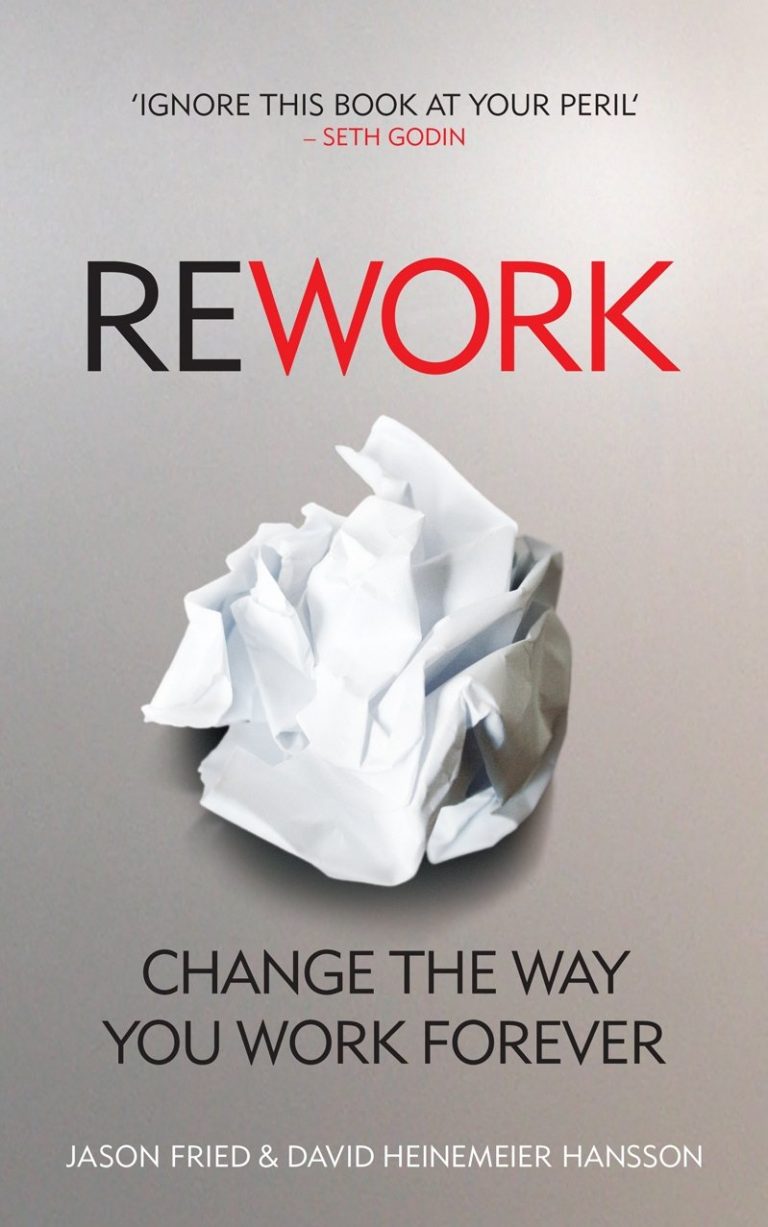
Fried & Heinemeier Hansson: Rework

bout the book

“Why don’t we just call plans what they really are: guesses. Start referring to your business plans as business guesses.” This quote illustrates the content of the book. Fried and Hansson has great ideas and a lot of those. That’s why you should continue reading.

What are the key learnings?

The mission of the book is as they say: “We hope it inspires you to rework how you do things.” And in a way it does. No, you won’t be getting new skills nor learn new theories or even read about great cases. You simply get inspiration to the ideas that you have already been thinking.

The key learnings are

–      “Become a starter, not an entrepreneur.

–      Do not raise funding, because it’s a bad deal.

–      A business without a path to profit isn’t a business, it’s a hobby.

–      Build an audience, because an audience can be your secret weapon.

–      Marketing is not a department, it is something everyone in your company is doing 24 / 7 / 365.”

I would call this book as a growth hacking of work

–      “Contrast that with learning from your successes. Success gives you real ammunition. When something succeeds, you know what.

–      Maybe the right size for your company is five people. Maybe it’s forty. Maybe it’s two hundred. Or maybe it’s just you and a laptop. Don’t make assumptions about how big you should be ahead of time.

–      Small is not just a stepping-stone. Small is a great destination in itself.

–      Workaholics aren’t heroes. They don’t save the day, they just use it up. The real hero is already home because she figured out a faster way to get things done.”

How to become s starter?

–      “Let’s retire the term entrepreneur. It’s outdated and loaded with baggage. It smells like a members-only club. Everyone should be encouraged to start his own business, not just some rare breed that self-identifies as entrepreneurs.

–      Anyone who creates a new business is a starter. You don’t need an MBA, a certificate, a fancy suit, a briefcase, or an above-average tolerance for risk. You just need an idea, a touch of confidence, and a push to get started.”

–      Stanley Kubrick gave this advice to aspiring filmmakers: “Get hold of a camera and some film and make a movie of any kind at all.” Kubrick knew that when you’re new at something, you need to start creating. The most important thing is to begin. So get a camera, hit Record, and start shooting.”

Make a dent in the universe

–      “To do great work, you need to feel that you’re making a difference. That you’re putting a meaningful dent in the universe. That you’re part of something important.”

Don’t take money from outsiders. Why?

–      “You give up control.

o  When you turn to outsiders for funding, you have to answer to them too. That’s fine at first, when everyone agrees. But what happens down the road? Are you starting your own business to take orders from someone else? Raise money and that’s what you’ll wind up doing.

–      Cashing out” begins to trump building a quality business.

o  Investors want their money back—and quickly (usually three to five years). Long-term sustainability goes out the window when those involved only want to cash out as soon as they can.

–      Spending other people’s money is addictive.

o  There’s nothing easier than spending other people’s money. But then you run out and need to go back for more. And every time you go back, they take more of your company.

–      It’s usually a bad deal.

o  When you’re just beginning, you have no leverage. That’s a terrible time to enter into any financial transaction.

–      Customers move down the totem pole. You wind up building what investors want instead of what customers want.

–      Raising money is incredibly distracting.

o  Seeking funding is difficult and draining. It takes months of pitch meetings, legal maneuvering, contracts, etc. That’s an enormous distraction when you should really be focused on building something great.”

Start a business, not a startup. Why?

–      “It’s a place where the laws of business physics don’t apply.

–      The startup. it’s a special breed of company that gets a lot of attention (especially in the tech world).

–      The startup is a magical place. It’s a place where expenses are someone else’s problem.

–      It’s a place where that pesky thing called revenue is never an issue.

–      It’s a place where you can spend other people’s money until you figure out a way to make your own.”

A business without a path to profit isn’t a business, it’s a hobby

–      Would you meet with a divorce lawyer the morning of your wedding? That would be ridiculous, right? You need a commitment strategy, not an exit strategy.

–      About pivoting… Huge organizations can take years to pivot. They talk instead of act. They meet instead of do.

–      Build an audience. All companies have customers. Lucky companies have fans. But the most fortunate companies have audiences. An audience can be your secret weapon.

–      Teaching is your chance to outmaneuver them.”

Go behind the scenes

–      People are curious about how things are made. It’s why they like factory tours or behind-the-scenes footage on DVDs.

–      They want to see how the sets are built, how the animation is done, how the director cast the film, etc.

–      They want to know how and why other people make decisions.

–      Letting people behind the curtain changes your relationship with them.”

Marketing is not a department

–      “Accounting is a department. Marketing isn’t. Marketing is something everyone in your company is doing 24 / 7 / 365.

–      Just as you cannot not communicate, you cannot not market: Every time you answer the phone, it’s marketing.

–      Every time you send an e-mail, it’s marketing.

–      Every time someone uses your product, it’s marketing.

–      Every word you write on your Web site is marketing.

–      If you build software, every error message is marketing.

–      If you’re in the restaurant business, the after-dinner mint is marketing”.

About hiring

–      “Do it yourself first.

–      Never hire anyone to do a job until you’ve tried to do it yourself first. That way, you’ll understand the nature of the work. You’ll know what a job well done looks like.

–      Hire when it hurts.

–      Don’t hire for pleasure; hire to kill pain. Always ask yourself: What if we don’t hire anyone? Is that extra work that’s burdening us really necessary? Can we solve the problem with a slice of software or a change of practice instead? What if we just don’t do it?”

Who to hire?

–      “If you are trying to decide among a few people to fill a position, hire the best writer.

–      It doesn’t matter if that person is a marketer, salesperson, designer, programmer, or whatever; their writing skills will pay off. That’s because being a good writer is about more than writing.

–      Clear writing is a sign of clear thinking. Great writers know how to communicate. They make things easy to understand. They can put themselves in someone else’s shoes. They know what to omit.

–      Those are qualities you want in any candidate.

Comeback of writing

–      “Writing is making a comeback all over our society.

–      Look at how much people e-mail and text-message now rather than talk on the phone.

–      Look at how much communication happens via instant messaging and blogging.

–      Writing is today’s currency for good ideas.”

Ideas are forever

–      “Ideas are immortal.

–      They last forever.

–      What doesn’t last forever is inspiration.

–      Inspiration is like fresh fruit or milk: It has an expiration date.”

About inspiration

–      When you’re high on inspiration, you can get two weeks of work done in twenty-four hours.

–      Inspiration is a time machine in that way.

–      Inspiration is a magical thing, a productivity multiplier, a motivator. But it won’t wait for you.

–      Inspiration is a now thing. If it grabs you, grab it right back and put it to work.”

How should we change according to the book?

Put your inspiration into work.

What should I personally do?

Write to rework@ 37signals.com

Summary

The book in six words – ”Say and I will listen. Talk and I will reply. Ask and I will think” (Mikko Mattinen)

Kategoriat
Uncategorized

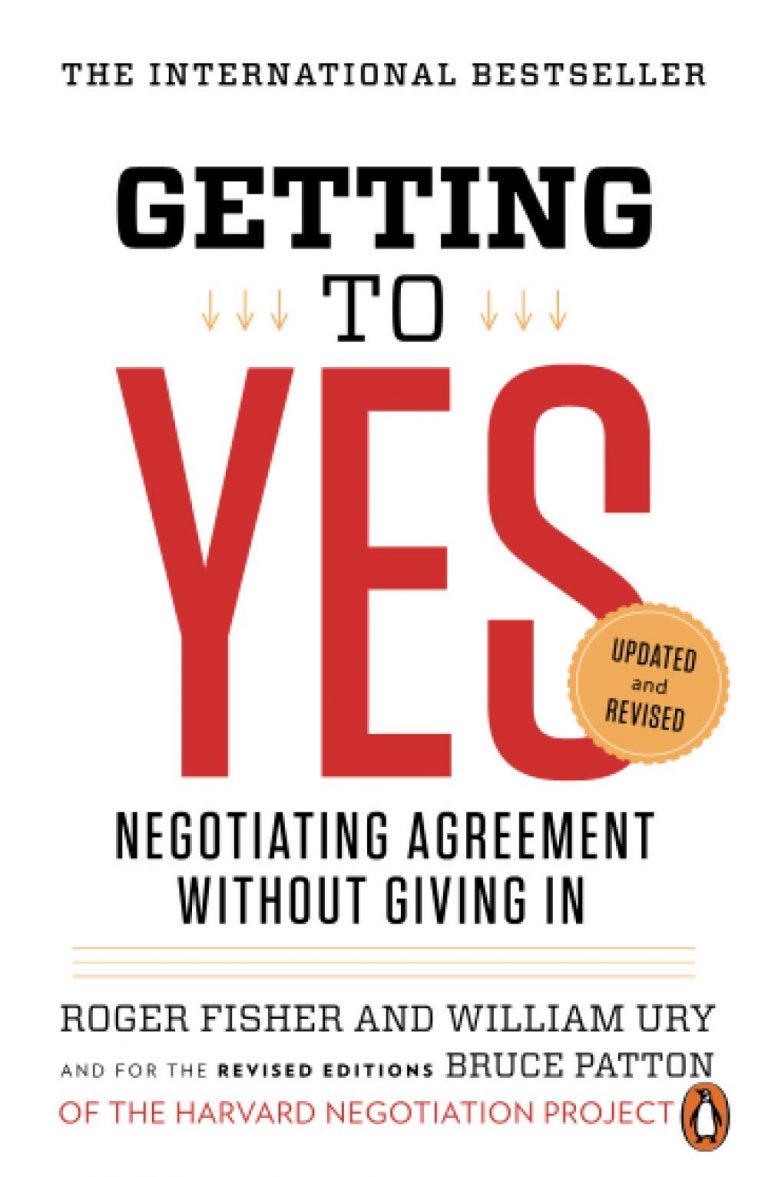
Fisher & Ury: Getting to YES

About the book

Getting to YES is a book about negotiating agreement without giving in. As Robert Fish and William Ury states in the book – negotiation is a fact of life. We are always making trade-offs, but the best part is that you get to choose what you want. It’s a back-and-forth communication designed to reach an agreement.

“Getting to YES”-method is about using independent standards to discuss the fairness of a proposal, getting to you what you deserve and protect you from getting taken.

What are the key learnings?

The key learning of the book is that the agreement is often based on disagreement and with principled negotiation you can reach a deal.

“Substantive issues need to be disentangled from relationship and process issues. The content of a possible agreement needs to be separated from questions how you talk about it and how deal with the other side. Each set of issues needs to be negotiated on its own merits:

–      Substantive issues

o  Terms

o  Conditions

o  Prices

o  Dates

o  Numbers liabilities

–      Relationship issues

o  Balance of emotions and reasons

o  Ease of communications

o  Degree of trust and reliability

o  Attitude of acceptance (or rejection)

o  Relative emphasis on persuasion (or coercion)

o  Degree of mutual understanding

There is no trade-off between pursuing a good outcome and pursuing a good relationship.”

The Principled Negotiation

Before you anything – start by “envisioning what a successful agreement might look like.”

In the principled negotiation the negotiator looks for mutual gains and when interests conflict, “the negotiator should insist that the result be based on some fair standards independent of the will of either side”.

The principled negotiation method is totally apart from hard and soft methods. In soft negotiation the negotiator wants to avoid personal conflict and in hard negotiation the negotiator” sees any situation as a contest of wills”.

The “Getting to YES” or principled method has four major parts:

1)   PEOPLE: Separate the people form the problem.

2)   INTERESTS: Focus on interests, not positions.

3)   OPTIONS: Invent options fort mutual gain.

4)   CRITERIA: Insist on using objective criteria.

When evaluating the end-result – agreement, you should consider is the agreement:

·     Wise agreement.

·     Efficient.

·     Improve relationships (or at least not damage).

People

Separate the people form the problem or “don’t bargain over positions” means that people should be attacking the problem, not each other. “Being nice is no answer” means that you are dealing with either hard or soft negotiation. When you take the soft position you loose your shirt. When you are driving a hard negotiation you are about to loose your face.

When building the people problem, you should remember three things – perception, emotion and communication:

–      In perception you should put yourself into their shoes. Ask their perception or advise and give them some credit/stake in the outcome.

–      In emotions pay attention to “core concerns”, make emotions legitimate and allow the other side to let off steam and use symbolic gestures (shake hands, eat together).

–      In communication remember to talk to each other (acknowledge what is being said – repeat what you heard), make sure they are listening (speak to explain to be understood) and avoid misunderstanding (speak about yourself and for a purpose).

Prevention works best and by building a working relationship does help, because then you have “a foundation of trust to build upon in a difficult situation”. It helps to meet unofficially and knowing their likes and dislikes.

Interests

“A wise solution reconcile interests, not positions”. To identify interests you should ask “Why” and “Why not”. Find out their interests, because each side has multiple interests and positions. When knowing the interest you can start evaluating possible trade-offs or options to deal with. The most powerful interests are basic human needs:

–      Security.

–      Economic well-being.

–      A sense of belonging.

–      Recognition.

–      Control over one’s life.

Start by documenting the interests, write a list. Then remember to explain your own interests and talk about those – in great detail, so that the other side knows your motivation behind the negotiation. Be specific, use concrete details and invite the other side to “correct me if I’m wrong”.

Options

Try to expand the pie before dividing it and do not leave money on the table. Methods how you can invent options:

1)   Avoid premature judgement.

2)   Do not search for a single answer.

3)   The pie is not fixed.

4)   Consider trying to solve their problem also.

Prescription for inventing creative options:

–      Separate the act of inventing options from the act of judging them.

–      Broaden the options to multiple answers.

–      Search for mutual gains and weights for the gains (!!! Basis of the agreement !!!).

o  Shared interests are typically latent

o  Shared interests are opportunities, not godsends.

o  Makes the negotiations smoother and more amicable.

–      Invent ways of making their decisions easy (who’s shoes, who’s making the decision).

Types of differences are:

–      Difference in interests.

–      Different beliefs.

–      Different values placed on time.

–      Different forecasts.

–      Differences in aversion to risk.

Dovetailing – “look for items that are of low cost to you and high benefit to them and vice versa”. And remember – do not leave money on the table.

Objective Criteria

Start by committing yourself reaching a solution based on principle, not pressure. The objective criteria can be fair standards (market value, scientific judgement, costs etc.), fair procedures (one cuts and the other chooses, taking turns, drawing lots, letting someone else decide):

1)   Frame each issue as a joint search for objective criteria.

2)   Reason and be open to reason.

3)   Never yield to pressure.

BATNA

BATNA is Best Alternative To a Negotiated Agreement. It has two sides – protect yourself and make most out of it.

Negotiation Jujitsu

–      Don’t attack their position, look behind it.

–      Don’t defend your ideas, invite criticism and advise.

–      Recast an attack on you as an attack on the problem.

–      Ask questions and be silent.

Dirty Tricks

Rules for the game when the other side is using dirty tricks:

–      Recognize the tactic.

–      Raise the issue explicitly.

–      Question the legitimacy and desirability.

Tricky Tactics

All these three might occur simultaneously:

–      Deliberate deception

o  Phony facts, ambiguous authority, dubious intentions, less than full disclosure.

–      Psychological warfare

o  Stressful situations, personal attacks, goo-guy/bad-guy routine, threats.

–      Positional pressure tactics

o  Refusal to negotiate, extreme demands, escalating demands, lock-in tactics, hardhearted partner, a calculated delay, “take it or leave it”

But remember not be a victim in any dirty or tricky tactics games.

Conclusion

1.   You know all of this by heart.

2.   Learn from doing.

3.   Winning in negotiations is about way-of-working, not luring your opponent to a bad deal. It’s all about how to do well in a negotiation.

How should we change according to the book?

We should learn “how to get what we are entitled to while still getting along with the other side”.

What should I personally do?

Remember

1.   BATNA.

2.   Shared interests are opportunities, not godsends.

Summary

The book in six words – “Be hard on the problem, soft on the people”.

Kategoriat
Uncategorized

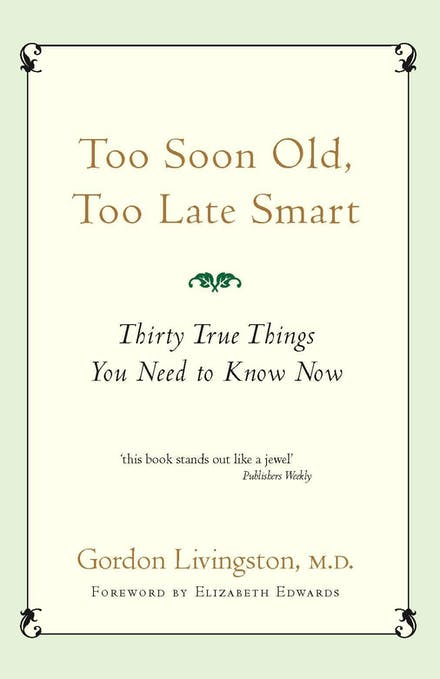
Gordon Livingston: Toon Soon Old, Too Late Smart

About the book

I was afraid that this book was might be one of those self-improvement books that the market is filled with. No, it’s not.

How was the book?

This is a very elegant book – filled with beautiful and human thoughts. It has 168 pages and the book will create a flow or pull of pages when you read it. The concept is that Gordon Livingston presents ”thirty true things you need to know now”. He does not argue anything and especially does not present any scientific evidence to back-up his ”thirty true things”. The ideas are wisdom of an elderly therapist. You either believe or you don’t believe in the ideas. Having said that – these words will certainly put you think about his ideas.

Somehow Livingston’s book reminds me of Viktor Frankl’s book about ”Man’s Search For Meaning”.   

What are the key learnings?

Gordon Livingston has identified ”thirty true things you need to know now”. I won’t be going through all of those. You have to pick and choose your own favorites. But my favorites are:

·       Only bad things happen quickly.

·       There is nothing more pointless, or common, than doing the same things and expecting different results.

·       High tolerance for boredom.

Actually the last idea is not from the original list, but I took the liberty on pointing it out. Why? Livingston states that it is the most common answer to the secret to a successful marriage. I suppose that people need assurance that life might be seen as dull, but boredom actually totally normal feeling in the long-run. You just have to re-define boredom and make it meaningful.   

Only bad things happen quickly is a sinister idea, because we hope that good changes come quickly, but obviously that’s not the case. Patience and determination are ”life’s primary virtues” when you are looking for happiness-producing processes in our lives, because those take a long time. Only bad things happen quickly is also a sinister idea if you are not prepared for changes.

There is nothing more pointless, or common, than doing the same things and expecting different results idea is a great idea. Without further analysis I can state that it fits well into our protestant work ethic.    

Minor notions which might be helpful:

·       It is hope that I’m really selling.

·       We get what we expect.

·       Selective attention and a sense of humor helps to survive.

·       Past behavior is the most reliable predictor of future behavior.

·       Happiness is built from someone to love, something to look forward to and something to do.

Why do I think this book is worth the time? Because the thinking of the book which is filled with mundane ideas how to survive. No, nothing truly genial scientific analysis nor theories. Only ordinary ideas about survival, hope and happiness. Things that we all can access and most of us even can deploy whenever we want. Forget measuring the ideas – just rely on your feelings.

How should we change according to the book?

·       Be prepared.

·       Endorse patience and determination.

·       Suriving is easy – just remember to love, laugh and tolerate the uncertainty.

What should I personally do?

Read this book once a year.

Summary

The book in ”six” words – Whining is the beginning of the process.