Kategoriat
Uncategorized

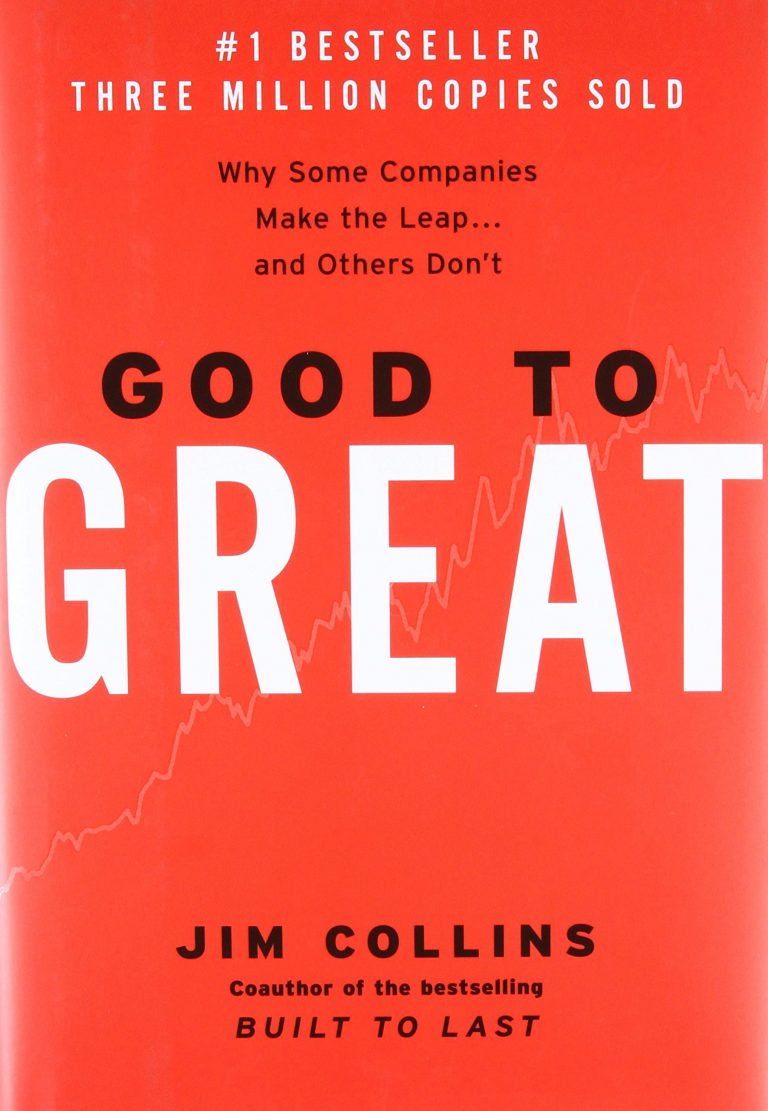
Collins & Hansen: Great by Choice

About the book

I just the love Mr. Jim Collins and his research team has conducted. No man on earth has made as much as Mr. Collins to help leaders to stay on track. The current business systems wouldn’t be the same without his insights, creative writings and evidence based analysis. We can easily promote Jim Collins to the same category as Peter Drucker.

“One should… be able to see that things are hopeless and yet be determined to make them otherwise.” —F. Scott Fitzgerald

What are the key learnings?

Key question… “What does it take to build a great company?”

This is the recipe…. “Bill Gates didn’t just get a lucky break and cash in his chips. He kept pushing, driving, working:

1)   staying on a 20 Mile March;

2)   firing first bullets, then big calibrated cannonballs;

3)   exercising productive paranoia to avoid the Death Line;

4)   developing and amending a SMaC recipe;

5)   hiring great people;

6)   building a culture of discipline; never deviating from his monomaniacal focus—and sustained his efforts for more than two decades.”

1 THRIVING IN UNCERTAINTY

Meaning of the book…. “All of this led us to a simple question: Why do some companies thrive in uncertainty, even chaos, and others do not? We began the nine-year research project behind this book in 2002, when America awoke from its false sense of stability, safety, and wealth entitlement.”

“We selected on performance plus environment for two reasons:

1)   First, we believe the future will remain unpredictable and the world unstable for the rest of our lives, and we wanted to understand the factors that distinguish great organizations, those that prevail against extreme odds, in such environments.

2)   Second, by looking at the best companies and their leaders in extreme environments, we gain insights that might otherwise remain hidden when studying leaders in more tranquil settings.”

FINDING THE 10X CASES

“We spent the first year of our efforts identifying the primary study set of 10X cases, searching for historical cases that met three basic tests:

1)   The enterprise sustained truly spectacular results for an era of 15 + years relative to the general stock market and relative to its industry.

2)   The enterprise achieved these results in a particularly turbulent environment, full of events that were uncontrollable, fast-moving, uncertain, and potentially harmful.

3)   The enterprise began its rise to greatness from a position of vulnerability, being young and/ or small at the start of its 10X journey.

The crucial question is “What did the great companies share in common that distinguished them from their direct comparisons?”

Leaders…. Entrenched myth: Successful leaders in a turbulent world are bold, risk-seeking visionaries. Contrary finding: The best leaders we studied did not have a visionary ability to predict the future. They observed what worked, figured out why it worked, and built upon proven foundations.

They were not:

·     more risk taking,

·     bolder,

·     more visionary, and

·     more creative than the comparisons.

They were:

·     more disciplined,

·     more empirical, and

·     more paranoid.

Innovation…. “Entrenched myth: Innovation distinguishes 10X companies in a fast-moving, uncertain, and chaotic world. Contrary finding: To our surprise, no. Yes, the 10X cases innovated, a lot. But the evidence does not support the premise that 10X companies will necessarily be more innovative than their less successful comparisons; and in some surprise cases, the 10X cases were less innovative. Innovation by itself turns out not to be the trump card we expected; more important is the ability to scale innovation, to blend creativity with discipline.”

Speed….. “Entrenched myth: A threat-filled world favors the speedy; you’re either the quick or the dead. Contrary finding: The idea that leading in a “fast world” always requires “fast decisions” and “fast action”—and that we should embrace an overall ethos of “Fast! Fast! Fast!”—is a good way to get killed. 10X leaders figure out when to go fast, and when not to.”

Change…. “Entrenched myth: Radical change on the outside requires radical change on the inside. Contrary finding: The 10X cases changed less in reaction to their changing world than the comparison cases. Just because your environment is rocked by dramatic change does not mean that you should inflict radical change upon yourself.”

Luck…. “Entrenched myth: Great enterprises with 10X success have a lot better luck.  Contrary finding: The 10X companies did not generally have more luck than the comparisons. Both sets had luck—lots of luck, both good and bad—in comparable amounts. The critical question is not whether you’ll have luck, but what you do with the luck that you get.”

Peter Drucker taught, “the best—perhaps even the only—way to predict the future is to create it.

2 10XERS

“Victory awaits him who has everything in order—luck people call it. Defeat is certain for him who has neglected to take the necessary precautions in time; this is called bad luck.” —Roald Amundsen, The South Pole

“Amundsen’s philosophy: You prepare with intensity, all the time, so that when conditions turn against you, you can draw from a deep reservoir of strength. And equally, you prepare so that when conditions turn in your favor, you can strike hard.”

“Unlike Scott, Amundsen systematically built enormous buffers for unforeseen events.”

“A single detail aptly highlights the difference in their approaches: Scott brought one thermometer for a key altitude-measurement device, and he exploded in “an outburst of wrath and consequence” when it broke; Amundsen brought four such thermometers to cover for accidents.”

DIFFERENT BEHAVIORS, NOT DIFFERENT CIRCUMSTANCES

“We’re not saying that 10Xers lacked creative intensity, ferocious ambition, or the courage to bet big. They displayed all these traits, but so did their less successful comparisons. So then, how did the 10Xers distinguish themselves?

1)   Control: First, 10Xers embrace a paradox of control and non-control. On the one hand, 10Xers understand that they face continuous uncertainty and that they cannot control, and cannot accurately predict, significant aspects of the world around them.

2)   Fate: On the other hand, 10Xers reject the idea that forces outside their control or chance events will determine their results; they accept full responsibility for their own fate.

10Xers then bring this idea to life by a triad of core behaviours:

·     Fanatic discipline,

·     Empirical creativity, and

·     Productive paranoia.

FANATIC DISCIPLINE

“Both Kelleher and Lewis, like all the 10Xers we studied, were nonconformists in the best sense. They started with values, purpose, long-term goals, and severe performance standards; and they had the fanatic discipline to adhere to them.”

(if you’re a hammer, everything you see looks like a nail).

EMPIRICAL CREATIVITY

Like scientists….. “CEOs of the 10Xers were like scientists. Working based on the data and evidence.”

“Social psychology research indicates that at times of uncertainty, most people look to other people—authority figures, peers, group norms—for their primary cues about how to proceed.

10Xers, in contrast, do not look to conventional wisdom to set their course during times of uncertainty, nor do they primarily look to what other people do, or to what pundits and experts say they should do. They look primarily to empirical evidence.”

“But the 10Xers had a much deeper empirical foundation for their decisions and actions, which gave them well-founded confidence and bounded their risk. The 10Xers don’t favor analysis over action; they favor empiricism as the foundation for decisive action.”

PRODUCTIVE PARANOIA

“Like Amundsen with his huge supply buffers, 10Xers maintain a conservative financial position, squirreling away cash to protect against unforeseen disruptions.”

“In short, we found no consistent pattern in the backgrounds of 10Xers relative to the comparison leaders.”

3 20 MILE MARCH

“The 20 Mile March is more than a philosophy. It’s about having concrete, clear, intelligent, and rigorously pursued performance mechanisms that keep you on track.”

“The 20 Mile March creates two types of self-imposed discomfort:

(1) the discomfort of unwavering commitment to high performance in difficult conditions, and

(2) the discomfort of holding back in good conditions.”

Important…. “We found that every 10X company exemplified the 20 Mile March principle during the era we studied.”

WHY 20 MILE MARCHERS WIN?

“20 Mile Marching helps turn the odds in your favor for three reasons:

1. Confidence: It builds confidence in your ability to perform well in adverse circumstances.

2. Prevent: It reduces the likelihood of catastrophe when you’re hit by turbulent disruption.

3. Self-control: It helps you exert self-control in an out-of-control environment.”

“Having a clear 20 Mile March focuses the mind; because everyone on the team knows the markers and their importance, they can stay on track.”

ARTHUR LEVINSON: TEACHING A COMPANY TO MARCH

A good 20 Mile March has the following seven characteristics:

1. Clear performance markers.

2. Self-imposed constraints.

3. Appropriate to the specific enterprise.

4. Largely within the company’s control to achieve.

5. A proper timeframe—long enough to manage, yet short enough to have teeth.

6. Imposed by the company upon itself.

7. Achieved with high consistency.

“Key question? What is your 20 Mile March, something that you commit to achieving for 15 to 30 year?”

4 FIRE BULLETS, THEN CANNONBALLS

A BIG SURPRISE

About innovation…. “The evidence from our research does not support the premise that 10X companies will necessarily be more innovative than their less successful comparisons. And in some surprise cases, such as Southwest Airlines versus PSA and Amgen versus Genentech, the 10X companies were less innovative than the comparisons.”

About pioneering…. “Tellis and Golder also found that 64 percent of pioneers failed outright.

Good for society, bad for pioneers…. “It seems that pioneering innovation is good for society but statistically lethal for the individual pioneer!”

The level of innovation…. “We’re not saying that innovation is unimportant. Every company in this study innovated. It’s just that the 10X winners innovated less than we would have expected relative to their industries and relative to their comparison cases; they were innovative enough to be successful but generally not the most innovative.”

CREATIVITY AND DISCIPLINE

“Of course, it is not discipline alone that makes greatness, but the combination of discipline and creativity.”

“Fire bullets, then fire cannonballs. First, you fire bullets to figure out what’ll work. Then once you have empirical confidence based on the bullets, you concentrate your resources and fire a cannonball. After the cannonball hits, you keep 20 Mile Marching to make the most of your big success.”

<= Just like in the “Lean Startup Way”

Bullets… “Acquisitions would be made with little or no debt, and only when the balance sheet would remain strong after the purchase, thereby ensuring that acquisitions would remain low risk, low cost, and relatively low distraction.”

Calibrated cannonballs… “The 10Xers were much more likely to fire calibrated cannonballs, while the comparison cases had uncalibrated cannonballs flying all over the place.”

“And that’s the underlying principle: empirical validation. Be creative, but validate your creative ideas with empirical experience. You don’t even need to be the one to fire all the bullets; you can learn from the empirical experience of others.”

EMPIRICAL VALIDATION, NOT PREDICTIVE GENIUS

APPLE’S REBIRTH: BULLETS, CANNONBALLS, AND DISCIPLINED CREATIVITY

KEY POINTS ► A “fire bullets, then cannonballs” approach better explains the success of 10X companies than big-leap innovations and predictive genius.

5 LEADING ABOVE THE DEATH LINE

“As soon as there is life there is danger.” —Ralph Waldo Emerson

“In this chapter, we explore three core sets of practices, rooted in the research, for leading and building a great enterprise with productive paranoia: ► Productive Paranoia 1: Build cash reserves and buffers—oxygen canisters—to prepare for unexpected events and bad luck before they happen. ► Productive Paranoia 2: Bound risk—Death Line risk, asymmetric risk, and uncontrollable risk—and manage time-based risk. ► Productive Paranoia 3: Zoom out, then zoom in, remaining hypervigilant to sense changing conditions and respond effectively.”

PRODUCTIVE PARANOIA 1: EXTRA OXYGEN CANISTERS-IT’S WHAT YOU DO BEFORE THE STORM COMES

“A Black Swan is a low-probability disruption, an event that almost no one can foresee, a concept popularized by the writer and financier Nassim Nicholas Taleb. Almost no one can predict a particular Black Swan before it hits, not even our 10Xers. But it is possible to predict that there will be some Black Swan, as yet unspecified.”

“When a calamitous event clobbers an industry or the overall economy, companies fall into one of three categories: those that pull ahead, those that fall behind, and those that die. The disruption itself does not determine your category. You do.”

PRODUCTIVE PARANOIA 2: BOUNDING RISK

“To explore this question, we first identified three primary categories of risk relevant to leading an enterprise: (1) Death Line risk, (2) asymmetric risk, and (3) uncontrollable risk. (See Research Foundations: Risk-Category Analysis.)”

“In short, we found that the 10X companies took less risk than the comparison cases. Certainly, the 10X leaders took risks, but relative to the comparisons in the same environments, they bounded, managed, and avoided risks. The 10X leaders abhorred Death Line risk, shunned asymmetric risk, and steered away from uncontrollable risk.”

PRODUCTIVE PARANOIA 3: ZOOM OUT, THEN ZOOM IN

Zoom Out…. “Sense a change in conditions Assess the time frame: How much time before the risk profile changes? Assess with rigor: Do the new conditions call for disrupting plans? If so, how?”

Zoom In…. “Focus on supreme execution of plans and objectives”

LEADING ABOVE THE DEATH LINE KEY POINTS ► This chapter explores three key dimensions of productive paranoia: 1. Build cash reserves and buffers—oxygen canisters—to prepare for unexpected events and bad luck before they happen. 2. Bound risk—Death Line risk, asymmetric risk, and uncontrollable risk—and manage time-based risk. 3. Zoom out, then zoom in, remaining hypervigilant to sense changing conditions and respond effectively.

6 SMaC

“Most men die of their remedies, and not of their illnesses.” —Molière

The “SMaC” is a formula and the word stands for

–      Specific,

–      Methodical, and

–      Consistent.”

“You can use the term “SMaC” as a descriptor in any number of ways: as an adjective (“ Let’s build a SMaC system”), as a noun (“ SMaC lowers risk”), and as a verb (“ Let’s SMaC this project”).”

“A SMaC recipe is a set of durable operating practices that create a replicable and consistent success formula; it is clear and concrete, enabling the entire enterprise to unify and organize its efforts, giving clear guidance regarding what to do and what not to do. A SMaC recipe reflects empirical validation and insight about what actually works and why. Howard Putnam’s 10 points at Southwest Airlines perfectly illustrates the idea.”

7 RETURN ON LUCK

“The real difference between the 10X and comparison cases wasn’t luck per se but what they did with the luck they got. Adding up all the evidence, we found that the 10X cases were not generally luckier than the comparison cases. The 10X cases and the comparisons both got luck, good and bad, in comparable amounts. The evidence leads us to conclude that luck does not cause 10X success. People do. The critical question is not “Are you lucky?” but “Do you get a high return on luck?”

This is just like straight from Malcolm Gladwell’s “Outliers” …. “His friend Paul Allen just happened to see a cover story in the January 1975 issue of Popular Electronics titled “World’s First Microcomputer Kit to Rival Commercial Models.”

Important about the luck…. “Gates did more with his luck, taking a confluence of lucky circumstances and creating a huge return on his luck. And this is the important difference.”

Return on Luck (ROL)….. “Everyone gets luck, good and bad, but 10X winners make more of the luck they get. The Bill Gates story illustrates the upper-right quadrant, getting a great return on good luck.”

10XERS SHINE: GREAT RETURN ON BAD LUCK

“Canadian NHL players with the “bad luck” of being born in the second half of the year have a higher likelihood of making it into the Hall of Fame than those with the “good luck” of being born in the first half of the year!”

About bad luck…. “Nietzsche famously wrote, “What does not kill me, makes me stronger.” We all get bad luck. The question is how to use that bad luck to make us stronger, to turn it into “one of the best things that ever happened,” to not let it become a psychological prison. And that’s precisely what 10Xers do.”

BAD LUCK, POOR RETURN: THE ONE PLACE YOU REALLY DON’T WANT TO BE

LUCK IS NOT A STRATEGY…. “Life offers no guarantees. But it does offer strategies for managing the odds, indeed, even managing luck. The essence of “managing luck” involves four things: (1) cultivating the ability to zoom out to recognize luck when it happens, (2) developing the wisdom to see when, and when not, to let luck disrupt your plans, (3) being sufficiently well-prepared to endure an inevitable spate of bad luck, and (4) creating a positive return on luck—both good luck and bad—when it comes. Luck is not a strategy, but getting a positive return on luck is.”

“The best leaders we’ve studied maintain a paradoxical relationship to luck. On the one hand, they credit good luck in retrospect for having played a role in their achievements, despite the undeniable fact that others were just as lucky. On the other hand, they don’t blame bad luck for failures, and they hold only themselves responsible if they fail to turn their luck into great results. 10Xers grasp that if they blame bad luck for failure, they capitulate to fate. Equally, they grasp that if they fail to perceive when good luck helped, they might overestimate their own skill and leave themselves exposed when good luck runs dry. There might be more good luck down the road, but 10Xers never count on it.”

EPILOGUE GREAT BY CHOICE

Disease…. “We sense a dangerous disease infecting our modern culture and eroding hope: an increasingly prevalent view that greatness owes more to circumstance, even luck, than to action and discipline—that what happens to us matters more than what we do.”

Responsibility…. “Do we want to build a society and culture that encourage us to believe that we aren’t responsible for our choices and accountable for our performance? Our research evidence stands firmly against this view.”

People….“The factors that determine whether or not a company becomes truly great, even in a chaotic and uncertain world, lie largely within the hands of its people.”

Moment of truth…. “When the moment comes—when we’re afraid, exhausted, or tempted—what choice do we make? Do we abandon our values? Do we give in? Do we accept average performance because that’s what most everyone else accepts?”

Deep within…. “The greatest leaders we’ve studied throughout all our research cared as much about values as victory, as much about purpose as profit, as much about being useful as being successful. Their drive and standards are ultimately internal, rising from somewhere deep inside.

How should we change according to the book?

Start the 20 Mile March:

1. Clear performance markers (tavoitteet).

2. Self-imposed constraints.

3. Appropriate to the specific enterprise.

4. Largely within the company’s control to achieve (saavutettavissa).

5. A proper timeframe—long enough to manage, yet short enough to have teeth (aikaikkuna).

6. Imposed by the company upon itself.

7. Achieved with high consistency (osumatarkkuus).

What should I personally do?

“Companies, leaders, organizations, and societies do not thrive on chaos. But they can thrive in chaos.”

Summary

The book in six words – ”When the going gets weird, the weird become CEO.” (Hunter S. Thompson quote with a slight twist)

Kategoriat
Uncategorized

Gladwell: David & Goliath

About the book

The expectations of the book are high due to his “Tipping point” book. David & Goliath is not an disappointment. And if I would have read this as a first Gladwell book and after that the Tipping point I might have found this book better. The thing is that I’m trying to say that Tipping point is a great book. But anyways, don’t get hesitant. Malcom Gladwell’s book about David and Goliath is worth reading. Go!  

How was the actual reading of the book?

This book is for everybody. People who are interested about science, it is for parents, it is for business people and it is for people interested in life in large.

Gladwell tells his story through nine different characters. Those range from modern people to historic figures. Some of the portraits are very detailed and some rather lengthy. 

Malcom Gladwell explains how one should not take the apparent as a fact. He argues that we should look beyond the apparent. For example how parenting economics influence parents ability to raise their children. Or how Impressionists found their place in the world of art. Or how relative deprivation influences the suicide rate of different nations. 

Secondly Gladwell states that underdogs have opportunities that are not apparent. And underdogs have nothing to lose. Famous underdogs are Lawrence of Arabia who defeated Turks. Martin Luther King who defeated racism. And Ferrari which defeated Ford in Le Mans year after year (not an example in the book…;-)  

What are the key learnings of the book? 

Malcom Gladwell has two central ideas and a hint.

1) “Giants are not what we think they are”:

–      “Giants are not what we think they are” is a valuable lesson in the world of Internet.

–      All the current Internet goliaths where actually originally davids. Take any of the top ten Internet sites which did not exist twenty years ago.

2) “Underdogs win all the time”, but underdog strategies are hard:

–      Underdogs and opportunities are packaged for example in a form of dyslexia. Dyslexia is a desirable difficulty and it can be turned into advantage.

–      Not all difficulties are negative, because humans can adapt their behavior. For example a dyslexic became top courthouse lawyer because of compensation learning i.e. his ability to listen and memorize carefully.  

–      But the underdog strategies are hard, because those are not to be found from any books. One have to discover those by themselves.

For giants there is a valuable lesson to be learned:

–      “There comes a point where the best-intentioned application of power and authority begins to backfire.”

–      Northern Ireland is a sad example how power is misused and what went wrong the usage of power.

–      Gladwell advises that one should carefully evaluate how and where to use ones power. And are there other means to an end?

How should we change according to the book?

Goliaths should learn their limits of power and Davids should deploy a suitable strategy to become a giant.

What should I personally do? 

Evaluate ones desirable difficulties. 

Summary

Malcolm Gladwell’s book tells a story about the art of battling giants. He makes his points thoroughly and not only leaning to success stories. In this kind of book it’s important that the reader can relate to the topics. That’s why Gladwell has succeeded again. He has taken into consideration the main target group – his readers.  

The book in six words – Everybody can be David, not Goliath. 

Kategoriat
Uncategorized

Jan Carlzon: Moments of Truth

About the book

This book must have been a bright flash in the world of business books during the days when it was published. Jan Carlzons thinking is fresh and the lessons of the book are still valid.

“Moments of Truth” was published in 1987, but it has not lost the magic of customer-driven thinking. That in our mind the second important notion about the book is that if Carlzon was able to develop such a holistic approach towards customer-driven thinking thirty years ago – how hard can it be for us to be customer-driven today?

What are the key learnings?

The key lesson for me is the name of the book – moments of truth. “Moments of Truth” is all about the 15 seconds that you typically spend with a customer (within airline industry). During those 15 seconds the customer defines the entire customer relationship.

Second lesson is that we must re-define middle management. In his Swedish version he talks about “riv ner pyramiden” – tear down the pyramid. Get rid of hindering hierarchies.

Third and last lesson was that by empowering people by spreading responsibility you unleash a money making monster.

These three key lessons can be found from the first pages of the book. Rest of the book is spent on scrutinising other topics. For example explaining his business operations in companies such as Vingresor, Linjeflyg and SAS. Do not skip the rest of the book. Carlzon in fact helps you to get grip of the book.

Other lessons of the book are:

·     SAS existed in the era when Sweden was leaping from rural society into modern welfare state.

·     Power of pricing. SAS dropped the ticket prices on average with 11 %, but the number of passengers increased 44 %. Talk about price sensitivity.

·     Carlzons recipe was to reorient SAS “towards the needs of the market it serves”. He wanted to restore the olive into customers’ the martini”.

·     “Love is in the Air” was the tune of SAS when Carlzon started his change management activities. So Swedish choice!

Carlzon talks a lot about leaders and leadership. He sees that leaders To Do –list consists the following topics:

–      Define clear strategy and goals.

–      Communicate it.

–      Train your people to take responsibility.

In Carlzons’ thinking a leader is a listener, communicator and educator.

How should we change according to the book?

We should everybody understand the Latin concept of company. In Latin company comes from two words – com and panis. Com means “our”. “Panis” means bread. So company is our common bread.

What should I personally do?

If Jan Carlzon saw diversity as one of the key drivers in innovative thinking – we must follow him.

Summary

The book in six words – “An individual without information cannot take responsibility; an individual who is given information cannot help but take responsibility“.

Kategoriat
Uncategorized

Carol S. Dweck: Mindset

About the book

This is a book about mindset, how to change your mindset – if needed, and how to stay on track.

I got hint of the book from an article stating that Narayana Nadella (CEO of Microsoft) had red it. I was thinking that maybe it’s worth the try. It was worth the effort and I learned from it a great deal.   

What are the key learnings?

This book has three key learnings:

1) In a nutshell the key learning is that people have either growth mindset or fixed mindset. Growth mindset people believe that eternal learning is the key to success. Fixed mindset people believe that their superiority is due to “divine” luck.

2) Second most important learning is: “You have a choice. Mindsets are just beliefs.”

3) Third most important key learning is…. “Mindset change is not about picking up a few pointers here and there. It’s about seeing things in a new way.”

“Sometimes we’re in one mindset and sometimes we’re in the other. Our task then becomes to understand what triggers our fixed mindset. What happens when our fixed-mindset “persona” shows up—the character within who warns us to avoid challenges and beats us up when we fail at something?”

A minor disappointment is that with the merits that the writer has – she uses a lot inductive reasoning. Namely individual athletes like John McEnroe or Michael Jordan. More disappointing is that she spends time quoting Wooden, Collins and Gladwell. They all are my favorite authors, but we know already the works of them. 

Your prize… “Change can be tough, but I’ve never heard anyone say it wasn’t worth it.”

Chapter 1 THE MINDSETS

About mindset…. “Alfred Binet, the inventor of the IQ test – designed this test to identify children who were not profiting from the Paris public schools, so that new educational programs could be designed to get them back on track. He believed that education and practice could bring about fundamental changes in intelligence.”

“In fact, as Gilbert Gottlieb, an eminent neuroscientist, put it, not only do genes and environment cooperate as we develop, but genes require input from the environment to work properly.”

Purposeful engagement…. “Robert Sternberg, the present-day guru of intelligence, writes that the major factor in whether people achieve expertise “is not some fixed prior ability, but purposeful engagement.” 

Word…. “Binet recognized, it’s not always the people who start out the smartest who end up the smartest.”

WHAT DOES ALL THIS MEAN FOR YOU? THE TWO MINDSETS

“My research has shown that the view you adopt for yourself profoundly affects the way you lead your life.”

Fixed mindset…. “Believing that your qualities are carved in stone—the fixed mindset—creates an urgency to prove yourself over and over. If you have only: 

– a certain amount of intelligence, 

– a certain personality, and 

– a certain moral character—well, then you’d better prove that you have a healthy dose of them.”

Growth mindset…. “This growth mindset is based on the belief that your basic qualities are things you can cultivate through your efforts, your strategies, and help from others. Although people may differ in every which way—in their initial talents and aptitudes, interests, or temperaments—everyone can change and grow through application and experience.”

“They believe that a person’s true potential is unknown (and unknowable); that it’s impossible to foresee what can be accomplished with years of passion, toil, and training.”

“Did you know that Darwin and Tolstoy were considered ordinary children?”

“The passion for stretching yourself and sticking to it, even (or especially) when it’s not going well, is the hallmark of the growth mindset. This is the mindset that allows people to thrive during some of the most challenging times in their lives.

“It’s startling to see the degree to which people with the fixed mindset do not believe in putting in effort or getting help.”

“Studies show that people are terrible at estimating their abilities. But it was those with the fixed mindset who accounted for almost all the inaccuracy. The people with the growth mindset were amazingly accurate.”

Chapter 2 INSIDE THE MINDSETS

Important…. “Nothing was easy. So why am I satisfied? I changed my mindset. There were two meanings to ability, not one: a fixed ability that needs to be proven, and a changeable ability that can be developed through learning.

IS SUCCESS ABOUT LEARNING—OR PROVING YOU’RE SMART? 

Learners and nonlearners…. “Benjamin Barber, an eminent political theorist, once said, “I don’t divide the world into the weak and the strong, or the successes and the failures. . . . I divide the world into the learners and nonlearners.”

“Believing that success is about learning, students with the growth mindset seized the chance.”

“Those with the fixed mindset didn’t want to expose their deficiencies. Instead, to feel smart in the short run, they were willing to put their college careers at risk. This is how the fixed mindset makes people into nonlearners.”

Nonlearners…. “Their brain waves showed them paying close attention when they were told whether their answers were right or wrong. But when they were presented with information that could help them learn, there was no sign of interest.”

See the potential…. “People with the growth mindset hoped for a different kind of partner. They said their ideal mate was someone who would: See their faults and help them to work on them. Challenge them to become a better person. Encourage them to learn new things.”

Business leaders:

–      Lee Iacocca had become a nonlearner.

–      “Darwin Smith, looking back on his extraordinary performance at Kimberly-Clark, declared, “I never stopped trying to be qualified for the job.”

–      Albert Dunlap, a self-professed fixed mindsetter, was brought in to turn around Sunbeam. He chose the short-term strategy of looking like a hero to Wall Street. The stock soared but the company fell apart.

–      Lou Gerstner, an avowed growth mindsetter, was called in to turn around IBM.

“People in a growth mindset don’t just seek challenge, they thrive on it. The bigger the challenge, the more they stretch. Actually, people with the fixed mindset expect ability to show up on its own, before any learning takes place. After all, if you have it you have it, and if you don’t you don’t. I see this all the time.

“The fixed mindset does not allow people the luxury of becoming. They have to already be.”

Effort & coaching…. “But isn’t potential someone’s capacity to develop their skills with effort and coaching over time? And that’s just the point.”

Superior…. “When people with the fixed mindset opt for success over growth, what are they really trying to prove? That they’re special. Even superior.”

Special…. “The problem is when special begins to mean better than others. A more valuable human being. A superior person. An entitled person.”

In short…. “People who believe in fixed traits feel an urgency to succeed, and when they do, they may feel more than pride. They may feel a sense of superiority, since success means that their fixed traits are better than other people’s. However, lurking behind that self-esteem of the fixed mindset is a simple question: If you’re somebody when you’re successful, what are you when you’re unsuccessful?”

John Wooden…. “you aren’t a failure until you start to blame. What he means is that you can still be in the process of learning from your mistakes until you deny them.”

“The top is where the fixed-mindset people hunger to be, but it’s where many growth-minded people arrive as a by-product of their enthusiasm for what they do.”

Outcome…. “This point is also crucial. In the fixed mindset, everything is about the outcome. If you fail—or if you’re not the best—it’s all been wasted. The growth mindset allows people to value what they’re doing regardless of the outcome.”

Focus…. “How it’s so important to focus on learning and improving. It turned me around. My defects are things I can work on!”

Chapter 3 THE TRUTH ABOUT ABILITY AND ACCOMPLISHMENT

“The fixed mindset, plus stereotyping, plus women’s trust in other people’s assessments of them: All of these contribute to the gender gap in math and science. That gap is painfully evident in the world of high tech.”

Plans…. “In fact, their father applied the growth mindset to everything. I’ll never forget a conversation we had some years ago. I was single at the time, and he asked me what my plan was for finding a partner. He was aghast when I said I didn’t have a plan. “You wouldn’t expect your work to get done by itself,” he said. “Why is this any different?” It was inconceivable to him that you could have a goal and not take steps to make it happen.”

Chapter 4 SPORTS: THE MINDSET OF A CHAMPION

Character… “All of these people had character. None of them thought they were special people, born with the right to win. They were people who worked hard, who learned how to keep their focus under pressure, and who stretched beyond their ordinary abilities when they had to. Character is what allows you to reach the top and stay there.”

“To be successful in sports, you need to learn techniques and skills and practice them regularly.”

WHAT IS SUCCESS? 

Finding #1: Those with the growth mindset found success in doing their best, in learning and improving. And this is exactly what we find in the champions. For those with the fixed mindset, success is about establishing their superiority, pure and simple. Being that somebody who is worthier than the nobodies.

WHAT IS FAILURE?

Finding #2: Those with the growth mindset found setbacks motivating. They’re informative. They’re a wake-up call.

TAKING CHARGE OF SUCCESS

Finding #3: People with the growth mindset in sports (as in pre-med chemistry) took charge of the processes that bring success—and that maintain it. Always a victim of outside forces. Why didn’t he take charge and learn how to perform well in spite of them? That’s not the way of the fixed mindset.

Great athletes… “Character, heart, the mind of a champion. It’s what makes great athletes and it’s what comes from the growth mindset with its focus on self-development, self-motivation, and responsibility.

Somebody-nobody syndrome… “Even though the finest athletes are wildly competitive and want to be the best, greatness does not come from the ego of the fixed mindset, with its somebody–nobody syndrome.”

Chapter 5 BUSINESS: MINDSET AND LEADERSHIP

“Those with the growth mindset kept on learning. Not worried about measuring—or protecting—their fixed abilities, they looked directly at their mistakes, used the feedback, and altered their strategies accordingly.”

FIXED-MINDSET LEADERS IN ACTION

“Fixed-mindset leaders, like fixed-mindset people in general, live in a world where some people are superior and some are inferior. They must repeatedly affirm that they are superior, and the company is simply a platform for this.”

“Fixed-mindset people want to be the only big fish so that when they compare themselves to those around them, they can feel a cut above the rest.”

Muckamuck… “Warren Bennis, the leadership guru, studied the world’s greatest corporate leaders. These great leaders said they didn’t set out to be leaders. They’d had no interest in proving themselves. They just did what they loved—with tremendous drive and enthusiasm—and it led where it led. Iacocca wasn’t like that. Yes, he loved the car business, but more than anything he yearned to be a muckamuck at Ford. He craved the approval of Henry Ford II and the royal trappings of office. These were the things he could measure himself by, the things that would prove he was somebody.”

“Their minds are always on one thing: Validate me!”

GROWTH-MINDSET LEADERS IN ACTION

As growth-minded leaders, they start with a belief in human potential and development—both their own and other people’s. Instead of using the company as a vehicle for their greatness, they use it as an engine of growth—for themselves, the employees, and the company as a whole.

Jack Welch: Listening, Crediting, Nurturing

GROUPTHINK VERSUS WE THINK…. “In the early 1970s, Irving Janis popularized the term groupthink. It’s when everyone in a group starts thinking alike. No one disagrees. No one takes a critical stance. It can lead to catastrophic decisions, and, as the Wood study suggests, it often can come right out of a fixed mindset:

–      Groupthink can occur when people put unlimited faith in a talented leader, a genius. This is what led to the disastrous Bay of Pigs invasion.

–      To prevent this from happening to him, Winston Churchill set up a special department. Others might be in awe of his titanic persona, but the job of this department, Jim Collins reports, was to give Churchill all the worst news.

–      Alfred P. Sloan, the former CEO of General Motors, presents a nice contrast. He was leading a group of high-level policy makers who seemed to have reached a consensus. “Gentlemen,” he said, “I take it we are all in complete agreement on the decision here. . . . Then I propose we postpone further discussion of this matter until our next meeting to give ourselves time to develop disagreement and perhaps gain some understanding of what the decision is all about.”

Chapter 6 RELATIONSHIPS: MINDSETS IN LOVE (OR NOT)

Many people want to feel their relationship is special and not just some chance occurrence. This seems okay. So what’s the problem with the fixed mindset? There are two. 

1.   If You Have to Work at It, It Wasn’t Meant to Be One problem is that people with the fixed mindset expect everything good to happen automatically. It’s not that the partners will work to help each other solve their problems or gain skills.

2.   Problems Indicate Character Flaws The second big difficulty with the fixed mindset is the belief that problems are a sign of deep-seated flaws. But just as there are no great achievements without setbacks, there are no great relationships without conflicts and problems along the way.

MIND READING Part of the low-effort belief is the idea that couples should be able to read each other’s minds.

AGREEING ON EVERYTHING It’s strange to believe in mind reading. But it makes sense when you realize that many people with a fixed mindset believe that a couple should share all of each other’s views.

Chapter 7 PARENTS, TEACHERS, AND COACHES: WHERE DO MINDSETS COME FROM?

It can be a fixed-mindset message that says: You have permanent traits and I’m judging them. Or it can be a growth-mindset message that says: You are a developing person and I am committed to your development.

Don’t judge. Teach. It’s a learning process.

PREPARING PLAYERS FOR LIFE Was Wooden a genius, a magician able to turn mediocre players into champions? Actually, he admits that in terms of basketball tactics and strategies, he was quite average. What he was really good at was analyzing and motivating his players. With these skills he was able to help his players fulfill their potential, not just in basketball, but in life—something he found even more rewarding than winning games.

What a Growth Mindset Is and Is Not?

Misunderstanding #1. Many people take what they like about themselves and call it a “growth mindset.”

Misunderstanding #2. Many people believe that a growth mindset is only about effort, especially praising effort.

Misunderstanding #3. A growth mindset equals telling kids they can do anything.

How Do You Get a (True) Growth Mindset? You don’t get a growth mindset by proclamation. You move toward it by taking a journey.

What I will emphasize here is that it is a long journey, one that takes commitment and persistence:

– Even parents who hold a growth mindset can find themselves praising their child’s ability—and neglecting to focus on their child’s learning process.

– Second, it’s the way adults respond to children’s mistakes or failures. When a child has a setback and the parent reacts with anxiety or with concern about the child’s ability, this fosters more of a fixed mindset in the child.

– Third, passing on a growth mindset is about whether teachers are teaching for understanding or are simply asking students to memorize facts, rules, and procedures.

It’s the parents who respond to their children’s setbacks with interest and treat them as opportunities for learning who are transmitting a growth mindset to their children.

Chapter 8 CHANGING MINDSETS

– Beliefs Are the Key to Happiness (and to Misery)  

– Mindsets Go Further

THE MINDSET LECTURES Just learning about the growth mindset can cause a big shift in the way people think about themselves and their lives.

A MINDSET WORKSHOP Adolescence, as we’ve seen, is a time when hordes of kids turn off to school. You can almost hear the stampede as they try to get as far from learning as possible.

MORE ABOUT CHANGE Is change easy or hard? So far it sounds easy. Simply learning about the growth mindset can sometimes mobilize people for meeting challenges and persevering.

PEOPLE WHO DON’T WANT TO CHANGE Entitlement: The World Owes You Many people with the fixed mindset think the world needs to change, not them. They feel entitled to something better—a better job, house, or spouse. The world should recognize their special qualities and treat them accordingly.

MINDSET AND WILLPOWER. Remember that willpower is not just a thing you have or don’t have. Willpower needs help.

Maybe that’s why Alcoholics Anonymous tells people they will always be alcoholics—so they won’t become complacent and stop doing what they need to do to stay sober. It’s a way of saying, “You’ll always be vulnerable.”

THE JOURNEY TO A (TRUE) GROWTH MINDSET

The Journey: Step 1 You’ll be surprised to hear me say this.

The Journey: Step 2 The second step is to become aware of your fixed-mindset triggers. When does your fixed-mindset “persona” come home to roost? As you come to understand your triggers and get to know your persona, don’t judge it. Just observe it.

The Journey: Step 3 Now give your fixed-mindset persona a name.

The Journey: Step 4 You’re in touch with your triggers and you’re excruciatingly aware of your fixed-mindset persona and what it does to you. It has a name. What happens now? Educate it. Take it on the journey with you. The more you become aware of your fixed-mindset triggers, the more you can be on the lookout for the arrival of your persona. If you’re on the verge of stepping out of your comfort zone, be ready to greet it when it shows up and warns you to stop.

How should we change according to the book?

Take the journey to a growth mindset.

What should I personally do?

“It’s not always the people who start out the smartest who end up the smartest.”

Summary

The book in six words – ”You have a choice. Mindsets are just beliefs” 

Kategoriat
Uncategorized

Cialdini: Influence The Psychology of Persuasion

About the book

What a great book! Filled with insights, deep understanding of human behavior and wealth of data. I suggest that everybody should read this.

Having said that I dislike the idea that the book sees (potential) customers as victims ”move its victims to fulfil their agreements and to engage in further such agreements.”

What are the key learnings?

Key learning of the book is that “all the weapons of influence discussed in this book work better under some conditions than under others. If we are to defend ourselves adequately against any such weapon, it is vital that we know its optimal operating conditions in order to recognize when we are most vulnerable to its influence.”

Key learning is also that “internal consistency is a hallmark of logic and intellectual strength, while its lack characterizes the intellectually scattered and limited among us. Emerson, but in the popular version of what he had said. Actually he wrote, “A foolish consistency is the hobgoblin of little minds.”

Key learning: ““The enemy is the simple state of uncertainty. Social proof – bystander effect (one vs. three persons) and uncertainty (without a glue one seeks advise from the behaviour of others – while everybody is doing so…:-)”

Key learning: FEW PEOPLE WOULD BE SURPRISED TO LEARN THAT, AS A RULE, we most prefer to say yes to the requests of someone we know and like. The clearest illustration I know of the professional exploitation of the liking rule is the Tupperware party, which I consider the quintessential American compliance setting.

Key Learning: “The joy is not in experiencing a scarce commodity but in possessing it.”

WEAPONS OF INFLUENCE 

Everything should be made as simple as possible, but not simpler. —ALBERT EINSTEIN

WEAPONS OF INFLUENCE:

– ”Because” and then, adding nothing new (Xerox)

– The “expensive = good” stereotype (Turquoise)

– The contrast principle is virtually undetectable. (Sell the expensive suit first)

Provide a reason and use the word BECAUSE: Harvard social psychologist Ellen Langer demonstrated “a well-known principle of human behavior says that when we ask someone to do us a favor we will be more successful if we provide a reason. People simply like to have reasons for what they do.” For example: “Excuse me, I have five pages. May I use the Xerox machine because I have to make some copies? The result was that once again nearly all (93 percent) agreed, even though no real reason, no new information, was added to justify their compliance.”

RECIPROCATION The Old Give and Take… and Take

“The rule for reciprocation. The rule says that we should try to repay, in kind, what another person has provided us. We are human because our ancestors learned to share their food and their skills in an honored network of obligation,” 

“How does liking for a person affects the tendency to comply with that person’s request? People are more willing to do a favor for someone they like. People we might ordinarily dislike can greatly increase the chance that we will do what they wish merely by providing us with a small favor prior to their requests. Another person can trigger a feeling of indebtedness by doing us an uninvited favor.”

For example: “Only after the Krishna member has thus brought the force of the reciprocation rule to bear on the situation is the target asked to provide a contribution to the Society. Of course, the power of reciprocity can be found in the merchandising field as well, for example the “free sample.” The beauty of the free sample, however, is that it is also a gift and, as such, can engage the reciprocity rule.”

“Another consequence of the rule, however, is an obligation to make a concession to someone who has made a concession to us. The reciprocation rule brings about mutual concession in two ways. 

– The first is obvious. It pressures the recipient of an already-made concession to respond in kind. 

– The second, while not so obvious, is pivotally important. Just as in the case of favors, gifts, or aid, the obligation to reciprocate a concession encourages the creation of socially desirable arrangements by ensuring that anyone seeking to start such an arrangement will not be exploited.”

Large-request-then-smaller-request: First to make a larger request of me, one that I will most likely turn down. Then, after I have refused, you would make the smaller request that you were really interested in all along. Provided that you have structured your requests skillfully, I should view your second request as a concession to me and should feel inclined to respond with a concession of my own, the only one I would have immediately open to me—compliance with your second request.”

Case: “By presenting the zoo trip as a retreat from our initial request, our success rate increased dramatically. Three times as many of the students approached in this manner volunteered to serve as zoo chaperons.” 

Case: “Labor negotiators, for instance, often use the tactic of beginning with extreme demands that they do not actually expect to win but from which they can retreat in a series of seeming concessions designed to draw real concessions from the opposing side. Rejection-then-retreat technique shows that if the first set of demands is so extreme as to be seen as unreasonable, the tactic backfires.

 “A important goal was to obtain from prospects the names of referrals. The percentage of successful door-to-door sales increases impressively when the sales operator is able to mention the name of a familiar person who “recommended” the sales visit.”

Rules:

– The rule for reciprocation. The rule says that we should try to repay, in kind, what another person has provided us.

– The rejection-then-retreat technique—its incorporation of the reciprocity rule.

– This larger-then-smaller-request strategy is effective for a pair of other reasons as well. 

Case: “The tendency of a man to spend more money on a sweater following his purchase of a suit than before: After being exposed to the price of the large item, the price of the less expensive one appears smaller by comparison. In the same way, the larger-then-smaller-request procedure makes use of the contrast principle by making the smaller request look even smaller by comparison with the larger one. If I want you to lend me five dollars, I can make it seem like a smaller request by first asking you to lend me ten dollars.”

Case Watergate: In the context of Liddy’s initial extreme requests, it seems that “a quarter of a million dollars” had come to be “a little something” to be left as a return concession. ‘I have a plan to burglarize and wiretap Larry O’Brien’s office,’ we might have rejected the idea out of hand. Instead he came to us with his elaborate call-girl/ kidnapping/ mugging/ sabotage/ wiretapping scheme…. He had asked for the whole loaf when he was quite content to settle for half or even a quarter.” 

The clearest utilization of this aspect of the larger-then-smaller-request sequence occurs in the retail-store sales practice of “talking the top of the line.” Here the prospect is invariably shown the deluxe model first. If the customer buys, there is frosting on the store’s cake. However, if the customer declines, the salesperson effectively counteroffers with a more reasonably priced model.

Case Brunswick: During the first week, customers… were shown the low end of the line… and then encouraged to consider more expensive models—the traditional trading-up approach…. The average table sale that week was $ 550…. However, during the second week, customers… were led instantly to a $ 3,000 table, regardless of what they wanted to see… and then allowed to shop the rest of the line, in declining order of price and quality. The result of selling down was an average sale of over $ 1,000.

How to say NO? But how does one go about neutralizing the effect of a social rule like that for reciprocation? It seems too widespread to escape and too strong to overpower once it is activated. Perhaps the answer, then, is to prevent its activation.

COMMITMENT AND CONSISTENCY Hobgoblins of the Mind 

It is easier to resist at the beginning than at the end. —LEONARDO DA VINCI

“Psychologists have long understood the power of the consistency principle to direct human action. Prominent theorists such as Leon Festinger, Fritz Hieder, and Theodore Newcomb have viewed the desire for consistency as a central motivator of our behavior. But is this tendency to be consistent really strong enough to compel us to do what we ordinarily would not want to do? There is no question about it. The drive to be (and look) consistent constitutes a highly potent weapon of social influence, often causing us to act in ways that are clearly contrary to our own best interests.” 

Case: “Take, as proof, what happened when psychologist Thomas Moriarty staged thefts on a New York City beach to see if onlookers would risk personal harm to halt the crime. In the study, a research accomplice would put a beach blanket down five feet from the blanket of a randomly chosen individual—the experimental subject. After a couple of minutes on the blanket spent relaxing and listening to music from a portable radio, the accomplice would stand up and leave the blanket to stroll down the beach. A few minutes later, a second researcher, pretending to be a thief, would approach, grab the radio, and try to hurry away with it. As you might guess, under normal conditions, subjects were very reluctant to put themselves in harm’s way by challenging the thief—only four people did so in the twenty times, that the theft was staged. But when the same procedure was tried another twenty times, with a slight twist, the results were drastically different. In these incidents, before taking his stroll, the accomplice would simply ask the subject to please “watch my things,” which each of them agreed to do. Now, propelled by the rule for consistency, nineteen of the twenty subjects became virtual vigilantes, running after and stopping the thief, demanding an explanation, and often restraining the thief physically or snatching the radio away.”

COMMITMENT IS THE KEY “What produces the click that activates the whirr of the powerful consistency tape? Social psychologists think they know the answer: commitment. If I can get you to make a commitment (that is, to take a stand, to go on record), I will have set the stage for your automatic and ill-considered consistency with that earlier commitment. Once a stand is taken, there is a natural tendency to behave in ways that are stubbornly consistent with the stand. As we’ve already seen, social psychologists are not the only ones who understand the connection between commitment and consistency. Commitment strategies are aimed at us by compliance professionals of nearly every sort.

Click & whirr “For the salesperson, the strategy is to obtain a large purchase by starting with a small one. Almost any small sale will do, because the purpose of that small transaction is not profit. It is commitment. Further purchases, even much larger ones, are expected to flow naturally from the commitment. The tactic of starting with a little request in order to gain eventual compliance with related larger requests has a name: the foot-in-the-door technique. You can use small commitments to manipulate a person’s self-image; you can use them to turn citizens into “public servants,” prospects into “customers,” prisoners into “collaborators.”

“One final tip before you get started: Set a goal and write it down. Whatever the goal, the important thing is that you set it, so you’ve got something for which to aim—and that you write it down. There is something magical about writing things down. So set a goal and write it down. When you reach that goal, set another and write that down. You’ll be off and running. Yet another reason that written commitments are so effective is that they require more work than verbal ones.”

Commitment… “It appears that commitments are most effective in changing a person’s self-image and future behavior when they are active, public, and effortful. But there is another property of effective commitment that is more important than the other three combined. To understand what it is, we first need to solve a pair of puzzles in the actions of Communist interrogators and fraternity brothers.

Lowball…..a way to mess with your client…. No matter which variety of lowballing is used, the sequence is the same: An advantage is offered that induces a favorable purchase decision; then, sometime after the decision has been made but before the bargain is sealed, the original purchase advantage is deftly removed. It seems almost incredible that a customer would buy a car under these circumstances. Yet it works—not on everybody, of course, but it is effective enough to be a staple compliance procedure in many, many car showrooms.

SOCIAL PROOF Truths Are Us 

Where all think alike, no one thinks very much. —WALTER LIPPMANN

In this topic there is a resemblance to the wisdom of crowds…. “The principle of social proof. It states that one means we use to determine what is correct is to find out what other people think is correct. The principle applies especially to the way we decide what constitutes correct behavior. As a rule, we will make fewer mistakes by acting in accord with social evidence than contrary to it.”

CASE: In the case of canned laughter, the problem comes when we begin responding to social proof in such a mindless and reflexive fashion that we can be fooled by partial or fake evidence.

“Since 95 percent of the people are imitators and only 5 percent initiators, people are persuaded more by the actions of others than by any proof we can offer.”

“The principle of social proof says so: The greater the number of people who find any idea correct, the more the idea will be correct.”

Standing in queue…. “In general, when we are unsure of ourselves, when the situation is unclear or ambiguous, when uncertainty reigns, we are most likely to look to and accept the actions of others as correct.”

“Especially in an ambiguous situation, the tendency for everyone to be looking to see what everyone else is doing can lead to a fascinating phenomenon called “pluralistic ignorance.”

“Bystander angle”:

– The first reason is fairly straightforward. With several potential helpers around, the personal responsibility of each individual is reduced: “Perhaps someone else will give or call for aid, perhaps someone else already has.” So with everyone thinking that someone else will help or has helped, no one does.

– The second reason is the more psychologically intriguing one; it is founded on the principle of social proof and involves the pluralistic ignorance effect. Very often an emergency is not obviously an emergency. What is going on? In times of such uncertainty, the natural tendency is to look around at the actions of others for clues. We can learn, from the way the other witnesses are reacting, whether the event is or is not an emergency.

Single person acts, groups DO not…. “The smallest number of bystanders took action, though, when the three-person groups included two individuals who had been coached to ignore the smoke; under those conditions, the leaks were reported only 10 percent of the time.

“All the conditions that decrease an emergency victim’s chances for bystander aid exist normally and innocently in the city: (1) In contrast to rural areas, cities are more clamorous, distracting, rapidly changing places where it is difficult to be certain of the nature of the events one encounters. (2) Urban environments are more populous, by their nature; consequently, people are more likely to be with others when witnessing a potential emergency situation. (3) City dwellers know a much smaller percentage of fellow residents than do people who live in small towns; therefore, city dwellers are more likely to find themselves in a group of strangers when observing an emergency.”

Call for help… “The key is the realization that groups of bystanders fail to help because the bystanders are unsure rather than unkind. They don’t help because they are unsure of whether an emergency actually exists and whether they are responsible for taking action. When they are sure of their responsibilities for intervening in a clear emergency, people are exceedingly responsive!”

“Embarrassment is a villain to be crushed here. In the context of a possible stroke, you cannot afford to be worried about the awkwardness of overestimating your problem.”

“Stare, speak, and point directly at that person and no one else: “You, sir, in the blue jacket, I need help. Call an ambulance.” Isolate one individual from the crowd.”

“In general, then, your best strategy when in need of emergency help is to reduce the uncertainties of those around you concerning your condition and their responsibilities. Be as precise as possible about your need for aid. Do not allow bystanders to come to their own conclusions because, especially in a crowd, the principle of social proof and the consequent pluralistic ignorance effect might well cause them to view your situation as a nonemergency.”

“Pick out one person and assign the task to that individual. The principle of social proof operates most powerfully when we are observing the behavior of people just like us. But, in addition, there is another important working condition: similarity.” 

CASE In 1977, the Reverend Jim Jones: In the alien, Guyanese environment, then, Temple members were very ready to follow the lead of others. The first was the initial set of their compatriots, who quickly and willingly took the poison drafts.

LIKING The Friendly Thief 

The main work of a trial attorney is to make a jury like his client. —CLARENCE DARROW

Liking and people we know helps us achieving a YES. “Other compliance professionals have found that the friend doesn’t even have to be present to be effective; often, just the mention of the friend’s name is enough. Although it is generally acknowledged that good-looking people have an advantage in social interaction, recent findings indicate that we may have sorely underestimated the size and reach of that advantage.”

CASE: “A study of the Canadian federal elections found that attractive candidates received more than two and a half times as many votes as unattractive candidates. In fact, the attractive defendants were twice as likely to avoid jail as the unattractive ones.”

Similarity…. “Dress is a good example. Several studies have demonstrated that we are more likely to help those who dress like us. As trivial as these similarities may seem, they appear to work. One researcher who examined the sales records of insurance companies found that customers were more likely to buy insurance when the salesperson was like them in such areas as age, religion, politics, and cigarette-smoking habits.”

Compliments…. “We are phenomenal suckers for flattery. Although there are limits to our gullibility – we tend, as a rule, to believe praise and to like those who provide it, oftentimes when it is clearly false.”

Lunch…. “The least recognized benefit, however, may be the one uncovered in research conducted in the 1930s by the distinguished psychologist Gregory Razran. Using what he termed the “luncheon technique,” he found that his subjects became fonder of the people and things they experienced while they were eating. It was a literature dedicated to the study of the association principle and dominated by the thinking of a brilliant man, Ivan Pavlov. Razran’s luncheon technique. Obviously, a normal reaction to food can be transferred to some other thing through the process of raw association. Razran’s insight was that there are many normal responses to food besides salivation, one of them being a good and favorable feeling. Therefore, it is possible to attach this pleasant feeling, this positive attitude, to anything (political statements being only an example) that is closely associated with good food.”

HOW TO SAY NO 

“We don’t attempt to restrain the influence of the factors that cause liking. Quite the contrary. We allow these factors to exert their force, and then we use that force in our campaign against them. The stronger the force, the more conspicuous it becomes and, consequently, the more subject to our alerted defenses.

“In the twenty-five minutes I’ve known this guy, have I come to like him more than I would have expected?”

AUTHORITY Directed Deference 

Follow an expert. —VIRGIL

CASE Professor Stanley Milgram and electric shocks: “It is the extreme willingness of adults to go to almost any lengths on the command of an authority that constitutes the chief finding of the study.”

“There are several kinds of symbols that can reliably trigger our compliance in the absence of the genuine substance of authority:

– Titles Titles are simultaneously the most difficult and the easiest symbols of authority to acquire.

– Clothes A second kind of authority symbol that can trigger our mechanical compliance is clothing. Less blatant in its connotation than a uniform, but nonetheless effective, is another kind of attire that has traditionally bespoken authority status in our culture: the well-tailored business suit.

– Trappings owners of prestige autos receive a special kind of deference from us.”

SCARCITY The Rule of the Few 

The way to love anything is to realize that it might be lost. —G. K. CHESTERTON

Potential unavailability…. “With the scarcity principle operating so powerfully on the worth we assign things, it is natural that compliance professionals will do some related operating of their own. Probably the most straightforward use of the scarcity principle occurs in the “limited-number” tactic, when the customer is informed that a certain product is in short supply that cannot be guaranteed to last long. As opportunities become less available, we lose freedoms; and we hate to lose the freedoms we already have.”

“Romeo and Juliet effect.” Do couples suffering parental interference react by committing themselves more firmly to the partnership and falling more deeply in love? According to a study done with 140 Colorado couples, that is exactly what they do. that interference also made the pair feel greater love and desire for marriage.”

Whenever we confront the scarcity pressures surrounding some item, we must also confront the question of what it is we want from the item.

How to avoid? 

– Think straight, do not panic with scarity.

– Think the reason why you want owning or the functinality.

How should we change according to the book?

Maintain the internal consistency, because it “is a hallmark of logic and intellectual”.

What should I personally do?

Defend myself from the “the joy of possessing a scarce commodity”.

Summary

The book in six words – ”Pay every debt, as if God wrote the bill.” (Ralph Waldo Emerson)

Kategoriat
Uncategorized

Järvinen: Kyberuhkia ja somesotaa

Kirjasta

Petteri Järvinen uusi kirja – ”Kyberuhkia ja somesotaa”, on hengästyttävän kattava kuvaus digitalisaation myötä syntyneisiin vaaratilanteisiin. Tietosisältö, josta lukija pääsee oppimaan on kaikkea kodin kyberturvasta aina valtion huoltovarmuuteen. Siinä välissä toki käsitellään somesodat ja verkkovaikoilut.

Minkälainen kirja oli?

Olipa lukija sitten digitalisaation noviisi tai 90-luvun internetveteraani, niin jokaiselle on opittavaa sekä uusia näkökulmia. Itselleni mielenkiintoisinta sisältöä oli sodankäynnin digitalisointi. Opin Järviseltä, että kybersodat ovat suosittuja, koska niiden kustannukset ovat pienemmät kuin varsinaisen aseellisen konfliktin. Siksi Venäjä on ahkera informaatiovaikuttamisen käyttäjä, koska sen taloudelliset resurssit ovat olemattomat muihin suurvaltoihin verrattuna. Järvinen sai minut pohtimaan, että onko informaatiovaikuttaminen ja informaatiosota sodankäynnin digitalisoimista. Vai onko se digitoimista?

Mitkä ovat kirjan keskeiset ideat? 

Petteri Järvinen kirjoitti kirjansa, koska halusi nostaa esille kaksi teemaa – pelko ja kansalaisten vastuun. Pelkoa hän halusi käsitellä, koska uskoo sen määrittelevän melko pitkälti ihmisten tapaa ajatella tulevaisuutta. Kansalaisten vastuu limittyy pitkälti kansallisen turvallisuudesta huolehtimiseen.

Yksi keskeinen oppi on, että kaivataan asiallista uutisointia, koska se vaikuttaa ensisijaisesti miten ihmiset näkevät ja kokevat tulevaisuuden. Järvisen kirjan ehdotonta antia on case-kuvaukset. Hän on koonnut kirjaan mitä mielikuvitellullisempia keinoja mm. komentaa digivakoojia. Työkaluina voivat olla esim. Britney Spearsin Instagram-tilin kommenttikenttä tai morsettavat kovalevyt tai tietokoneiden mikrofonit sekä kaiuttimet. Tai esim. Dellin yrityskauppa, jolla se estettiin valumasta esim. Kiinan vaikutuksen piiriin.

Kirjan sisällöstä huolimatta kirjoittaja on säilyttänyt sävyn neutraalina, jopa uteliaan tunnelman. Teoriat kirjailija kiertää kaukaa, vaikka itse olisin mielelläni oppinut niistä myös. Ja onneksi kirjassa ei ajauduta pelottelemaan lukijaa. Järvinen juoksuttaa kirjan sivuilla satoja case-tyyppisiä kuvauksia aiheisiin liittyen. Ehkä paikotellen caset muuttuvat jo uuvuttavaksi knoppologiaksi.

Mitä meidän pitäisi tehdä kirjan perusteella?

Meidän pitäisi oppia tunnistamaan valeuutiset. Järvinen ehdottaa miten lukija voi tunnistaa valeuutisen:

–      Tekstissä viitattujen lähteiden arviointi.

–      Tekstin tuottaneen kirjoittajan validointi.

–      Julkaisulla tai medialla ei ole kirjoittajan sähköpostiosoitetta tai puhelinnumeroa tai katuosoitetta.

–      Oikaisuja ei julkaista.

–      Kuvien analysointi.

Mitä minun pitäisi itse tehdä? 

Lukea vain luotettaviksi tunnistettuja medioita.

Yhteenveto

Kirja kuudella sanalla – ”Turvallisuus on tunne ja tapa toimia”

Kategoriat
Uncategorized

Kees van der Heijden: Scenarios – The Art of Strategic Conversation

About the book

This book is the book in the field of scenario planning. The first time I read it was approximately 21 years ago. I was forced to read it again, because Risto Siilasmaa told in his “Paranoid Optimism” book that he is devoted user of scenarios. Maybe because of Siilasmaa’s book the scenario planning methods will see some kind of renaissance. Anyways I’m ready for the scenario planning tsunami.

van der Heijden wrote the book for “practitioners of strategic management” who could make thoughtful decisions and they can “take account of longer-term aims in their daily decision making”. The aim is superior overall results.

What are the key learnings?

Scenarios are memories of the future. Scenarios are also always a testbed for something. Scenarios can be both organizational and leadership tools. There are two types of scenarios:

–      External scenarios which are “intended to be representative of the ranges of possible futures”.

–      Internal scenario is “a causal line of argument, linking an action option with a goal”.

Scenario planning is an organizational learning process which aims to build common understanding and base for different projects which are aimed to make the organization fit for future. A solid strategy requires to based on the following elements:

–      Aims of the organization

–      Assessment of the organization

–      Assessment of the environment, current and future

–      Assessment of the fit between the two

–      Development of policies, decisions and actions

Scenario planning provides a structure, it identifies uncertainty, it creates dialectic conversation, it taps into knowledge, it brings external perspectives and forms basis for corporate strategic considerations. The scenario planner “is to create a more adaptive organization which recognizes change and uncertainty, and uses it to its advantage”. (S)he is also a process facilitator who provides key stories to become part of the company language. (S)he also helps to build a successful competitive strategy that is an original invention. Scenarios a needed to:

1)   Prepare the organization to generate projects and decisions “that are more robust under a variety of alternative futures”.

2)   Building better future.

3)   Enhancing corporate perception.

4)   Energizing management.

Shell has always been forerunner of scenario planning.

Even today you can find scenarios developed by their internal scenario team (https://www.shell.com/energy-and-innovation/the-energy-future/scenarios.html). Shell’s experience has highlighted that:

–      Sound strategies reduce the complexity of the management task.

–      Devote management’s time on strategic conversation.

–      Incorporate common sense and good strategy.

Three different paradigms within strategic management:

1)   The rationalist school tries to get as close as possible to the best solution or one right answer. The IBM mainframe business case is a classic example of this school.

2)   The evolutionary school believes that strategy is emergent in it’s behavior.

3)   The processual school is in between the two previous schools and it is more like a living organism. This school is quite close to Lean way of development by learning loops.

Scenario planning needs a Business Idea.

It is the mental model of forces behind the organisation’s current and future success. The Business Idea has to have profit potential and distinctive competencies. The ideal Business Idea is:

–      A new way of creating value for customer

–      A combination of competencies

–      Unique value

–      Offering creates value to both seller and buyer.

Scenario planning aims to strengthen Business Idea. Scenarios are a windtunnel for the Business Idea. Can it stand the winds of future?

Fundamental source of distinctiveness are:

1)   Networked people.

2)   Embedded processes.

3)   Investment in reputation.

4)   Legal protection.

5)   Specialized assets.

Solid Business Idea is built on competitive advantage, differentiation and cost leadership. But uncertainty in the forms of risks and unknowables will be on the path for sure. Scenario planning will definitely help managers to bear the uncertainty. And not all uncertainty is uncomfortable. Scenarios will bring understanding of the environment, put structural uncertainty on the agenda and scenarios will help the organization to become more adaptable. In a way scenario planning is a risk management tool.

Iceberg analysis is a vital tool for scenario planning, because with the Iceberg analysis you will identify events, trends & patterns and structures that will affect to your business. Typically future analysis is done by forecasting which will not take into consideration events that have no historical data available. “Scenarios let the decision makers look not just an outcomes, but also at the driving forces which could move the business one way or the other.” For example could taxi industry have been able to build a scenario where Uber will rock the boat. And if yes could the taxi industry have made some pre-emptive strikes before Uber hit the fan.  

Scenario planner has to take two elements into consideration – know you customer and plausibility. The scenarios are made to be used by the customer and (s)he should be able to execute according. Secondly (s)he should be able to see that the potential scenarios are plausible. Scenarios are “a bridge between existing understanding and new alternative future framework”. 

Scenario analysis should follow these principles:

–      Start with the platform of the existing “consensus view”.

–      Recognise the uncertainty and complexity.

–      Stretch by the introduction of new knowledge from inside and outside the organization.

–      Provide structure to seemingly unrelated environmental insights.

–      Time limits will kill creativity.

First step

In the first step in building scenarios the planners typically use:

–      Customer insight,

–      Group brainstorming,

–      SWOT,

–      Individual interviews and

–      Feedback.

Second step

Second step is to essential to find the driving forces – external and internal. “September” formula is used to categorize the environment:

–      Societal development

–      Economic development

–      Political development

–      Technological development.

Scenario planner needs also analysis of the competing forces (Porter):

–      Generic competing forces in the industry

–      Relative power of suppliers

–      Relative power of buyers

–      Relative power of potential new entrants

–      Potential influence of substitute products.

After these steps one has to build a scenario agenda which has a list of four to five broad themes. These themes are typically something that the client is concerned about. The themes should be very independent. The scenario horizon can be years or in the major capital investment it can also be up to 20 years.

While building the scenarios the management team will have time to evaluate that what does drive success in the future. Typically the drivers of the business success are:

–      The customer value created.

–      The competitive advantage.

–      The Distinctive Competencies.

–      A positive feedback loop. 

Re-build Business Idea

After the scenarios the management team needs to re-build the Business Idea. The process behind it is the following:

1.     Deciding on the company’s Competitive Advantage

2.    Addressing the Devil’s Advocate question (what are the unique factors of Competitive Advantage)

3.    Developing a cause and effect picture/diagram

4.    Completion of the diagram

5.    Identifying the Distinctive Competencies

6.    Cleaning up the diagram

7.    Review of the Business Idea (3E test, SWOT)

8.    Drawing out the essentials

9.    Strategic implications

After the Business Idea is reviewed with the help of scenarios the management team can start analyzing it’s position in the playing field (competitive positioning):

1.    Identifying potential customers

2.    Testing the business definitions

3.    Identifying the competitors

4.    Competitive cost driver analysis

5.    Competitor response profiles

6.    Summarising the most important competitors.

 A Scenario Team and the project

The team working with the scenarios should be multi-disciplinary and embracing diversity team. They should promote disbelief, think the unthinkable, let intuition and premonitions flow freely. The target for the team should be novelty and relevance to the client. For the client most important part is to deliver on time. Developing scenarios should be seen as a project. The work is typically done in workshops. Typically off-site workshops taking two to three days. They should also have a dedicated workroom or space. The team uses data to find common and historical variables. These datapoints will turn into driving forces and conceptualization of variables along with the Iceberg analysis (events, trends, patterns and structures). 

After the scenario team has gathered the data – the team will start formulizing scenarios which has a consistent story line. The story lines can be built based on

1)   Inductive (used with divergent client group),

2)   Deductive (used when client group thinks cohesively) and

3)   incremental (used in step by step approach) scenario structuring methods.

The scenarios are tested by:

–      Quantification (causal models) or

–      Actor testing (most important actors in business environment).

Scenarios are not one size fits all. Those can be:

–      Surprise-free scenarios.

–      Challenge scenarios.

–      Phantom scenarios.

Scope of the scenario projects can be:

–      Strategy projects.

–      Project development.

–      Short-term/tactical decision making.

–      Crisis management.

–      Exploration (consensus building) scenarios.

–      Morale building projects.

How should we change according to the book?

“The strength of every Business Idea will deteriorate over time with the depreciation of their Distinctive Competencies.” To address this fact the scenarios should be used to:

–      Identify and evaluate options

–      Build scenario/option matrix

–      Test the end-results with the most important stakeholders and actors

–      Integrate the findings into the overall strategy.

Plan for action:

1.    Define current position

2.    Define desired future state

3.    Define steps to make transition

4.    Execute

Scenarios should be guiding the strategic conversation.

What should I personally do?

Find the Radiolinja’s scenario planning results.

Summary

The book in six words – ”Business Idea is not valid forever”

Kategoriat
Uncategorized

Siilasmaa: Paranoidi optimisti

Kirjasta

Missä olit kun Stephen Elop julkisti Windows Phone –strategian? Minä muistan elävästi missä olin silloin. Tässä kirjassa voit palata niihin hetkiin kun suomalainen moninkertainen matkapuhelinalan voittaja myytiin pois.

Minkälainen kirja oli?

Kirja sopii lukijoille, jotka ovat kiinnostuneet lukemaan suomalaisen huippujohtajan menetelmistä, tavoista toimia ja johtamisfilosofiasta. Se on myös harvinainen sisäpiiriläisen kokemusperäinen selostus Nokia-tarinan käänteistä 2010-luvulla.

Jokainen johtamistyötä tekevä voi samaistua tilanteisiin, joita kirjassa esitellään olkoonkin että Siilasmaan mittaluokka on vailla vertaa. Se mikä on uniikkia kirjassa, niin on Siilasmaan omien tuntemusten esitteleminen. Se yhdistettynä Nokian yrityshistoriaan suorastaan pakotti minut lukemaan kirjan yhdellä istumalla. 

Mitkä ovat kirjan keskeiset ideat? 

Kirjan kolme keskeistä ideaa ovat:

1)   Skenaariotyöskentelyn paluu osaksi ylimmän johdon työskentelyä.

2)   God lives in details.

3)   Kurjasta tilanteesta huolimatta yritys voi aina keksiä itsensä uudelleen.

Kirjan tarkoituksen Siilasmaa kiteyttää seuraavasti: ”tärkeä syy siihen, miksi päätin ryhtyä työhön, on se, että Nokian tarina ansaitsee tulla kerrotuksi.” Ja siitä pitää olla kahta kautta kiitollinen. Nokia kiinnostaa meitä ja harva sisäpiiriläinen paljastaa itseään sekä tapahtumia näin tiivistunnelmaisesti.

Risto Siilasmaa on optimisti, joka suhtautuu vainoharhaisesti tulevaisuuteen. Tulevaisuutta ja tekemistään hän hallinnoi kahdella eri työkalulla – OneNote-muistilistoilla sekä skenaariotyöskentelyllä. Samaten Siilasmaa paljastaa kirjan sivuilla olevansa pikkutarkka yksityiskohtien ystävä.

Julkisuudessa on esiintynyt paljon klikkiuutisotsikkoja. Avoimuuttaan hän perustelee seuraavasti: ”Minulle olisi huomattavasti helpompaa olla käsittelemättä tiettyjä yksityiskohtia siitä mitä Nokiassa tapahtui, mutta se lasikatto on rikottava. 

·     Jos yksikin yhtiö pelastuu näillä sivuilla jakamieni kokemusten avulla, työni on maksanut vaivan. 

·     Jos edes muutama hallitus ja johtoryhmä lähentyvät ja oppivat toimimaan paremmin yhdessä, sekin olisi kelpo palkkio. 

·     Jos suuret yhtiöt muuttuvat yrittäjähenkisemmiksi, se olisi toiveideni täyttymys, ja jos pienet startup-yritykset oppivat suunnittelemaan tulevaisuutta systemaattisemmin, kirjalla on ollut positiivinen vaikutus.”

Siilasmaassa ja hänen tavassaan toimia yksilönä on paljon ihailtavaa. Mm. ”olen myös oppinut näinä vuosina paljon ja haluan jakaa saamiani oppeja. Oppimiseen kuuluu aina älyllinen rehellisyys, ja rehellisyys saattaa tuottaa joskus tuskaa. Oppimiseen kannustavan yrityskulttuurin vastakohta on kulttuuri, jossa huonot uutiset tukahdutetaan, johtajien tuhoisaa toimintaa suvaitaan eikä uusia asioita kokeilla, koska epäonnistumisesta rangaistaan.

Johtamistyyli

Omaa johtamistyyliään Siilasmaa kutsuu yrittäjämäiseksi johtajuudeksi. Hänen mukaan: ”yrittäjämäinen johtajuus tarkoittaa käytettävissä olevien resurssien arvioimista ja niiden käyttämistä parhaalla mahdollisella tavalla yhtiön suorituskyvyn ja kilpailukyvyn kehittämiseksi. Yrittäjämäinen johtaminen tarkoittaa myös oppimista – jokaisen haasteen, jokaisen ongelman, jokaisen huonon uutisen näkemistä mahdollisuutena oppia ja kehittyä. Olen saanut oppia paljon.

Siilasmaan opit tiivistyvät seuraaviin kuuteen kohtaan:

·     Opin, että riittävän paranoidi asenne ja suunnitelmien tekeminen pahimman varalta itse asiassa mahdollistavat optimistisen suhtautumisen tarjolle tuleviin tilaisuuksiin. 

·     Opin, että erityisesti kiperissä tilanteissa luottamus on öljy, joka pitää rattaat pyörimässä, ja liima, joka pitää kaiken koossa. 

·     Opin, että omistajuuden ja vastuullisuuden tunnetta on luottamuksen lailla vaalittava jatkuvasti. 

·     Opin myös, että yrittäjämäisen johtajuuden oppien valama vankka perusta antaa rohkeutta suuriin unelmiin – jopa suurempiin kuin aiemmin olisi uskaltanut kuvitellakaan.

·     Opin myös taitoja, joilla oppeja toteutetaan käytännössä.

·     Lisäksi opin jotakin onnesta, hyvästä tuurista. 

Kuinka opin johtamaan paranoidin optimismin avulla?

”Paranoidi optimismi on ajattelutapa, jossa valppaus ja aimo annos todellisuudentajuista pelkoa yhdistyvät optimistiseen tulevaisuudenasenteeseen. Paranoidi optimisti tarkastelee tulevaisuutta skenaarioiden valossa. (Kerron skenaariotyöskentelystä tarkemmin yhdennessätoista luvussa.) Paranoidi ajattelu herkistää omat ja johdettavien ihmisten vaistot, mutta jatkuva paranoia lannistaa ja on epäterveellistä, ellei sitä tasapainoteta optimismilla, joka perustuu vaihtoehtoisten skenaarioiden tunnistamiseen ja tutkimiseen. Paradoksaalisesti optimismi on suoraa seurausta paranoidista ajattelusta. Paranoidi ajattelu auttaa näkemään ennalta pahimmat vaihtoehdot, jolloin on mahdollista suunnitella, miten ne vältetään. Kun johtaja totuttaa lähipiirinsä miettimään pelottaviakin skenaarioita, huonot uutiset eivät tule järkytyksenä, koska pahimman vaihtoehdon vaikutusten lieventämistä on pohdittu jo etukäteen. Jos johtaja ei ole optimisti, hän ei pysty kannustamaan muita. Toisaalta, jos ihmisiä ei auteta torjumaan pahimpia tulevaisuudennäkymiä, yritykselle ei kehity resilienssiä. Olennaisinta on, että paranoidi ajattelu antaa varaa optimismiin. Juuri tosiasioihin ankkuroitu optimismi on se, mitä johtajalta odotetaan erityisesti kriisitilanteissa. Kriisissä yritykseltä saattaa jäädä huomaamatta, että käynnissä on useita samanaikaisia tapahtumaketjuja, ja sen sijaan ne kaikki tulkitaan yhdeksi kausaaliseksi kokonaisuudeksi.”

Yrittäjämäinen johtajuus

1.   ”Vastuuntunto.

a.   Ensimmäinen ja tärkein asia on välittää – välittää aidosti – kaikesta, mitä tapahtuu. Yrittäjän tavoin ajatteleva ihminen kantaa vastuuta kaikesta. Hän välittää aidosti ja osoittaa sen teoillaan selkeästi.

2.   Tosiasioiden tunnustaminen.

a.   Huonojen uutisten vastaanottaminen positiivisessa hengessä on ainoa tapa varmistaa, että johtajalle ja koko tiimille kerrotaan asioiden todellinen tila. Tosiasioille ei pidä koskaan suuttua eikä varsinkaan niille ihmisille, jotka niitä kertovat. Mitä huonompi uutinen johtajalle kerrotaan, sitä kiitollisemmin siihen tulisi suhtautua. Näin ihmisiä kannustetaan välittämään huonot uutiset hyvissä ajoin jatkossakin.

3.   Sinnikkyys.

a.   Tosiasioista ei tarvitse pitää. Mutta erityisesti silloin, kun tosiasiat eivät miellytä, ne on kohdattava ja ratkaistava viipymättä. Yrittäjällä ei ole varaa antaa periksi. Jokin ratkaisu on olemassa aina. 

4.   Riskienhallinta.

a.   Yrittäjä ottaa riskejä. Mitään merkittävää ei saavuteta, jos ei tutkita ja vallata uusia alueita. Riskien ottaminen ei tarkoita hyppäämistä veteen sokkona, aivan kuten riskien hallinta ei tarkoita niiden välttämistä. Riskienhallinta ei myöskään tarkoita riskien minimoimista vaan sitä, että valitaan silmät auki ja analyyttisesti, millaisia riskejä otetaan. Luettelo tehtävistä asioista on tärkeä, mutta luettelo asioista, jotka päätetään jättää tekemättä, on toisinaan vieläkin tärkeämpi.

5.   Opinjano.

a.   Jokainen haaste, jokainen ongelma ja jokainen huono uutinen ovat tilaisuuksia oppia ja kehittyä. Ole opinjanoinen ja yritä tartuttaa se muihinkin. Jos lakkaa oppimasta, lakkaa pian elämästä.

6.   Herpaantumaton fokus.

a.   Kun oikein mietitään, hyvin harva asia on lopulta todella tärkeä. Tavalla tai toisella kaikki tiivistyy yrityksen tuotteisiin ja asiakkaisiin. Kun fokus on selvillä, kaikki toiminta on mietittävä ja suunniteltava sen näkökulmasta. Harhapoluille on helppo lipsahtaa.

7.   Katse taivaanrantaan.

a.   Pidä katseesi koko ajan horisontissa, myös silloin kun sammutat palonalkuja jalkojesi juuressa. Tämä on erityisen vaikeaa johtajalle. 

8.   Mukavien ja arvostamiesi ihmisten tiimi.

a.   Yrittäjä tietää, että hän joko voittaa tai häviää yhdessä tiiminsä kanssa. 

9.   Kysy miksi.

a.   Tämä on hyvin yksinkertainen asia, joka unohtuu usein. Meillä on tapana kysyä aivan liian usein ”mitä?” erityisesti verrattuna siihen, kuinka usein kysymme ”miksi?” Esimerkiksi kun tiimi esittelee strategiaansa strategiatyöpajassa, tyypillisin sille esitetty kysymys on ”mitä”: Mitkä ovat tärkeimmät tavoitteenne? Mikä on toimintasuunnitelmanne? Kysymys, joka pakottaa ihmiset todella ajattelemaan, on sen sijaan: ”Miksi tämä on mielestänne hyvä strategia?”

10. Älä lakkaa unelmoimasta.

a.   Robert Kennedyn (ja alun perin George Bernard Shaw’n) kuuluisan toteamuksen sanoin: ”Jotkut näkevät asiat sellaisina kuin ne ovat ja kysyvät miksi. Minä unelmoin sellaisesta, mitä ei ole koskaan ollutkaan, ja kysyn miksi ei.””

Yrittäjämäisessä johtamisessa on paranoidin optimismin voimaa

·     ”Yrittäjämäisen johtajuuden ydin edellyttää paranoidia optimismia. Paranoidi optimismi kuulostaa ristiriitaiselta, mutta ei ole sitä. Kyse on kolikon kahdesta eri puolesta.

·     Paranoidi optimismi tarkoittaa sitä, että kaiken pelon ja hämmennyksen keskellä voi olla optimisti, koska on vakuuttunut siitä, että käsillä oleviin ongelmiin on olemassa ratkaisu. Samalla on kuitenkin oltava paranoidi sen suhteen, mikä voi kenties mennä vikaan. Näin varaudutaan ongelmiin, sillä ongelmia on aina, myös silloin kun muut väittävät, ettei niitä ole. Kun ongelmia tunnistetaan, selviää, miten ne voidaan välttää tai niiden vaikutuksia minimoida. Vaikka ongelmien ennalta ehkäiseminen ei onnistuisikaan, optimisti on vuorenvarma, että niistä selvitään.

·     Paranoidi optimismi on oivallinen tapa selvitä vaikeista ajoista. Valppaus ja aimo annos realistista pelkoa yhdistyvät myönteiseen asenteeseen ja tulevaisuudenuskoon.

·     Käytännössä paranoidi optimismi vaatii johtajaa perehtymään mitä erilaisimpiin skenaarioihin: parhaaseen ja pahimpaan mahdolliseen vaihtoehtoon ja kaikkeen siltä väliltä. ”

Yrittäjäksi

Kirjoittaja kuuluu siihen oikeaan ikäpolveen kuin muut Piilaakson muut high tech-yrittäjät, jotka löysivät itsensä tietokoneiden parista ja ponnisti sitä kautta yrittäjyyteen. ”Olin tietokonehullu. Olin ostanut ensimmäisen tietokoneeni – Commodore 64:n – teini-ikäisenä palkkarahoilla.” Kirjaa lukiessa tulee mieleen Gladwellin ”Outliers”-kirja, jossa hän kuvaa eritystiä menestystä aikaansaaneita yksilöitä seuraavasti “to become successful you need:

·     Accumulative advantage,

·     You have to be skilled-talented-driven -type of person and

·      (Second) chance.

Toisekseen Siilasmaa noudatti ”Kirjoittamalla yrittäjäksi”-kaavaa, niinkuin ystäväni Ville Tolvanen. ”Kirjoitin seikkailupelin tekemisestä artikkelin ja lähetin sen Mikrobitti-lehdelle. Artikkeli kasvoi artikkelisarjaksi, ja pian kirjoitin juttuja Mac-lehtiin, PC-lehtiin ja tietokonepelilehtiin.”

Nokian matkapuhelinliiketoiminta

Minun mielestä kirjan kovin väite liittyi yhtiön strategiaan: ”Huolia yhtiön strategiasta ei kuitenkaan otettu vakavasti, vaihtoehtoja ei analysoitu eikä niistä edes keskusteltu, ei ainakaan hallituksen kokouksissa. Omat yritykseni ottaa asioita puheeksi sivuutettiin.”

Kirjaa lukiessa on hyvä muistaa, että mitkä olivat juurisyyt Nokian matkapuhelin liiketoiminnan vastoinkäymisiin Siilasmaan mukaan:

·     Epäonnistunut tuotejohtaminen ja –hallinta.

o  ”2000-luvun ensimmäisen vuosikymmenen puolivälissä Nokia kuitenkin toi markkinoille joukoittain Symbian-laitteita joka vuosi, ja uusissa malleissa oli usein varta vasten räätälöity versio käyttöjärjestelmästä. Seurauksena oli häkellyttävä määrä rinnakkaisia puhelimia ja ohjelmistoversioita, outoja erityispiirteitä ja yleistä sekasotkua. Symbian ei ollut selvästi hahmottuva puu, vaan monihaarainen – monien mielestä suorastaan läpitunkematon – ryteikkö, johon jokainen sen kanssa tekemisissä ollut sotkeutui ja takertui.”

·     Nokia näki itsensä puhelinvalmistajana.

o  ”Nokia piti edelleen käyttöjärjestelmää alisteisena laitteille eikä suinkaan mobiilimaailman ytimenä.”

·     Disruption tarve puuttui.

o  ”Vika ei ollut siinä, etteikö Nokia olisi toiminut oikein, vaan siinä, että se toimi oikein liian pitkään.” 

Konkurssit ja muut vaikeudet yritystoiminnassa ovat verrannollisia lentkokoneonnettomuuksiin, jossa selittäviä tekijöitä on useita – väsyneet lentäjät, huonot sääolosuhteet, teknisiä vikoja jne. Nokialla ne olivat 

·     Kumppanuuksien hoito: ”F-Secure teki tietoturvaohjelmia myös Windowsiin, Linuxiin, joihinkin Unix-versioihin ja Applen Macintosh-tuotteisiin, ja niihin verrattuna työskentely Nokian kanssa oli kuin päivä ja yö. Ja Symbian oli vasta vaikeuksien jäävuoren huippu.”

·     ”Lakiasioissa Nokia toimi hitaasti ja byrokraattisesti (kuten toki moni muukin maailmanlaajuinen suuryritys).” 

·     Aggressiivinen kustannustietoisuus. ”Yhteistyökumppanien kanssa Nokiaa näytti kiinnostavan vain ohjelmistojen hankkiminen mahdollisimman pienin kustannuksin sen sijaan, että olisi rakennettu kestäviä kumppanuussuhteita toimivien tuotteiden kehittämiseksi. Se oli mielestäni väärä tapa toimia, sillä ohjelmiston kaltainen innovatiivinen tuote on ratkaiseva osa lopputuotteen kilpailukykyä.”

Siilasmaa kuvaa kuinka hän palvoi ja ihaili Nokiaa yhtiönä ”Teroitin usein itselleni, että Nokian palveluksessa oli tuhansittain Suomen – ja maailman – parhaita ja luovimpia ihmisiä. Täytyihän heidän tajuta tilanne minua paremmin. Loppujen lopuksi olin vain yhden pienen ja suhteellisen tuntemattoman yrityksen johtaja ja Nokia oli jättiläinen, joka viitoitti koko maailman tietä tulevaisuuteen. Yritin ottaa heistä esimerkkiä. Halusin oppia heidän salaisuutensa.”

Ollilasta

Jorma Ollilan roolista Siilasmaalla on paljon sanottavaa kirjassa. Esim. Ollila ”teki minulle selväksi, ettei hallituksen ollut tarpeen puuttua ”operatiiviseen toimintaan”. Pelko hallituksen ryhtymisestä ”operatiiviseksi” on ase, jota voidaan käyttää koska tahansa ”asioihin puuttuvaa” hallitusta vastaan. Pelkkä syytös liiallisesta operatiivisuudesta riittää. Väitettä on hyvin vaikea osoittaa paikkansapitämättömäksi, ja niin hallitus yleensä perääntyy. Varsinkin silloin, kun puheenjohtaja syyttää kysymyksiä esittävää hallituksen jäsentä puuttumisesta operatiiviseen toimintaan, vallitsevaa tilannetta on todella vaikea muuttaa.” Sen sijaan Olli-Pekka Kallasvuon tai muun johtoryhmän osuutta Nokian matkapuhelinliiketoimintaan käsitellään melko vähän.

Työskentelystä

Elähdyttävää on, että kirjassa nousee esille erilaisia tietoiskuja yritystoimintaan liittyen. Esimerkiksi mitä hallitus tekee?

·     ”Hallitus edustaa yrityksen osakkeenomistajia (poikkeuksena ne maat, joissa hallitus edustaa myös muita sidosryhmiä, kuten työntekijöitä). Tämän vuoksi osakkeenomistajat valitsevat tavallisesti hallituksen jäsenet yhtiökokouksessa. Yhtiön osakkeenomistajien edustajina hallituksen tärkeimpänä tehtävänä pidetään toimitusjohtajan palkkaamista ja erottamista.

·     Hallituksen tehtävä on yrityksen strategian hyväksyminen. Hallitus ei siis laadi strategiaa vaan hyväksyy sen.

·     Kolmanneksi tärkein tehtävä on varmistaa, että yhtiötä johdetaan hyvin. Tämä tarkoittaa usein yhteistyötä tilintarkastajan kanssa sen varmistamiseksi, että yhtiön talous on kunnossa ja että yhtiön hallinto, tilinpito, lakiasiat ja henkilöstöasiat hoidetaan asianmukaisesti.

·     Neljäs tehtävä on päättää palkoista ja palkkioista erityisesti yhtiön ylimmän johdon osalta.”

Tai hallitustyöskentelystä. ”Yleensä hallitus kokoontuu korkeintaan kerran kuukaudessa, ja keskimäärin kokouksia lienee noin kuusi kertaa vuodessa. Pienen yrityksen kokous kestää ehkä kolme tuntia, ja suuryrityksen kokous saattaa kestää kaksi päivää. Kokouksessa käsiteltävien asioiden määrä voi olla hyvinkin suuri, ja kokouksen alla on joskus luettava jopa satoja sivuja ennakkomateriaalia. Uudelta hallituksen jäseneltä kestää usein 8–12 kuukautta oppia tuntemaan yritys kunnolla.”

Kolme kysymystä faktojen selvittämiseksi:

·     Puhummeko oikeista asioista?

·     Keskustelemmeko oikeista aiheista oikein?

·     Onko avainjohtajien näkemyksiä lupa haastaa?

Myrkyllisen menestyksen oireet

Tämä on tärkeä oppi ellei melkein tärkein oppi koko kirjassa – myrkyllisen menestyksen neljän oireen tunnistaminen:

·     ”Huonot uutiset eivät tavoita sinua tai tiimiäsi. Emme vaatineet johtoryhmää selittämään, miksi epäonnistuimme. Joka kerta, kun epäonnistumisen syyt jätettiin selvittämättä pohjia myöten, vahvistimme johtoryhmän jäsenten omaksumaa käytöstapaa ja annoimme heille roolimallin, jota he saattoivat toistaa omissa tiimeissään.

·     Tiimi ei etsi huonoja uutisia eikä kovia faktoja. Tiedon on kuljettava kahteen suuntaan. Huonojen uutisten on saavutettava johto, ja johdon on myös etsittävä huonoja uutisia.

·     Päätöksiä lykätään ja vesitetään jatkuvasti. jokainen on vakuuttunut, että hänellä on veto-oikeus missä tahansa päätöksessä, mutta kenestäkään ei tunnu, että hänellä on oikeus ajaa jokin päätös läpi. 

·     Usein on olemassa vain yksi suunnitelma ilman vaihtoehtoja.”

Kriisin aikana

·     ”Symboleissa on voimaa.

o  Jokaisen johtajan, erityisesti jos hän on ulkopuolelta palkattu muutosjohtaja, on syytä kiinnittää erityishuomiota symboleihin ja oltava varovainen sen suhteen, mitä hän muuttaa, miten hän sen tekee, millaisen viestin muutos välittää ja miten se välitetään.

·     Punainen joukkue.

o  Kun on tehtävä yrityksen kohtalon kannalta ratkaiseva päätös, kannattaa harkita yhden tai kahden ryhmän jäsenen nimittämistä punaiseksi joukkueeksi. Sen tehtävänä on keskittyä huonoihin puoliin, tuoda esiin riskit ja pitää kaikkien jalat maassa. Meidän tapauksessamme kaikki olivat sinisten puolella.

·     Viesti superaktiivisesti – mutta mieti, mitä sanot.

o  Jälkikäteen arvioituna Stephen ja viestintätiimi tekivät virheen jättäessään huomiotta sen mahdollisuuden, että muistiosta tulisi maailmanlaajuinen ilmiö (palava lautta-muistiosta).

·     Minusta yrittäjän ei pidä koskaan luovuttaa.”

Selviytymistaistelusta 

·     ”Ensinnäkin kustannuksia on leikattava niin paljon, että yrityksellä on mahdollisuus selviytyä ja se voi lisätä investointeja tulevaisuuden kannalta tärkeimmille kehitysalueille. Me teimme tämän irtisanomalla henkilöstöä ja karsimalla voittoa tuottamattomia toimintoja. 

·     Toiseksi on jatkettava ydintoimintojen pitkän tähtäimen kehittämistä tavoitteena nopeampi kasvu ja parempi kannattavuus. Me valitsimme ne markkina-alueet, joiden katerakenne oli paras (Japanin, Etelä-Korean ja Yhdysvallat), ja asetimme etusijalle näillä alueilla toimivien asiakkaiden tarpeisiin räätälöidyn tutkimuksen, tuotekehityksen ja asiakaspalvelut huonompaa katetta tuottavimarkkinoiden kustannuksella. 

·     Kolmanneksi on investoitava tulevaisuuteen. Meidän tapauksessamme se tarkoitti 5G:tä ja pilvipalveluja. Työ käynnistyi vuoden 2011 lopulla ja alkoi tuottaa tuloksia vuoden 2013 alkupuolella.

·     Ja mikä tietenkin tärkeintä, on pidettävä huolta ihmisistä! Erityisesti kriisiaikoina. Kun ihmisiä on pakko irtisanoa, heitä on kohdeltava kunnioittavasti, ja jäljelle jääville on annettava runsaasti syitä luottaa siihen, että valittu tie on oikea.”

Kultaiset säännöt

Siilasmaa teki yhdessä oman hallituksensa kanssa kultaiset säännöt:

·     Oleta aina, että muut toimivat hyvissä aikeissa. Ole avoin, rehellinen ja suorapuheinen ja edellytä samaa muilta.

o  Toimintafilosofiamme perustuu tietoon ja analyysiin. Pyrimme aina kartoittamaan analyyttisesti yhtiön vaihtoehtoiset tulevaisuudenskenaariot ja yritämme ymmärtää kunkin skenaarion synty- ja vaikutusmekanismit. Tämän vuoksi hallitustyölle on uhrattava toisinaan enemmän aikaa kuin muissa hallituksissa, mutta uskomme, että vaivannäkö tuottaa tulosta pitkällä aikavälillä.

·     Perehdy yhtiön liiketoimintaan ja pidä yllä tiivistä vuoropuhelua yhtiön johdon kanssa. Johdolta on lupa odottaa tukea pyrkimyksille oppia lisää sekä avointa, suoraa ja paneutuvaa suhtautumista hallitukseen.

·     Ole valmis keskustelemaan ja väittelemään, mutta tee se asiapohjalta, kiihkottomasti ja kunnioittavasti. Tue tehtyjä päätöksiä, vaikka näkökantasi ei olisikaan voittanut.

·     Johtoryhmä on haastettava päättäväisesti ja kunnioittavasti pitäen kuitenkin mielessä, että hallitus menestyy vain silloin, kun johtoryhmäkin menestyy.

·     Pyrimme kehittymään jatkuvasti kaikessa mitä teemme. Kaikkien hallituksen jäsenten odotetaan osallistuvan työn, työkalujen ja toimintatapojen kehittämiseen unohtamatta tapaa, jolla työskentelemme tiiminä.

·     Kannustamme yritysjohtoa ja hallituksen jäseniä olemaan tekemisissä toistensa kanssa myös hallituksen kokousten ulkopuolella.

·     Hallitus toimii mahdollisimman epämuodollisesti ja asiakeskeisesti.

Siilasmaan hallitus keskittyi seuraaviin, jotka ”ovat keskeisiä asioita missä tahansa yrityksessä, mutta erityisesti kriisiyrityksessä:

·     Tekniikkaan,

·     tuotteisiin,

·     henkilöstöön,

·     asiakkaisiin ja

·     kilpailijoihin sekä

·     yrityksen kilpailukykyyn nyt ja tulevaisuudessa.

Luottamuksesta

Luottamuksesta – ”luottamus perustuu kahteen kulmakiveen: läpinäkyvyyteen ja tasa-arvoon. Läpinäkyvyys tarkoittaa tiedon jakamista, systemaattisen analyysin kehittämistä ja hallituksen jäsenten kannustamista keskusteluihin toimitusjohtajan ja johtoryhmän kanssa sekä käytyjen keskustelujen asiasisällön jakamista kaikille. Tasa-arvo merkitsee monenlaisia asioita alkaen siitä, että kaikille annetaan yhtäläinen mahdollisuus tulla kuulluiksi, aina siihen asti, että kehitetään tiimihenkeä ajamalla samalla bussilla.”

Skenariotyöskentelystä

·     Paranoidi optimismi suorastaan pakottaa skenaariotyöskentelyyn. Mielikuvitusta on mahdotonta estää kehittelemästä erilaisia menestys- ja romahdusskenaarioita – ja keksimästä keinoja vaikuttaa niiden toteutumiseen.

·     Skenaariotyöskentely on keino tuoda kuria ja järjestystä tulevaisuuden ajatteluun ja toisaalta väline, jolla suuret ongelmat puretaan hallittaviksi osiksi, joita voidaan käsitellä yksi kerrallaan. Skenaariotyöskentelyn tuloksellisuus riippuu näkemysten laajuudesta ja syvyydestä: ensin varteenotettavat vaihtoehdot luetteloidaan ja sitten poraudutaan syvälle kunkin mahdollisuuden avainkohtiin.

·     Skenaariotyöskentelyyn sisältyi lupaus siitä, että epämiellyttäviltä yllätyksiltä vältyttäisiin. Pyrimme siihen pyytämällä johtoryhmää esittelemään hallitukselle vaihtoehtoisia skenaarioita. 

Neuvotteluista

Tuloksekkaiden neuvottelujen tärkeimmät tekijät ovat seuraavat

·     ”Maksimoikaa kasvokkain vietetty neuvotteluaika.

·     Pitäkää neuvotteluryhmät pieninä ja keskustelujen tunnelma intiiminä.

·     Etsikää jokaiselle neuvottelijalle oikea vastinpari. Esimerkiksi lakiasiainjohtajamme ja talousjohtajamme olivat luontaisia pareja. Minä itse olin oikea pari Steve Ballmerille.

·     Suunnitelkaa neuvottelutaktiikka etukäteen. Varautukaa kaikkiin vaihtoehtoihin.

·     Vaatimusten tulee olla johdonmukaisia ja selkeitä. On tunnettava rajansa, tiedettävä mistä ei tingitä ja ymmärrettävä, milloin on aika joustaa.

·     Pitäkää hallituksenne tilanteen tasalla joka käänteessä.

·     Pitäkää neuvottelut käynnissä, älkää antako liikkeen pysähtyä. Varmistakaa, että seuraavasta askeleesta on aina sovittu yhdessä.

·     Pyytäkää rohkeasti sitä, mitä tarvitsette. Perustelkaa pyyntö selvästi. Älkää pelätkö menevänne liian pitkälle, mutta keskittykää toimimaan tavalla, joka todennäköisimmin tuottaa halutun tuloksen.

·     Yhteistyösuhteen rakentaminen on tärkeä osa neuvotteluja. Luottamus pitää viestintäyhteydet avoimina, vaikka neuvottelut katkeaisivatkin, ja niin keskustelut voidaan käynnistää uudelleen. Luottamus on öljyä, jonka voitelemana kaikki rullaa sujuvammin.

·     Ongelmat ovat tilaisuus luoda luottamusta.

·     Jättäkää egot neuvotteluhuoneen ovelle.”

Tulevaisuutta Siilasmaa näkee seuraavasti

·     ”HERE oli pilvipohjainen yritys, jonka ideana oli vastata kysymykseen ”Missä?” aivan kuten Google vastasi kysymykseen ”Mitä?” ja Facebook kysymykseen ”Kuka?”

·     Ohjelmoitavan maailman ideana on reaalimaailman jatkuva analysointi miljardien sensorien avulla, eli tapahtumia pyritään ymmärtämään keräämällä tietoja ja punomalla niistä verkko, joka muuttaa arkisen maailmamme muokattavaksi ympäristöksi. Tätä ilmiötä kutsutaan myös esineiden internetiksi (Internet of Things, IoT) tai kaiken internetiksi (Internet of Everything, IoE). Se on nopeasti kehittyvän tekoälyn ja koneoppimisen maailman ytimessä.

·     Bruce Brown, P&G:n teknologiajohtaja, ehdotti menetelmää nimeltä ”tulevaisuudesta takaisin” (”Future Back”).6 Se on strateginen ajattelutapa, jossa kuvitellaan ensin kunnianhimoinen tulevaisuudennäkymä ja palataan sitten askel askeleelta kohti nykyhetkeä ja hahmotellaan, miten tavoitteeseen päästään.”

Saneerauksesta

•              Älä ikinä valehtele.

•              Jos tilanne sallii, on viisainta myöntää avoimesti, ettet voi puhua aiheesta.

•              Selitä, miksi et voi puhua siitä.

•              Kun puhut oman väen kesken, sano kaikki mitä suinkin voit ja tee se minkä voit, jotta he tajuavat, että sinä teet parhaasi kertoaksesi niin paljon kuin mahdollista ja ehkä vähän enemmänkin.

•              Jos et voi puhua lopputuloksesta, kerro valintaan johtavasta prosessista.

Neljä arvoa

Neljä arvoa vastaavat lähes täsmälleen yrittäjämäisen johtajuuden periaatteita:

 • Kunnioitus tarkoittaa tinkimätöntä rehellisyyttä. Ihmisten kunnioittava kohtelu on perusta luottamuksen rakentamiselle.

 • Tavoitteiden saavuttaminen tarkoittaa vastuuntuntoa – ei ainoastaan korkeaa vaatimustasoa vaan jatkuvaa kehitystä, joka kohottaa jatkuvasti omaa ja kollegoiden rimaa.

• Haaste tarkoittaa, ettei saa sortua itsetyytyväisyyteen. Toisin sanoen on tutkittava vaihtoehtoisia skenaarioita, otettava huonot uutiset vastaan ja hyödynnettävä paranoidin optimismin voimaa.

 • Uudistuminen tarkoittaa halua kuunnella ja oppia, kehittää taitoja, mukauttaa tapoja ja muuttua muuttuvan liiketoimintaympäristön mukana.

Uusi Nokia

Siilasmaan analyysi miksi Nokia selviytyi vaikeuksista. ”Seuraavat neuvot auttoivat meitä hitsautumaan yhtenäiseksi tiimiksi, saamaan voimaa toisiltamme ja luomaan mallin, josta muut saattoivat ottaa oppia sovellettavaksi omissa ryhmissään:

 • Paranoidi optimismi. On keskusteltava avoimesti ja rehellisesti pahimmastakin mitä voi tapahtua. Meidän tapauksessamme tämä hälvensi pelkoja ja toi tietoisuuden siitä, että vaihtoehtoja on olemassa. Niin kauan kuin vaihtoehtoja on olemassa, voimme vaikuttaa siihen, millaisten vaihtoehtojen haluamme toteutuvan. Se luo optimismia. Kun johto säteilee aitoa optimismia, se tarttuu muihinkin.

 • Vastuuntuntoisuuteen kannustaminen. Halusimme jokaisen ajattelevan kuin johtaja, joten annoimme ihmisille laajat valtuudet. Yritimme maksimoida niiden ihmisten määrän, joilla on mielestään tilanteen vaatiessa lupa sanoa ”Minä teen sen” tai ”Minä päätän tästä”, minimoidaksemme johdon päätettäviksi vietävien asioiden määrän.

 • Skenaarioajattelun edistäminen. Halusimme, että jokainen miettii aina mahdollisia vaihtoehtoja. Tavoitteena on paitsi havaita kulloinkin tarjolla olevat vaihtoehdot myös kuvitella ja jopa luoda erilaisia tilaisuuksia ja mahdollisuuksia, niin kielteisiä kuin myönteisiäkin, samoin kuin mahdollisuuksiin liittyviä toimenpiteitä.

 • Luottamuksen rakentaminen. Luottamus on öljy, joka saa asiat luistamaan. Lakkaamatta muuttuvassa toimintaympäristössämme, jossa ongelmia putkahteli kuin tyhjästä, luottamus oli myös polttoaine, joka piti meidät liikkeessä. Se pakotti toimimaan avoimesti, kohtelemaan kollegoita kunnioittavasti ja kertomaan huonotkin uutiset viivyttelemättä.

 • Maltin säilyttäminen joka tilanteessa. Mitä kireämpi tilanne, sitä tyynempänä on pysyttävä. Mitä enemmän pelottaa, sitä kylmempänä pää on pidettävä. Kun suuttumisen mahdollisuus on poissa laskuista, sitä on itse asiassa helppo välttää. Suuttuminen on mahdollista vain silloin, kun sen ylellisyyden suo itselleen.

 • Naurunaiheiden löytäminen. Nauru – tai jo pelkkä hymy – lievittää kummasti jännitystä, hälventää levottomuutta ja saa ihmiset ajattelemaan tuloksekkaammin.

Paikkoja

Mielenkiintoista kirjassa oli myös paikat, joita Siilasmaa luetteli. Siis paikkoja missä Nokian historiaa tehtiin:

•              Lontoossa hotelli Berkeleyssä, Connaughtissa ja Savoyssa Lontoossa.

•              Pekingin Ritz-Carltonista. 

•              Båtvikissa Kirkkonummella. 

•              Pariisissa ravintola Laurentissa. 

Mitä meidän pitäisi tehdä kirjan perusteella?

Yksityiskohdista

”Kun naula puuttui, menetettiin hevosenkenkä. Kun hevosenkenkä puuttui, menetettiin hevonen. Kun hevonen puuttui, hävittiin taistelu. Kun taistelu hävittiin, kaatui kuningaskunta – ja kaikki vain yhden puuttuvan naulan takia.” Paranoidi optimisti näkee mielessään juuri tämän skenaarion ja pureutuu yksityiskohtiin varmistaakseen, että kaikki naulat ovat paikoillaan.

Mitä minun pitäisi itse tehdä? 

Milloin pitää toimia? ”Hyvät ajat ovat paras hetki ryhtyä paranoidiksi optimistiksi. Vaaran merkkejä kannattaa etsiä juuri siksi, että yrityksellä on vielä riittävästi resursseja, joilla korjata kurssia kohti selviä vesiä.”

Yhteenveto

Tästä kirjasta löytyi enemmän kuin yksi kuuden sana tiivistystä, joten arvoisa lukija saat valita parhaimman:

Kuusi sanaa…. ”Minusta miksi on aina tärkeämpi kysymys kuin mitä ja miten.”

Kuusi sanaa…. ”Jos näin käy, leukemiaa saatetaan hoitaa kipsaamalla vasen jalka.”

Kuusi sanaa…. ”Risto, miksi vitussa sinun pitää työntää nenäsi joka paikkaan?”

Kuusi sanaa…. ”If you see something, say something.”

Kuusi sanaa…. ”Tieto ei korvaa ymmärrystä.”

Kuusi sanaa…. “This is what I want you to take back to your board.”

Kuusi sanaa…. ”Mitä enemmän harjoittelen, sitä useammin minulla on tuuria.”

Kategoriat
Uncategorized

Parker, Van Alstyne, Choudary: Platform Revolution

How was the book?

How AirBnB got started? ”If you’re heading out to the ICSID/ IDSA World Congress/ Connecting ’07 event in San Francisco next week and have yet to make accommodations….” And then Chesky and Gebbia recruited a third friend, Nathan Blecharczyk, to help them make affordable room rentals a long-term business. Their first big hit at the 2008 South by Southwest festival in Austin.

– Uber was launched in San Francisco in March 2009. Today the valuation exceeds  $ 50 billion and is present in 200 global cities.

– China-based retailing giant Alibaba handles 80% of ecommerce in China, it has nearly a billion different products and is “the world’s biggest bazaar” without it’s own inventory.

– ”Facebook is arguably the world’s biggest media company—all without producing a single piece of original content”.

This book is a handbook of platform economy and the book should be part of every leaders curriculum.

What are the key learnings of the book? 

”Why network effects? The reason Instagram sold for $ 1 billion is not its thirteen employees; the reason WhatsApp sold for $ 19 billion wasn’t its fifty employees. The reasons were the same: the network effects both organizations had created.”

Network effect is a kind of:

– growth building strategy and

– new customer acquisition strategy.

Business model for a platform company is Network effect + Price effects + Brand effects = Market building tools.

”Price effects and brand effects have their place in a startup’s growth strategy. But only network effects create the virtuous cycle we described above, which leads to the building of a longlasting network of users—a phenomenon we called lock-in. Curious about what separated the successful companies from those that failed, we examined dozens of cases and found that the failures mostly relied on price or brand effects.”

Key learnings is that…

1) First the industries likely to target for the platform disruption are:

– Information-intensive industries (media/telecom)

– Industries with non-scalable gatekeepers (retail/publishing)

– Highly fragmented industries (Uber / AirBnB)

– Industries characterized by extreme information asymmetries (used cars/houses)

2) Second the industries that are not likely to be target of the platform disruption are:

– Industries with high regulatory control (banking/health care)

– Industries with high failure cost (where risk for the consumer to fail is high)

– Resource-intensive industries

3) Third key learning is that regulators must adjust and adapt their thinking from the pipe-line businesses to platform economy.

Developing the metrics for a platform company one must design those from the core interactions and benefits for producers and consumers? Measure what you are supposed to do. Not normal KPIs. Measure core interactions!

What is a platform?

”A platform is a business based on enabling value-creating interactions between external producers and consumers. The platform provides an open, participative infrastructure for these interactions and sets governance conditions for them. The platform’s overarching purpose: to consummate matches among users and facilitate the exchange of goods, services, or social currency, thereby enabling value creation for all participants.”

”A platform is fundamentally an infrastructure designed to facilitate interactions among producers and consumers of value. These two basic types of participants use the platform to connect with each other and to engage in exchanges—first, an exchange of information; then, if desired, an exchange of goods or services in return for some form of currency.”

”Strategy has moved from controlling unique internal resources and erecting competitive barriers to orchestrating external resources and engaging vibrant communities.”

”Positive network effects are the main source of value creation and competitive advantage in a platform business.”

In the case of Uber, two sides of the market are involved: riders attract drivers, and drivers attract riders. So Uber has created two-sided network effects.

Eight Ways to Launch a Successful Platform

1. The follow-the-rabbit strategy. Case Intel and challenge in demonstrating the value of wireless technology.

2. The piggyback strategy.  Case Paypal. PayPal used this strategy when it piggybacked on eBay’s online auction platform.

3. The seeding strategy. Case Android. When Google launched its Android smartphone operating system to compete with Apple’s, it seeded the market by offering $ 5 million in prizes to developers who came up with the best apps in each of ten categories, including gaming, productivity, social networking, and entertainment. Winners not only got the prize money but became market leaders in their categories, attracting large numbers of customers as a result.

Case Adobe. Adobe launched its now-ubiquitous PDF document-reading tool in part by arranging to make all federal government tax forms available online.

4. The marquee strategy. Provide incentives to attract members of a key user set onto your platform. Case Swiss Post and iPads.

5. The single-side strategy. Case OpenTable.

6. The producer evangelism strategy. Case Kickstarter.

7. The big-bang adoption strategy. Case Twitter/Tinder/Foursqaure.

8. The micromarket strategy. Case Facebook.

Capturing the Value Created by Network Effects:

1. CHARGING A TRANSACTION FEE. Case AirBnB

2. CHARGING FOR ACCESS. Case Dribble.

3. CHARGING FOR ENHANCED ACCESS. Case Yelp.

4. CHARGING FOR ENHANCED CURATION. Case Sittercity.

Defining What Platform Users and Partners Can and Cannot Do

There are three kinds of openness decisions that platform designers and managers need to grapple with. These are:

– Decisions regarding manager and sponsor participation. Case Visa.

– Decisions regarding developer participation. Case API’s and Amazon.

– Decisions regarding user participation. Case Wikipedia / ETSY.

Policies to Increase Value and Enhance Growth

Three fundamental rules of good governance:

1. Always create value for the consumers you serve;

2. Don’t use your power to change the rules in your favor

3. Don’t take more than a fair share of the wealth.

How Platform Managers Can Measure What Really Matters

Startup phase and core interaction: ”In the startup phase, it is critical to have simple measures to guide decision-making around key questions of platform design and launch, including the design of the core interaction; the development of effective tools to pull users, facilitate interactions, and match producers with consumers; the creation of effective systems of curation; and decisions about how open the platform should be to various kinds of participants. The startup phase must track the growth of their most important asset: active producers and consumers who are participating in a large volume of successful interactions.”

Monetization phase and conversion. ”Once the platform has reached critical mass and users are gaining significant value from the platform, the focus of metrics can shift to customer retention and the conversion of active users to paying customers. This is the phase in which monetization becomes a crucial issue.”

Innovation phase and innovation: ”Finally, as the platform matures and a self-sustaining business model has been developed, the challenge of user retention and growth requires the platform to innovate. This is the best way to maintain and enhance the business’s value proposition relative to competing platforms.”

Measure what matters:

1. Revenue. ”Platforms whose revenue is based on claiming a share of the value of any interaction—a commission fee based on a percentage of the interaction, for example—may choose to measure interaction capture.”

2. Content. ”Platforms that focus on content creation require different metrics. For example, some measure co-creation (the percentage of listings that are consumed by users) or consumer relevance (the percentage of listings that receive some minimum level of positive response from potential consumers). These metrics focus on interaction quality and reflect the skill with which production is being curated.”

3. Market access. ”Platforms focus on market access—the effectiveness with which users have been able to join the platform and find or connect with one another, regardless of whether a complete interaction has occurred.”

4. Producers. ”Some measure producer participation—that is, the rate at which producers join the platform and the growth of this rate over time. Dating and matrimonial sites often talk about number of women registered, since this metric serves as a useful proxy for the value that other users of the site can expect to receive. In a somewhat different fashion, OpenTable tracks restaurant reservations.”

Try to avoid:

”Overcomplex metrics make management less effective by introducing noise, discouraging frequent analysis, and distracting from the handful of data points that are most significant.”

“Vanity metrics,” such as total sign-ups—a relatively meaningless statistic that often increases even as the volume of interactions is flat or actually declining. Vanity metrics fail to indicate accurately whether the business is really achieving critical mass or the liquidity it needs.”

How should we change according to the book?

We should consider two things – unicorns and multipliers.

Why China and USA has the most unicorns? Because of the single market….. How to compete? What could EU do to enhance European platform companies?

Which of these companies you want to be? Deloitte published research that sorts companies into four broad categories based on their chief economic activity:

•                             Asset builders (Ford/Walmart),

•                             Service providers (Accenture),

•                             Technology creators (Microsoft),

•                             Network orchestrators (AirBnB).

A bonus is that platform businesses on average enjoy a market multiplier (based on the relationship between a firm’s market valuation and its price-to-earnings ratio) of 8.2. Technology creators multiplier is 4.8, 2.6 for service providers, and 2.0 for asset builders.

What should I personally do? 

Three things:

1) Design core interaction

2) Design the platform design

3) Curation

1) Participants + Value Unit + Filter → Core Interaction

Platforms are designed one interaction at a time. Thus, the design of every platform should start with the design of the core interaction that it enables between producers and consumers.

When designing a platform, your first and most important job is to decide what your core interaction will be, and then to define the participants, the value units, and the filters to make such core interactions possible.

The core interaction involves three key components:

•                             The participants,

•                             The value unit, and

•                             The filter.

2) Pull + Facilitate + Match → Platform Design

”The platform must pull the producers and consumers to the platform, which enables interactions among them. It must facilitate their interactions by providing them with tools and rules that make it easy for them to connect and that encourage valuable exchanges (while discouraging others). And it must match producers and consumers effectively by using information about each to connect them in ways they will find mutually rewarding.”

”Platform designers should always leave room for serendipitous discoveries, as users often lead the way to where the design should evolve.”

3) ”Quality through curation”

”These early days in the life of a platform can be difficult. However, over time, as the curation mechanism starts to work, the platform improves its ability to match consumers with relevant and high-quality content, goods, and services from producers.”

Summary

The book in six words – ”Measure core interactions! Not normal KPIs”.

Kategoriat
Uncategorized

Rosling: Faktojen maailma

Kirjasta

Kirja oli erittäin nopea lukea, hauska ja positiivinen sävyltään. Hans Rosling määritteli itsensä possibilistiksi ja sen kyllä huomaa. Tämän kirjan ahmaiset tuossa tuokiossa ja se on lukukokemuksena hauska.

Minkälainen kirja oli?

Pettymys, kirja oli pettymys. Minun mielestä kirja on saanut poikkeuksellisen paljon ylistävää näkyvyyttä. Jopa suorastaan hurmoshenkistä kiitosta on sadellut kirjalle. En voi samaistua Bill Gatesin kokemukseen että kirja on ”one of the most important”. Roslingin ”Faktojen maailma” ei pääse minun top10-kirjoihin.

Plussaa kirjassa on, että se on parantumattoman optimistin kirjoittama, vaikka kirjalilija määrittelee itsensä seuraavasti: ”Minä en ole optimisti. Se saa minut kuulostamaan sinisilmäiseltä. Olen hyvin vakava ”possibilisti”, mahdollisuuksien etsijä”. Miinusta kirjassa on, että osa opetuksista on kerrottu jo tilastotieteen perusopinnoissa. Ja ensimmäistä kertaa tällä vuosikymmenellä on pakko todeta, että käännös on huono, oikoluku jäänyt tekemättä koska se sisältää kirjoitusvirheitä ja jotkut ajatukset on epäselvästi käännetty.

Älä pety näihin sanoihin, koska kirja on lukemisen arvoinen.  

Mitkä ovat kirjan keskeiset ideat? 

Hans Roslingin perusviesti on, että ”aste asteelta, vuosi vuodelta, maailma muuttuu paremmaksi. Maailma on tänään parempi paikka kuin menneisyydessä, jonne ei missään nimessä pidä haaveilla paluuta. Rosling haluaa opettaa faktatietoisuutta , jolla voi taistella ylidramaattisuutta vastaan. Tai kuten Rosling määrittelee kirjan tarkoituksen olevan seuraava: ”Tämä kirja on viimeinen taistelu elämänmittaisessa tehtävässäni tuhoisaa globaalia tietämättömyyttä vastaan.” 

Faktatietoisuuden pitäisi kuulua arkielämääsi siinä missä terveellinen ruokavalio ja säännöllinen liikunta. Alettuasi harjoittaa faktatietoisuutta pystyt korvaamaan ylidramaattisen maailmankuvan sellaisella, joka perustuu faktoihin.

Kirja opettaa mitä voit tehdä faktatietoisuuden avulla ja ”miten se voi muuttaa olosi positiivisemmaksi, stressittömämmäksi ja toiveikkaammaksi, kun astut sirkusteltasta takaisin maailmaan. Meidän on opittava kontrolloimaan draaman määrää. Draamannälkä menee kontrolloimattomana liian pitkälle, estää näkemästä maailman sellaisena kuin se on ja vie meidät pahasti harhaan.”

”Kun ongelma näyttää kiireelliseltä, ensimmäiseksi ei pidä parkua sutta vaan organisoida data. Dataa on käytettävä kertomaan totuus eikä yllyttämään toimintaan, olivatpa aikomukset kuinka jaloja tahansa.”

”Faktatietoisuutta on tunnistaa, milloin päätös tuntuu kiireelliseltä ja muistaa, että se harvoin on sitä.” 

Faktatietoisuuden lisäksi meille länsimaisen hyvinvointivaltion asukkailla ei ole hajuakaan missä todellisuudessa keskeinen osa maapallon väestöstä elää. Kirja on eräänlainen ”reality check”. Kaikilla ei ole kahta autoa ja rivitaloa. Hyvä jos muilla kuin ”meillä” on oma hammasharja. 

Kirjassa esitellään kymmenen draamavaisto. Ne estävät ihmisiä näkemästä asioita niin kuin ne oikeasti ovat 

1. KUILUVAISTO

”Tarkoitan vastustamatonta houkutusta jakaa kaikenlaiset asiat kahteen erilliseen ja usein vastakkaiseen ryhmään, joita erottaa kuviteltu juopa – valtava epäoikeudenmukaisuuden kuilu. Luku käsittelee sitä, miten kuiluvaisto luo ihmisten päähän kuvan maailmasta, joka jakaantuu kahdenlaisiin maihin tai kahdenlaisiin ihmisiin: toisaalta rikkaisiin toisaalta köyhiin.”

Miten hallita kuiluvaistoa?

”Tavallisesti nähdään kolme varoitusmerkkiä, kun joku kertoo sinulle (tai sinä kerrot itsellesi) ylidramaattista kuilukertomusta ja laukaisee kuiluvaistosi. Kutsukaamme niitä: 

– Keskiarvojen vertailuiksi. Keskiarvot johtavat harhaan kätkemällä hajonnan (eri lukujen vaihteluvälin) yhteen numeroon. Toisin sanoen näemme aukkoja, joita ei todellisuudessa ole olemassa. Miehet vastaan naiset. Totta kai aukkokertomukset voivat heijastaa todellisuutta. Etelä-Afrikan apartheidissa mustat ja valkoiset elivät eri tulotasoilla ja niiden välillä oli todellinen kuilu eikä juuri lainkaan päällekkäisyyttä. Eri ryhmien juopakertomus oli ehdottomasti merkitsevä. Apartheid oli kuitenkin hyvin epätavallista. Paljon useammin kuilukertomukset ovat harhaanjohtavaa ylidramatisoimista

– Äärimmäisyyksien vertailuiksi ja äärimmäisyyksien olemassaolo ei vielä kerro paljon. Enemmistö löytyy yleensä keskeltä, ja se kertoo hyvin erilaista tarinaa.

– Ylhäältäpäin katseluksi. Alaspäin katsottaessa näkymä vääristyy. Kaikki muu näyttää tasaisen matalalta, vaikka niin ei ole.

2. KIELTEISYYSVAISTO 

”Ihmisillä on viehtymyksestä kielteisyyteen: taipumuksestamme nähdä paha pikemmin kuin hyvä. On helppo tiedostaa kaikki pahat asiat, joita maailmassa tapahtuu. Vaikeampaa on tietää hyvistä asioista.” Suureksi osaksi se johtuu viehtymyksestä kielteisyyteen – paha kiehtoo meitä enemmän kuin hyvä. Siihen vaikuttaa kolme seikkaa:

1. menneisyyden väärin muistaminen,

2. journalistien ja aktivistien valikoiva raportointi sekä

3. tunne, että niin kauan kuin asiat ovat huonosti, on sydämetöntä sanoa niiden muuttuvan paremmiksi.”

Miten kielteisyysvaistoa hallitaan 

”Negatiivisen vaiston hallitsemiseksi odota huonoja uutisia.

• Parempi ja paha. Harjoittele erottamaan taso (esimerkiksi huono) ja muutoksen suunta (esimerkiksi parempi) toisistaan. Vakuuta itsellesi, että asiat voivat olla sekä paremmin että huonosti.

• Hyvä uutinen ei ole uutinen. Hyvistä uutisista ei usein kerrota. Siksi uutiset ovat melkein aina huonoja. Kun näet huonoja uutisia, kysy, olisiko yhtä lailla positiivinen uutinen tavoittanut sinut.

• Vähittäinen parannus ei ole uutinen. Kun trendi paranee asteittain mutta tilapäisin notkahduksin, todennäköisesti huomaat notkahdukset paremmin kuin yleisen parantumisen.

• Lisää uutisia ei merkitse lisää kärsimystä. Huonojen uutisten lisääntyminen johtuu joskus siitä, että kärsimystä seurataan tarkemmin, ei siitä että maailmaa muuttuu huonommaksi.

• Varo ruusuista menneisyyttä. Usein ihmiset kaunistelevat kokemuksiaan ja kansakunnat kiillottavat menneisyyttään.”

3. VIIVASUORUUSVAISTO

Suorat viivat ovat paljon harvinaisempia kuin kuvittelemme, mutta jotkut viivat ovat suoria.

Miten hallitaan viivasuoravaistoa eli kaikki viivat eivät ole suoria

Viivasuoruusvaiston hallitsemiseksi kannattaa muistaa, että käyriä on monenmuotoisia.

• Älä oleta suoria linjoja. Monet trendit eivät noudata suoria viivoja vaan ovat S-mutkia, liukumäkiä tai tuplaantuvia linjoja. Yksikään vauva ei ole koskaan kasvanut samaa vauhtia tultuaan puolivuotiaaksi eikä kukaan vanhempi ole sitä odottanutkaan. 

4. PELKOVAISTO

”Kenelläkään meistä ei ole niin paljon henkistä kapasiteettia, että kykenisimme käyttämään kaiken ulkopuolisen informaation. Epätavalliset tapaukset ovat suurempia uutisia kuin tavanomaiset. Suhdelukuja hirvittämistä tapahtumista: luonnonkatastrofeja (0,1 prosenttia kaikista kuolemista), lentokoneonnettomuuksia (0,001 prosenttia), murhia (0,7 prosenttia), ydinvuotoja (0 prosenttia) ja terrorismia (0,05 prosenttia).”

”Vuonna 2016 kaikkiaan 40 miljoonaa kaupallista matkustajalentokonetta laskeutui turvallisesti määränpäähänsä. Vain kymmenen joutui vakavaan onnettomuuteen. Totta kai juuri niistä journalistit kirjoittivat: 0,000025 prosenttia kaikista. Vuosi 2016 oli toiseksi turvallisin vuosi ilmailun historiassa. Myöskään se ei ole uutisarvoista.” 

”Jos on olemassa ihmisryhmä, joka on ymmärtänyt pelkovaiston voiman täydellisesti, se ei ole journalistit. Se on terroristit. Vuodesta 2007 vuoteen 2016 terroristit tappoivat tason 4 maissa kaikkiaan 1 439 ihmistä. Edellisinä kymmenenä vuotena surmattuja oli 4 358.”

”Faktatietoisuutta on havaita, milloin pelottavat asiat vievät huomiomme, ja muistaa, että ne eivät välttämättä ole kaikkein vaarallisimpia. Luontainen pelkomme väkivaltaa, loukkuun joutumista ja saastutetuksi tulemista kohtaan saa meidät liioittelemaan näitä riskejä järjestelmällisesti.”

”Pelkovaiston hallitsemiseksi pitää arvioida riskit.

• Pelottava maailma: pelko vastaan todellisuus. Maailma näyttää pelottavammalta kuin se on, koska se mitä kuulemme siitä on oman huomiosuodattimen tai median valitsemaa – juuri siksi että se on pelottavaa.

• Riski = vaara × alttius. Omaan itseen kohdistuva uhka ei riipu siitä, miten pelokkaaksi se tekee olon, vaan se on kahden seikan yhdistelmä. Miten vaarallinen se on? Ja miten alttiina sinä itse olet?

• Pysähdy rauhoittumaan. Pelon vallassa maailman näkee eri tavalla. Tee mahdollisimman vähän päätöksiä kunnes paniikki on helpottanut.”

5. KOKOVAISTO

”Kokovaisto ohjaa rajallisen huomiomme ja resurssimme yksittäisiin tapauksiin ja tunnistettaviin uhreihin, konkreettisiin asioihin aivan silmiemme edessä. Tärkein seikka, jolla välttää arvioimasta väärin jonkin asian tärkeyttä, on karttaa yksittäisiä lukuja. Älä ikimaailmassa tyydy ainokaiseen lukuun. Älä koskaan usko, että yksi ainoa luku voi olla merkitsevä. Jos sinulle tarjotaan yhtä lukua, pyydä aina vähintään toinen lisää. Jotain mihin verrata. Ole erityisen varovainen suurten lukujen kanssa. Omituista kyllä, mutta tietyn koon ylittävät numerot näyttävät aina suurilta, jos niitä ei verrata mihinkään. Ja miten jokin voi olla iso olematta tärkeä?”

Faktatietoisuutta on huomata, milloin yksittäinen luku näyttää vaikuttavalta (pieneltä tai suurelta), ja muistaa, että voisi saada päinvastaisen vaikutelman, jos lukua vertaa tai jos sen jakaa toisella relevantilla luvulla.

Kokovaistoa hallitaan panemalla asiat oikeisiin mittasuhteisiin.

• Vertaa. Suuret numerot näyttävät aina suurilta. Yksittäiset luvut sellaisinaan ovat harhaanjohtavia ja niiden pitäisi herättää epäilyksiä. Hae aina vertailukohtia. Ihannetapauksessa jaa ne jollain.

• 80/20. Oletko saanut pitkän luettelon? Etsi siitä muutamat suurimmat kohdat ja selvitä ne ensin. Ne ovat hyvin todennäköisesti tärkeämpiä kuin kaikki muut kohdat yhteensä.

• Jaa. Määrät ja suhteet voivat kertoa hyvin erilaisia tarinoita. Suhteet ovat merkitsevämpiä varsinkin kun verrataan erikokoisia ryhmiä. Hae varsinkin henkeä kohti laskettuja määriä, kun tehdään vertailuja maiden tai alueiden välillä.

6. YLEISTÄMISVAISTO

Jokainen ihminen luokittelee ja yleistää automaattisesti koko ajan. Tiedostamattaan. Kyse ei ole ennakkoluuloisuudesta tai valistuneisuudesta. Kuiluvaisto jakaa maailman ”meihin” ja ”heihin” ja yleistämisvaisto saa ”meidät” pitämään kaikkia ”heitä” samanlaisina. On hyödyllistä olettaa aina, että kategoriasi ovat harhaanjohtavia.”

”Faktatietoisuutta on tunnistaa, milloin kategoriaa käytetään selityksenä, ja muistaa, että kategoriat voivat olla harhaanjohtavia. Emme voi lakata yleistämästä eikä sitä pidä edes yrittää. Sen sijaan meidän pitäisi välttää yleistämästä väärällä tavalla.”

”Pitääksesi yleistämisvaiston hallinnassa epäile kategorioitasi.

• Hae ryhmien sisäisiä eroja. Varsinkin kun ryhmät ovat suuria, koeta jakaa niitä pienemmiksi, täsmällisemmiksi kategorioiksi.

• Hae yhtäläisyyksiä ryhmien välillä. Jos huomaat hämmästyttäviä yhtäläisyyksiä eri ryhmien välillä, harkitse ovatko kategoriasi relevantteja. Mutta myös…

• Hae eroja ryhmien välillä. Älä oleta, että se mikä pätee yhteen ryhmään (esimerkiksi sinuun ja muihin tasolla 4 eläviin ihmisiin tai tiedottomiin sotilaisiin) pätee toiseen (kuten ihmisiin, jotka eivät elä tasolla 4 tai nukkuviin vauvoihin).

• Varo ”enemmistöä”. Enemmistö tarkoittaa ainoastaan yli puolta. Kysy, tarkoittaako se 51:tä prosenttia, 99:ää prosenttia vai jotain siltä väliltä.

• Varo räikeitä esimerkkejä. Vahvat kuvat on helpompi muistaa, mutta ne voivat olla poikkeus eikä sääntö.

• Oleta, että ihmiset eivät ole idiootteja. Kun jokin näyttää oudolta, ole utelias ja nöyrä ja ajattele: Millä tavoin tämä on neuvokas ratkaisu?”

7. KOHTALOVAISTO

”Kohtalovaiston tavallinen ilmentymä on edinburghilaisen herrasmiehen ajatus, että Afrikka tulee aina olemaan konkurssissa eikä saa ikinä Eurooppaa kiinni. Kohtalovaiston kurissa pitäminen edellyttää, että ei sekoiteta hidasta muutosta muuttumattomuuteen. Ei pidä vähätellä vuotuista muutosta – edes 1 prosentin vuotuista muutosta – siksi että se vaikuttaa liian pieneltä ja hitaalta.” 

”Faktatietoisuutta on oivaltaa, että monet asiat (mukaan lukien ihmiset, maat, uskonnot ja kulttuurit) näyttävät olevan aina samat juuri siksi, että muutos tapahtuu hitaasti, ja muistaa, että jopa pienistä, hitaista muutoksista kasvaa vähitellen suuria muutoksia.” 

”Kohtalovaiston kurissa pitämiseksi muista, että hidas muutos on silti muutos.

• Seuraa vähittäisiä parannuksia. Pieni muutos joka vuosi voi merkitä valtavaa muutosta vuosikymmenten mittaan.

• Päivitä tietosi. Jotkut tiedot vanhenevat nopeasti. Teknologia, maat, yhteiskunnat, kulttuurit ja uskonnot ovat jatkuvassa muutoksessa.

• Puhu isoisäsi kanssa. Jos haluat muistutuksen siitä miten arvot ovat muuttuneet, ajattele isovanhempiesi arvoja ja miten ne eroavat sinun arvoistasi.

• Kokoa esimerkkejä kulttuurin muutoksista. Epäile ajatusta, että tämän päivän kulttuurin on oltava sama kuin eilen ja että se on sama vielä huomennakin.”

8. AINOAN NÄKÖKULMAN VAISTO

”Kaikilla ongelmilla on yksi ainoa syy – jota meidän on aina ehdottomasti vastustettava. Tai kaikilla ongelmilla on yksi ainoa ratkaisu, jota meidän on aina ehdottomasti puolustettava. Kaikki on yksinkertaista. Siinä on vain yksi pikku juttu. Me ymmärrämme maailman täysin väärin. Kutsun tätä mieltymystä ainoihin syihin ja ainoihin ratkaisuihin ainoan näkökulman vaistoksi.”

”Sen sijaan etsi aina lempi-ideoittesi heikkouksia. Suhtaudu nöyrästi asiantuntemuksesi laajuuteen. Suhtaudu uteliaasti sekä uuteen tietoon, joka ei sovi kuvaan, että muiden alojen informaatioon. Älä puhu vain samaa mieltä olevien kanssa tai kokoa ideoihisi sopivia esimerkkejä, vaan pidä vastaan inttäviä, eri mieltä olevia ja erilaisia ideoita esittäviä ihmisiä hyvänä mahdollisuutena ymmärtää maailmaa.”

Kuuba: ”Me emme ole köyhistä terveimmät, me olemme terveistä köyhimmät.”

USA: Yhdysvallat: Rikkaista sairaimmat

”Faktatietoisuutta on huomata, että yksi ainoa näkökulma voi rajoittaa mielikuvitustasi, ja muistaa, että on parempi tarkastella ongelmia monesta kulmasta, jotta alkaisi ymmärtää tarkemmin ja löytäisi käytännöllisiä ratkaisuja.” 

”Ainoan näkökulman vaiston hallintaan tarvitaan työkalupakki, ei vasaraa.

• Testaa ideasi. Älä pelkästään kerää esimerkkejä siitä, kuinka erinomaisia lempi-ideasi ovat. Hanki eri mieltä olevia ihmisiä testaamaan ideoitasi ja huomaamaan niiden heikkoudet.

• Rajallinen asiantuntemus. Älä väitä olevasi asiantuntija oman alasi ulkopuolella: suhtaudu nöyrästi siihen mitä et tiedä. Tiedosta myös muiden asiantuntemuksen rajat.

• Vasara ja naula. Jos olet hyvä käyttämään yhtä työkalua, haluat kenties käyttää sitä liian usein. Jos olet setvinyt ongelmaa perusteellisesti, voit päätyä liioittelemaan ongelman tai oman ratkaisusi tärkeyttä. Muista, että mikään työkalu ei ole hyvä kaikkeen. Jos mieli-ideasi on vasara, etsi kollegoita, joilla on ruuvimeisseleitä, jakoavaimia ja mittanauhoja. Ole avoin muiden alojen ideoille.

• Numeroita mutta ei pelkkiä numeroita. Maailmaa ei voi ymmärtää ilman numeroita, mutta sitä ei voi ymmärtää ainoastaan numeroilla. Arvosta numeroita, koska ne kertovat todellisesta elämästä.

• Varo yksinkertaisia ideoita ja yksinkertaisia ratkaisuja. Historia on täynnä visionäärejä, jotka yksinkertaisilla utopistisilla näyillä perustelivat hirvittäviä tekoja. Suhtaudu myönteisesti monimutkaisuuteen. Yhdistele ideoita. Tee kompromisseja. Ratko ongelmia tapaus tapaukselta.”

9. SYYTTELYVAISTO 

”Syyttelyvaisto on viehtymys etsiä selvä, yksinkertainen syy siihen miksi jotain pahaa on tapahtunut.”

”Sama syytteluvaisto laukeaa, kun asiat sujuvat hyvin. ”Maine” tulee aivan yhtä helposti kuin ”moite”.”

”Syyttelypeli paljastaa usein mitä me pidämme tärkeimpinä asioina. Etsimme helposti pahiksia, jotka vahvistavat olemassa olevia uskomuksiamme. Vilkaistaanpa muutamaa ihmistä, joita mieluiten osoitamme sormella: sydämetöntä liikemiestä, valehtelevaa journalistia ja ulkomaalaisia.” 

”Samaten hillitse intoa syyttää mediaa valehtelemisesta (enimmäkseen se ei valehtele) tai vääristyneen maailmankuvan antamisesta (minkä se useimmiten tekee, mutta usein ei tahallaan). Vältä syyttämästä asiantuntijoita siitä, että he keskittyvät liikaa omiin intresseihinsä ja erikoisaloihinsa tai käsittävät asiat väärin (minkä he joskus tekevät, mutta usein hyvää tarkoittaen).”

”Vältä todella syyttämästä ketään yksittäistä ihmistä tai ihmisryhmää mistään. Koska ongelma on siinä, että kun yksilöimme pahiksen, ajattelu lakkaa. Ongelma on melkein aina mutkikkaampi. ” 

”Faktatietoisuutta on huomata, milloin etsitään syntipukkia ja muistaa, että yksilön syyttäminen vie usein huomion muista mahdollisista selityksistä ja kyvyn estää samanlaiset ongelmat tulevaisuudessa.”

”Syyttelyvaiston hallitsemiseksi vastusta syntipukin hakemista.

• Etsi syitä, älä pahiksia. Kun jokin menee pieleen, älä etsi yksilöä tai ryhmää syytettäväksi. Hyväksy se, että pahoja asioita tapahtuu ilman että kukaan on aikonut niin käyvän. Sen sijaan käytä energiasi ymmärtämään moninkertaisia keskinäisiä syitä tai järjestelmää, joka on tilanteen aiheuttanut.

• Etsi järjestelmiä, älä sankareita. Kun joku väittää saaneensa aikaan jotain hyvää, kysy olisiko niin tapahtunut joka tapauksessa, vaikka kyseinen yksilö ei olisi tehnyt mitään. Anna järjestelmälle edes vähän tunnustusta.”

10. HÄTÄVAISTO

Hätävaisto saa meidät haluamaan suoraa toimintaa välittömäksi koetun uhan edessä.

”Opi hallitsemaan hätävaistoa. Erikoistarjous! Vain tänään! Kun minun käsketään toimia heti, alan epäröidä. Useimmiten minut koetetaan vain saada lakkaamaan ajattelemasta selvästi.” 

Käytännön faktatietoisuutta on, ”että vuodesta 2014 lähtien Ruotsi seuraa kasvihuonekaasupäästöjä neljännesvuosittain (ensimmäisenä ja yhä ainoana maana maailmassa). Tämä on käytännön faktatietoisuutta. Kun sinua kutsutaan mukaan toimintaan, joskus hyödyllisintä on parantaa dataa.”

”Hallitaksesi hätävaistoa, ota pieniä askelia.

• Vedä henkeä. Kun hätävaistosi on lauennut, myös muut vaistot tulevat mukaan ja analysointi loppuu. Pyydä lisää aikaa ja tietoa. Asia on harvoin nyt tai ei koskaan ja harvoin joko/tai.

• Vaadi dataa. Jos jokin on kiireellistä ja tärkeää, se pitäisi mitata. Varo dataa, joka on asiaankuuluvaa mutta epätarkkaa tai tarkkaa mutta asiaankuulumatonta. Vain asiaankuuluva ja tarkka data on hyödyllistä.

• Varo povareita. Kaikki tulevaisuuden ennusteet ovat epävarmoja. Varo ennusteita, jotka eivät sitä myönnä. Vaadi skenaarioista koko vaihteluväli, ei vain parasta tai pahinta tapausta. Kysy miten usein kyseiset ennusteet ovat aiemmin osuneet oikeaan.

• Varo radikaalia toimintaa. Kysy mitkä tulevat olemaan sivuvaikutukset. Kysy miten ajatusta on testattu. Vaiheittaiset käytännön parannukset ja niiden vaikutuksen arviointi ovat vähemmän dramaattisia mutta tavallisesti tehokkaampia.” 

Mitä meidän pitäisi tehdä kirjan perusteella?

”Viisi globaalia uhkaa, joista meidän pitäisi kantaa huolta:

1. Globaali pandemia,

2. talousromahdus,

3. maailmansota,

4. ilmastonmuutos ja

5. äärimmäinen köyhyys.

”Niiden toteutuminen on hyvin mahdollista: kolme ensimmäistä ovat tapahtuneet jo aiemminkin ja kaksi muuta ovat parhaillaan käynnissä; lisäksi niistä jokaisella on mahdollisuus aiheuttaa valtaisaa kärsimystä joko suoraan tai välillisesti pysäyttämällä ihmiskunnan kehityksen vuosiksi tai vuosikymmeniksi.” 

Mitä minun pitäisi itse tehdä? 

Opetella faktojen maailma, koska:

”1. Faktoihin perustuvasta maailmankuvasta on enemmän hyötyä kun haetaan suuntaa elämässä, aivan kuten tarkasta GPS:stä on enemmän hyötyä kun etsitään tietä kaupungissa.

2. Faktoihin perustuva maailmankuva on mukavampi. Se aiheuttaa vähemmän stressiä ja toivottomuutta kuin dramaattinen maailmankuva yksinkertaisesti siitä syystä, että dramaattinen kuva on niin kielteinen ja pelottava.”

Yhteenveto

Kirja kuudella sanalla – ”Maailmaa ei voi ymmärtää ilman numeroita, ei myöskään pelkästään numeroilla. ”.