Kategoriat
book-review Uncategorized

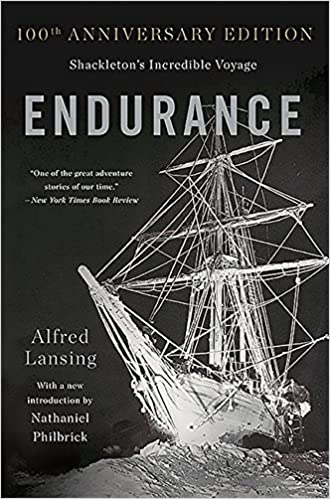
Endurance

About the book

This is not a typical book about leadership. If it ever was ment to be a book about leadership. But great many other books cover Shackelton’s expedition to the South Pole. And in those books this book is introduced in the light of leadership. So I had to read the original one.

How was the actual reading of the book?

Ernest Shackleton was no amateur. This was his third expedition to the South Pole. He spent over four years planning and preparing for this expedition. Leaders of such expeditions must be an extraordinary leader of men. Let’s look at him in detail.

Ernest Shackelton was 40 years old during this mission and he died already when he was 47 years. Shackletons family motto was ”By endurance we conquer”. He was described was romantic, utterly self-reliant and little swashbuckling (rämäpää) as an explorer. And purposeful. But as a person he was described as flamboyant. He had monsterous ego and implacable drive. Critics said that he was immature and irresponsible. Are these typical traits for a great leader? Well, for him at least.

Shackleton motives for the expedition were not all romantic. He was also after the social position and the financial rewards it included. As such we could conclude that he was a start-up entrepreneur of his time. 

About his team mates. Frank Wild was chosen a second-in-command and he was opposite to Shackleton. They formed a perfect match. Plus they had been in the Pole twice before the Endurance expedition. The method of selecting other newcomers in to the expedition was described as capricious. Looks of the men was crucial in the selection process. Shackelton did use some funny questions. Such as the conditions of teeth or can one sing. Maybe Shackleton used the five seconds method for deciding the fit of the man? Nevertheless his decisions proved to be right.

Leadership is a statement.  And that Shackelton knew. One have to show example for others. And this was Shackelton in person. For example left his golden cigarette case and bible behind when they abandoned their ship. In the same circumstances a seaman called Hussey was ordered to take his banjo with. Mostly because singing kept the spirit up. Third example could be that Shackelton wanted to give the credit for begin the first man setting his foot in the Elephant Islands to one of the seamen called Blackboro.

Basic trait for Shackleton was to keep the team close-knit and under his control. He was afraid of demoralization. It was his way to ensure that he could safely lead the team. He also wanted to conduct similar duties as others. And he did not want to have privileges. But he was aware of his responsibility and that created a aloofness for him.

If the mission started for monetary and social reasons, it turned out to be a rescue mission. Invincibility was Shackelton’s main purpose while trying to rescue the mission from the icy hell.

This is not a book about leadership. It’s a story about life and death.

What are the key learnings of the book? 

Shackelton’s book has been hailed, because of his leadership skills. I not denying that those elements are there, but to me this book is also about endurance. Nearly every page addresses endurance. And maybe every tenth page addresses leadership.

Key learnings can be categorized into five findings and a strategy:

Responsibility

  • Responsibility is a pervasive act.
  • A true leader takes everything account. 

Smells like team spirit.

  • It’s crucial to understand different personalities and how they operate within a community.
  • Keeping the spirit up is a skill that a leader should acquire.

Less privileges, more leadership.

  • Leading the change or people or a company is an act, not a project.          

Endurance

  • How a team of people will survive in harsh conditions and what is the the formula.
  • They all had assigned duties for every day and there was organized mangement & leadership. That kept them going.
  • Just like in Viktor Frankl’s story about his survival from the Auschwitz.

How should we change according to the book?

Maybe we should learn how Shackelton sacrified himself to rescue his men. Not because they could not have handled it, but because Shackelton was the leader and that way responsible of the expedition. And especially responsible for the lives of his crew. 

What should I personally do? 

Learn or understand how different personalities operate within a community.

Summary

The book in six words: Hope is the fuel for the bravery.
Kategoriat
book-review Uncategorized

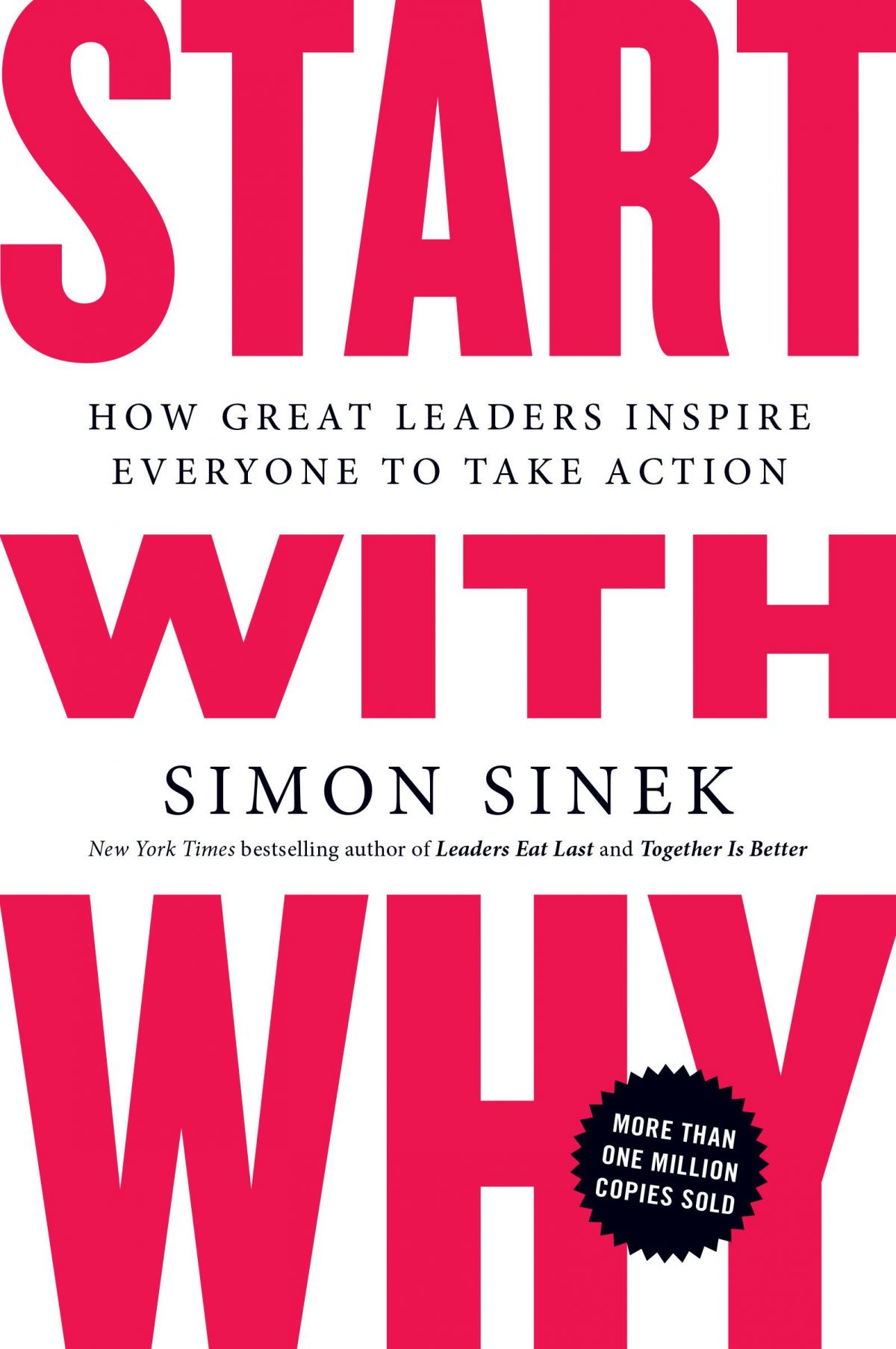
Start With Why

About the book 

Simon Sinek has a non-typical way of writing. His approach is more like a pamphlet. Mr. Sinek knows the answer and can put his finger on it. Easy to read, light in academic perspective and spot on.

How was the actual reading of the book? 

Simon Sinek has a theory about leadership and he gives great credit to it. It’s not entirely unique, but he has his approach. He repeatedly underlines his ideas and has different cases to proof it. 

His main theme is that everything starts with asking the question why. After that you can move on to asking how and last, but not least is the question what. 

If the why questions is missing then the how and what does not have a lasting foundation to build up on. He uses fairly lot Steve Jobs and Bill Gates as examples. They had a vision and they had a partner who knew how to build business based on it. Bill and Steve have been a lot in different leadership literature and somehow they don’t differentiate as examples in Sinek’s book. 

But he has also great examples such as railroads. If they would have in the late 1800s defined themselves as transport companies – and not railroad companies, they might still exist as one of the biggest companies as they were. 

What are the key learnings of the book? 

Key learnings can be categorized into two major findings: 

Inspiration comes from within

  • No one can build inspiration for us. If we are inspired by a vision or a mission, we have fairly good probabilities to succeed.
  • Inspirational people are those we are willing to follow. 

Team should consist different types of people

  • You should have the why-people who have the vision.
  • You should have the how-people who know how to do it.
  • And you should have the what-people who know what to do.

How should we change according to the book? 

Sineks’s main ideas about leadership could be summarized in to three topics:

  • Good fits. Great leaders recruit good fits – hire for attitude and inspire recruits as did Ernest Shackleton.
  • Where ideas happen. Leaders role is to create an environment where ideas can happen.
  • Trust. Organizations should trust their people to solve problems. “There is nothing you can’t do that I can’t fix” said General Lori Robinson. 

And a bonus. We should trust our “gut decisions”. Sinek believes that our first instinct is the best way to navigate forward. In that sense Sinek’s ideas reminds me of Mischel’s book about the Marshmallow Test.

What should I personally do?   

Act like Herb Kelleher from Southwest. He knew that “happy employees ensure happy customers”.

Summary 

The book in six words: Employees before customers & customers before shareholders.

Kategoriat
Uncategorized

The Medici Effect

About the book 

This time I read the book in paper format. Compared to previous books this one more of a snack than a heavy intellectual trip. Maybe the reason was that there were less than 200 pages to be red. Not that the previous comments would make the content less inspiring. 

How was the actual reading of the book? 

Johanssons book is basically like mini stories, but with common narrative. Reading of the book is easy and quick. His book reminds me of the advices that the Creative Social last publication had also. Typically Johansson has few ideas in one chapter which he evaluates in the chapter. Secondly the names of the chapters are more like questions which he answers during the chapter. Thirdly he highlights great many times his concept of making novel ideas. That he calls the Intersection and the Medici effect. Place where unique ideas can be found or invented. The place is a crossing of different disciplines and that creates clash which generates novel ideas. I could call it the Medici strategy. So finding new and unconventional things will lead into ideas that you have never met.

What are the key learnings of the book? 

Key learnings can be categorized into five findings and a strategy:

Pursue many ideas

  • In the Intersection or in the Medici effect one can create enormous amount of ideas. Use the tide of the Intersection and try to generate a lot of ideas.
  • Quality and quantity goes hand-by-hand in ideas.
  • Many ideas generate more possibilities than less.
  • More is more and more is better. 

 Intersectional innovations are better than directional innovations.

  • Those are more creative.
  • Those are radical.
  • And because those change the world.  

New ideas should not be executed at once.

  • Write down new ideas instantly when those occur, but allow time for evaluation of the ideas. Brains at work!
  • Make judgement of the idea after some time. Sleep over it!  

Trial and error vs. resources.

  • You should not put all-in like Boo.com did.
  • One should invest enough, but saving some resources for iterations.
  • “Try ideas that fail to find those that won’t.”  

Intersectional innovators can turn into leaders.

  • These innovators differentiate from conventional ones.
  • They are productive, because they create new ideas all the time. Not just when it’s time to innovate.
  • Like Elon Musk, Marcus Samuelsson, Thomas Edison or Richard Branson.

The Medici strategy

  • Find Intersectional ideas.
  • Use resources to multiple trial&errors.
  • Stay motivated.

How should we change according to the book?

I’ll admit. These are pure copy-paste from the book:

  • Expose to different cultures
  • Learn differently
  • Reverse assumptions
  • Take multiple perspectives

What should I personally do? 

I should work with diverse groups of people. For example like the people who worked in Bletchely Park while they were trying to crack the Enigma code. How? Try avoiding similar-attraction effect.

Or I should create 50 new ideas instead of trying to figure out two new ideas.  

Or try the Edgar Allan Poe way of writing. Look for two or three random words and start writing.

Or buy a couple of magazines that I usually don’t read.

Summary 

The book in six words: Go for a thought walk and remain motivated.

Kategoriat
Uncategorized

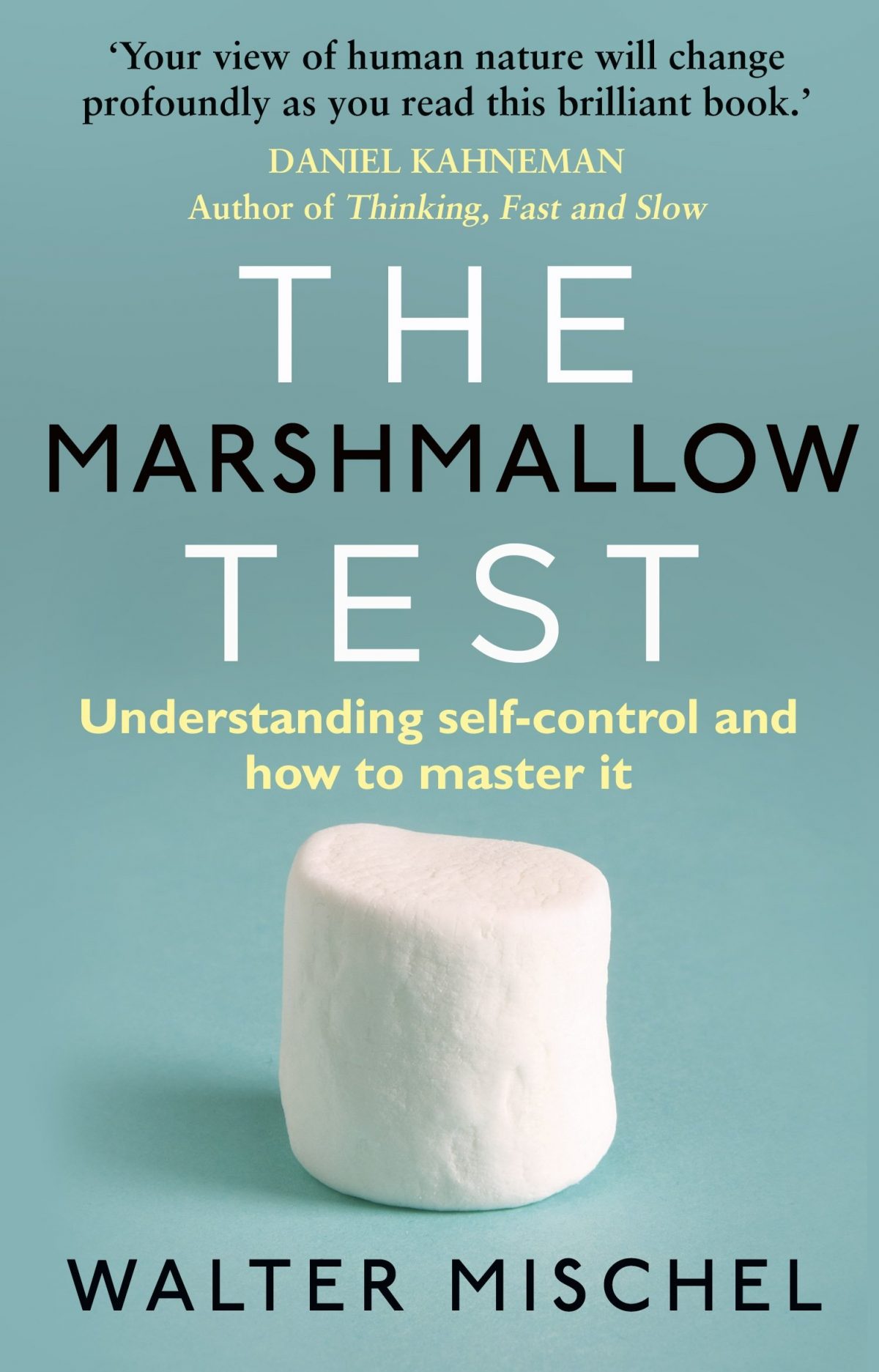
The Marshmallow Test

Walter Mischel: The Marshmallow Test

About the book

Again this time I read the book in Kindle format. It reminded me a lot of the days I was studying psychology. Expect this book is written in with individual touch by the way that the writer shares his own personal experiences. In that sense it’s more a self-help book than a course book for studying psychology.

Shakespeare: ”All the world’s a stage, And all the men and women merely players; They have their exits and entrances; And one man in his time plays many parts, His acts being seven ages.”

How was the actual reading of the book?

Mischel has divided the book into three parts. First one explains results of different studies. Second part dives into different solutions. The third one is summary and conclusions.

Reading of the book is inspiring. It’s just like Kahneman’s great book. Scientific without the academic nuances. Mischel’s main theory can help people to understand his or hers hot and cool actions. Hot actions are temptations and cool decisions are rational choices. It also gives a great opportunity to develop different strategies for personal development or even ways to work with other people’s development. Especially children. The book could be also seen as tutorial to psychology. The reader can scratch the surface of behavioristic psychology without bothered any heavy lectures of main stream theories. 

Less inspiring the book is when the writer shares the same observations in different forms. Luckily the writer points out why some observations are delt numerous times.

What are the key learnings of the book? 

Key learnings can be categorized into four main elements: 

It’s all about self-control

  • Beating your personal best becomes the moving target
  • Self-control is a skill and that can be learned 

Now vs. later?

  • You have a winning formula if you have sense or understanding that potentially later will bring better results than now.
  • You will fulfil your goals if you have the self-control and motivation work based on the understanding
  • The more you can connect to future of yours, the more you are willing to invest into the future 

Pursuing goals and behavior

  • Behavior is crucial for pursuing goals and it can be predicted and steered.
  • Strategies and tools for personal development are easy to access. Understanding ones actions can be monitored with diaries and based on the findings one can develop if-then –strategies.
  • Age is not an obstacle on having a good working memory. By exercising and minimizing loneliness one can keep the working memory up and running.
  • By pre-living different situations you can understand the end-results of your actions  

Fundamental value of self-control is to cool now and heat the later.

  • Self-control is a key to success. It starts a process that cools ones thinking and regulates hot thinking.
  • If one can delay urge to fulfil temptations, most probably one can also see the benefit of delayed gratification. And by that way he can pursuit higher goals than just fulfilling temptations.
  • Are low delayers losers? Yes, based on the data. But no if they can develop ways on steering their own behavior. We all have our personal behavioral signature which triggers if-then –patterns. Knowledge of different if-then -strategies will help to delay unwanted temptations.

How should we change according to the book?

We should not overvalue the immediate rewards and discount the value of delayed rewards. Dollar today is worth more that dollar tomorrow?

What should I personally do?  

I should study the things that I’m not good at (ref. Carl Jung).

Summary

Walter Mischel sheds light to an important phenomenon of human beings. His studies can build foresight into our actions. Based on Mischel’s book we can:

  • Understand our self-control abilities and measure our willpower capabilities
  • Analyze our hot and cool areas of decision
  • Make an if-then –plan to resist unwanted hot decisions and to endorse desired cool decisions.

The book in six words: Find and develop your behavioral signature

Kategoriat
book-review Uncategorized

Hacker, Maker, Teacher, Thief

About the book

This time I read the book as an ordinary paper book. The book is a collection of articles or stories about aspects in creating vibrant marketing communications for the advertisers. It’s not a book from David Ogilvy, but it’s a great and inspirational book about current issues within creative industry.

How was the actual reading of the book?

The reading experience is good. And as a starting point I will recommend this book to everybody who are working or interested on adding value to his daily business. The book is divided into six parts addressing topics from advertising to future. The articles are written by 35 individuals from Creative Social Network. There are even Finns as authors.

The articles are standalone writings so that those can be easily ready without fearing missing a point if the reading is not consistent.

The main message of the book could be summarized into this sentence – ad people are facing competition from numerous disciplines, but they have a work around for every fight. But the solutions are not entirely new. And they will prevail due to new and old “tricks”.

The “tricks” could be summarized in words of Erkki Izzara – “Our job is to make people love stuff. The main tools are intuition and humor.” Or with the words of Daniele Fiandaca – “Creativity is thinking up new things. Innovation is doing new things”. Last but not least the words of Gareth Kay – “Great communication ideas acts as a bridge between what people are interested in and care about and what you make / sell”. Sounds just like Ogilvy?

Some critics about the book. Maybe some of the stuff are obvious and tied into current trends which will vanish over time. Great many of the authors are splendid in expressing their ideas. Could there have been more co-ordination about the contents of the articles? Anyways none of these critical notions will spoil the reading experience.

What are the key learnings of the book? 

Key learnings are:

Research, research, research.

  • Jake Attree and Laura Jordan Bambach have summarize their method of creativity in form of out-of-the-box-thinking.
  • They suggest that you do something out of ordinary. And then research. Like read a plethora of blogs you have no interest in. And then research. Haggle a car-boot sale. And then research. Hangout with old people you may never see again and then research again.
  • So find new stuff and then summarizing these findings into your database of your brains. And use these findings creatively.

Be a Hacker 

  • Don’t try act like advertising people. Be a Hacker. Be efficient. Break stuff positively. And simplify things like an outlaw.

Find a lateral solution to a linear problem.

  •  Now here is a key learning that cannot be operationalize easily.
  • How to find lateral solutions? Basically the book is filled with tips and tricks from appointing a chief officer of innovation to the executive board of the company. Ending up to an advice of using a Mont Blanc pen and a Moleskin pad for documenting your ideas. The reader can evaluate that which of these ideas would suit to your personal way of working.
  • Anyways the lateral solution for a linear problem is the magic what happens in the creative industry.

How should we change according to the book?

Brew creative results out of the hacking

What should I personally do?  

Get out of office and learn from other hackers.

Summary

Creative Social network has written great articles and these findings can be used in all industries. Especially I enjoyed that in includes thinking how the creative industry can re-invent itself. What are ways of working for truly creative people. How to lead teams of creative people. And how to develop your every day work for ideation.

The book in six words – Doing comes first, “drunk or sober”…

Kategoriat
book-review Uncategorized

The Tipping Point

About the book

I read this book in paper format. There is plethora of books about change. Nevertheless this book about changes is well spent time.

Let’s start with the definition. A tipping point is one dramatic moment when a change occurs. Or as Gladwell defines “the moment of critical mass, the threshold, the boiling point”. For example Sharp introducing low-priced fax in 1984 or mobile phones hitting a tipping point 1998. Is the low-price 3D printers a tipping point?

How was the actual reading of the book?

I would recommend this book for people in business or interested about business. Somehow the business could utilize these findings more rapidly than other industries. Obviously other applications can be developed based on the book too.

Tipping point is about change and how the changes occur. It helps the reader to identify and understand changes more coherently. What could a trend and what will be a fad.

Underlying pattern that connects all changes is:

  • Contagious behavior
  • Little things have huge impact
  • Those are rapid

What are the key learnings of the book? 

Malcom Gladwell has three major findings into which the concept of Tipping point is tied to.

The Law of the few

  • Exceptional people noticing a trend and spreading it onwards.
  • These people identify the trends or changes and spread it via word-of-mouth.
  • Who would spread the change better than people whom we trust in their opinion?

The Stickiness Factor

  • The Stickiness Factor is a critical component.
  • The change must be recognizable and it must differentiate from other incidents.
  • How do you remember it if it does not stick with you?

The Power of Context

  • Sensitivity of people makes changes.
  • These are true in religious movements or in movies.
  • Is the movie good if the theater is half-empty?

How should we change according to the book?

Maybe this book is not about changing our behavior unless we see it as a way to perceive changes.

Daniel Kahneman writes in his book “Thinking, Fast and Slow” about organizations making less errors. This one of the lessons for organizations also in Gladwell’s book.

Greatest benefit of reading this book comes from the notions that we can obtain an ability to recognize changes.

What should I personally do? 

Start evaluating people and incidents. Weak signs can be found from those sources. Maybe a trend is building up momentum towards a tipping point.

Summary

Malcolm Gladwell has designed his book in order to satisfy the needs of the reader Change is happening all the time and it is occurring around you. With help of Gladwell’s writings these changes can be turned into action.

He even uses the learnings of the book by himself. For example the name of the book. It is well formulated. It helps us to remember the book. And more importantly the name helps us to spread Gladwell’s learnings.

The book in six words – Don’t be a bystander, be the change agent.

Kategoriat
book-review Uncategorized

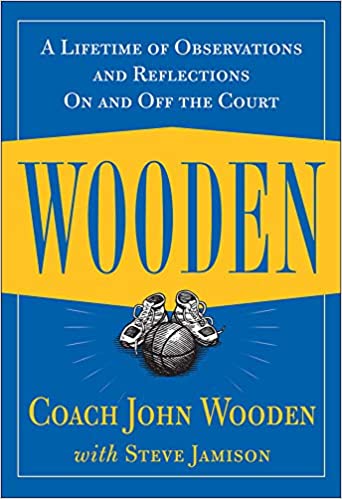
A Lifetime of Observations and Reflections On and Off the Court By J. Wooden

About the book

This time I read the book in Kindle format. The chapters are fairly short and the e-book format works well with Wooden’s thinking.

How was the actual reading of the book?

Wooden is very frank and humane. He uses less superlatives compared to a typical business book. This book can be easily read in a weekend.

What are the key learnings of the book? 

 The key learnings can be summarized as following:

  • Two sets of threes 
    • Wooden’s father had simple rules about honesty and adversity. Honesty goes like “never lie, never cheat and never steal”. Adversity rules are “don’t whine, don’t complain and don’t make excuses”. For a Finn these rules are obvious
  • The goal is a by-product 
    • Coach Wooden sees that making your best has an end-result – achieving your goals.
  • Seek small improvements every day
    • And the key to goals lies in small improvements which can be achieved every day.
  • Think big is too strong for kids
    • But achieving goals should be fitted into ones resources. Small dreams for those who have small resources. Big dreams for those who have big resources.
  • Did I make my best effort?
    • That’s what matters

How should we change according to the book?

In great many ways, but from this book you can find the baby steps of improvement. I would highlight two essential learnings that can turned into everyday guidelines.

First is that the doer makes mistakes. John Wooden believes that the team which makes most mistakes will probably win. Doing and learning goes hand in hand in Wooden’s thinking. The second one is to learn forever, die tomorrow. If you want to turn Wooden’s philosophy in an equation it might look like this: Idealism + Realism + Hard work = More than you can hope

What should I personally do? 

Promise to talk health, happiness and prosperity.

Summary

Not too many times you come up with a writer like John Wooden. His humane attitude and great reputation as a coach underlines the soft ways of coaching teams into greatness. Compared to Kahneman’s book this book is about team leadership in plain English.

All in all it is a great book if you have recently read only hard-core business books. A short book, but a welcomed book about coaching. And you ask from yourself every day….

The book in six words – Did I make my best effort?

Kategoriat
book-review Uncategorized

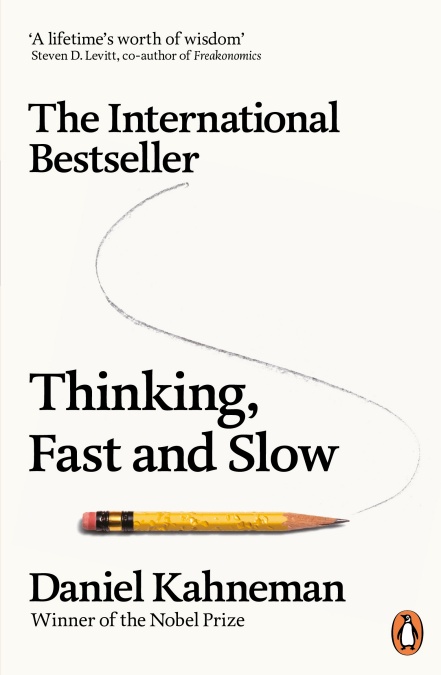
Thinking, fast and slow

Daniel Kahneman

Me and my book club

I’ve been member of a book club for four years. Book club has eleven members and they are also business professionals of various discipline and industries. We gather once a month or every other month. The meetings are standardized. We have the same procedure and standard questions. This time I took a challenge. I would make written notes of the book, not just underline interesting topics. I also decided that I would document my analysis. So here we go…..

About the book

In the age of Twitter a book that has nearly 500 pages must be worth the time. While this a book that requires your full attention, it is in the same time intellectually rewarding and also fun. I could sometimes hear Kahneman giggle. For example his equation about martial stability – “frequency of lovemaking minus frequency of quarrels. You don’t want your result to be a negative number”.

How was the actual reading of the book?

Sometimes writers with a position in the academia have a cumbersome way on expressing themselves. That is not the case of Kahneman. He has forgotten his discipline and is writing in plain English. Secondly he lures readers on thinking different what-if –scenarios. For example when explaining how System 1 or 2 operates he let’s us test ourselves with different tests. Thirdly it is quite difficult to come up with negative comments of the contents. Sometimes he get’s carried away with his statistical analysis, but that happens fairly seldom. And sometimes the describing of the designing of different tests are less interesting. But nevertheless he carries readers easily through those parts also.

What are the key learnings of the book? 

I will skip all the key lessons and dive straight into learnings. Key learnings are: 

  • Want to be well-being?
    • Goals are key into well-being. Think about your goals before dreaming being satisfied and well-being.
  • Don’t want to regret anything?
    • Know you loss aversion and create a risk policy.
  • Want to be realistic?
    • Legitimize doubts
  • Would you like to be optimistic?
    • Sorry, the optimistic attitude is inherited

How should we change according to the book? 

Actually Kahneman points out in the last page of the book an elegant answer to this. Firstly organizations make less errors, because they can think more slowly and the way of working is organized. Secondly organizations have read their “Checklist Manifestos” and they do have checklists. Organizations can do forecasting. Last, but not least. Organizations are deploying premortem – analysis of failure.

What should I personally do? 

This is easy. Set new goals. 

Summary

Thinking, fast and slow by D. Kahneman is one of the TOP3 business books I’ve read so far. The crip of the book is intense and will not let you down. Every page is worth turning, because you cannot wait the findings Kahneman has made. It’s intellectually challenging. It’s well written. One can easily imagine how to use the learnings. And would also argue that the wealth of the wisdom of the book might be everlasting?

The book in six words – top three business book of our lives.

Kategoriat
book-review Uncategorized

Yksin seitsemällä merellä

🔵 Suomi on avomeripurjehduksen suurvalta? Ainakin minä toivon niin, että Lehtinen aloittaa uuden aikakauden.

✅ Lehtisen purjehdusfilosofiaa on hauskaa opiskella kirjasta, miten hän kertoo siitä ja kuinka sitä kilpailun aikana koetellaan.

✅ Tavallaan hänen tarinansa muistuttaa Shackletonin ja Amundsenin seikkailuja. Loppuvaiheessa Lehtinen seilasi Atlantilla ilman kaasuhellaa, kone rikkoutuneena, akut eivät lataudu ja vessapaperi on loppu.

✅ Vuoden mittaisen purjehduskilpailun opit on helppo kiteyttää neljään ja puoleen totuuteen:
1) Valmistaudu ajoissa.
2) Ota kaikkea mukaan kaksi ellei peräti kolme.
3) Ystäviä ei ole koskaan liikaa, kun lähdön hetki lähenee.
4) Veneen tiivisteisiin eikä toisten puheisiin kannata luottaa – tarkasta kaikki itse.
4 ½) Merta ei saa roskata.

✅ Olen lukenut Tompen, Hjalliksen ja muiden suomalaisten avomeripurjehduskokemuksista. Tapion tarina ei häviä muille maailman ympäripurjehtijoille, koska tämä tarina on kertaluokkaa sivistyneempi.

✅ Vuoden mittaisessa yksinpurjehduskilpailussa auttaa toki, jos olet osallistunut aikaisemmin maailman ympäripurjehduskilpailuihin. Lehtinen oli osallistunut Skopbank of Finlandin miehistössä Whitbread Round The World-kisaan.

🔴 Jos jotain negatiivista pitää keksiä, niin Tapio oli viimeinen maaliin saapuja.

Kategoriat
book-review Uncategorized

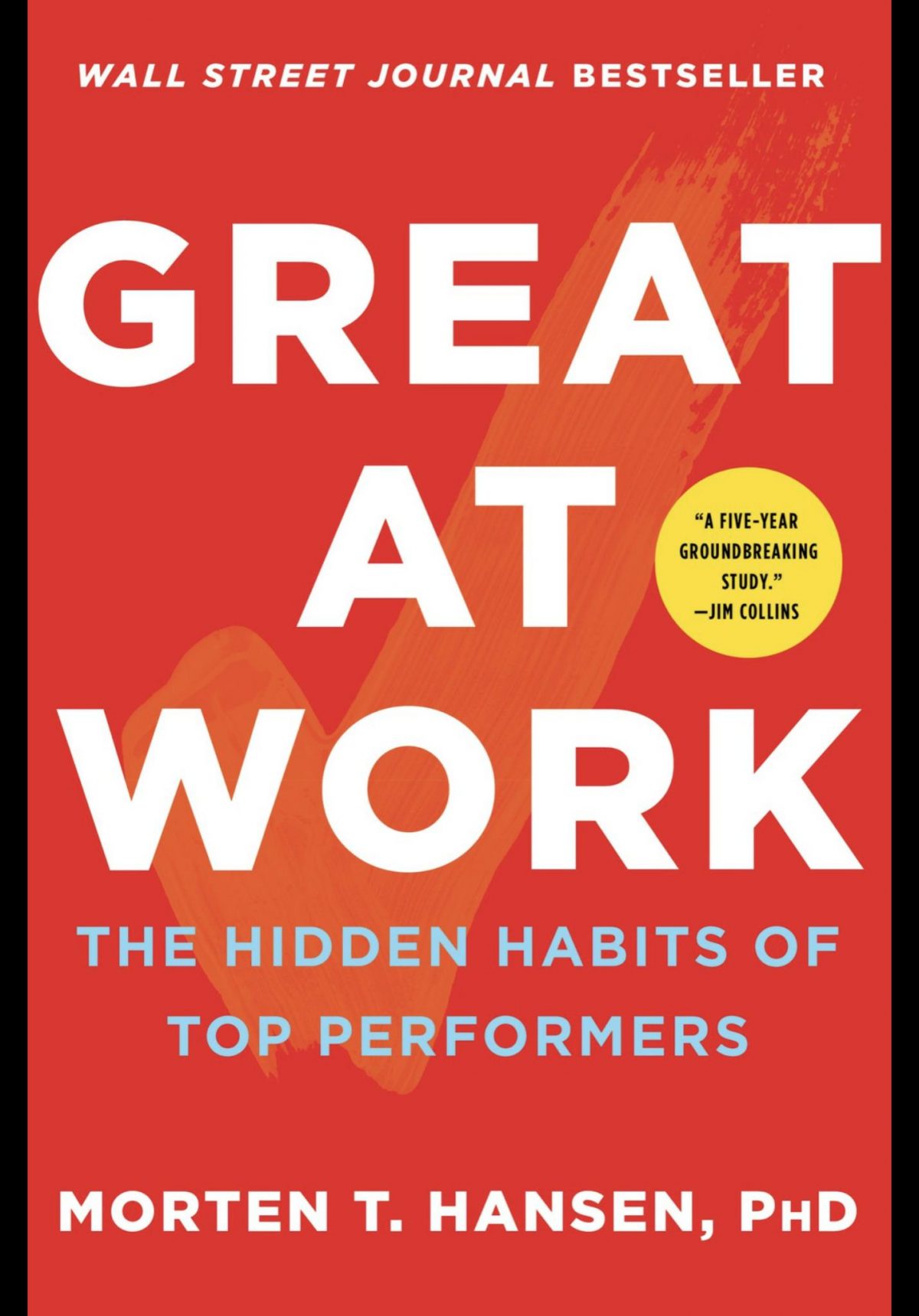
GREAT AT WORK

🔵 Haluatko olla 25 % tehokkaampi työssäsi kuin muut ihmiset?

✅ Mortenin mukaan valtaosin paremmin työssään suoriutuminen perustuu #TeenTyöniTaitavasti-tapoihin. Tavat ovat siis avain tehokkuuteen. Ja erityisesti tavat miten teet töitä yksin ja yhdessä muiden kanssa.

✅ Kirja perustuu tutkimustuloksiin, jossa kerättiin dataa 5000 asiantuntijalta ja johtajalta. Tuloksien mukaan:
– 66% suoriutumisesta selittyy oman ja yhteistyötapojen kautta. #TeenTyöniTaitavasti
– 10% selittyy koulutuksen, iän ja tehtyjen työtuntien perusteella.
– 24% selittyy onnen ja lahjakkuuden sekä muiden satunnaisten tekijöiden kautta.

✅ Miten tullaan #TeenTyöniTaitavasti-työntekijäksi?
1) Pienennä tavoitteiden määrää ja toteuta ne aina paremmin.
2) Ole nopea, mutta lopeta kiireily.
3) Tee tavoistasi taito.

✅ Muita mielenkiintoisia datapisteitä:
– #TeenTyöniTaitavasti -menetelmä kasvattaa tehokkuutta 25 %.
– Jos viikkotyötunnit kasvavat yli 50 tunnin, niin tehokkuus häviää.
– Myynnissä on intohimoa, koska myyjistä yli 30% koki intohimoa työhönsä. Se oli tutkimuksen toiseksi paras tulos.
– Kun multitaskaaminen kasvaa 50 %:lla, niin se johtaa aikataulujen venymiseen 20 %:lla ja tehokkuus heikkenee 40 %:lla.

⛔ “Being busy is not an accomplishment”.