Kategoriat
Uncategorized

Siukonen & Neittaanmäki: Mitä tulisi tietää tekoälystä

🔵 Tavoitteletko kilpailuetua tekoälystä? Jos kyllä, niin tämä kirja on voittajan valinta. 
✅ Siukkosen ja Neittaanmäen kirja on laajin suomenkielinen opas aiheeseen. Saat ajankohtaisen katsauksen tekoälyyn, sen soveltamiskohteisiin ja eri toimijoiden rooleihin. 
✅ Kirjaa lukiessa yltiöoptimismi liittyen tekoälyyn karisee, koska paljastuu että käsissämme ei ole mitään tarunhohtoista tekniikkaa. Vielä? 

✅ Tekoäly on luonnollisen älykkyyden vastakohta ja se on tietokoneen toimintojen jatke. Tekoälyn kehityksen tilaa helpottaa ymmärtämään seuraavat kolme lähtökohtaa. 

  1. Parhaillaan tavoitteena on, että tekoälyllä pystytään jäljittelemään hiiren aivojen toimintaa. Ennuste on, että ihmisaivoja pystytään jäljittelemään korkeintaan vasta 2040-luvulla.
  2. Tekoäly jakautuu heikkoon ja vahvaan. Heikkoa tekoälyä edustavat esimerkiksi hakukoneet ja roskapostinsuodatin. Vahvassa tekoälyssä voidaan jäljitellä ihmisen aivotoimintaa.
  3. Tekoäly oppii datan kautta. Datan laatu ja määrä ovat lopputuloksen kannalta keskeisessä roolissa. Ilman, että on massoittain dataa tekoäly ei pysty toimimaan eikä oppimaan.

 ⛔️ Kirja on hengästyttävä listaus tekoälytietoa. Välillä lukija toivoo, että sitä olisi vähemmän. Toisin ilman laajaa tietosisältö kirja ei olisi lukemisen arvoinen.

Kategoriat
Uncategorized

Kai-Fu Lee: AI Superpowers

About the book

This is one of the ”The Economist’s books of the year”. It is also a very political book and everyone who is interested about foreign policy should read this.

Like electricity…. “Deep-learning pioneer Andrew Ng has compared AI to Thomas Edison’s harnessing of electricity: a breakthrough technology on its own, and one that once harnessed can be applied to revolutionizing dozens of different industries. Just as nineteenth-century entrepreneurs soon began applying the electricity breakthrough to cooking food, lighting rooms, and powering industrial equipment, today’s AI entrepreneurs are doing the same with deep learning. Much of the difficult but abstract work of AI research has been done, and it’s now time for entrepreneurs to roll up their sleeves and get down to the dirty work of turning algorithms into sustainable businesses.”

Harnessing the power of AI today—the “electricity” of the twenty-first century—requires four analogous inputs:

–      abundant data,

–      hungry entrepreneurs,

–      AI scientists and

–      an AI-friendly policy environment.

What are the key learnings?

This is a boring book if you have already read five other AI-books for business people. Kai-Fu Lee uses the same examples that are already widely used. For example why we are currently living in a AI-era? Because of the computing power and data. ”Both data and computing power were in short supply at the dawn of the field in the 1950s.” Or ”The turning point came in 2012, when a neural network built by Hinton’s team demolished the competition in an international computer vision contest.” Or “Deep learning is what’s known as “narrow AI”—intelligence that takes data from one specific domain and applies it to optimizing one specific outcome.”

Key learnings:

–      Copycat Era

o  Chinese startup ecosystem. The copycat era had forged world-class entrepreneurs, and they were just beginning to apply their skills to solving uniquely Chinese problems.

§ They burn cash like crazy and rely on armies of low-wage delivery workers to make their business models work. It’s a defining trait of China’s alternate internet universe that leaves American analysts entrenched in Silicon Valley orthodoxy scratching their heads.

–      Saudi-Arabia of Data

o  These companies are turning China into the Saudi Arabia of data.

–      O2O Evolution

o  Online-Merge-Offline

o  Analysts dubbed the explosion of real-world internet services that blossomed across Chinese cities the “O2O Revolution,” short for “online-to-offline.”

o  Uber may have given an early glimpse of O2O, but it was Chinese companies that would take the core strengths of that model and apply it to transforming dozens of other industries.

o  But the O2O revolution showcased an even deeper—and in the age of AI implementation, more impactful—divide between Silicon Valley and China—what I call “going light” versus “going heavy.” The terms refer to how involved an internet company becomes in providing goods or services. They represent the extent of vertical integration as a company links up the on-and offline worlds. When looking to disrupt a new industry, American internet companies tend to take a “light” approach. Going heavy means building walls around your business, insulating yourself from the economic bloodshed of China’s gladiator wars.

–      AI expertise and government support.

Other learnings are that:

–      Hail China…

o  But around 2013, China’s internet took a right turn. Rather than following in the footsteps or outright copying of American companies, Chinese entrepreneurs began developing products and services with simply no analog in Silicon Valley.

–      Half of the AI-market will go to China…..

o  “PricewaterhouseCoopers estimates AI deployment will add $ 15.7 trillion to global GDP by 2030. China is predicted to take home $ 7 trillion of that total, nearly double North America’s $ 3.7 trillion in gains.”

–      Entrepreneurs….

o  The most valuable product to come out of China’s copycat era wasn’t a product at all: it was the entrepreneurs themselves.

–      Key message of the book…..

o  Corporate America is unprepared for this global wave of Chinese entrepreneurship because it fundamentally misunderstood the secret to The Cloner’s success.

The Four Waves of AI

The complete AI revolution will take a little time and will ultimately wash over us in a series of four waves:

1)   Internet AI i.e. Optimization of user behaviour

2)   Business AI i.e. Optimization of business data

3)   Perception AI i.e. Optimizing online and offline environment

4)   Autonomous AI i.e. Optimizing machine learning and perception

“The first two waves—internet AI and business AI—are already all around us.

Perception AI is now digitizing our physical world, learning to recognize our faces, understand our requests, and “see” the world around us. This wave promises to revolutionize how we experience and interact with our world, blurring the lines between the digital and physical worlds.

Autonomous AI will come last but will have the deepest impact on our lives. As self-driving cars take to the streets, autonomous drones take to the skies, and intelligent robots take over factories, they will transform everything from organic farming to highway driving and fast food.”

FIRST WAVE: INTERNET AI (optimization of user behaviour)

“Internet AI is largely about using AI algorithms as recommendation engines: systems that learn our personal preferences and then serve up content hand-picked for us.

Average people experience this as the internet “getting better”—that is, at giving us what we want—and becoming more addictive as it goes.”

This is the Technolandia.

SECOND WAVE: BUSINESS AI (optimization of business data)

“For instance, insurance companies have been covering accidents and catching fraud, banks have been issuing loans and documenting repayment rates, and hospitals have been keeping records of diagnoses and survival rates. All of these actions generate labeled data points.

Business AI mines these databases for hidden correlations that often escape the naked eye and human brain.

Optimizations like this work well in industries with large amounts of structured data on meaningful business outcomes. In this case, “structured” refers to data that has been categorized, labeled, and made searchable. Prime examples of well-structured corporate data sets include historic stock prices, credit-card usage, and mortgage defaults.

There’s no question that China will lag in the corporate world, but it may lead in public services and industries with the potential to leapfrog outdated systems.”

THIRD WAVE: PERCEPTION AI (optimizing online and offline environment)

“Third-wave AI is all about extending and expanding this power throughout our lived environment, digitizing the world around us through the proliferation of sensors and smart devices.

Amazon Echo is digitizing the audio environment of people’s homes. Alibaba’s City Brain is digitizing urban traffic flows through cameras and object-recognition AI. Apple’s iPhone X and Face + + cameras perform that same digitization for faces, using the perception data to safeguard your phone or digital wallet.

Important…… I call these new blended environments OMO: online-merge-offline. OMO is the next step in an evolution that already took us from pure e-commerce deliveries to O2O (online-to-offline) services. Each of those steps has built new bridges between the online world and our physical one, but OMO constitutes the full integration of the two.

True application… One KFC restaurant in China recently teamed up with Alipay to pioneer a pay-with-your-face option at some stores. Customers place their own order at a digital terminal, and a quick facial scan connects their order to their Alipay account—no cash, cards, or cell phones required…. Pay-with-your-face applications.

Central to that system is the Mi AI speaker, a voice-command AI device similar to the Amazon Echo but at around half the price, thanks to the Chinese home-court manufacturing advantage. That advantage is then leveraged to build a range of smart, sensor-driven home devices: air purifiers, rice cookers, refrigerators, security cameras, washing machines, and autonomous vacuum cleaners. Xiaomi doesn’t build all of these devices itself. Instead, it has invested in 220 companies and incubated 29 startups—many operating in Shenzhen—whose intelligent home products are hooked into the Xiaomi ecosystem. Together they are creating an affordable, intelligent home ecosystem, with WiFi-enabled products that find each other and make configuration easy.

Third-wave AI products like these are on the verge of transforming our everyday environment, blurring lines between the digital and physical world until they disappear entirely.

These third-wave AI innovations will create tremendous economic opportunities and also lay the foundation for the fourth and final wave, full autonomy.”

FOURTH WAVE: AUTONOMOUS AI

For example…. “Shenzhen is home to DJI, the world’s premier drone maker and what renowned tech journalist Chris Anderson called “the best company I have ever encountered.” DJI is estimated to already own 50 percent of the North American drone market and even larger portions of the high-end segment.”

Perfect is the enemy of the good

“Perfect vs. Incremental vs. the Chinese mentality is that you can’t let the perfect be the enemy of the good. Indeed, local officials are already modifying existing highways, reorganizing freight patterns, and building cities that will be tailor-made for driverless cars.

America’s global juggernauts seek to conquer these markets for themselves, China is instead arming the local startup insurgents.

There are already some precedents for the Chinese approach. Ever since Didi drove Uber out of China, it has invested in and partnered with local startups fighting to do the same thing in other countries: Lyft in the United States, Ola in India, Grab in Singapore, Taxify in Estonia, and Careem in the Middle East.

An alternate model of AI globalization: empower homegrown startups by marrying worldwide AI expertise to local data.”

Utopia vs. Dystopia

“It has fed a belief that we’re on the verge of achieving what some consider the Holy Grail of AI research, artificial general intelligence (AGI)—thinking machines with the ability to perform any intellectual task that a human can—and much more. Some predict that with the dawn of AGI, machines that can improve themselves will trigger runaway growth in computer intelligence. Often called “the singularity,” or artificial superintelligence, this future involves computers whose ability to understand and manipulate the world dwarfs our own, comparable to the intelligence gap between human beings and, say, insects. Such dizzying predictions have divided much of the intellectual community into two camps: utopians and dystopians.

Getting to AGI would require a series of foundational scientific breakthroughs in artificial intelligence, a string of advances on the scale of, or greater than, deep learning. These breakthroughs would need to remove key constraints on the “narrow AI” programs that we run today and empower them with a wide array of new abilities: multidomain learning; domain-independent learning; natural-language understanding; commonsense reasoning, planning, and learning from a small number of examples.

General Purpose Technologies (GPTs)

Like the utopian and dystopian forecasts for AGI, this prediction of a jobs and inequality crisis is not without controversy. A large contingent of economists and techno-optimists believe that fears about technology-induced job losses are fundamentally unfounded.

These are what economists call General Purpose Technologies, or GPTs. In their landmark book The Second Machine Age, MIT professors Erik Brynjolfsson and Andrew McAfee described GPTs as the technologies that “really matter,” the ones that “interrupt and accelerate the normal march of economic progress.”

Three technologies that receive broad support: the steam engine, electricity, and information and communication technology (such as computers and the internet).”

Consulting firm PwC predicts that AI will add $ 15.7 trillion to the global economy by 2030.

Important…. Artificial intelligence will be the first GPT of the modern era in which China stands shoulder to shoulder with the West in both advancing and applying the technology.”

Leap and Data

“In deep learning, there’s no data like more data.

The country’s massive number of internet users—greater than the United States and all of Europe combined—gives it the quantity of data, but it’s then what those users do online that gives it the quality.

Hardly anyone noticed when the world’s most powerful app waltzed onto the world stage. The January 2011 launch of WeChat, Tencent’s new social messaging app, received only one mention in the English-language press, on the technology site the Next Web.

Airbnb largely remains a lightweight platform for listing your home, the company’s Chinese rival, Tujia, manages a large chunk of rental properties itself. For Chinese hosts, Tujia offers to take care of much of the grunt work: cleaning the apartment after each visit, stocking it with supplies, and installing smart locks.

Leap…. But that leap to mobile payments wasn’t just a product of weak incumbents and independent consumer choices. Alibaba and Tencent accelerated the transition by forcing adoption through massive subsidies, a form of “going heavy” that makes American technology companies squirm.

Imporant once again…. Data from mobile payments is currently generating the richest maps of consumer activity the world has ever known, far exceeding the data from traditional credit-card purchases or online activity captured by e-commerce players like Amazon or platforms like Google and Yelp.

Something new was emerging from all those rides: perhaps the world’s largest and most useful internet-of-things (IoT) networks.

THE STUFF OF AN AI SUPERPOWER

“As I laid out earlier, creating an AI superpower for the twenty-first century requires four main building blocks: abundant data, tenacious entrepreneurs, well-trained AI scientists, and a supportive policy environment. We’ve already seen how China’s gladiatorial startup ecosystem trained a generation of the world’s most street-smart entrepreneurs, and how China’s alternate internet universe created the world’s richest data ecosystem.”

About workforce and the future of workforce

Jobs….” The OECD team instead proposed a task-based approach, breaking down each job into its many component activities and looking at how many of those could be automated. In this model, a tax preparer is not merely categorized as one occupation but rather as a series of tasks that are automatable (reviewing income documents, calculating maximum deductions, reviewing forms for inconsistencies, etc.) and tasks that are not automatable (meeting with new clients, explaining decisions to those clients, etc.). The OECD team then ran a probability model to find what percentage of jobs were at “high risk” (i.e., at least 70 percent of the tasks associated with the job could be automated). As noted, they found that in the United States only 9 percent of workers fell in the high-risk category. Applying that same model on twenty other OECD countries, the authors found that the percentage of high-risk jobs ranged from just 6 percent in Korea to 12 percent in Austria.”

Kai-Fu Lee: “I also respectfully disagree with the low-end estimates of the OECD.”

“But beyond that disagreement over methodology, I believe using only the task-based approach misses an entirely separate category of potential job losses: industry-wide disruptions due to new AI-empowered business models. Separate from the occupation-or task-based approach, I’ll call this the industry-based approach.”

Theory or Paradox… “Core to this logic is a tenet of artificial intelligence known as Moravec’s Paradox. Hans Moravec was a professor of mine at Carnegie Mellon University, and his work on artificial intelligence and robotics led him to a fundamental truth about combining the two: contrary to popular assumptions, it is relatively easy for AI to mimic the high-level intellectual or computational abilities of an adult, but it’s far harder to give a robot the perception and sensorimotor skills of a toddler.”

“Within fifteen years I predict that we will technically be able to automate 40 to 50 percent of all jobs in the United States. That does not mean all of those jobs will disappear overnight, but if the markets are left to their own devices, we will begin to see massive pressure on working people.

What about Europe? Is our future the Dataslavery…..

No Europeans in the AI race…. “The seven that have emerged as the new giants of corporate AI research—Google, Facebook, Amazon, Microsoft, Baidu, Alibaba, and Tencent.” If Europe cannot race with the AI Superpowers we have to cope.

How to cope with AI? THE THREE R’S:

–      REDUCE,

–      RETRAIN

–      REDISTRIBUTE

“Many of the proposed technical solutions for AI-induced job losses coming out of Silicon Valley fall into three buckets: retraining workers, reducing work hours, or redistributing income.”

Those advocating the retraining of workers tend to believe that AI will slowly shift what skills are in demand, but if workers can adapt their abilities and training, then there will be no decrease in the need for labor. Those advocates of reducing work hours believe that AI will reduce the demand for human labor and feel that this impact could be absorbed by moving to a three-or four-day work week, spreading the jobs that do remain over more workers. The redistribution camp tends to be the most dire in their predictions of AI-induced job losses. Many of them predict that as AI advances, it will so thoroughly displace or dislodge workers that no amount of training or tweaking hours will be sufficient.

How should we change according to the book?

“AI today—the “electricity” of the twenty-first century”. We should invent the applications that will be using AI?

What should I personally do?

Check this out…. www.arxiv.org

Summary

The book in six words – “You can’t connect the dots looking forward. You can only connect them looking backwards. So you have to trust that the dots will somehow connect in your future.” (Steve Jobs)

Kategoriat
Uncategorized

Moilanen, Niinioja, Honkanen & Seppanen: API-talous 101

Kirjasta

”101 is a topic for beginners in any area. It has all the basic principles and concepts that is expected in a particular field.” (Wikipedia)

Minkälainen kirja oli?

API-talouden historia alkaa kun Ebayllä oli ensimmäinen API vuonna 2000, jota seurasi Amazon sekä Google vuonna 2002.

Kirja alkaa hyvin kuvaamalla case K-Raudan ja sen liiketoimintamallin. Kaikki K-Raudan tuotteet kuljetuksineen on tehty asiakkaalle verkossa selattavaksi API:n avulla. MaaS ja Whim voisivat olla toinen kotimainen esimerkki. Monissa mobiilisovelluksissa hyödynnetään API:ja. API:en avulla voidaan siis tuottaa saumattomia asiakaskokemuksia. Näistä on kyse tässä kirjassa.

Mitkä ovat kirjan keskeiset ideat? 

Kirjasta

”101 is a topic for beginners in any area. It has all the basic principles and concepts that is expected in a particular field.” (Wikipedia)

Minkälainen kirja oli?

API-talouden historia alkaa kun Ebayllä oli ensimmäinen API vuonna 2000, jota seurasi Amazon sekä Google vuonna 2002.

Kirja alkaa hyvin kuvaamalla case K-Raudan ja sen liiketoimintamallin. Kaikki K-Raudan tuotteet kuljetuksineen on tehty asiakkaalle verkossa selattavaksi API:n avulla. MaaS ja Whim voisivat olla toinen kotimainen esimerkki. Monissa mobiilisovelluksissa hyödynnetään API:ja. API:en avulla voidaan siis tuottaa saumattomia asiakaskokemuksia. Näistä on kyse tässä kirjassa.

Mitkä ovat kirjan keskeiset ideat? 

API-taloudessä yhtiöt jakavat rajapintoja ja asiakkuuksia. Keskiössä ovat rajapinnat, eivät alustat. API-talous ilmenee alustojen ulkoreunoilla ja välillä. Alustatalousyhtiöt hallitsevat asiakkaita. API-talousyhtiöt keskittyvät sähköiseen kaupankäyntiin, mobiiliteknologiaan ja sosiaaliseen mediaan. PSD2:n myötä mukaan tulee myös finanssisektori.

Alustatalousyhtiö:

⁃ Tarjoaa asiakkailleen ulkopuolisia resursseja – Uber.

⁃ Luo säännöt ja hallinnoida sekä parantaa vuorovaikutusta – LinkedIn.

⁃ Tuottaa arvoa yhdistämällä asioita uusiksi – Finnair.

⁃ Hyödyntää niukasti käytettyjä resursseja – AirBnB.

⁃ Orkesteroi eniten arvo tuottavaa vuorovaikutusta – Ticknovate.

⁃ Kuluttajista on tullut tuottajia – Facebook.

Alustatalouden kehityssuunnat ovat:

⁃ Tiedon määrän ja käytön muutos, esim. AI.

⁃ Ympäristön lisääntyvä älykkyys.

⁃ Arvonluonnin ja arvon jakautumisen hajaantuminen.

⁃ Alustatalouden käyttäytymismallien hapuilu.

API-strategian toimenpiteet voisivat perustua kehittäjäkokemuksen johtamiseen, B2D-ohjelmaan (business to developper), käyttäjäyhteisön hackathon-tapahtumaan, kumppaniohjelmaan ja aktiiviseen markkinointiin. Aktiivinen markkinointi voi olla myös kehittäjäyhteisön omaa sisältömarkkinointia.

Liiketoiminnallisesti API on resurssi, jota myydään ja ostetaan. Monetisaatio on paljon monimutkaisempi. Esim. maksujenvälitysverkostossa yleinen tapa monetisoida on komissio tai freemium-malli. API-yhtiölle asiakas on yleensä B2D. Käytössäolevia liiketoimintamalleja voi olla yhteensä jopa noin 20 kappaletta.

Toinen tärkeä elementti API-taloudessa on kehittäjäkokemus, joka on verrannollinen asiakaskokemukseen sekä asiakaspolkuun. Co-creation on yleisesti käytetty toimintamalli kehittäjäverkostoissa. 

API-talous on Sinisen meren strategia, koska digitaaliset alustat ovat ”hallintajärjestelmiä, joilla kontrolloidaan, vuorovaikutetaan ja jalostetaan datan arvoa”. Esim. Finnairin MaaS-palvelu on Sinisen meren strategiaa.

API on tapa kommunikoida tai tapa parantaa tiedon laatua tai vähentää kustannuksia. Tai se voi olla vetovoimatekijä miksi joku yritys valikoituu kumppaniksi. Viimeisessä tapauksessa nousee esille mm. kehittäjäkokemus. Huomionarvoista on, että APIt muuttavat organisaatiota. Siksi se tarvitsee oman API-strategian sekä johtamista, ettei synny systeemitason virhettä.

API:t ovat tuotteita tai palveluita samalla tavalla kuin muutkin tuotteet ja se tarvitsee myös elinkaariajattelua. API pitää tuotteistaa esim. Lean Startupin oppien mukaan paperiprotosta MVP:n. API:t pitää palvelumuotoilla, käytettävyystestata ja auditoida (Plan, Do, Check, Act) kuten muutkin tuotteet.

API:n tuottama lisäarvo:

⁃ Vähentää monimutkaisuutta ja standardoi tehtävän toteutuksen

⁃ Tarjoaa paremman pääsyn tietoon avoimuudella

⁃ Mahdollisuus vaikuttaa sisältöjen kehitykseen

⁃ Alentaa riskiä, koska riippuvuus yhteen rajapintaan on pieni

⁃ Parantaa palvelun näkyvyyttä, innovaatiotoiminta ja havainnollistaa avoimen datapolitiikan hyödyt.

⁃ Kasvattaa liikevaihtoa, tuo kustannussäästöjä, asiakasuskollisuutta ja/tai innovaatioita.

Mitä meidän pitäisi tehdä kirjan perusteella?

Suomalaisilla yrityksillä eikä Suomen valtiolla ole ilmeistä strategiaa saavuttaa API-taloudessa markkinaosuutta. Amazonin Jezz Bezos on antanut mandaatin APIn pakollisuudesta. Kone Oyj:llä on API-strategia, koska sillä voidaan automatisoida mm. hissien huoltoa.

Mitä minun pitäisi itse tehdä? 

Asiakasodotukset ovat yleensä, että API on tehokas, luotettava ja helppokäyttöinen. Ja se noudattelee 3-30-3 -sääntöä. Asiakas ymmärtää 3 sekunnissa miksi API on olemassa, pääsee kokeilemaan APIa 30 sekunnissa ja 3 minuutin sisällä API löytyy omasta koodista. Ymmärränkö minä?

Yhteenveto

Kirja kuudella sanalla – ”Joko sinun kahvinkeittimessäsi on API?”

Alustatalousyhtiö:

⁃ Tarjoaa asiakkailleen ulkopuolisia resursseja – Uber.

⁃ Luo säännöt ja hallinnoida sekä parantaa vuorovaikutusta – LinkedIn.

⁃ Tuottaa arvoa yhdistämällä asioita uusiksi – Finnair.

⁃ Hyödyntää niukasti käytettyjä resursseja – AirBnB.

⁃ Orkesteroi eniten arvo tuottavaa vuorovaikutusta – Ticknovate.

⁃ Kuluttajista on tullut tuottajia – Facebook.

Alustatalouden kehityssuunnat ovat:

⁃ Tiedon määrän ja käytön muutos, esim. AI.

⁃ Ympäristön lisääntyvä älykkyys.

⁃ Arvonluonnin ja arvon jakautumisen hajaantuminen.

⁃ Alustatalouden käyttäytymismallien hapuilu.

API-strategian toimenpiteet voisivat perustua kehittäjäkokemuksen johtamiseen, B2D-ohjelmaan (business to developper), käyttäjäyhteisön hackathon-tapahtumaan, kumppaniohjelmaan ja aktiiviseen markkinointiin. Aktiivinen markkinointi voi olla myös kehittäjäyhteisön omaa sisältömarkkinointia.

Liiketoiminnallisesti API on resurssi, jota myydään ja ostetaan. Monetisaatio on paljon monimutkaisempi. Esim. maksujenvälitysverkostossa yleinen tapa monetisoida on komissio tai freemium-malli. API-yhtiölle asiakas on yleensä B2D. Käytössäolevia liiketoimintamalleja voi olla yhteensä jopa noin 20 kappaletta.

Toinen tärkeä elementti API-taloudessa on kehittäjäkokemus, joka on verrannollinen asiakaskokemukseen sekä asiakaspolkuun. Co-creation on yleisesti käytetty toimintamalli kehittäjäverkostoissa. 

API-talous on Sinisen meren strategia, koska digitaaliset alustat ovat ”hallintajärjestelmiä, joilla kontrolloidaan, vuorovaikutetaan ja jalostetaan datan arvoa”. Esim. Finnairin MaaS-palvelu on Sinisen meren strategiaa.

API on tapa kommunikoida tai tapa parantaa tiedon laatua tai vähentää kustannuksia. Tai se voi olla vetovoimatekijä miksi joku yritys valikoituu kumppaniksi. Viimeisessä tapauksessa nousee esille mm. kehittäjäkokemus. Huomionarvoista on, että APIt muuttavat organisaatiota. Siksi se tarvitsee oman API-strategian sekä johtamista, ettei synny systeemitason virhettä.

API:t ovat tuotteita tai palveluita samalla tavalla kuin muutkin tuotteet ja se tarvitsee myös elinkaariajattelua. API pitää tuotteistaa esim. Lean Startupin oppien mukaan paperiprotosta MVP:n. API:t pitää palvelumuotoilla, käytettävyystestata ja auditoida (Plan, Do, Check, Act) kuten muutkin tuotteet.

API:n tuottama lisäarvo:

⁃ Vähentää monimutkaisuutta ja standardoi tehtävän toteutuksen

⁃ Tarjoaa paremman pääsyn tietoon avoimuudella

⁃ Mahdollisuus vaikuttaa sisältöjen kehitykseen

⁃ Alentaa riskiä, koska riippuvuus yhteen rajapintaan on pieni

⁃ Parantaa palvelun näkyvyyttä, innovaatiotoiminta ja havainnollistaa avoimen datapolitiikan hyödyt.

⁃ Kasvattaa liikevaihtoa, tuo kustannussäästöjä, asiakasuskollisuutta ja/tai innovaatioita.

Mitä meidän pitäisi tehdä kirjan perusteella?

Suomalaisilla yrityksillä eikä Suomen valtiolla ole ilmeistä strategiaa saavuttaa API-taloudessa markkinaosuutta. Amazonin Jezz Bezos on antanut mandaatin APIn pakollisuudesta. Kone Oyj:llä on API-strategia, koska sillä voidaan automatisoida mm. hissien huoltoa.

Mitä minun pitäisi itse tehdä? 

Asiakasodotukset ovat yleensä, että API on tehokas, luotettava ja helppokäyttöinen. Ja se noudattelee 3-30-3 -sääntöä. Asiakas ymmärtää 3 sekunnissa miksi API on olemassa, pääsee kokeilemaan APIa 30 sekunnissa ja 3 minuutin sisällä API löytyy omasta koodista. Ymmärränkö minä?

Yhteenveto

Kirja kuudella sanalla – ”Joko sinun kahvinkeittimessäsi on API?”

Kategoriat
Uncategorized

Lacity, Willcocks & Craig: Robotic Process and Cognitive Automation

How was the book?

If you are as a business leader interested about a step-by-step way forward with Robotic Process Automation (RPA) and Cognitive Automation (CA) – then this a great book for you. It also delivers also business cases with a triple win methodology. Bonus part is that you can get easily understanding about the solutions that are available for both domains – RPA and CA.

This book should also be mandatory for all leadership teams, because this way you will get an understanding what other industries are going through.

What are the key learnings of the book? 

Key question to all business leadership teams is that do we have a strategy that links automation with other digital technologies. Do you?

If not – start developing one and simultaneously test your service automation strategy with proof-of-concepts and piloting. There is a need for strategy that ”sees technology augmenting, complementing and amplifying humans skills”. Managers should be able to answer based on the new strategy how they will prepare and train their people to seize the new business opportunities. Can you?

RPA can be a strategic enabler. RPA Strategic usage is built on:

·       Understanding and planning for the mid-term and long-term endpoint

·       Aiming for the ”triple-wins” for shareholders, customers and employees

·       Resourcing RPA as a strategic business project

·       Ensuring the C-suite is completely on board with the strategic vision

·       Identifying and managing change and implementation challenges from the start

·       Centralizing automation capability to accelerate scaling

RPA/CA will be game changers. This phase will take us to year 2027 and the game will be guided by human intelligence. Bigger picture of future of automation is that:

·       RPA & CA are only part of bigger technological developments

·       RPA & CA will have an important role within social, political, economic, legal and regulatory context.

If the RPA/CA is a game changer – how will businesses deploy RPA/CA, Internet of Things and business analytics to gain competitive advantage?

·       Acceleration,

·       Employment,

·       Security,

·       Privacy and

·       Environmental sustainability.

About RPA/CA market

First are foremost everybody should understand that human capabilities are not easy to replicate. Especially if we are talking about capabilities such as leadership, empathy, creativity, sense-making, intuition and so on. Secondly, the vast and popular debate about Artificial Intelligence (AI) is more or less Cognitive Automation (CA). Service automation is divided into:

·       Robotic Process Automation (RPA)

·       Cognitive Automation (CA)

If you want to get readiness to deploy these technologies you should do research around service automation:

·       Why clients are adopting automation?

·       What outcomes are they achieving?

·       What practices distinguish service automation outcomes?

There are 45 companies that provide RPA solutions. Popular RPA companies are Blue Prism, Automation Anywhere and UiPath. Advisors in the RPA space are Symphony Ventures, ISG, KPMG, EY, Accenture. Redwood software provides Accelerated Robotic Automation (ARA) and it is connected with APIs to the ERP. By the way Finnish OpusCapita is mentioned as a decent service provider. Size of RPA market is 250 mUSD (2016) to 2,9 billion USD (2021).

AI or CA solutions provides 120 companies. Popular AI companies IBM Watson, Workfusion, IPsoft, Expert System, Nuance and Digital Reasoning. Size of the CA market is 1 billion USD (2018) to 11 billion (2024). AI is cognitive automation. AI mimics cognitive functions

What happens to workforce? Nearly half (49%) have redeployed the FTEs within their unit. Only third (32%) reduced the number of FTEs. Half (51%) of the users where satisfied with their RPA deployment. And half (52%) where satisfied with their cost savings. RPA might provide 30% improvement and other positive outcomes. Triple-win companies (shareholder, customers and employees) are Associated Press, Telefonica O2 and Xchanging.

The RPA market took off during the 2016-2018 period. 51% of hi-tech and 44% of banking&insurance companies will invest into RPA solutions. RPA PoC are deployed by 51% of companies across industries. Only 32 % rely on their current providers i.e. there is a huge potential for new business. RPA is alive and well plus growing exponentially.

Blockchain is to transaction, what Internet was to information. Blockchain will decentralize, democratize and disintermediate transactions. RPA/CA is that to business operations.

RPA as a business transformation process

Important to incorporate RPA into corporate strategic thinking, service automation, digital developments and business strategic intent. The Royal DSM case shows that RPA is best treated as a strategic long-term investment and not as a one-off tactical initiative. Do not buy technology, buy business solutions that fits into your agenda.

RPA deployments have seven risk areas:

·       Strategy

·       Sourcing selection

·       Tool selection

·       Stakeholder buy-in

·       Automation launch

·       Operations/change management

·       Road to maturity

Action principles to follow in a RPA deployment:

·       Cultural adoption by C-suite for the Strategic RPA

·       Let business operations lead RPA

·       Send the right messages to staff

·       Evolve the composition of RPA teams over time

·       BIG THING: Identify process and sub-process attributes ideally suited for automation

·       Prototype continually as RPA expands to new business contexts

·       Re-use components to scale quickly and to reduce development costs

·       Bring IT on-board early

·       Build robust infrastructure

·       Consider RPA as a complement to enterprise systems (automate systems that ERP does not cover)

RPA is not for quick wins. The evolution goes typically:

1.  Phase is Hype & Fear

2.  Phase is Focus primarily on ROI

3.  Phase is Focus on the Triple-Wins

4.  Phase is Institutionalized

RPA should be seen as a change management program. You should try to combine RPA, BPO and ERP. However, RPA and CA are complementary technologies.

RPA can deliver:

·       Processes automated

·       FTE savings

·       Process time savings

·       Increase productivity

RPA could enhance:

·       Quality issues

·       Regulatory compliance difficulties

·       Customer dissatisfaction

·       Labor shortages

·       Widespread use of temporary workforce

·       Cost & process inefficiencies

The RPA value proposition is real but different in a complex, low volume service environment:

·       Changing the content of labor

·       Upskilling

·       Driving focus from back office data processing into front office

Cognitive automation

CA systems do not think or understand – they manipulate symbols based on algorithms. Nowadays we are talking about how BPM (business process management) and RPA joins forces, but CA is still for early adopters. Period 2018-2020 will be a major period for automation strategy and cognitive automation. Cognitive automation is about machine learning, image processing, natural language processing and fast computes.

Three specific CA tools:

·       IBM Watson

·       IPSoft Amelia

·       Expert System’s Cogito

Machine Learning:

·       When supervised Machine Learning gets new data the algorithm instructs the computer to match the new input to the closest pattern.

·       In unsupervised Machine Learning the algorithm extracts patterns based on the data, but it needs vast amount of data to perform competently.

·       In deep learning the algorithms build a hierarchy of equitation’s for processing the data inputs and the data can be labeled or not.

Image processing and machine learning:

·       For example, alphabetic characters and image processing / ML is a good case example. Too many characters and handwriting styles.

·       In supervised training human teaches that which character is which letter. In unsupervised the algorithm commands the computer to categorize the data by finding patterns among the elements. This requires massive amount of data – upwards of tens of thousands of examples.

Natural language processing

·       This more complex than image processing, because the algorithm must be extracting the semantic intent of text or speech from the relationship among words and sentences.

·       This is relatively old technology, because the NLP algorithms have been around for 50 years. NLP machine learning has been available since the 1980s

·       Data extraction is used for example in Zurich Insurance to extract data from handwritten medical report with the help of OCR and CA

·       Classification is used in Virgin Train to filter and categorizes 470 types of email correspondence with a CA tool by Celaton called inSTREAM. Daily processing time dropped from 32 man-hours to four. It means six (6) FTEs.

·       Language translations is used in SEB and they used few weeks to train IPsoft

·       Amelia to execute Swedish in banking processes.

The wrenches hinder the usage of RPA or CA technology.

Dara wrenches are:

·       Data wrenches are difficult data (fuzzy images) – OCR can recognize 98% of images,

·       Dark data is 80% of organizations data (emails, text messages, videos etc.)

·       Dirty data is missing, incomplete, incorrect etc.

The Algorithm Wrench

Limitations of today’s Machine Learning Algorithms

·       We don’t know how to build algorithms for ”one-shot” learning

·       The algorithm cannot explain its actions and there is no audit-trail for humans to supervise the actions

IBM Watson and Blue Prism

Year 2011 Watson won from Jeopardy one million dollars. It was triumph of Machine Learning when IBM Watson won the Jeopardy using supervised machine learning (SML). Before SML the hit rate for IBM Watson was 10%, but after SML and upload of 10.000 Jeopardy questions the hit rate was close to 90% and similar to humans.

Triple WIN Business case – Zurich Insurance and Blue Prism:

·       5 mUSD yearly savings

·       39 000 hours saved per annum or freed up to other activities

·       Time to analyze a medical report was taken from 58 min to five seconds!!!!!!

Action principles from Zurich Insurance:

·       Strategy drives CA investment

·       Use RPA as forward reconnaissance

·       Manage as an innovation process

·       Put in place a strong in-house team

·       Don’t look for a Swiss army knife

·       Test the providers tool with a controlled experiment

·       Manage expectations

·       Create new process flow

Automation and the Future of Work Revisited

Are going live in an Automotopia, a well-run technologized world? Alternatively, are we going to live in an Automageddon where humans are replaced with robots?

Problem with predictions about future of work by Frey & Osborne, 2013:

·       The study do not take into consideration the jobs that are created by the change.

·       The study focus on job and occupation, but not with the activities nor the amount of work that needs to be done.

·       The long road to diffusion of dilemma is ignored.

Three engineering barriers to computerization and these qualities are needed at work:

·       Complex perception and manipulation tasks

·       Creative intelligence

·       Social intelligence

In work we need 18 human capabilities and with the help of automation we can perform 11 capabilities at human level within 15 to 50 years. New technologies will enable new products and services alas new work. For every 20 jobs that are lost another 13 are created. An overall job loss and creation estimate is that 12-14 percent across the top 20 economies of the world within the next 15 years.

When looking at RPA/CA the key questions are:

·       Will the technology itself provide advantage? (Key success factors etc.)

·       What will be the innovation implementation process? (silos, legacy systems, organizational politics)

USA is short of workforce and Japan’s workforce is already shrinking. To achieve required aggregate GDP per capita growth of 2,9% we need to grow the size of our workforce. The automation could increase economic growth by 0,8 – 1,4 % annually.

We are seeing sources of more work comes from:

·       Exponential data explosion leads to massive amount of work to be done with collection and analysis of the work

·       The cross sectional explosion of audit, regulation and bureaucracy combined with need for transparency

·       Technology’s double-edged capacity to provide solutions that also create additional problems such as cybersecurity

The diffusion of new technologies typically take 4-5 years in major organizations. This is what we are looking for in RPA and CA. It will take eight to 28 years to reach 90% adaptation level.

How should we change according to the book?

If you believe in game changers, now it is time to act.

What should I personally do? 

Draw few pics based on the book.

Summary

The book in six words – ”RPA is a business transformation process”.

Kategoriat
Uncategorized

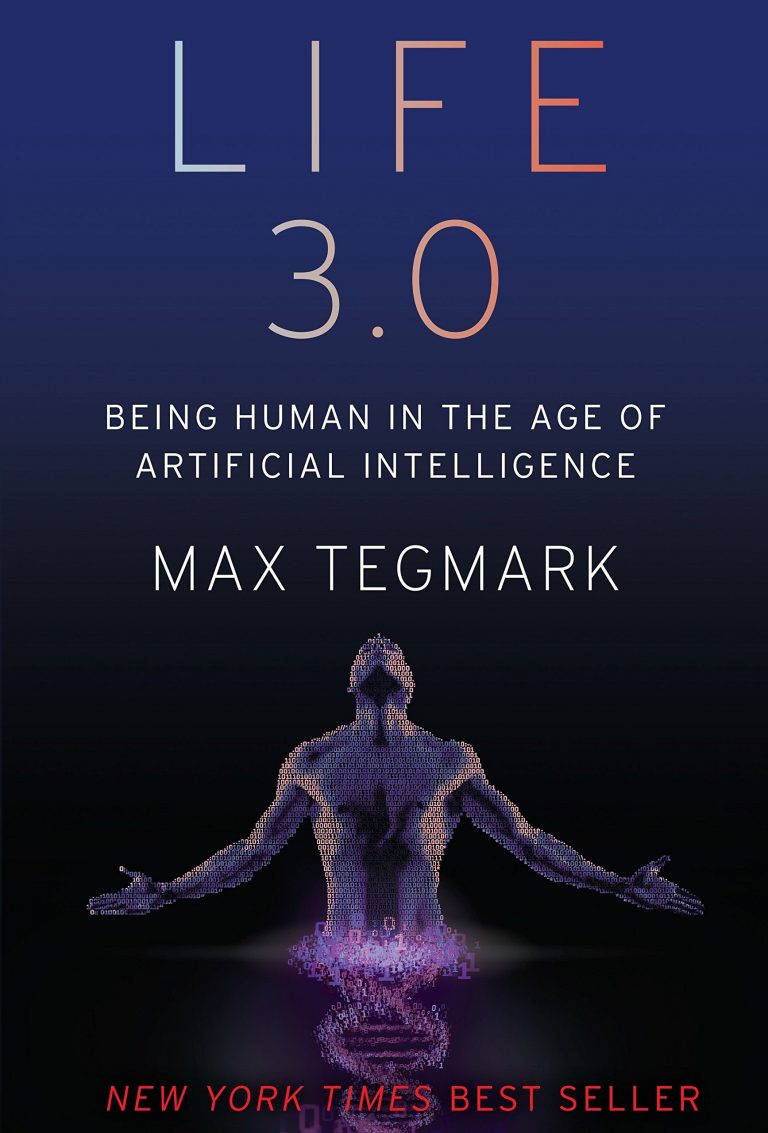
Tegmark: Life 3.0

How was the book?

This book is exciting and everybody who are interested about artificial intelligence should read it. It was a great supplement to the Nick Bostrom’s ”Superintelligence”.

I like the way Tegmark summarizes big and important topics such as AI and consciousness. He typically starts the summary by saying that ”In summary”….:-) Secondly he keeps readers hooked with simple language and examples. Thirdly the story of Prometheus and Omegas was fascinating image of how the world could change when power from the people was moved to movement’s supported by companies owned by Omegas. I think there was a small resemblance to Google, Facebook and Microsoft. Aren’t they doing the same thing?

The essence of the book is ”exploring the origin and fate of intelligence, goals and meaning.” Also Tegmark wants explore how to turn the ideas into action. The book is about ”the tale of our own future with AI.” This book is also an invitation to join the conversation about AI as Tegmark states ”I wrote it in the hope that you, my dear reader, will join this conversation.”

Name of the book comes from an idea that “Life 1.0 (biological stage): evolves its hardware and software Life 2.0 (cultural stage): evolves its hardware, designs much of its software Life 3.0 (technological stage): designs its hardware and software.”

Obviously AI will be the Life 3.0. Or AGI (artificial general intelligence). Learning and accomplishing goals are something that’s characteristic for an AGI and by AGI Tegmark means AI that can reach human level and beyond which will be enabling Life 3.0.

What are the key learnings of the book? 

Three schools of thought

”The saddest aspect of life right now is that science gathers knowledge faster than society gathers wisdom.” (Isaac Asimov)

There are three distinct schools of thought when thinking about when (if ever) will it happen, and what will it mean for humanity. These are digital utopians, techno-skeptics and members of the beneficial-AI movement.

I) Digital Utopians. ”Digital life is the natural and desirable next step in the cosmic evolution and that if we let digital minds be free rather than try to stop or enslave them, the outcome is almost certain to be good. Most of the utopians think human-level AGI might happen within the next twenty to a hundred years.”

Such as Larry Page from Google: ”Don’t be evil”.

II) Techo-skeptics. ”They think that building superhuman AGI is so hard that it won’t happen for hundreds of years, and therefore view it as silly to worry about it now.”

Such as Andrew Ng: “Fearing a rise of killer robots is like worrying about overpopulation on Mars.”

III) The Beneficial-AI Movement. ”Stuart Russell and many groups around the world are pursuing the sort of AI-safety research that he advocates. Concerns similar to Stuart’s were first articulated over half a century ago by computer pioneer Alan Turing and mathematician Irving J. Good.

Key question is that ”how to build beneficial AI.” AI should be redefined: the goal should be to create not undirected intelligence, but beneficial intelligence.

The questions raised by the success of AI aren’t merely intellectually fascinating; they’re also morally crucial, because our choices can potentially affect the entire future of life.”

We have to write the specifications for AI such way that we are happy our selves…. A superintelligent AI is by definition very good at attaining its goals, whatever they may be, so we need to ensure that its goals are aligned with ours.

What is intelligence?

It is ”ability to accomplish complex goals”. That’s why ”there’s no fundamental reason why machines can’t one day be at least as intelligent as us. The ability to learn is arguably the most fascinating aspect of general intelligence.”

”The driving force behind many of the most recent AI breakthroughs has been machine learning. Natural language processing is now one of the most rapidly advancing fields of AI, and I think that further success will have a large impact because language is so central to being human. The better an AI gets at linguistic prediction, the better it can compose reasonable email responses or continue a spoken conversation. Although it doesn’t understand what it’s saying in any meaningful sense.”

AI-safety research

There are four main areas of technical AI-safety research:

I) Verification = Ensuring that software fully satisfies all the expected requirements,

II) Validation = “Did I build the right system?”

III) Security

IV) Control = ”But sometimes good verification and validation aren’t enough to avoid accidents, because we also need good control: ability for a human operator to monitor the system and change its behavior if necessary.”

Tegmark illustrates a scenario where you do not want to end-up. For example: ”What if the phishing email appears to come from your credit card company and is followed up by a phone call from a friendly human voice that you can’t tell is AI-generated?”

But robojudges could in principle ensure that, for the first time in history, everyone becomes truly equal under the law: they could be programmed to all be identical and to treat everyone equally, transparently applying the law in a truly unbiased fashion.

Future of Work

Tegmark is a Jobtimist. If you can answer yes to these questions – you will find the future of work:

I) Does it require interacting with people and using social intelligence?

II) Does it involve creativity and coming up with clever solutions?

III) Does it require working in an unpredictable environment?

The following professions are a safe bet – a teacher, nurse, doctor, dentist, scientist, entrepreneur, programmer, engineer, lawyer, social worker, clergy member, artist, hairdresser or massage therapist. “Work keeps at bay three great evils: boredom, vice and need.” (Voltaire)

Philosophy with a deadline (Nick Bostrom).

Tegmark spends a lot of time exploring how AI could execute the takeover of Earth? ”Exploring scenarios with slower takeoffs, multipolar outcomes, cyborgs and uploads”. Slow Takeoff and Multipolar Scenarios We’ve now explored a range of intelligence explosion scenarios, spanning the spectrum from ones that everyone I know wants to avoid to ones that some of my friends view optimistically. Yet all these scenarios have two features in common: A fast takeoff: the transition from subhuman to vastly superhuman intelligence occurs in a matter of days, not decades. A unipolar outcome: the result is a single entity controlling Earth.” Globalization is merely the latest example of this multi-billion-year trend of hierarchical growth.

Consciousness = subjective experience. Would an artificial consciousness feel that it had free will? “Yes, any conscious decision maker will subjectively feel that it has free will, regardless of whether it’s biological or artificial.” Decisions fall on a spectrum between two extremes: You know exactly why you made that particular choice. You have no idea why you made that particular choice—it felt like you chose randomly on a whim.

If some future AI system is conscious, then what will it subjectively experience?

A) First of all, the space of possible AI experiences is huge compared to what we humans can experience.

B) Second, a brain-sized artificial consciousness could have millions of times more experiences than us per second, since electromagnetic signals travel at the speed of light—millions of times faster than neuron signals.

We need to find answers to some of the oldest and toughest problems in philosophy—by the time we need them.

The long-term future of humanity

Tegmark analyses that the cosmos is a future playground for man and superintelligence. ”If we discover an extraterrestrial civilization, it’s likely to already have gone superintelligent. My vote is for embracing technology, and proceeding not with blind faith in what we build, but with caution, foresight and careful planning.”

How should we change according to the book?

”The first ultraintelligent machine is the last invention that man need ever make, provided that the machine is docile enough to tell us how to keep it under control.” (Irving J. Good)

I) Become humble: ”Traditionally, we humans have often founded our self-worth on the idea of human exceptionalism: the conviction that we’re the smartest entities on the planet and therefore unique and superior. The rise of AI will force us to abandon this and become more humble.”

II) Homo sapiens has to do some re-branding: ”From this perspective, we see that although we’ve focused on the future of intelligence in this book, the future of consciousness is even more important, since that’s what enables meaning. Philosophers like to go Latin on this distinction, by contrasting sapience (the ability to think intelligently) with sentience (the ability to subjectively experience qualia). We humans have built our identity on being Homo sapiens, the smartest entities around. As we prepare to be humbled by ever smarter machines, I suggest that we rebrand ourselves as Homo sentiens!”

What should I personally do? 

”If a machine can think, it might think more intelligently than we do, and then where should we be? Even if we could keep the machines in a subservient position … we should, as a species, feel greatly humbled”. (Alan Turing)

Think – how do I want the future of life to be.

Summary

The book in six words – ”Cogito, ergo sum i.e. ergo sum, cogito?” 

Kategoriat
Uncategorized

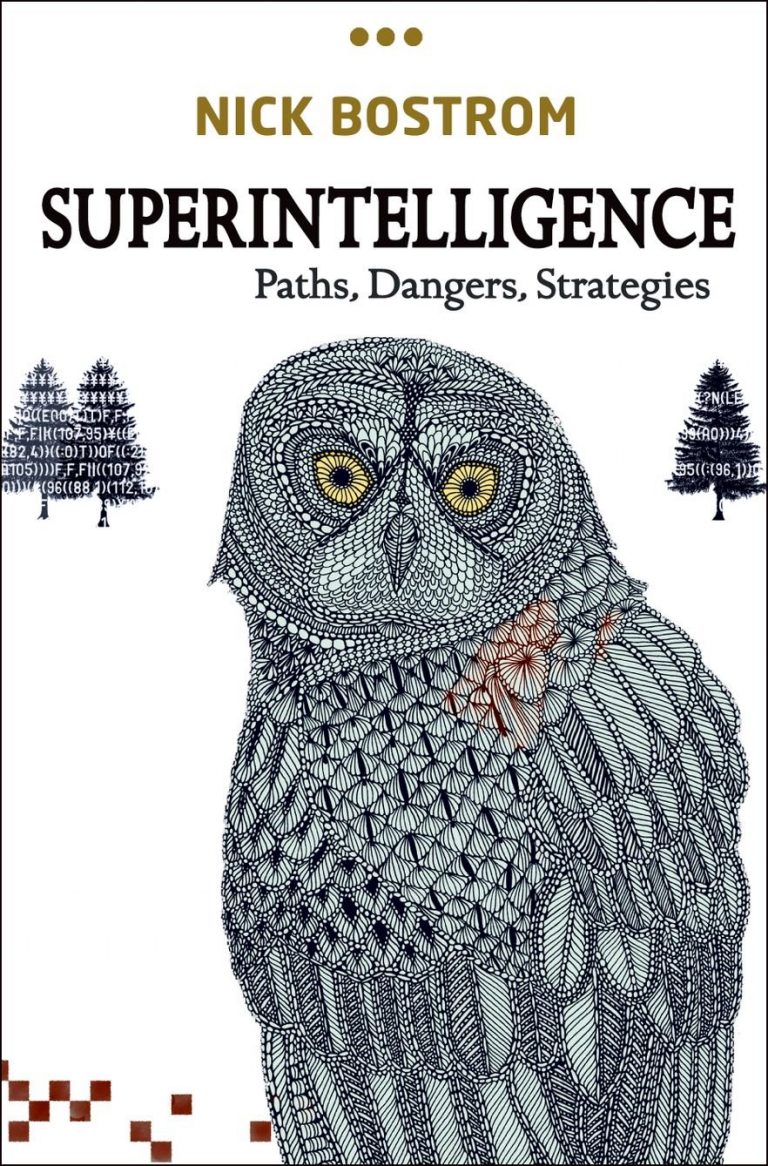
Bostrom: Superintelligence

How was the book?

Read this book if you want to fully understand the concept of AI and superintelligence.

My analysis of Nick Bostrom’s ”Superintelligence” will be a lenghty one and more detailed than ever. But there is a good reason for that. The book is very philosophical and in the same time very fundamental on explaining the basics of AI. Bostrom uses a lot of space to analyze the potential threats that the superintelligence concept consists, but I won’t bring those topics up more than needed. I’ll start the analysis by pointing out three fundamental topics of AI and superintelligence. The topics are – laws of robotics, the value problem and components of AI.

About the threats of superintelligence Bostrom quotes Isaac Asimov’s “three laws of robotics” concept:

I) A robot may not injure a human being or, through inaction, allow a human being to come to harm.

II) A robot must obey any orders given to it by human beings, except where such orders would conflict with the First Law.

III) A robot must protect its own existence as long as such protection does not conflict with the First or Second Law.

Second Bostrom points out solutions to the value-specification problem for AI and superintelligence:

I) “Encapsulate moral growth”

II) “Avoid hijacking the destiny of humankind”

III) “Avoid creating a motive for modern-day humans to fight over the initial dynamic”

IV) “Keep humankind ultimately in charge of its own destiny”

After these decisions humans needs to decide what kind of AI to build – genie, oracle, sovereign or tool-AI (I’ll refer to these later in the analysis), and then decide the components to upload into these systems:

”I) Goal content component. What objective should the AI pursue?  

II) Decision theory component. Should the AI use causal decision theory, evidential decision theory, updateless decision theory, or something else?

III) Epistemology component. What should the AI’s prior probability function be, and what other explicit or implicit assumptions about the world should it make? What theory of anthropics should it use?

IV) Ratification component. Should the AI’s plans be subjected to human review before being put into effect? If so, what is the protocol for that review process?”

The content of the book is heavy to read, but inorder to understand the fundamentals of AI – you should master these topics.

What are the key learnings of the book? 

From human intelligence to superintelligence

What if the future AI will have an IQ of 6455? “As soon as it works, no one calls it AI anymore.” (John McCarthy). Most probably we cannot even imagine the world beyond AI or superintelligence.

Bostrom’s definition of a superintelligence is that it is like ”any intellect that greatly exceeds the cognitive performance of humans in virtually all domains of interest.” Currently even the most advanced AI system is below the human baseline. Bostrom predicts that ”may be reasonable to believe that human-level machine intelligence has a fairly sizeable chance of being developed by mid-century.” So we will have to wait at least 30 years before the start of the superintelligence era – maybe even 100 years. But because superintelligence is something that exceeds the human level of intelligence, we first have to develop the AI that can match human intelligence.

”When they expect “human-level machine intelligence” (HLMI) to be developed? The combined sample gave the following (median) estimate: 10% probability of HLMI by 2022, 50% probability by 2040, and 90% probability by 2075.”

How long from human level to superintelligence?

                                              TOP100     Combined

Within 2 years after HLMI    5%               10%

Within 30 years after HLMI  50%             75%

First and foremost ”if and when a takeoff occurs, it will likely be explosive.” The AI experience might resemble the first time you used Internet or even a mobile phone.

The path to superintelligence

”The principal reason for humanity’s dominant position on Earth is that our brains have a slightly expanded set of faculties compared with other animals. Our greater intelligence lets us transmit culture more efficiently, with the result that knowledge and technology accumulates from one generation to the next.” So in that sense the AI or superintelligence projects are aligned with our way of living and developing our culture.

A AI project is a large scale software development program ”with it’s advantages and disadvantages…. Large scale software projects might offer a closest analogy with AI projects, but it is harder to give crisp examples of typical lags because software is usually rolled out in incremental installments and the functionalities of competing systems are often not directly comparable.”

Compared to a typical software development program there will be also the benefits such as:

I) Editability.

II) Duplicability.

III) Goal coordination.

IV) Memory sharing.

V) New modules, modalities, and algorithms.

”The AI path is more difficult to assess. Perhaps it would require a very large research program; perhaps it could be done by a small group. A lone hacker scenario cannot be excluded either. Building a seed AI might require insights and algorithms developed over many decades by the scientific community around the world.” Just to give a perspective we should remember that the Manhattan Project employed 130 000 people although the great majority of people employed where blue-collar workers.

But then again. Take a look at Google. Google started as a two man project. ”It is possible that the last critical breakthrough idea might come from a single individual or a small group that succeeds in putting everything together.” This is a possibility for countries such as Finland. Even the international collaboration is a possibility for Finland and especially within the EU.

Cognitive superpowers

The world population of robots exceeds 10 million. In the ABB Finland every fifth worker are robots. AI-tools can already outperforms human intelligence in many domains such as backgammon, chess, checkers, scrabble, poker, bridge etc. The list could go on, but the main message is that bits and pieces are already here. Let’s take a closer look at important milestones for AI-tools by the year 2015:

·      Face recognition has improved.

·      Machine translation remains imperfect but is good enough for many applications.

·      Modern speech recognitionis sufficiently accurate for practical use

·      ”The Google search engine is, arguably, the greatest AI system that has yet been built. Automated stock-trading systems are widely used by major investing houses.”

Lessons from previous works:

·      Complications

o  One is the reminder that interactions between individually simple components (such as the sell algorithm and the high-frequency algorithmic trading programs) can produce complicated and unexpected effects.

·      The algorithm just does what it does

o  Another lesson is that smart professionals might give an instruction to a program based on a sensible-seeming and normally sound assumption (e.g. that trading volume is a good measure of market liquidity) and that this can produce catastrophic results when the program continues to act on the instruction with iron-clad logical consistency even in the unanticipated situation where the assumption turns out to be invalid.

·      Automation

o  Automation contributed to the incident, it also contributed to its resolution. The pre-programmed stop order logic, which suspended trading when prices moved too far out of whack, was set to execute automatically because it had been correctly anticipated that the triggering events could happen on a timescale too swift for humans to respond.

”The computer scientist Donald Knuth was struck that “AI has by now succeeded in doing essentially everything that requires ‘thinking’ but has failed to do most of what people and animals do ‘without thinking’—that, somehow, is much harder!””

Paths to superintelligence (direct quotes from the book)

How could and should we create superintelligence? Let us examine some possible paths. It now seems clear that ”a capacity to learn would be an integral feature of the core design of a system intended to attain general intelligence. The same holds for the ability to deal effectively with uncertainty and probabilistic information.” Here are presented Bostrom’s five different paths to superintelligence.

I) Artificial intelligence

Alan Turing’s notion of a “child machine,” which he wrote about in 1950: Instead of trying to produce a programme to simulate the adult mind, why not rather try to produce one which simulates the child’s? If this were then subjected to an appropriate course of education one would obtain the adult brain. Time needed to produce brain like superintelligence? Even a century of continued Moore’s law would not be enough to close this gap.

II) Whole brain emulation

A human whole brain emulation might be available around mid-century.

III) Biological cognition

A third path to greater-than-current-human intelligence is to enhance the functioning of biological brains. Many generations would be required to produce substantial results. Our individual cognitive capacities can be strengthened in various ways, including by such traditional methods as education and training. A world that had a large population of such individuals might (if it had the culture, education, communications infrastructure, etc., to match) constitute a collective superintelligence.

IV) Brain–computer interfaces

”The ultimate potential of machine intelligence is vastly greater than that of organic intelligence. For example even today’s transistors operate on a timescale ten million times shorter than that of biological neurons.”

A reason to doubt that superintelligence will be achieved through cyborgization, namely that enhancement is likely to be far more difficult than therapy.

Even if there were an easy way of pumping more information into our brains, the extra data inflow would do little to increase the rate at which we think and learn unless all the neural machinery necessary for making sense of the data were similarly upgraded.

V) Networks and organizations

Another conceivable path to superintelligence is through the gradual enhancement of networks and organizations that link individual human minds with one another and with various artifacts and bots.

Collective superintelligence could be one form of superintelligence. And of course Internet is the best way to ”continuing development of an intelligent web, with better support for deliberation, de-biasing, and judgment aggregation, might make large contributions to increasing the collective intelligence of humanity as a whole or of particular groups.”

”The internet stands out as a particularly dynamic frontier for innovation and experimentation. Most of its potential may still remain unexploited.”

Four types of superintelligence

There could be four types of superintelligence

A) Oracles.

B) Genies.

C) Sovereigns.

D) Tools.

A) ”An oracle is a question-answering system. It might accept questions in a natural language and present its answers as text. An oracle that accepts only yes/no questions could output its best guess with a single bit, or perhaps with a few extra bits to represent its degree of confidence. An oracle that accepts open-ended questions would need some metric with which to rank possible truthful answers in terms of their informativeness or appropriateness. To make a general superintelligence function as an oracle, we could apply both motivation selection and capability control.”

For example a pocket calculator can be viewed as a very narrow oracle for basic arithmetical questions. An internet search engine can be viewed as a very partial realization of an oracle with a domain that encompasses a significant part of general human declarative knowledge. Nick Bostrom is preferring that the first superintelligence be an oracle.

B-C) Genies and sovereigns. ”A genie is a command-executing system: it receives a high-level command, carries it out, then pauses to await the next command. A sovereign is a system that has an open-ended mandate to operate in the world in pursuit of broad and possibly very long-range objectives.

With a genie, one already sacrifices the most attractive property of an oracle: the opportunity to use boxing methods.

If one were creating a genie, it would be desirable to build it so that it would obey the intention behind the command rather than its literal meaning,

A genie endowed with such a super-butler nature, however, would not be far from qualifying for membership in the caste of sovereigns. Consider, for comparison, the idea of building a sovereign with the final goal of obeying the spirit of the commands we would have given had we built a genie rather than a sovereign.

One might think that a big advantage of a genie over a sovereign is that if something goes wrong, we could issue the genie with a new command to stop or to reverse the effects of the previous actions, whereas a sovereign would just push on regardless of our protests.

One option would be to try to build a genie such that it would automatically present the user with a prediction about salient aspects of the likely outcomes of a proposed command, asking for confirmation before proceeding. Genie-with-a-preview?”

D) ”One suggestion that has been made is that we build the superintelligence to be like a tool rather than an agent. Might one not create “tool-AI” that is like such software—like a flight control system, say, or a virtual assistant—only more flexible and capable?”

Further research would be needed to determine which type of system would be safest. The answer might depend on the conditions under which the AI would be deployed.

Three forms of superintelligence

There would be a possibility to develop:

A) Speed superintelligence.

B) Collective superintelligence.

C) Quality superintelligence.

A) ”The speed superintelligence is an intellect that is just like a human mind but faster. This is conceptually the easiest form of superintelligence to analyze. Speed superintelligence is a system that can do all that a human intellect can do, but much faster. The simplest example of speed superintelligence would be a whole brain emulation running on fast hardware. The speed of ten thousand times that of a biological brain would be able to read a book in a few seconds and write a PhD thesis in an afternoon.”

B) ”Collective superintelligence is a system composed of a large number of smaller intellects such that the system’s overall performance across many very general domains vastly outstrips that of any current cognitive system. Collective intelligence excels at solving problems that can be readily broken into parts such that solutions to sub-problems can be pursued in parallel and verified independently.”

C) ”Quality superintelligence is a system that is at least as fast as a human mind and vastly qualitatively smarter. Top-of-the-line supercomputers are attaining levels of performance that are within the range of plausible estimates of the brain’s processing power.”

How should we change according to the book?

Bostrom is predicting that there will be no more AI winter, because many institutions are heavily investing into AI. Maybe AI has already reached a point-of-no-return. Then again there might be a superintelligence winter, because it will take at least 30 years to develop human like machine intelligence. And another 50 years to develop superintelligence that ”greatly exceeds the cognitive performance of humans in virtually all domains of interest.”

The common good principle is that ”superintelligence should be developed only for the benefit of all of humanity and in the service of widely shared ethical ideals.” Maybe we should stick with that?

What should I personally do? 

Keep reading, studying and investing resources into RPA, ML and AI.

Summary

The book in six words – ”An ultraintelligent machine could design even better machines.” (I. J. Good)

Kategoriat
Uncategorized

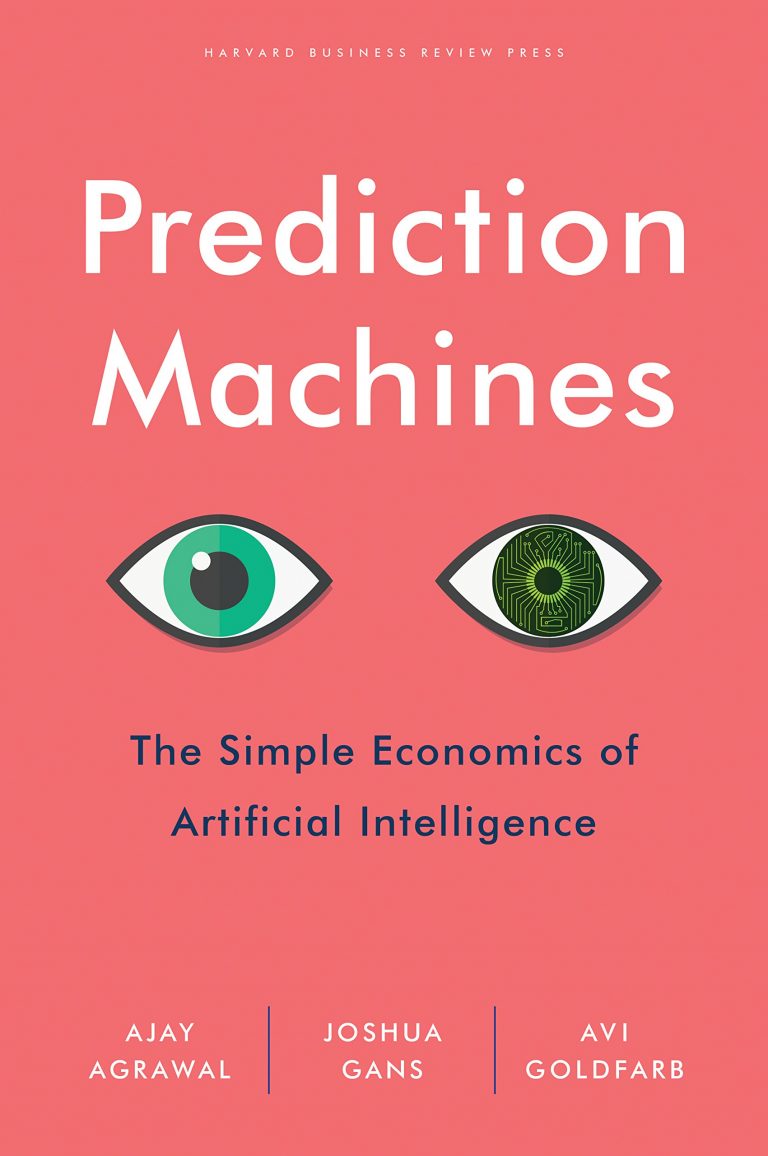
Agrawal, Gans & Goldfard: Prediction Machines

How was the book?

Do you remember your first AI moment? Was it with Siri? Or was it predictive text input? Or even with Tesla? Anyways those are the AI technologies that we currently see used and is commercialized.

AI is a prediction technology that will make decision making more efficient. Or as the writers define ”Our first key insight is that the new wave of artificial intelligence does not actually bring us intelligence but instead a critical component of intelligence—prediction.”

Somehow the name artificial intelligence is misleading, because ”the breakthrough that will give rise to general artificial intelligence remains undiscovered.” Maybe we should be talking about prediction technology than AI. But let’s remain true to the book and I will also talk about AI.

Key topic of the book is that Agrawal, Gans & Goldfard will provide a framework ”for identifying the trade-offs associated with each AI-related decisions”. The writers want to ease the activities that any organization has regarding artificial intelligence.

What are the key learnings of the book? 

The reason why AI is happening now is pure economics. This technology is cheap enough for large scale deployments. The components that make AI affordable are getting cheaper and cheaper all the time as we have learned from the Moore’s law. Components that make AI possible are for example cloud computing, data analytics capacity, etc.

First key learning is that efficient predictions to support decision making are available already. Soon predictive applications will emerge into new market places and quicker than ever.

Short definition of prediction is that it is ”the process of filling in missing information. Decisions usually occurs under conditions of uncertainty”, but a prediction is not a decision. So the decisions requires applying ”judgment to a prediction and then acting.” By the way humans have always performed prediction and judgment together and especially we Finns are very good on this. Goes without saying that it’s important to realise that AI don’t make any judgment and only humans do, because currently only humans can understand and express the trade-offs and ”the relative rewards from taking different actions.” Marching order will remain that ”a machine predicts what is likely to happen and humans will still decide what action to take”.

CASE: ”For every bomber that returned from bombing raids over Germany, the engineers could see where they had been hit by antiaircraft fire. The bullet holes in the planes were their data. But were these the obvious places to better protect the plane? They asked statistician Abraham Wald to assess the problem. With this insight, the air force engineers increased the armor in the places without bullet holes, and the planes were better protected.”

Second key learning is that how AI will change strategy. The writers gives a very concrete example from Amazon. They have a new business model which is called ”from shopping-then-shipping to shipping-then-shopping”. I.e. Amazon might send you the next item before you order it. You must evaluate your business model and current applications against the AI potential. If and when you see the time is right for the AI development work in your organisation you could start using startup methods. Methods such as Lean startup method could help you developing your own way of working in the AI era. One of the end-results will be the increase of the value of judgment.

Prediction is always based on data. ”More and better data leads to better predictions. In economic terms, data is a key complement to prediction. It becomes more valuable as prediction becomes cheaper.” But data collection is not cheap – it should be considered as an investment. Three points about data:

1. Input data is needed to feed to the algorithm and used to produce a prediction.

2. Training data is needed to ”generate the algorithm in the first place”

3. Feedback data is needed to ”improve the algorithm’s performance with experience”.

Data collection will be a expensive part of the AI business development. Here are the scenarios where the data is needed:

1. ”Known knowns. With rich data, machine prediction can work well. And we know the prediction is good. This is the sweet spot for the current generation of machine intelligence.”

2. ”Known Unknowns. We know our predictions will be relatively poor in situations where we do not have much data. We know that we don’t know: known unknowns. Predicting a presidential election outcome a few years out is nearly impossible.”

3. ”Unknown Unknowns. If something has never happened before, a machine cannot predict it. For example the Nassim Nicholas Taleb’s ”The Black Swan” or eighteen-year-old Shawn Fanning developing Napster. Both were unknown unknowns.”

4. ”Unknown Knowns. Prediction machines appear to provide a very precise answer, but that answer can be very wrong. You also need to know what would have happened if you hadn’t read this book. You don’t have that data.”

”Shifting to an AI-first strategy means downgrading the previous top priority. In other words, AI-first is not a buzz word — it represents a real tradeoff. An AI-first strategy places maximizing prediction accuracy as the central goal of the organization, even if that means compromising on other goals such as maximizing revenue, user numbers, or user experience.”

CASE: The Tesco’s Clubcard could be a good case example and especially Clive Humby. He has stated that “Data is the new oil. It’s valuable, but if unrefined it cannot really be used. It has to be changed into gas, plastic, chemicals, etc to create a valuable entity that drives profitable activity; so must data be broken down, analyzed for it to have value.”

The third key learning is that prediction machines and humans will work as a team. Those both are needed. A great example would be school bus drivers. Their job might change, because the driving will be automated (in future), but they are still needed as teachers on the bus. ”The point is that automation that eliminates a human from a task does not necessarily eliminate them from a job. Sometimes, the combination of humans and machines generates the best predictions, each complementing the other’s weaknesses. This is a classic division of labor, but not physically as Adam Smith described.”

”Humans have three types of data that machines don’t:

1. Human senses are powerful. In many ways, human eyes, ears, nose, and skin still surpass machine capabilities.

2. Humans are the ultimate arbiters of our own preferences. Consumer data is extremely valuable because it gives prediction machines data about these preferences.

3. Privacy concerns restrict the data available to machines.”

Will Humans Be Pushed Out? No, because in our lifetime ”humans will have a role in prediction and judgment when unusual situations arise.”

The fourth key learning is processes. In order to implement AI technology into different businesses requires rethinking of processes. ”The distinction between AI and automation is muddy. Automation arises when a machine undertakes an entire task, not just prediction.”

CASE: ”One of Hammer and Champy’s favorite examples was the dilemma Ford faced in the 1980s, In North America, its accounts payable department employed five hundred people, and Ford hoped that by spending big on computers, Once a new system was put in place, Ford’s accounts payable department was 75 percent smaller, and the whole process was significantly faster and more accurate. The rise of prediction machines motivates thinking about how to redesign and automate entire processes, or what we term here “work flows,” effectively removing humans from such tasks altogether.” This is a classical robotic process automation case (RPA).

Fifth key learning is AI tools. Steve Jobs have stated that, “one of the things that really separates us from the high primates is that we’re tool builders.” Currently ”Google is developing more than a thousand different AI tools to help with a wide variety of tasks, from email to translation to driving. AI tools can change work flows in two ways.

1. AI tools can render tasks obsolete and therefore remove them from work flows.

2. AI tools can add new tasks. This may be different for every business and every work flow.”

CASE:” March 2016 when Microsoft launched an AI-based Twitter chatbot named Tay. Precisely how Tay evolved so quickly is not entirely clear. Most likely, interactions with Twitter users taught Tay this behavior.”

Sixth learning is about security risks. ”Three classes of data have an impact on prediction machines: input, training, and feedback. All three have potential security risks. For example, you can trick an AI into misclassifying a video of a zoo by inserting images of cars for such a short time that a human would never see the cars, but the computer could. The implications are clear. Your competitors or detractors may deliberately try to train your prediction machine to make bad predictions.

CASE: ”Your competitors may be able to reverse-engineer your algorithms, or at least have their own prediction machines use the output of your algorithms as training data. Google’s team showed that Microsoft uses its toolbar to copy Google’s search engine.”

Minor, but interesting notions:

• Tesla aggregates and uses data from cars to upgrade Autopilot. Learning takes place in the cloud. Only then does it roll out a new version of Autopilot. This standard approach has the advantage of shielding users from undertrained versions. The downside, however, is that the common AI that resides on devices cannot take into account rapidly changing local conditions or, at the very least, can only do so when that data is built into a new generation. Thus, from the perspective of a user, improvements come in jumps.

• You are the product…. A few years ago, users of Internet services began to realize that when an online service is free, you’re not the customer.

• Privacy as a competative advantage… Apple.

• Experience Is the New Scarce Resource.

How should we change according to the book?

Ask yourself that what does it mean to your position when more and more AI tools are rolled out? Elon Musk, Daniel Kahneman, Bill Gates and Stephen Hawking (R.I.P.) are against AI. Or at least they are very doubtful. What’s your stand?

If there would be like a Robotlandia where robots compete head to head ”with humans for some tasks, so wages for those tasks fall. If you understand the benefits of free trade, then you should appreciate the gains from prediction machines. The key policy question isn’t about whether AI will bring benefits but about how those benefits will be distributed. If the competition is with human labor, then wages fall. A second trend leading to increased inequality is that technology is often skill-biased. It disproportionately increases the wages of highly educated people and might even decrease the wages of the less educated.”

Another thing is that new competition will emerge. ”This is not the first time that a new technology raises the possibility of breeding large companies.” From China for example. ”With AI, there is a benefit to being big because of scale economies. Technology-based monopolies are temporary due to a process that economist Joseph Schumpeter called “the gale of creative destruction.” Few facts about China and AI:

1. China’s share of papers at the biggest AI research conference grew from 10 percent in 2012 to 23 percent in 2017. Over the same period, the US share fell from 41 percent to 34 percent. 13

2. One city—China’s eighth largest—has allocated more resources to AI than all of Canada.

3. China has a second advantage: scale. Prediction machines need data, and China has more people to provide that data than anywhere else in the world.

4. Data access is China’s third source of advantage. The country’s lack of privacy protection for its citizens may give the government and private-sector companies

What should I personally do? 

Is this a race to the bottom or next dot-com boom?

Summary

The book in six words – Who will be the shawn fanning of AI? 

Kategoriat
Uncategorized

Merilehto: Tekoäly matkaopas johtajalle

Kirjasta

Aloitan kehumalla kirjaa. Kirjassa on sopivan liiketoimintalähtöinen ote, jotta se ei säikäytä kiireisempääkään lukijaa. Aihe on super-super-supermielenkiintoinen ja on kaikkien huulilla alkaen Googlen toimitusjohtajasta päätyen vastavalmistuneeseen. Esimerkit ovat hyvin kuvailevia sekä mielenkiintoa herättäviä. Risuja pitää antaa kirjan hinnoittelusta, koska melko-melko kevyesti ladotun kirjan hinta-laatu -suhde ei vastaa odotuksia. Enemmän olisi ollut parempi 60 euron kirjasta.

Minkälainen kirja oli?

Kirja on nimensä mukaisesti matkaopas, sillä valtaosa aiheista on nopeasti katettu, mutta yleisilmeen tarjoava. Se jakautuu kahteen osaan – perusteet ja hyödyntäminen. Kirjassa on hyviä kuvauksia tekoälyn / koneoppimisen sovelluskohteista. Esimerkiksi:

·       Utopia Analyticsin tekoälyn ja Suomi24:n kommenttien moderoinnin tuloksista.

·       Miten luottokorttidatan avulla voidaan ehkäistä petoksia.

·       OP:n kehittämän älykipsin tuloksista.

·       Staran kokemuksia ruohonleikkaajarobotista.

·       Miten eri malleja voi hyödyntää esim. logistinen regressiota asuntokauppaan.

·       Coca-Cola Companyn juoma-automaateista, jotka oppivat ihmisten makutottumuksista.

Tekstiin on upotettu vinkkejä lisälukemisesta, joka on hyvää lisäarvoa, niille joille aihealue sattuu kolahtamaan.

Mitkä ovat kirjan keskeiset ideat? 

Kirjan keskeinen idea on data ja tekeminen. Tekoäly määritellään kirjassa heikoksi tekoälyksi, joka ”kykenee ratkaisemaan yhtä tehtävää, johon se on opetettu”. Suurin osa tekoälystä kuin me sen tänä päivänä tunnemme on siis koneoppimista. Pystyäksemme opettamaan tekoälysovelluksia tukemaan liiketoimintaa, niin tarvitsemme paljon dataa, jota voidaan totta esim. ostokäyttäytymisen, mobiiliapplikaatioiden tai keskustelupalstojen kautta. Tänä päivänä yksi ihminen tuottaa 700 megatavua dataa vuorokaudessa ja vuonna 2020 hän tuottaa 1,5 gigatavua. Datan määrässä enemmän on parempi ja siksi esim. internetjätit tai Kiina ovat tekoälyn kehittämisessä vahvoilla.

Kolme askelta koneoppimisen hyödyntämiseen kilpailuedun hankkimiseen:

1.    Liiketoimintaprosesseista päätöksentekopisteiden tunnistaminen,

2.    Selkeisiin haasteisiin keskittyminen.

3.    Koneoppimisen hyödyntäminen monimutkaisiin ongelmiin.

Koneoppimisen malleja on viisi:

1.    Luokittelu, jossa kohde luokitellaan ja sitä tietoa voidaan hyödyntää esim. kohdennettuun markkinointiin.

2.    Ryhmittely, jossa luokittelematon data luokitellaan ja ryhmitellään esim. asiakasryhmiksi.

3.    Regressio, jossa ennustetaan numeerista arvoa ja ennsutetaan esim. huoltoajankohtaa.

4.    Suosittelu, jossa arvioidaan asiakaspreferenssejä ja tehdään esim. up- tai cross-sell -suosituksia asiakkaalle.

5.    Poikkeamien tai anomalioiden etsimistä ja havaitaan esim. luottokorttipetoksia.

Datan hyödyntämisen tasot kerrotaan yksinkertaisesti jäätelönmyynti esimerkillä:

·       Kuvaileva datan hyödyntämisessä kerrotaan kuinka paljon jäätä myytiin viime viikolla,

·       diagnosoiva kertoo miten sää vaikutti jäätelönmyyntiin,

·       ennakoivassa arvioidaan ensi viikon jäätelön menekkiä,

·       ohjaileva tilaa lisää jäätelöä ja

·       ohjaileva-automatisoitu tilasi jo lisää jäätelöä.

Kirjassa annetaan looginen selitys miksi tekoäly on nyt tarjolla vuosikymmenen kuumimmaksi kaupalliseksi sovellutukseksi. Selitys löytyy laskentatehoista, (harjoitus)datan määrästä sekä algoritmistä sekä kehitysvauhdista. Ehkä merkittävin selittävä tekijä on datan määrä, josta on muodostunut kilpailuedun lähde. Hieman vastaava kehityskulku kuin sosiaalisessa media missä matkapuhelinten kyky jakaa esim. kuvia verkon yli mahdollistui 3/4G-verkkojen avulla ja siksi siis kuvien laatu sekä puhelinverkkojen kyky jakaa niitä sai loi Somelle kilpailuedun. Tekoälyn kilpailu käydään siis niiden toimijoiden kesken mitkä pystyvät hyödyntämään dataa – perustuu se transaktioihin, puheeseen tai kuviin.

Kirjassa annetaan myös ohjeita miten kannattaa toimia GDPR:n tultua voimaan, datastrategian kehittämisestä sekä Chief AI Officerin palkkaamisesta.

Mitä meidän pitäisi tehdä kirjan perusteella?

Johdon suurin tulos tekoälyn käyttöönotossa voi olla kokeilukulttuurin synnyttäminen sekä pilottien käynnistämisen mahdollistaminen.

Mitä minun pitäisi itse tehdä? 

Koneoppia omasta datasta?

Yhteenveto

Kuluneella viikolla Mårten Mickos kertoi vanhan viisauden ”It takes a village to raise a child”, niin minusta tuntuu, että se sopii myös tämän kirjan kuudeksi sanaksi. Miksi? Tekoäly ei ole yhden ihmisen tai työntekijäryhmän vastuulla. Se on koko yrityksen läpäisevä kehityshanke, jonka pitää hyödyttää kaikkia organisaatiossa työskenteleviä.

Kirja kuudella sanalla – ”It takes a village to raise a child”.

Kategoriat
Uncategorized

Yuval Noah Harari: Homo Deus – A Brief History of Tomorrow

About the book

Name of the book – “A Brief History of Tomorrow”, might be a bit misleading. The book is approximately 500 pages long. And that might be the only criticism that can be found of the book. This book would be best to read as a e-book. It’s heavy and difficult to manage.

How was the book?

Homo Deus is a book that has multiple levels. From my point of view it is a historical prediction of humankind. It is also a collection of ideas and facts. And mostly it is a possibility for the reader to analyse the future and prepare himself for the issues which might lie ahead. Harari touches several issues that current readers are trying to understand. He interprets issues such as rise of inequality, man vs. technology and of course the rise of the nationalism in forms of Brexit and Trump. The book is as well modern, historical, analytical and as well very topical.  

Harari’s main topic is about how Homo Sapiens will survive from the emerging artificial intelligence and other technological possibilities. He binds this main topic into several waves of history of humankind. Harari sees that we are on the edge of last revolution that Homo Sapiens will experience. That’s why he calls the forthcoming revolution as second Cognitive Revolution. This revolution might lead to the birth of Homo Deus and extinction of Homo Sapiens.

What or who is Homo Deus? It is the result of a quest to upgrade Homo Sapiens into the next level. A superhuman that has reached immortality without a deal with the devil like Dorian Grey did.

Homo Sapiens was able to conquer famine, plague and war. Upgraded Homo Sapiens i.e. Homo Deus has the power of creation. Homo Deus will have happiness and immortality. He will also be seeking the possibility of attaining divinity. Homo Deus has human features, but he has also upgraded physical and mental abilities. Such as possibility continue to live forever, think and make decisions more accurately.

What are the key learnings of the book? 

Homo Deus will be seeking to reach happiness, immortality and attaining divinity. The quest to create Homo Deus is a continuum of Homo Sapiens if humankind will collectively will it to happen.

Unfortunately Harari has no one thing or key learning that he will be sharing. He is drawing a picture of our future. But there are numerous questions that we as individuals and societies must try to figure out before entering into the era of Homo Deus.

Let me divide the main questions into two main themes.

Future of humankind:

–      Is Life time learning our only hope? Should we be trying to develop our narrating self or invest heavily on the development algorithms in large?

–      Should we try to develop new religions such as Dataism or Techo-humanism to replace current humanistic thinking?

–      Should we let the robots do the work and convert current workforce into an unemployable mass?

–      Is our fate of horses when the automobiles replaced those?

–      Which choices should we try to pursue?

Future of artificial intelligence:

–      What should we be thinking about artificial intelligence?

–      What shall we do with artificial Intelligence?

–      Should humankind do a Turing Test every day in order to survive with the potential that AI brings us?

–      Which algorithms should we try to enhance?

–      Should we try to build a warm social logic for AI as humans have?

–      Should we give power to decide and ownership of capitals? Can AI have both? In what way should we give these to AI?

–      Are societies ready for the rise of AI?

What should I personally do? 

I should devote my personal time on exploring the possibilities of artificial intelligence.

Summary

Harari’s Homo Deus is a must read book. He has collected tons of excellent questions. By creating a personal understanding about AI will have value when making decisions. Eventually AI will be affecting our lives. Why not start hacking your future now?

The book in six words: “How to know what to ignore?”